

One step forward, two steps back. A delicate Viennese waltz on a Persian carpet laden with traps, to the sound and rhythm of the Ayatollah. A dance in which one side acts in a one-dimensional manner and the other side plays a multidimensional chess game in which the board is the Middle East and the tools are enriched uranium deposits, centrifuges and straits.
Negotiations to end the war between the U.S and Iran are being conducted using the Persian Bazaar method. While the nuclear discourse is deliberately delayed, Tehran is taking advantage of the vacuum to establish facts on the ground.
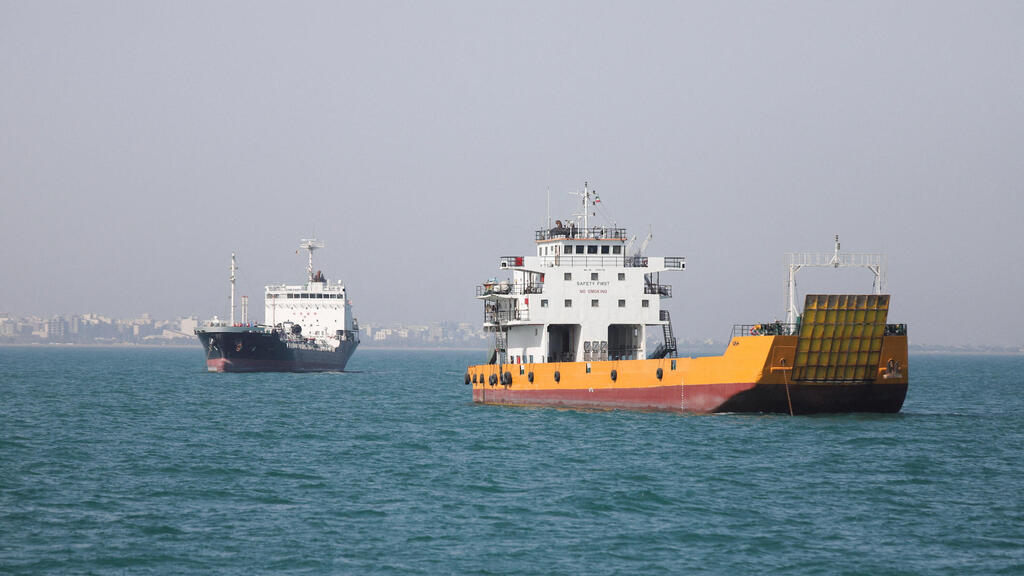
Strait of Hormuz
(Photo: Amirhosein Khorgooi/ISNA/WANA (West Asia News Agency) via REUTERS)
Alongside the resumption of military buildup, the regime's plan (which currently is rejected by the U.S) includes the elimination of the demand to remove Iran's stockpile of enriched uranium to 60%. In the absence of IAEA supervision, which has been out of the picture for a long time, there is concern about the disappearance of stockpiles in the endless expanses of the Persian Desert, the occurrence of which could pose a significant challenge to Western intelligence agencies. Under these disturbing circumstances, the world may wake up to a reality of "quiet breakout" – a situation in which Iran holds the capability to conduct a nuclear test.
The use of Pakistan as an intermediary adds another layer of risk. This is a country that is itself a nuclear power with a convoluted system of power, which is not at the heart of the Israeli intelligence community's preoccupation. Islamabad has a complex relationship with Iran, which does not help to understand the dynamics between parties, and puts the West in a problematic place where Pakistan becomes the gatekeeper of the negotiations, which in any case suffers from chronic communication gaps. This is while the Strait of Hormuz has become the beginning of the axes for dialogue between the U.S and Iran. While the regime uses the global trade route as a noose and reminds the West at every moment that even without a bomb, it has the ability to paralyze the global economy.
The American difficulty in understanding the Persian mentality is more pronounced than ever. Washington is trying to preserve the discourse, but the Trump Administration is dismantling all attempts to move forward. The president's volatile statements make any potential understanding temporary and of limited value (at best) in the eyes of the Iranians. Lack of professional perspectives in the American nuclear negotiation team, the lack of an international coalition that is involved in the process, and the volatility impositions - all prevent the presentation of a unified and sharp front against the ayatollahs. One way or another, the regime's willingness to freeze enrichment for 15 years is a positive basis for continuing the negotiations, that should further develop vis-a-vis the regime.
The lack of clarity regarding the objectives of the campaign, the significant gap in planning the diplomatic effort in advance and reaching agreements on the boundaries of the operation, as well as the path to getting Iran there, remains evident even now
As for Israel, the picture is not encouraging. As described at the beginning of the campaign above these lines, the lack of clarity in the objectives of the campaign, as well as the way to get Iran there, is still prominent: as is happening in Gaza and Lebanon, the lack of a "day after" strategy is once again conspicuous. Israel and its friends in the West (at least on the nuclear issue, such as Germany, Britain, and France) are being pushed into a corner, while President Trump is looking for some way out of the conflict even without an agreement, given his domestic growing constraints.
Under these circumstances, the chances of inventing an "improved JCPOA agreement" are not high, and even if such an agreement is achieved, Iran will maintain its assets in its core positions (continued development of nuclear technologies, long-range ballistic missiles, and assistance to proxies).
Despite the diminution of the regime's core capabilities, its ability to recover is rapid, as is its ability to adapt to a changing reality, from naval blockades to sanctions. The waltz with the Ayatollah is not expected to end anytime soon, but as the music stops, the West may find himself alone on the stage, with his partner on the dance floor cutting coupons and the Persian carpet unexpectedly falling under the players' feet.