

The U.S. administration's decision to continue to put pressure on Ukraine, an ally, is not only cynical to the point of immorality, but it also endangers the future of the world, including the administration itself.
When an administration official briefs the Wall Street Journal that two of the central issues discussed in Florida are a timetable for Ukrainian elections and land swaps between Russia and Ukraine, it is immediately clear just how wrong America’s approach to the biggest war in Europe since the Second World War is.
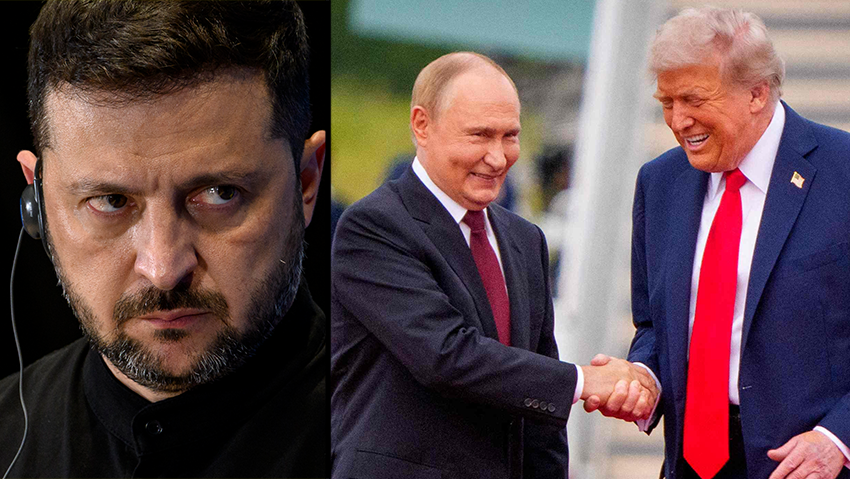
Ukraine, however flawed its political system, is a democracy. Like any democracy, it can and will make its own decisions about election dates, particularly when fighting a war of national survival. Raising this issue, intended as a method of pressuring Ukraine, is simply a coarse attempt at political interference, which the United States itself would never tolerate from any country.
The very concept of land swaps is yet more obscene. What is meant is the swapping of some Russian-occupied Ukrainian land for other land that Russia has taken. This act has no positive meaning, and would only legitimize Russia’s war of aggression, by lending Ukraine’s agreement to a trade in lands that are all Ukrainian by law.
Steve Witkoff, President Trump’s special envoy, does not realize how deeply his own fate is now intertwined with that of Ukraine. By holding meetings at Shell Bay, his own golf resort, he is connecting himself in a very personal manner with a negotiation that might produce a result directly opposed to the vital national interests of both Ukraine and the United States. A more intelligent man would have been both more prudent and much more aware of the gravity of his own position.
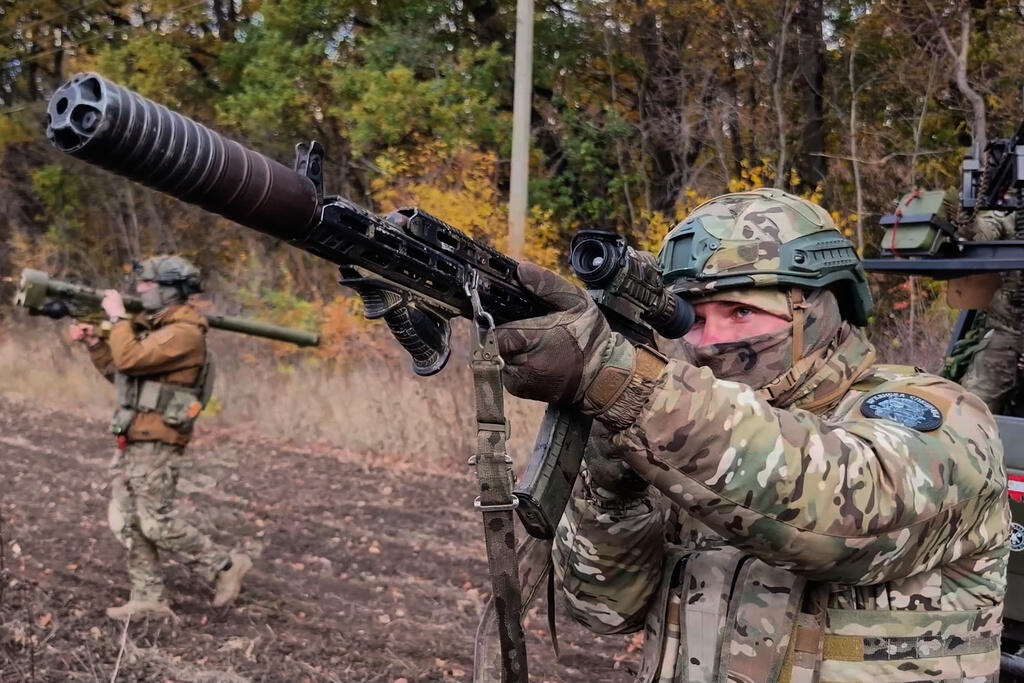
The problem is that multiple American officials have given the impression, as the Journal summarized, that their policy recommendation is that “Ukraine should accept or face a worse deal later because it can’t sustain the fight.” Superficially, that appears crude but grounded in rationality. Considered more closely, it is first of all absolutely immoral. Ukraine is the victim of Russian aggression, and America’s role as the world’s most prosperous democracy should be to support Ukraine, not to calmly and dispassionately observe that Ukraine cannot fight on successfully.

A Ukrainian soldier on the Kharkiv front
(Photo: REUTERS/Sofiia Gatilova)
What is even worse, the consequences of Ukraine following this ruthless form of advice would be catastrophic. Russia would achieve a partial but notable victory, taking the land of an innocent neighbor by means of war and retaining it, while maintaining a sense that the Russian army could have taken yet more land by force of arms, had fighting not been suspended.
Russia would be directly encouraged by this to contemplate further aggression. Perhaps against the three Baltic states, Estonia, Latvia and Lithuania. Combined, these have a far smaller population than Ukraine, and are conveniently located between Russia, Alexander Lukashenko’s Russian puppet regime in Belarus and the Russian exclave of Kaliningrad. In case of Russian attack on the Baltic states, the United States would be forced either to join a war against Russia in order to defend these NATO members, or else to acknowledge that NATO’s Article 5 has no meaning, and NATO itself is worthless. One need not describe in detail what would happen to Mr. Witkoff’s reputation if these events, and such a choice, come to pass.
As the Journal’s editorial board acknowledges, “the world is increasingly dangerous.” America’s actions are directly responsible for this unpleasant development. If the Biden administration had not watched impassively as Afghanistan collapsed in August 2021, Putin would not have invaded Ukraine in February of the following year. Biden’s administration never recovered from these dramatic crises. If the Trump administration, inspired by Mr. Witkoff and others, does not support Ukraine in ensuring an outcome of the war that indisputably secures Ukraine’s future, it will be preparing the ground for even worse consequences.
Witkoff’s core policy principle, as expressed to the Journal, that if “everybody’s prospering and they’re all a part of it, and there’s upside for everybody, that’s going to naturally be a bulwark against future conflicts,” constitutes a quite incredible expression both of historical illiteracy and of the inability to understand contemporary events. It is a peculiar billionaire form of Marxism, taking from Marx the demonstrably false view that economics determines the course of politics, and turning it into a very crude theory of peace through prosperity.
(Photo: AP)
It is politics that determines economics, and Putin’s attempt to destroy Ukraine and enslave the Ukrainian people is grounded in his political position as an aggressive dictator, not in Russia’s economic condition. The role of Russia’s vast resource base, and of the West’s very limited willingness to seek and find natural resources elsewhere, is to enable Putin to continue the war even as ordinary Russians become poorer and the Russian economy comes closer to crisis. If Putin prospers more, he will commit more murders, and he will be all the happier if Mr. Witkoff makes more money flow into Russia’s pocket.
Ukraine is in difficulty, but it faces only a single source of military danger – Russia. The Trump administration could find itself facing a military confrontation with any of Russia, China, Iran or North Korea, if one or all of these regimes conclude that there are rewards for the relentless criminal use of force. It is the administration, not Ukraine, that could lose a very great deal very quickly, if it does not act sensibly.
Given the stakes, it might appear to be morally questionable to view this problem through the prism of the Trump administration’s potential fate. After all, any administration is only a small group of people, while millions of lives could be directly threatened if the worst possibilities are realized. Yet, the Trump administration, by virtue of its control of the executive branch of the world’s most important country, is essentially the only political force in the West that can address a growing set of crises caused by a variety of criminals and aggressors worldwide.
Most Western countries are so burdened by debt and political division that they simply have no substantive influence on events, regardless of what nullities like French President Emmanuel Macron might try to pretend. If the Trump administration leads the United States in the direction of similar irrelevance through wrong policy, it is quite probable that the existing world crisis will accelerate rapidly far beyond the West’s ability to regain control of the situation.
- Dan Zamansky is a British-Israeli independent historian and author of The New World Crisis, a Substack analyzing the problems of today.