

Of the dozens of polls published in recent weeks, only a few show the opposition bloc crossing the 60-seat threshold. In the vast majority, there is no majority for a Zionist coalition made up only of the parties in the anti-Netanyahu bloc. On average, such a coalition stands at 57 seats, meaning an alternative government would need the support of the Arab Ra’am party.
Both sides of the political map have recognized this reality, and the campaigns have begun. In Likud, Mansour Abbas is being linked to Naftali Bennett in every set of talking points. On the other side, lawmakers from the Democrats have begun declaring that a government with Abbas is actually the desired political trend.
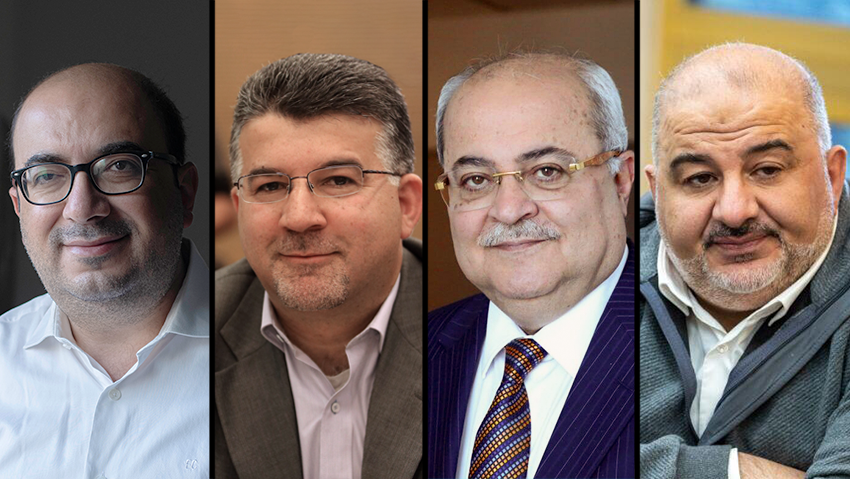
Mansour Abbas, Ahmad Tibi, Yousef Jabareen and Sami Abu Shehadeh
(Photo: Shalev Shalom, Ryan Frois, Alex Kolomoisky, Yuval Chen)
While the leaders of the anti-Netanyahu bloc compete over who is more right-wing and who can attract the elusive voter with the appealing label of “soft right,” the voter with the small kippah, or the invisible one, in the political neighborhoods of Eisenkot, Lapid-Bennett and Liberman, they are avoiding any discussion of coalition math. They, too, know that to reach 61 seats, the 57 need another four. And in this case, those four do not wear a kippah. They wear a keffiyeh.
And if the leaders of the anti-Netanyahu bloc are running away from the scenario in which they would have to form a government with Mansour Abbas, there is another scenario that would give them nightmares and cold sweats.
Talks among the Arab parties about running on a joint slate are at an advanced stage. The Arab public wants this alliance, most Arab parties and political players want this union, and if it does materialize, the seat map will change completely.
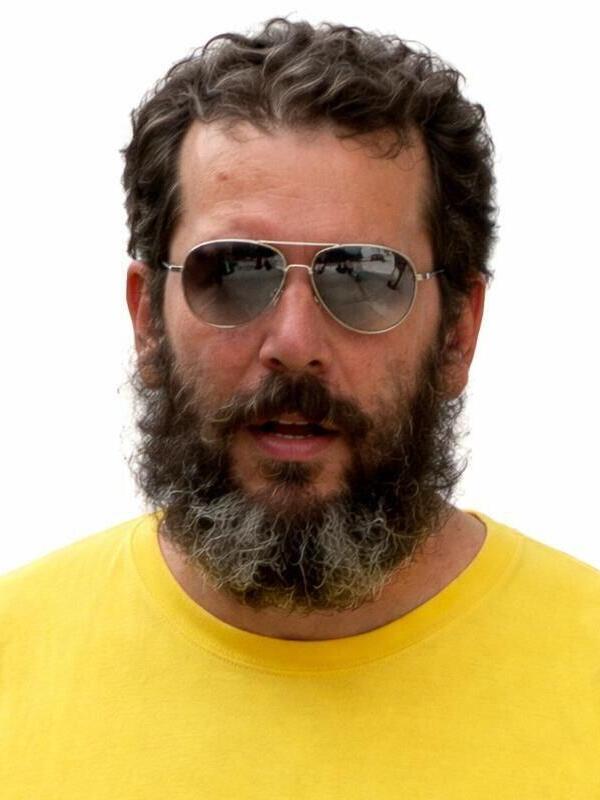 Nevo Cohen
 Anyone who follows the polls knows the familiar seat-circle graphic: one slice for the coalition, another for the opposition and, in the middle, a fixed 10-seat slice for the Arab parties. A union of Hadash-Ta’al with Ra’am and Balad would increase the Arab share to at least 15 seats, and if the campaign succeeds, the potential could approach 17.
Such a fundamental change in the seat map would pull both blocs down to lower numbers. And if the blocs are smaller, reaching the coveted number of 61 becomes more complicated.
In all likelihood, the Zionist opposition bloc would stand in such a case at 55 seats, perhaps even fewer, meaning it would need six more seats to reach 61. With Ra’am’s seats alone, that would be impossible.
At this stage, you understand where this is going. It is no longer just Mansour who would be needed to form a government. Now Ahmad Tibi would be needed too.