

The United Arab Emirates’ decision to leave OPEC and OPEC+ is not just an oil story. It is a strategic earthquake in the Gulf and a direct challenge to Saudi leadership.
On paper, Abu Dhabi framed the decision as a matter of production flexibility, saying it wants the freedom to set policy according to its own long-term energy interests, without being bound by the cartel’s collective discipline. But in the Middle East, especially in the Gulf, nothing is only technical.
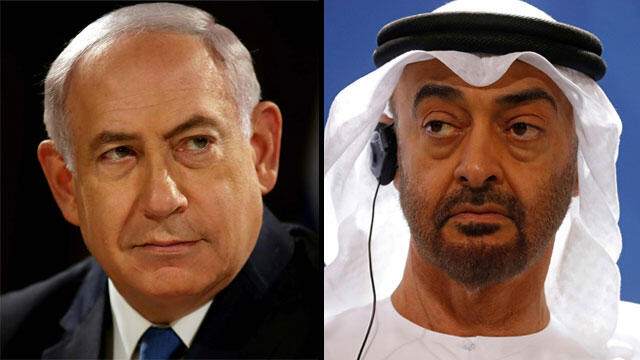
Prime Minister Benjamin Netanyahu, UAE leader Mohammed bin Zayed
(Photo: AFP)
The UAE did not merely leave an oil group. It told Saudi Arabia that Riyadh dictating the regional economic line is no longer a given.
For decades, OPEC’s power rested not only on the number of barrels pumped out of the ground but on discipline: producers accepted limits, kept their disputes behind closed doors and projected a united front even as rivalries simmered beneath the surface. The UAE has now punctured that façade.
Once a state as wealthy, capable and central as the Emirates walks away, others will quickly find themselves asking why they should continue paying the price of restraint dictated from the top by Riyadh.
That is the first major consequence. OPEC becomes weaker not necessarily because oil prices collapse tomorrow, but because the mythology of control has been damaged. Markets do not only respond to production. They respond to confidence. And the message from Abu Dhabi is clear: The cartel is no longer the only game in town.
The second consequence is aimed squarely at Saudi Arabia. The relationship between Riyadh and Abu Dhabi has long been presented as a Gulf partnership. It is also a rivalry. The two compete over foreign investment, ports, regional influence, technology, Yemen and the future architecture of the Gulf. The UAE’s exit from OPEC says plainly that it will not subordinate its national strategy to Saudi convenience.
This is where Israel should pay close attention.
The UAE has just signaled that it is prepared to break old frameworks when they no longer serve its interests, and Israel should take the hint. Since the Abraham Accords, the two countries have built a relationship rooted in trade, technology, security cooperation and shared concern over Iran, but it has not yet reached its full strategic potential. Abu Dhabi’s break with OPEC is a chance to move beyond symbolism, business delegations and polite conferences, and turn the partnership into something far more consequential.
First, Israel should position itself as a regional energy and infrastructure partner. The UAE wants flexibility, diversification and resilience. Israel can offer technology in cybersecurity, port security, desalination, energy storage, grid protection and drone defense. The Iran war has shown that energy infrastructure is now a front line. Israel and the UAE should build a joint energy security framework focused on protecting pipelines, ports, tankers, refineries and offshore assets.
We have already seen early signs of this budding cooperation, with Israel deploying an Iron Dome air defense battery to the UAE during the war, along with Israeli personnel to operate it and help defend its Gulf ally.
Second, Israel should move quickly on trade corridors. A UAE less tied to OPEC discipline and more focused on independent global reach will be looking for reliable routes to Europe and the Mediterranean. Israel should revive and expand discussions about land and sea corridors linking the Gulf to Israeli ports, namely the India-Middle East-Europe Economic Corridor (IMEC). The logic is simple: If Hormuz is vulnerable, alternatives matter. Israel can help provide one.
 Ilan Levinsohn Photo: Courtesy
Third, Israel should use this moment to strengthen the moderate regional camp. Abu Dhabi’s frustration with weak Arab and Gulf responses to Iranian attacks is not a mere quibble. It reflects a deeper question: Who can the UAE count on when Tehran escalates? Israel should not overplay its hand, but it should quietly make clear that it understands the threat and is ready for practical cooperation.
Fourth, Israel should coordinate with Washington. The UAE’s move is also a win for U.S. pressure on OPEC. Israel can help frame the development as part of a broader realignment: energy producers, technology powers and security partners working outside old cartel logic to contain Iran and stabilize markets.
The danger is complacency. Israel too often sees Gulf diplomacy as a prize already won rather than a relationship that must be constantly upgraded. The UAE has just signaled that it is willing to break old frameworks when they no longer serve its interests. Israel should do the same.
The end of the UAE’s OPEC chapter may mark the beginning of a more flexible Gulf order. If Israel is smart, it will not watch from the sidelines. It will help shape it.
- The writer is deputy editor-in-chief and analyst at ynet Global and an MA candidate in international relations and strategic studies at Bar-Ilan University, focusing on energy security and energy geopolitics in Israel and the Middle East.