

Any serious attempt to establish durable peace in Gaza ultimately converges on a single, unavoidable reality: without the disarmament of Hamas, no political agreement, reconstruction effort or ceasefire can endure.
Security, not diplomacy alone, remains the decisive variable. Absent a fundamental shift in the balance of force on the ground, even the most ambitious peace frameworks risk unraveling under pressure.
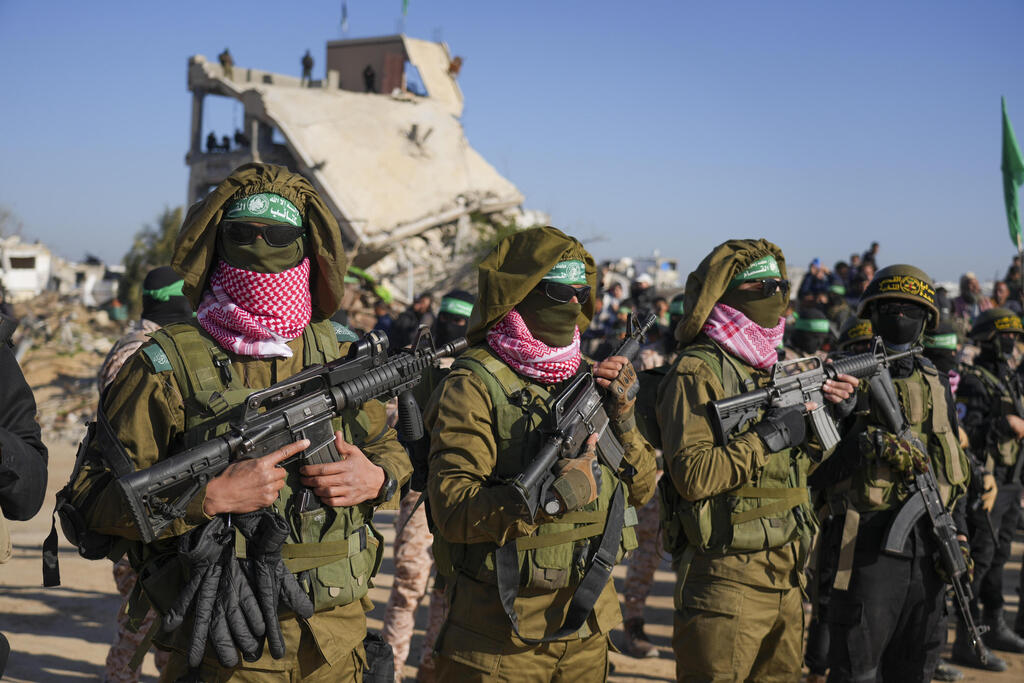
Recent diplomatic momentum—particularly initiatives associated with the administration of Donald Trump—initially placed significant emphasis on neutralizing Hamas’ military capabilities. This focus reflected a recognition that sustainable governance and economic recovery in Gaza cannot coexist with an armed non-state actor operating outside any unified authority.
Yet over time, that priority appears to have softened, overshadowed by broader geopolitical developments, including escalating regional tensions involving Iran.
This strategic drift raises serious concerns. When disarmament is downgraded in favor of short-term gains—such as maintaining fragile ceasefires or accelerating humanitarian aid—it risks hollowing out the very foundation upon which long-term peace must be built. Temporary calm, while politically appealing, can mask deeper structural instability if the core security dilemma remains unresolved.
At the heart of the issue lies Hamas’ consistent and unequivocal stance: it has shown no genuine willingness to relinquish its weapons. Despite multiple rounds of indirect negotiations, including mediation efforts centered in Cairo, the organization continues to resist any framework that would dismantle its armed wing.
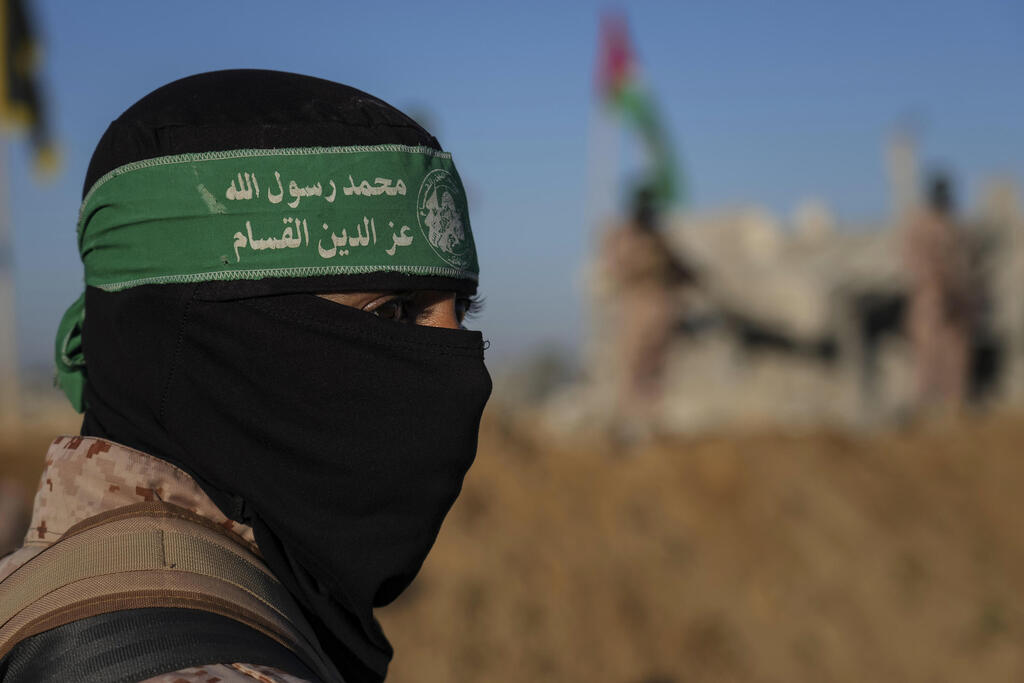
(Photo: AP/Abdel Kareem Hana)
This position is not tactical but ideological. For Hamas, military power is not merely leverage in negotiations—it is central to its identity, its authority and its survival.
Developments on the ground reinforce this assessment. Rather than signaling a shift toward demilitarization, Hamas has steadily deepened its administrative and economic control within Gaza. From regulating the flow of goods to influencing pricing structures and consolidating governance mechanisms, the group is entrenching itself as both a political authority and a military force. This dual role complicates any attempt to separate governance from militancy, making voluntary disarmament highly improbable.
Compounding the challenge is the lack of cohesion within the international and regional actors involved in the peace process. While some stakeholders continue to view disarmament as non-negotiable, others appear more willing to prioritize incremental progress in areas such as humanitarian relief or reconstruction funding. This divergence weakens collective pressure on Hamas and creates openings for ambiguity—an outcome that the group can exploit to maintain its position without making substantive concessions.
There is a growing risk that negotiators, in pursuit of visible progress, may accept partial or symbolic measures instead of comprehensive disarmament. For example, expanding humanitarian access or unlocking financial aid without securing verifiable steps toward demilitarization could inadvertently legitimize Hamas’ continued militarization. Such trade-offs may produce short-term stability but at the cost of long-term credibility.

Hamas operatives looting humanitarian aid truck in Gaza
(Photo: IDF)
Proposed diplomatic frameworks have attempted to address this dilemma by linking disarmament to incentives. One such approach envisions all armed factions in Gaza transferring their weapons to a centralized governing authority, followed by large-scale international investment in reconstruction and development. In theory, this model offers a pathway to both security and recovery. In practice, however, its success depends entirely on Hamas’s willingness to comply—a condition that remains deeply uncertain.
Experienced policymakers and former international officials involved in similar efforts have consistently underscored a critical point: ambiguity is the enemy of stability. Disarmament, if it is to be meaningful, must be total, unconditonal, and universally applied. Any exceptions, loopholes, or phased arrangements that allow armed capabilities to persist beneath the surface risk perpetuating the very dynamics that have historically led to renewed conflict.
The current ceasefire environment further illustrates the stakes. While pauses in hostilities are often framed as opportunities for diplomacy, they have also, in past cycles, enabled Hamas to regroup, rearm and reinforce its operational capacity. Without robust monitoring and enforcement mechanisms, a ceasefire can become less a step toward peace and more a temporary interlude before the next escalation.
This dynamic underscores a broader strategic lesson: treating disarmament as a negotiable component rather than a prerequisite undermines the integrity of the entire peace process. If Hamas is permitted to retain its arsenal while simultaneously benefiting from political engagement and economic support, it establishes a dangerous precedent—one in which armed power is rewarded rather than constrained.
Ultimately, achieving stability in Gaza requires more than diplomatic engagement or financial investment. It demands a coherent and consistent strategy anchored in security realities. Governance reform, economic recovery and humanitarian relief are all essential components of peace, but they cannot succeed in isolation. They must be built upon a foundation in which no armed group operates independently of a legitimate, unified authority.
Failure to enforce this principle risks repeating a familiar and costly cycle: temporary agreements, followed by breakdowns, followed by renewed violence. In this context, the disarmament of Hamas is not simply one objective among many—it is the defining test of whether any peace initiative in Gaza can move beyond fragile pauses and toward genuine, lasting stability.
- Rami Al Dabbas is a writer/commentator known for opinion pieces on Middle East politics, critiques of Islamist movements, advocacy of political realism and engagement and a controversial presence on social media.