

I write these words with a heavy heart, yet one still full of hope. I do not intend this article to be merely a romantic gesture, but instead, one that seeks to address practically a deep and painful existential need.
The issue of using a man’s sperm posthumously is one of the most sensitive and emotionally charged topics a person can encounter—especially when it concerns soldiers who were sent into battle by the State of Israel as heroes and fell in sanctification of God’s name.
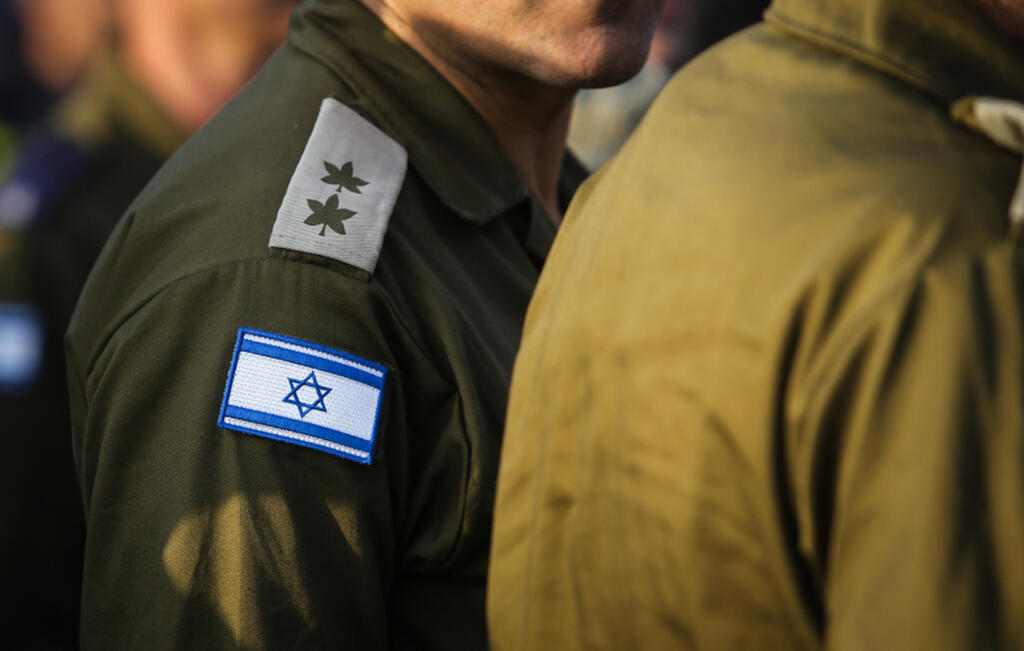
This issue crosses legal, halachic (Jewish law), moral and ethical boundaries. Every fallen soldier is considered holy. He and his family deserve the utmost respectful and sensitive treatment—both in preserving their dignity after death and in fulfilling their wishes while their soul still lives on.
Like many others, I was called to reserve duty on October 7—not to the physical battlefield but to another arena, as an officer in the IDF’s Casualty Notification Unit. There, before my eyes, families’ lives changed overnight. The knock on the door is only the beginning of a pain that never ends. The official notification of a son’s death is heartbreak embodied. It is the greatest fear of every parent the moment their child leaves home in uniform, especially during wartime.
One bereaved parent told us, “At first, you were angels of destruction. By the end of the shiva, you were angels from heaven.” In this painful and moving sentence lies the entire tension between life and death, hope and heartbreak. The bereaved parent’s words evoke Spinoza’s idea: “The same thing can be both good and bad at the same time.” So it is with an IDF uniform—an outfit that can save lives, but sometimes also announces death.
And then comes the almost incomprehensible question: Should the sperm of the fallen son be preserved?
This is not merely a medical question—it is a question of future, of hope, of memory that can become new life. For many families, this possibility opens a narrow window of light. Perhaps one day, a grandchild will be born from the preserved sperm—a life that continues the legacy, the name, the spirit. In most cases, the parents agree—they have nothing left to lose. Only one hope to cling to.
Recently, I was connected to Avi Haroush, father of Riff Haroush, a warrior in the elite Egoz unit who fell in Gaza, by MK Chili Tropper. Avi wears a shirt bearing a handwritten sentence by Riff: “There is no substitute for continuity.” At one point he told me, “If there's one thing I want to say to him, it’s that he should have children, like he wanted.”
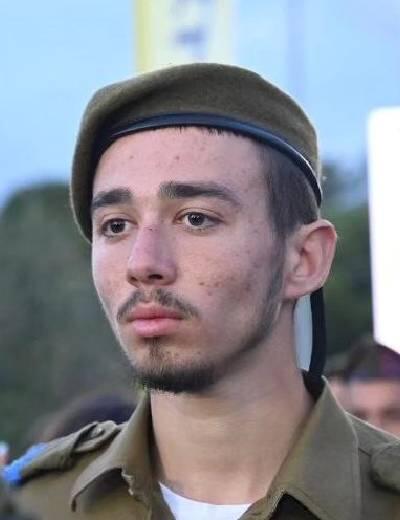
Sgt. Maor Cohen Eisenkot
(Photo: IDF)
Avi spoke of feeling abandoned by the state, which lacks a legal framework to support such a process. Bereaved parents are not only forced to digest an unbearable loss, but also to fight for the right to leave behind a living memory of their beloved son.
But not everything is bleak. A groundbreaking court ruling recently brought forth a ray of light. Sharon Eisenkot, a bereaved mother, requested to use the sperm of her son, Sgt. Maor Cohen Eisenkot, a Golani soldier who was killed in Gaza, in order to bring a grandchild into the world. The Family Court in Eilat approved her request, based on testimony from Maor’s friend that he had expressed such a wish while alive. A new and important principle was established in the ruling: the soldier’s will is the key.
But what happens when the fallen soldier leaves no clear statement? How can we know this was truly his desire?
Jewish law contains a deep principle: “Zachin l’adam shelo befanav, ve’ein chavin lo ela befanav”—one can act on another’s behalf, even without their presence or knowledge, so long as it is for their benefit. Ethiopian Jewry, which is a personal and moral source of inspiration for me, sees the continuity of one’s seed as a supreme biblical value. Kahen Elas Samai, one of its sages, emphasized that seed continuity is a fundamental biblical principle. Our kesim (spiritual leaders) recall the story of Judah and Tamar, the birth of King David—a messianic lineage born in an unconventional way, but one that was vital for generational continuity and redemption. Acts like this—similar to the story of Ruth the Moabite—carry values of compassion, courage and salvation.
The kes expressed surprise that rabbinic halacha at times allows the use of non-Jewish sperm for single women, yet hesitates to use the sperm of a Jewish soldier who died in sanctity. The message is clear: bringing children into the world is a fundamental human right. And what could be more fitting than a child who continues the path of a soldier who died for the people and the land?
This is the ideological and ethical foundation of the initiative I am leading—not just to preserve the sperm, but to grow hope from it.
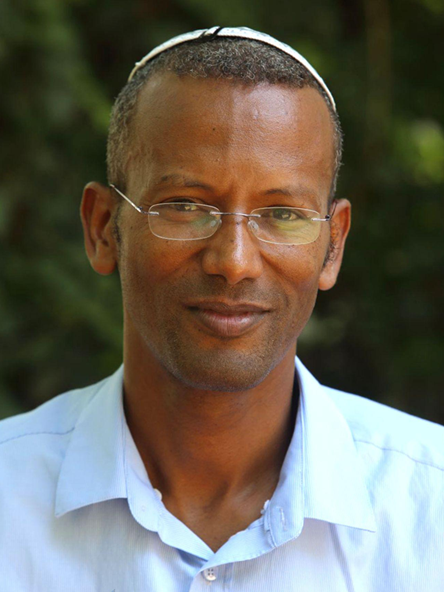 Rabbi Dr. Sharon Shalom Photo: Sasson Tiram
This would be a symbolic shidduch (match) between single women seeking to fulfill the dream of motherhood, and bereaved parents seeking to memorialize their sons through continuity. Older single women—who haven’t yet found love or a life partner, but still dream of starting a family—have expressed a desire to join this initiative. They see it as a mission, an act of giving, of healing.
Alongside their agreement, they also shared concerns:
- Will the child become a living memorial to a father he/she never knew?
- What will the relationship be like between the mother and the bereaved parents, now also grandparents?
I also consulted several leading rabbis. Many concerns arose in our conversations, but no immediate fundamental halachic objection emerged—aside from the central, complex question: Did the soldier want to bring a child into the world after his death?
As someone deeply connected to spiritual worlds, particularly the theology of Ethiopian Judaism, I feel that words like “fear,” “perhaps” and “maybe” carry less weight. The simple, profound faith says: If an act is done for the sake of heaven, it will succeed. And if the intention is pure, the path will be blessed.
In the end, every relationship—even the most conventional—carries uncertainty. Still, we do not avoid marriage, parenting or building a life because of doubt. We choose them in the light of hope.
Many bereaved families see this as a meaningful way to continue their son’s light—not just on a memorial plaque, but through a child who will smile, be educated and grow with those same values.
These days, when Israeli society is enduring immeasurable pain, an initiative arises born of fracture yet aiming to cultivate life. This project demands sensitivity, responsibility, and ethics—but above all, it is a deep expression of faith that love is stronger than fear. Netzach Yisrael—the eternity of Israel—is not just an idea. It is a child who will grow up in a loving home, carrying the spirit of someone who never had the chance to raise a child of his own.
As a people who sanctify life and believe in light even in the darkest of nights—the time has come to light this path too.
- Rabbi Dr. Sharon Shalom is a senior lecturer at Ono Academic College and founding director of its International Center for the Study of Ethiopian Jewry. He leads pioneering research and academic programs that integrate Ethiopian Jewish heritage into Israel’s broader educational and cultural landscape.