


The central concern for nuclear experts, as well as Prime Minister Benjamin Netanyahu and U.S. President Donald Trump, is that Iran could take the uranium it still holds enriched to 60% and raise it to weapons-grade levels using a relatively small number of surviving centrifuges.
If Tehran does so, and there are indications that this is its intention, it could possess enough fissile material for more than one atomic bomb. Once weapons-grade material is available, the path to assembling a nuclear weapon becomes relatively short.
Gallery
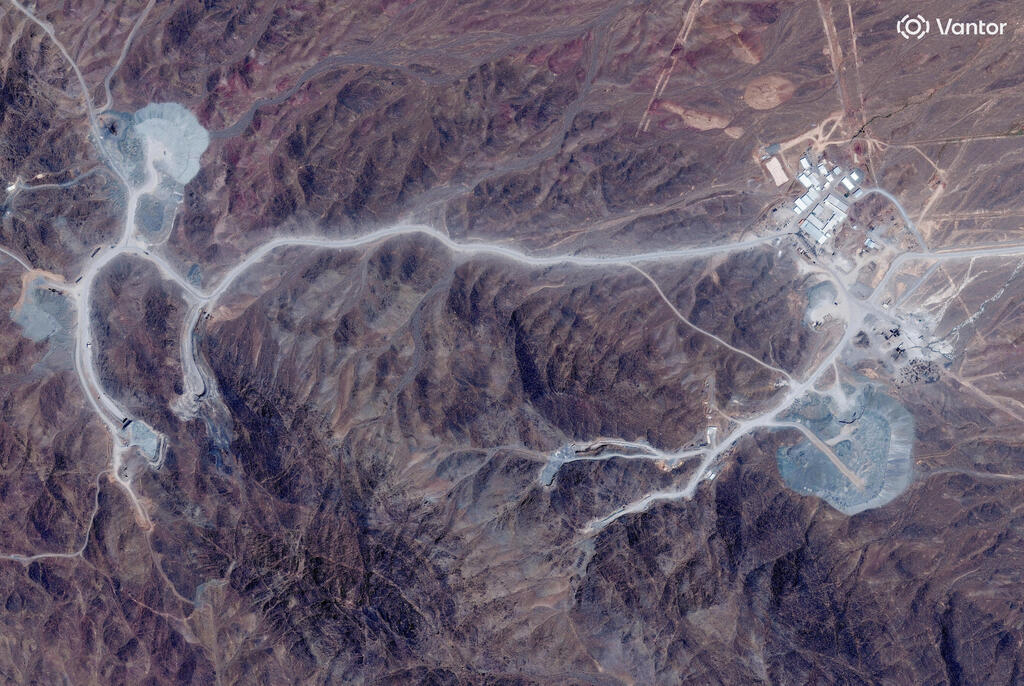
Pickaxe Mountain near Natanz. The area’s granite is difficult to excavate but highly resistant to aerial bombardment
(Photo: Vantor/Handout via REUTERS )
Highly enriched fissile material could also be used in a radiological or “dirty” bomb. A missile warhead or aerial bomb carrying such material could scatter radioactive contamination across a wide area when it strikes the ground, or even if it is intercepted, potentially making the area inaccessible.
That is why the new network of underground tunnels and production halls Iran has spent years excavating beneath the site known as Pickaxe Mountain has become a focus for Israeli, American and Western intelligence agencies.
The facility lies about 1.5 kilometers south of the Natanz uranium enrichment and nuclear production complex. Excavation began in 2020, and the site soon drew intelligence and scientific attention because its intended purpose remained unclear.
Iran may plan to turn the tunnel system into an enrichment facility and transfer advanced centrifuge arrays there from the original Natanz site to protect them. Alternatively, the complex could be intended for work related to assembling a nuclear weapon. There is still no definitive answer.
A question of weapons economics
Geologically, Pickaxe Mountain is composed of igneous rock, primarily granite. According to a Wall Street Journal report published Tuesday, its tunnels lie between 100 and 135 meters underground, making them almost completely resistant to conventional aerial bombardment. Both the depth and the hardness of the surrounding rock resemble the characteristics of Iran’s Fordow enrichment plant.
At the end of Israel’s Rising Lion operation last summer, U.S. B-2 bombers and specialized munitions were required to damage Fordow’s underground facilities and bury uranium enriched to 60% that had been stored there.
The name Pickaxe Mountain is itself a translation. Its Persian name, Kuh-e Kolang, refers to a pickaxe or hoe, apparently reflecting the difficulty of excavating the mountain even in ancient times. Despite modern equipment and reported Chinese expertise, tunneling through it remains highly complicated.
US B-2 bombers strike Iran
(Video: The Daily Wire)


The underground facility was not attacked in June 2025 because it was empty, or nearly empty, and its intended role had not yet been established. After Operation Rising Lion, however, Iran began moving centrifuges and other equipment from Natanz into the Pickaxe Mountain tunnels, along with machinery recovered from other nuclear sites that had been bombed.
The transfers did not begin immediately. Iran first needed time to clear the entrances to damaged tunnels at Natanz, Fordow and Isfahan. Only several months later, in fall 2025, did it begin secretly transferring surviving or lightly damaged centrifuges to Pickaxe Mountain.
Iran attempted to conceal the activity from satellite sensors and other intelligence systems operated by Israel and the United States, but apparently with limited success. Even so, the site was not attacked during Israel’s Roaring Lion operation or the American Epic Fury campaign, which began in late February 2026 and continued until the ceasefire in early April.
One likely reason is that the facility was still not being used for actual nuclear activity, such as uranium enrichment or weapons design, and served only as a storage location. Another, equally important reason is that seriously damaging the mountain’s tunnels would require an exceptionally large operation that only the United States could carry out.
Only the U.S. Air Force possesses the roughly 10-ton GBU-57 bunker-busting bomb, which can penetrate approximately 60 meters of hard rock. The United States also operates the stealth B-2 bombers capable of carrying several of the weapons.
During the June 2025 Midnight Hammer operation against Fordow and other underground nuclear facilities, the United States deployed seven B-2 bombers carrying 14 highly precise bunker-busting bombs. Each weapon was dropped into the crater created by the bomb before it, allowing the strikes to reach an estimated depth of 80 to 100 meters.
The shocks created around Fordow damaged its highly sensitive centrifuge systems and rendered them unusable. The attack was one of the largest operations conducted by the U.S. Air Force since World War II. Seismic stations near Fordow recorded tremors equivalent to a magnitude 4.3 earthquake.
The damage affected not only the rapidly spinning centrifuges but also the carefully leveled foundations on which they stood. U.S. and Israeli intelligence agencies therefore concluded that Fordow had been taken out of service, even if it was not completely destroyed.
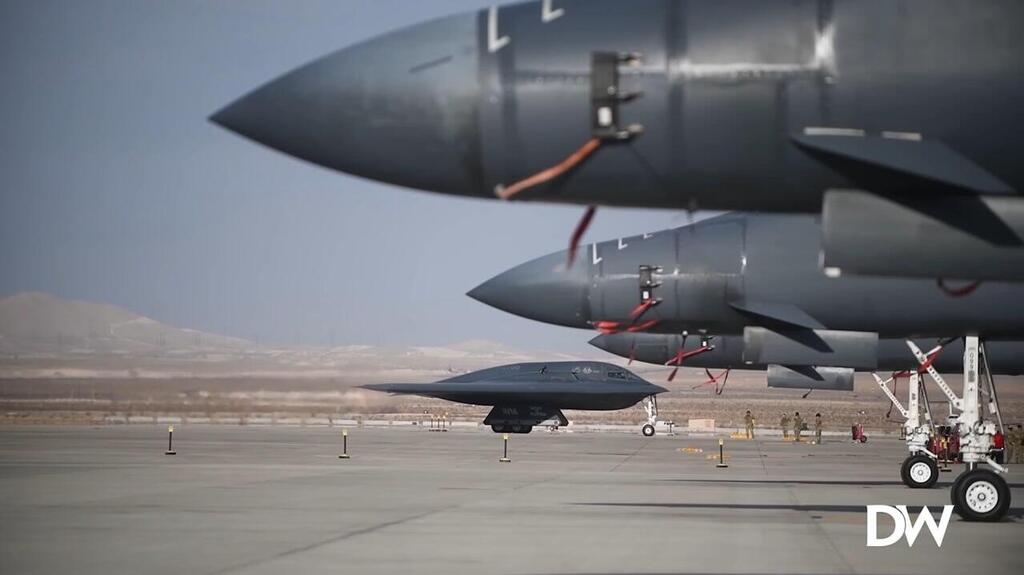
B-2 bombers
(Photo: The Daily Wire)
The bombers flew directly from a base in Missouri and returned there, spending more than 30 hours in the air. A separate deception operation sent seven other advanced B-2 bombers toward Guam in the Pacific Ocean, apparently to make Iran believe the attack would come from that direction.
No less important, however, was the effect on the American weapons stockpile. The operation used 14 of the roughly 20 heavy bunker-busting bombs the United States reportedly possessed, nearly exhausting the available supply. That suggests an attack on Pickaxe Mountain would be at least as complicated, and perhaps more so.
Before Midnight Hammer, the Israeli Air Force cleared a route for the American bombers by destroying Iranian air defenses on the way to Fordow, Natanz and Isfahan. Even then, the United States deployed an escort force of 125 aircraft, including F-22 stealth fighters, electronic warfare aircraft and other platforms protecting the B-2s. A strike on Pickaxe Mountain would likely require the same capabilities, including Israeli assistance.
For now, therefore, the main consideration for Israel and the United States remains one of cost versus benefit.
The secret is no longer secret
According to The Wall Street Journal, Pickaxe Mountain is not currently being used for active nuclear work. It is serving only as a storage site for centrifuges and other equipment that has not been installed or maintained in a way that would allow it to be used in the near future.
To reproduce the effect achieved against Fordow last year, four basic conditions would need to be met. First, intelligence agencies would need evidence that Iran had moved its stockpile of uranium enriched to 60% into the facility and had installed and activated at least some centrifuges and other equipment, even on a trial basis. Second, they would need sufficiently detailed intelligence on the precise location of the centrifuge production and operating halls to strike them accurately. Third, the U.S. defense industry would need to replenish an adequate stock of GBU-57 heavy bunker-busting bombs. Fourth, the U.S. Air Force would need to complete the planning and logistical preparations for an operation at least as complex as Midnight Hammer. That would take time and cost a great deal of money.
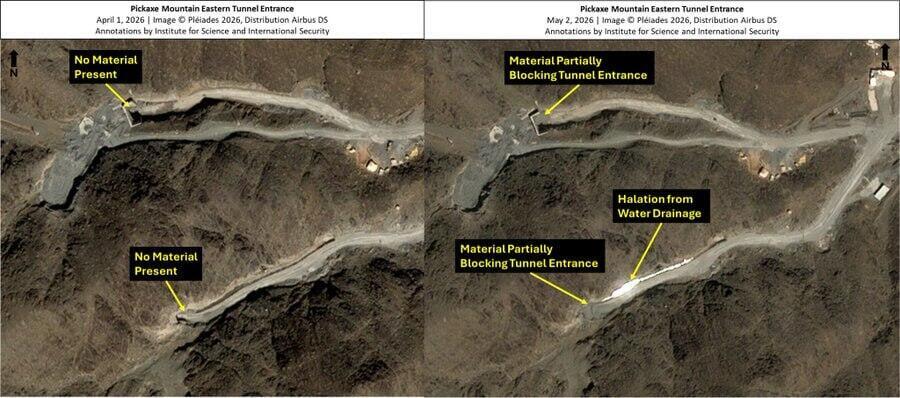
Satellite imagery shows reconstruction work at Pickaxe Mountain
Collecting intelligence on the facility is unlikely to be easy. To achieve meaningful damage, planners would need to know exactly where the centrifuges had been installed and calculate the bombs’ impact points to within one or two meters, perhaps even less.
The weapons would have to strike the same area in succession, penetrate the granite and damage the centrifuge halls and other underground installations, rather than merely shake the mountain. In other words, this would be a one-time operation requiring precise timing.
It would need to take place just before Iran began producing weapons-grade fissile material, but not so early that the strike failed to cause a meaningful delay in the nuclear program. Israeli and American intelligence and military officials had preferred to keep those calculations secret.
Several days ago, however, Trump said during an interview on a popular podcast that the United States was indeed planning to attack Pickaxe Mountain. The pickaxe was out of the bag, and the secret was no longer secret.
There is still no public evidence that Iran has installed the centrifuges stored in the mountain’s tunnels for operation. Satellite images, however, show Iranian work around the tunnel entrances and elsewhere to reinforce and harden them, allowing continued access even if the area is bombed.
At the same time, those entrances would be difficult for ground forces to reach if the United States decided on an operation to destroy the facility’s contents or potentially remove enriched uranium stored there.