


More than half a century ago, Israel’s ambassador to the United Nations, Chaim Herzog, stood before the General Assembly and delivered one of Israel’s most memorable attacks on the world body.
The United Nations, Herzog said in November 1975, had begun as an anti-Nazi alliance but, 30 years later, was “on its way to becoming the world centre of anti-Semitism.” He added that Adolf Hitler “would have felt at home” listening to some of its proceedings during the previous year.
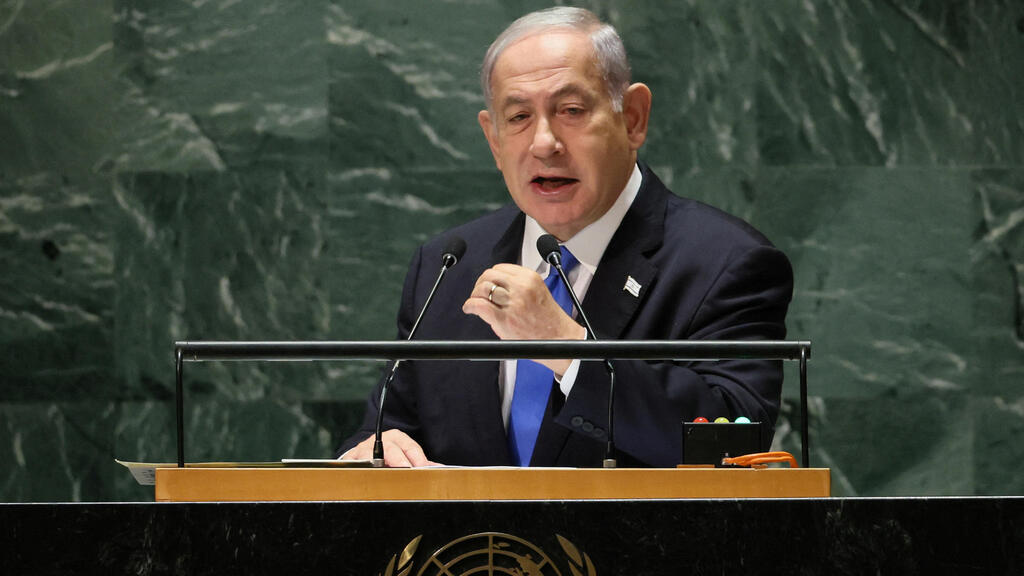
Netanyahu takes UN stage as Israel faces mounting diplomatic pressure
(Photo: REUTERS/Brendan McDermid)
The speech came as the General Assembly adopted Resolution 3379, declaring that “Zionism is a form of racism and racial discrimination.” The resolution was revoked in 1991.
Fifty-one years later, Israel is again confronting unusually sharp criticism at the annual gathering of world leaders in New York.
Jordan’s King Abdullah II accused the Israeli government of seeking to reshape realities in Gaza and the West Bank and said its policies threatened the prospects of a Palestinian state. UN Secretary-General António Guterres also sharply criticized Israel’s conduct in Gaza and settlement expansion in the West Bank, while Turkish President Recep Tayyip Erdogan used his General Assembly appearance to again press for international action over the war.
For Israel, such criticism is not new. What has changed is the diplomatic environment surrounding it.
The 1975 resolution equating Zionism with racism was eventually repealed, and Israel’s international standing improved substantially over the following decades. Israeli prime ministers attending the General Assembly were often accompanied by crowded diplomatic schedules and meetings with leaders from around the world.
The October 7 Hamas attack and the war that followed transformed that environment.
Israel entered the war with broad international support for its right to respond to the Hamas assault. Nearly three years later, the debate has shifted heavily toward the war’s humanitarian toll, the future of Gaza, Israeli policy in the West Bank and the prospects for a broader political settlement.
That shift is now visible at the United Nations.
A battle over the international narrative
From the beginning, the Gaza war was fought not only on the battlefield but also in the diplomatic and information arenas.
Israel has maintained that Hamas bears responsibility for the war and for endangering civilians by operating from populated areas. At the same time, Israeli governments have faced growing criticism over the scale of the fighting, civilian casualties, humanitarian conditions in Gaza and the absence of an agreed political plan for the territory.
The diplomatic battle has also been shaped by the question of a ceasefire.
A clearer and more consistent Israeli proposal linking an end to the fighting with the release of all hostages and the demilitarization of Gaza could have shifted greater diplomatic pressure toward Hamas if the group rejected it.
Instead, much of the international debate increasingly focused on whether Israel was prepared to end the war.
Statements by Israeli politicians have further complicated that effort. Remarks suggesting there are no innocent civilians in Gaza, as well as government responses to violence by extremist settlers in the West Bank, have received wide attention abroad and contributed to criticism of Israeli policy.
The result is a difficult diplomatic backdrop for Netanyahu’s appearance in New York.
His speech is therefore about more than answering individual leaders or defending Israel’s military campaign.
It is also about audience.
Netanyahu can devote much of the address to familiar themes aimed at supporters at home, including Iran, Hamas and what Israel views as international double standards.
Those issues are likely to remain central to any Israeli address.
But the UN stage also gives Netanyahu an opportunity to speak beyond Israel’s domestic political debate.
 Ben-Dror YeminiPhoto: Avigail Uzi
That could include an emphasis on Israel’s interest in regional stability, the release of the hostages, the future demilitarization of Gaza and a diplomatic path beyond the current fighting.
It could also include recognition of the suffering of civilians caught in the war while maintaining Israel’s position that Hamas bears responsibility for launching the conflict and embedding its forces among civilians.
Such language is unlikely to alter the positions of governments that have become among Israel’s strongest critics.
But it could matter to governments, political leaders and supporters of Israel abroad who continue to back its security concerns while seeking a clearer picture of what comes after the war.
For Netanyahu, the immediate question at the UN is therefore not simply how forcefully to answer Israel’s critics.
It is whether the speech will be designed primarily for the political debate at home or for the broader international audience Israel is increasingly struggling to reach.