

After years of failed attempts and political roadblocks, the government’s announcement of Uber’s entry into Israel has revived hopes. Now is the time to set things straight: what we stand to gain, the risks involved, and how to design a smart model that benefits the public while being fair to taxi drivers.
What’s in it for the public? Accessibility and availability. Services like Uber (similar to Gett, but with a larger and more flexible driver pool) shorten waiting times and expand geographic coverage. Try ordering a taxi on a Friday evening outside Tel Aviv – this is where the added value kicks in: more drivers on the app, higher chances of securing a ride, especially during hours and in towns where public transport is scarce or nonexistent.
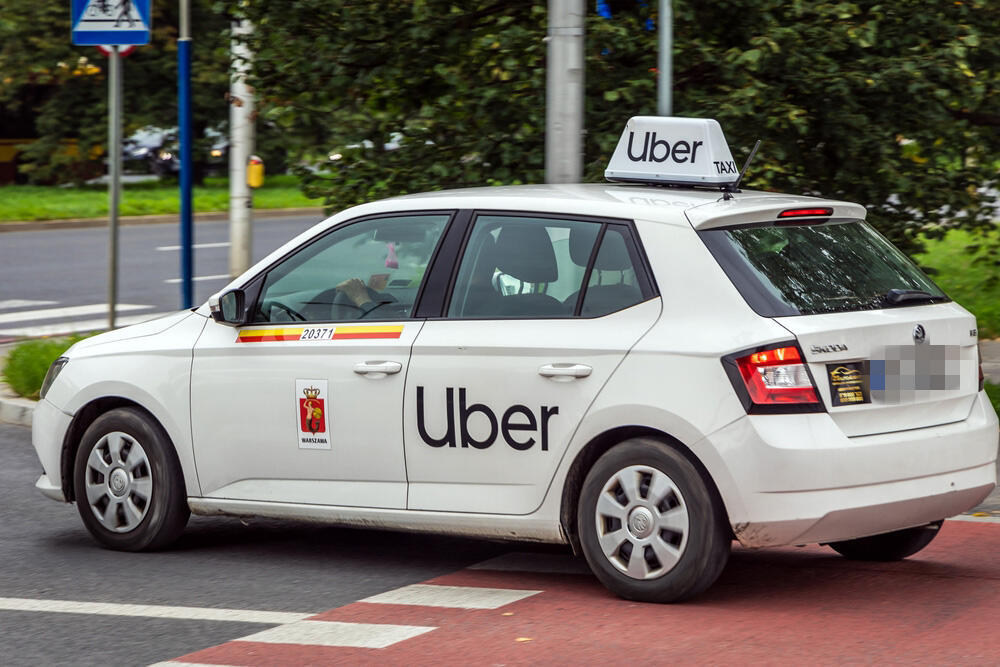
Uber
(Photo: Shutterstock)
Reliability, quality and fair pricing. Competition raises service standards: transparent pricing before the ride, mutual ratings that reward courtesy and professionalism and fewer surprises. With smart regulation (ideally, minimum–maximum price ranges and caps during peak hours), it’s possible to maintain reasonable fares without compromising quality. Uber is not always the cheapest, but it improves the price–value ratio for many.
The economic impact – the most important factor. Reliable transport is not just convenience; it is an engine of economic growth. Less wasted time in traffic and searching for parking, more punctuality for work and meetings, more predictable supply chains – all of this translates into higher productivity and downward pressure on the cost of living.
When on-demand transport is available, fewer households need a second car (sometimes any car at all), which reduces “empty” trips and unnecessary congestion.
Even the housing market benefits: improved accessibility expands the viable residential radius around employment centers, balances demand and eases price pressures in hot areas – a crucial factor influencing housing costs in Israel.
 Dr. Amit Serusi
And what about taxi drivers? This is a critical question. Opening the market introduces competition: new drivers can enter during their free hours (for example, evenings and weekends), increasing supply. On the other hand, a taxi driver can also become an Uber driver with lower fixed costs than maintaining a licensed taxi.
There will still be a need for full-time drivers; demand doesn’t disappear, it is simply distributed more intelligently. That’s why the government must accompany the reform with a fair solution: fast-track conversion programs, simplified regulation and adequate compensation for those affected. The goal is not to “replace” a profession, but to upgrade it.
In conclusion, Uber’s entry alone won’t solve all of Israel’s transportation problems, but it is an important step in the right direction. Another reliable and accessible tool that integrates with public transport (which itself must improve), offers consumer choice and enhances daily mobility.
If implemented responsibly – with fair pricing, safety and insurance, organized pick-up/drop-off zones and a fair plan for taxi drivers – we all stand to gain: less time on the road, higher productivity and lighter financial pressure. This is not just transportation efficiency – it is smart economics.
- Dr. Amit Serusi is a Philadelphia-based, Israeli-born strategic consultant and angel investor