

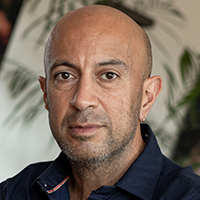
Many mocking titles have been written in the Israeli media — including here — about Naim Qassem, Hezbollah’s secretary-general who succeeded Hassan Nasrallah after his assassination on September 27, 2024. Time and again, commentators pointed to his lack of charisma, the large void left by his predecessor, his relatively low standing in dealings with Iran compared with Nasrallah and the contempt he receives within Lebanon’s political system from leaders of other sects.
Yet after nearly two weeks of war between Israel, Iran and Hezbollah, it appears that Qassem has managed to act as the organization’s most senior decision-maker and maintain a relatively orderly chain of command and control.
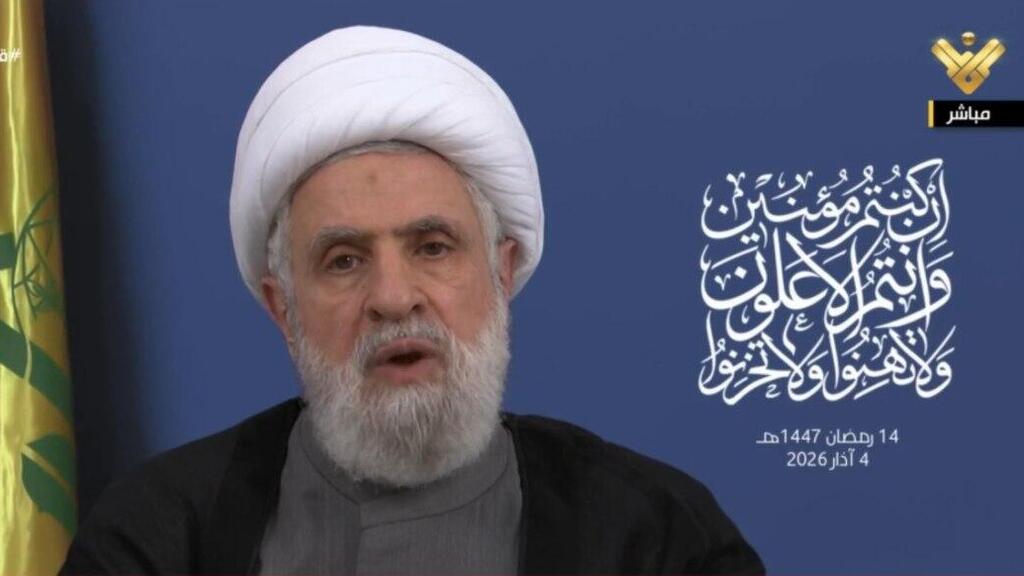
First, contrary to perhaps careless statements made early on, Hezbollah shows no signs of collapse or disintegration. Israel has recorded major successes, including targeted assassinations yesterday and the day before, as well as damage to Hezbollah’s rocket array and the killing of a senior commander in the Radwan Force, the group’s elite unit. Still, the organization maintains discipline, and its operatives obey Qassem without question. Alongside him, it appears, operates a team capable of running the system to some degree.
The heavy barrages toward Israel, alongside missile fire from Iran, indicate how Hezbollah has managed to preserve its command-and-control capabilities.
Working alongside Qassem are the head of the executive council — whose previous chairman, Hashem Safieddine, was killed in the fall of 2024 — as well as officials responsible for security, finance and even intelligence. In that sphere, however, the new secretary-general already faces difficulties, since senior figures in Hezbollah’s intelligence wing were killed at the start of the war, chief among them Abu Ali Yasser. Reports from the field are also less consistent, and Qassem and his fellow leaders face real difficulty obtaining a reliable picture of developments on the ground.
The claim heard in Israel at the start of the war that “Hezbollah fell into a strategic Israeli ambush” simply by entering the fighting now sounds insufficiently cautious. Qassem and the organization’s leadership made a clear and calculated decision to go to war with Israel the moment Israel attacked Iran and killed Ali Khamenei, who served as the group’s spiritual authority as well.
In fact, even before the war began, Hezbollah had already decided it would join the fighting, should it erupt, as part of conclusions reached by Iran and Hezbollah after Operation Rising Lion. Hezbollah, long considered Iran’s long arm near Israel’s border, was designed to serve Iranian interests and deter Israel from attacking its nuclear facilities. But once that attack occurred, the conclusion was that Hezbollah must be the body that exacts the price from Israel. And that is precisely what it is doing.
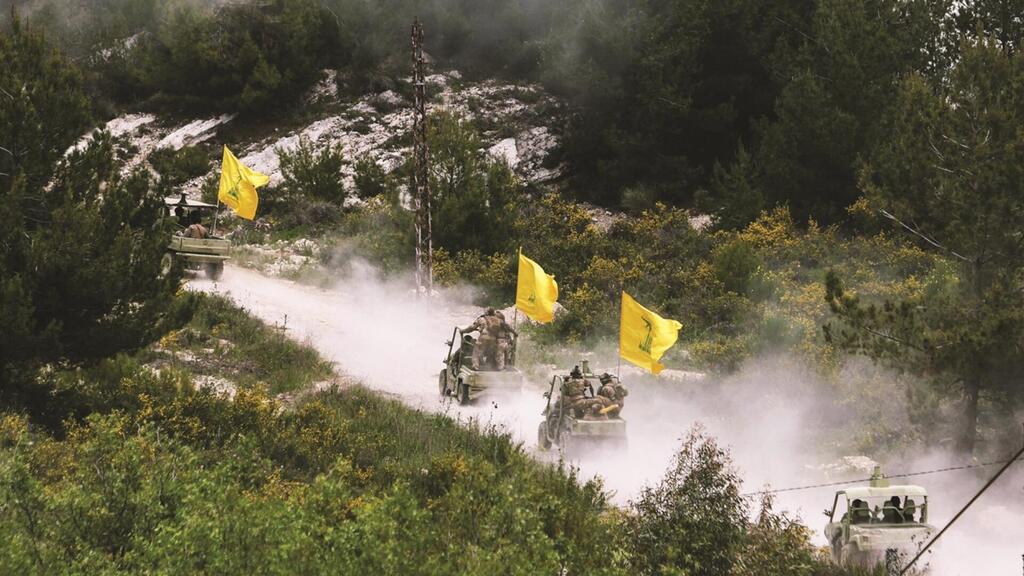
(Photo: Aziz Taher/Reuters)
The unceasing rocket barrages overnight between Wednesday and Thursday demonstrated that the organization still retains significant firepower. Its stockpiles now stand at only about 10% of the rockets it possessed in the summer of 2024. Still, that amounts to more than 10,000 rockets capable of causing serious damage in Israel and diverting Israeli military resources from Iran to Lebanon.
According to the Israeli side, Hezbollah’s rate of fire stands at about 90 rockets per day, most of them the well-known 122 mm Grad rockets.
It should be emphasized that Israel’s intelligence community, together with the Air Force, achieved something almost unimaginable in September 2024: the destruction of roughly 90% of Hezbollah’s stockpile of rockets and precision missiles, following an intelligence operation that spanned many years.
Hezbollah is now significantly weaker than it was in the summer of 2024 by every measure, not only because the number of rockets in its possession has dropped dramatically. The quality of its commanders has also declined. Many were killed, and younger, less experienced commanders have been appointed in their place. Israeli officials now say with certainty that about 300 Hezbollah operatives have been killed since the war began.
Yet despite all this, Hezbollah’s infantry units — the Radwan Force — continue to operate, despite the relentless pursuit by the Israeli military of the unit’s fighters. Last Saturday, Abu Ali Riyan, the Radwan Force commander for the southern Lebanon sector, was killed. The extensive killing of Radwan operatives during the fall of 2024 thinned the ranks and the command structure. Nevertheless, in recent days Radwan fighters have managed to deploy south of the Litani River and are constantly attempting to ambush Israeli forces operating there. In one case, those fighters succeeded in killing two Israeli soldiers, Maher Hattar and Or Damari.
The Radwan Force, once considered part of a quasi-army that planned an invasion of the Galilee and the seizure of parts of Israel, has now shifted direction in light of the blows it has suffered and the many assassinations within its ranks — more guerrilla warfare and less conventional military operations. Israeli officials believe that the invasion plans have been replaced by ambushes against Israeli forces and a return to the style of guerrilla warfare seen in the 1990s: roadside bombs, anti-tank fire and sniper attacks.
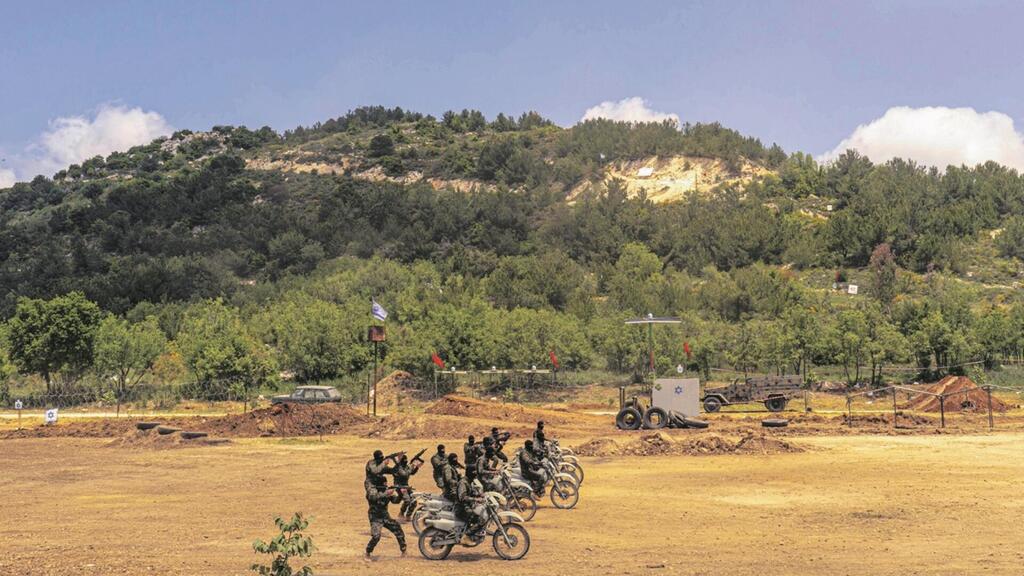
Radwan Force
(Photo: Fatma Jomaa/IMAGO/APA images/Reuters)
Decision-making within the Radwan Force has also changed. Approval from the senior command in Dahieh — Hezbollah’s stronghold in southern Beirut — is no longer required for attacks on Israeli forces. Operatives in the field now decide when to strike and whom to target.
Operational ties with Iran have also been severely damaged because of the extensive losses among members of the Quds Force in Lebanon and Iran who were responsible for directing Hezbollah. That was evident this week in the killing of several Quds Force field commanders tasked with coordinating between Iran and Hezbollah, five of whom were killed at a hotel in Beirut.
IDF Chief of Staff Lt. Gen. Eyal Zamir revealed last night that Israeli forces also killed the commander and deputy commander of the Iranian Imam Hussein Division, responsible from Tehran’s side for coordinating with Hezbollah.
Even so, the coordinated barrages show that the connection has been maintained and has not truly been severed, and an operational axis between Iran and Hezbollah remains active. Above all, the ideological connection remains intact, and the commitment to Tehran is still there.
As the war continues and the broader damage to Lebanese civilians who are not Shiite grows, the domestic Lebanese arena — which until now has largely been hostile to Hezbollah — is beginning to shift and produce different voices. Israel’s current threat to attack Lebanon’s state infrastructure, not just Hezbollah, plays directly into Hezbollah’s hands as it seeks to prove that it alone can defend the country — not President Joseph Aoun and not Prime Minister Nawaf Salam.