


The rising tensions along the Israel-Lebanon border and between Jerusalem and Beirut do not, according to sources in Washington and Jerusalem, reflect the full picture. Information obtained by Ynet indicates that the current assessments in both Israel and the United States regarding the situation in Lebanon are far more optimistic than what recent media reports suggest.
According to authorized intelligence sources, the region is now at a historic crossroads, with a potentially positive turning point from both the Israeli and American perspectives. This view is shaped by several developments, but especially by the public reaction in Lebanon—including among Shiites—to an “open letter” issued by Hezbollah Secretary-General Naim Qassem.
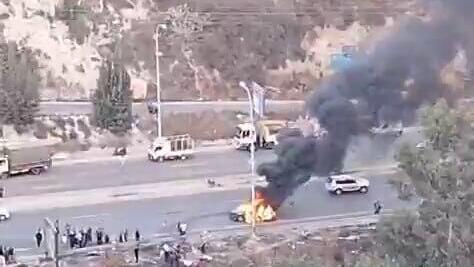
In the letter, Qassem claims Hezbollah has abided by the ceasefire declared nearly a year ago and warns that any move to disarm the group or to begin negotiations with Israel would weaken Lebanon. He further asserts Hezbollah’s refusal to surrender its “right to resist” and its independence from government authority in matters of war and peace.
The letter followed a series of powerful IDF strikes targeting Hezbollah’s growing military infrastructure in Lebanon, and a statement by Lebanese President Joseph Aoun that his country has no choice but to consider direct dialogue with Israel.
What caught Israeli and American analysts off guard, however, was the reaction within Lebanon’s Shiite community. Well-known and respected figures sharply condemned Hezbollah’s aggressive stance, believed to be driven by Iranian pressure. These individuals, part of a growing anti-Hezbollah movement within the Shiite sector, released videos calling on their fellow Shiites, now a majority in Lebanon, to pressure Hezbollah to change course and support a new political framework that would include disarmament.
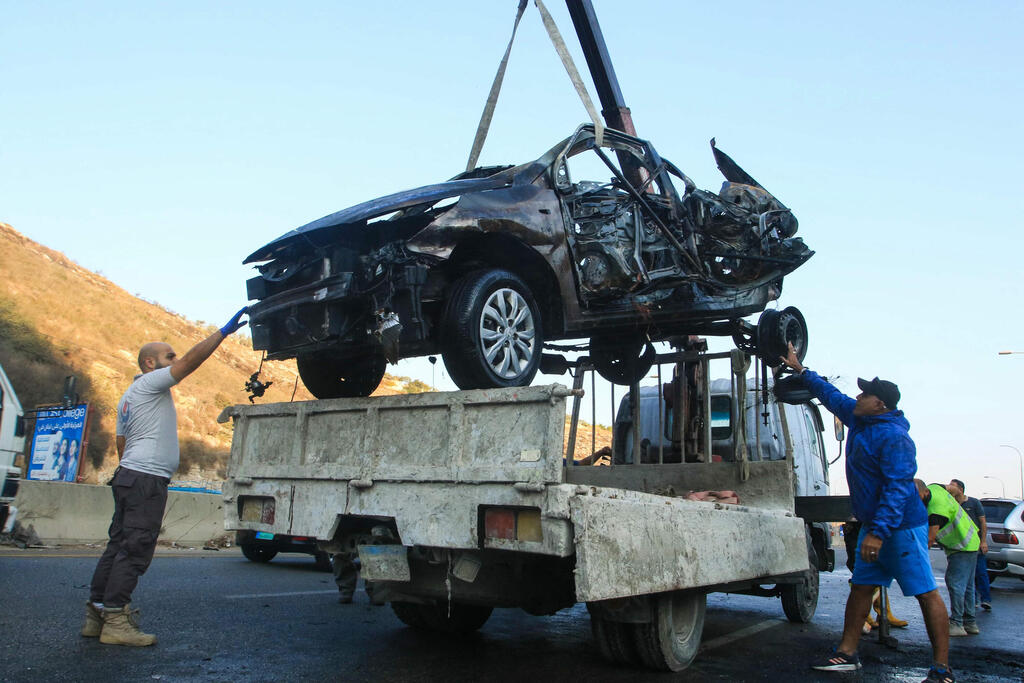
IDF strike on Hezbollah operative in southern Lebanon
(Photo: Mahmoud ZAYYAT / AFP)
Their call has been echoed by prominent voices and opinion leaders from other religious communities in Lebanon, signaling a broader potential shift in the country’s internal discourse.
Hezbollah’s ‘debts’ and rising discontent among Lebanese Shiites
According to senior analysts, Lebanon’s current government—led by President Aoun, a former army chief—now holds more political and military strength than any Lebanese administration in recent decades. This shift is attributed to several key factors.
First, Hezbollah has suffered significant military setbacks in its clashes with the IDF. The group has lost key personnel and weapons systems, while Iran—its main backer—is no longer able to provide the same level of financial and logistical support it once did.
Second, the Lebanese public—particularly the Shiite community—is war-weary and deeply wounded. Many now see the new government as a chance to lift the country out of economic collapse. While Hezbollah reportedly continues to receive substantial Iranian funding—some $1 billion over the past year, according to international media—it is not enough to meet its mounting obligations.
The group must pay monthly stipends to the families of its so-called martyrs, and the war added tens of thousands of new casualties to that list. One of Hezbollah’s largest expenses now is paying rent for Shiite families displaced from southern Lebanon—villages that the group effectively turned into forward operating bases. These refugees, along with the families of dead or wounded fighters, regularly crowd Hezbollah’s financial arm, al-Qard al-Hassan, which has struggled to meet demands after some of its branches and vaults were targeted by Israeli strikes.
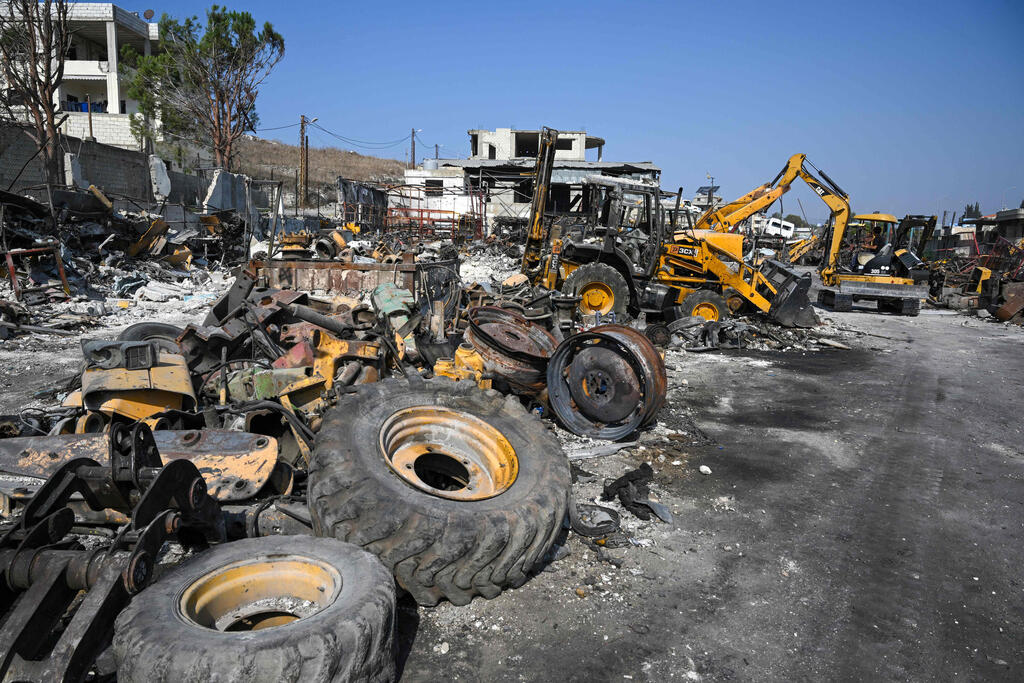
Hezbollah engineering equipment targeted by the IDF
(Photo: JOSEPH EID / AFP)
Meanwhile, Israel’s ongoing operations to disrupt Hezbollah’s rearmament efforts are deepening Lebanon’s crisis—militarily, socially and economically—and fueling public unrest.
A third key factor is financial: international donors who could help rebuild Lebanon—most notably Saudi Arabia, Qatar and the United Arab Emirates—are waiting for a green light from U.S. President Donald Trump. That approval, sources say, is contingent on Hezbollah’s disarmament.
Fear of another defeat and Trump’s deadline
Amid Lebanon’s deepening crisis, national elections are set for May 2026, and Hezbollah fears that in addition to losing much of its military capability, it may also suffer a significant political blow. However, a more pressing deadline looms for the group: Trump’s demand for disarmament by the end of December 2025—just six weeks away.
Should Hezbollah continue to reject disarmament, Lebanon’s economic collapse and political instability are expected to worsen, intensifying the hardship faced by the majority of its population still reeling from war.
Officials in both Washington and Jerusalem believe that Hezbollah, still the dominant military and financial force in Lebanon, must ultimately choose a path: either agree to a negotiated settlement and disarmament via the U.S.-French framework, or face a new confrontation—one in which Israel, backed by the United States, would carry out through military escalation what the Lebanese army and President Aoun cannot accomplish alone.
Israeli officials remain cautiously optimistic that such a confrontation can be avoided. Hezbollah, however, appears to be preparing for the opposite. The group is currently accelerating efforts to rebuild its military strength. In recent weeks, its rearmament activity has significantly intensified through multiple channels.
Workshops and body shops—especially in southern Lebanon and the Beqaa Valley—are now operating overtime to repair rocket launchers, assault rifles and damaged munitions. Even rockets damaged in Israeli airstrikes are being salvaged, straightened and made serviceable again, using basic lathes, hand tools and improvisation.
IDF strikes terrorists crossing into Israeli-held territory
(Video: IDF)


While the results are far from game-changing, they are helping local units of Hezbollah’s elite Radwan Force and missile-launching teams regain a degree of lost capability. Meanwhile, despite financial strains, Iranian funding to Hezbollah continues to flow—albeit in smaller, more sporadic amounts.
The second most significant channel for Hezbollah’s rearmament is the smuggling of weapons from Syria. Following the collapse of the Assad regime, the IDF systematically targeted and dismantled Syria’s air defense systems and stockpiles of heavy rockets and missiles. However, many caches of light weapons were left untouched—either because the IDF was unaware of their existence or deemed them too minor to pose a serious threat.
As a result, large quantities of light arms remain scattered across Syria, including RPG launchers and anti-tank missiles. These have fallen into the hands of local clans and criminal gangs who, reminiscent of the post-Soviet arms chaos, are now selling to the highest bidder—chief among them, Hezbollah.
While the new regime under Ahmad al-Sharaa in Syria, as well as the Lebanese army, is making efforts to halt these smuggling operations, seasoned smugglers on both sides of the border—who once trafficked drugs and cigarettes—are highly experienced and well-versed in using alternative routes. Since the weapons being smuggled are relatively small—rather than heavy launchers or long-range missiles—they are successfully being moved in significant quantities into Lebanon’s Beqaa Valley. There, Hezbollah is also working to recruit new fighters to replenish its depleted ranks, including members for its Radwan Force.
To lure young Shiites into its training camps, Hezbollah offers substantial financial incentives. A Lebanese army soldier earns an average of $300 per month, while a mid-level Hezbollah commander can earn up to $2,000. The group's main recruitment limitation is the dwindling flow of Iranian funding.
A third, still nascent, smuggling channel involves direct arms transfers from Iran. Tehran continues to supply its regional proxies—including the Houthis in Yemen and Shiite militias in Iraq—and is attempting to do the same for Hezbollah. But the smuggling operations are now being handled by inexperienced personnel.
Many of the seasoned operatives who previously oversaw military logistics and weapons transfers from both the Iranian side and within Hezbollah were eliminated in Israel’s Operation Northern Arrows in Lebanon and Operation Rising Lion in Iran.
The new operators face mounting challenges. Syria has blocked the traditional smuggling corridor from Iran through Iraq and the Syrian desert to the Lebanese border. Moreover, they simply lack the know-how. As a result, Iran and Hezbollah are now experimenting with new smuggling routes—by sea, air and land—though for now, only small quantities of weapons are getting through.
Israel is closely monitoring these efforts. Whenever it identifies a shipment—whether smuggled from Syria or directly from Iran—the IDF responds with immediate airstrikes, often without waiting for coordination with the U.S.-led security mechanism operating in Lebanon.
The Catch-22: Between IDF threats and civilian fury in Lebanon
Hezbollah understands that the light weapons it is now smuggling in or repairing will not restore its former military strength nor provide meaningful capability for direct confrontation with Israel. To maintain strategic leverage, the group is now purchasing and mass-producing drones and UAVs for offensive use. These are sourced from civilian markets in China and Europe and converted into attack platforms at an accelerating pace. The IDF is monitoring these efforts and striking relevant targets, particularly in the Beirut area and north of the Litani River.
Massive Israeli strikes across Lebanon, last week
What’s notable, however, is that Hezbollah’s current military buildup does not appear to be aimed at confronting Israel directly. Rather, the organization seems focused on amassing enough power to threaten Lebanon’s government and other sectarian communities with the possibility of civil war.
This internal threat has become Hezbollah’s main pressure tactic against President Aoun, his government and the wider Lebanese public.
“There is a deep-seated trauma in Lebanon from the civil war of the 1970s and 1980s—and its aftermath—which creates a widespread fear of internal conflict,” said an Israeli defense official familiar with the situation. “Aoun and his government are doing everything they can to avoid such a scenario. That fear is the main reason Lebanon’s government and military have not fully enforced their commitment to disarm Hezbollah.”
As a result, Israel increasingly finds itself compelled to act militarily in Lebanon to disrupt or delay Hezbollah’s rebuilding efforts. This includes attacks on weapons stockpiles hidden in Shiite village homes in southern Lebanon—some previously unknown to the IDF or not yet targeted.
The Lebanese army, for its part, claims it is uncovering and dismantling Hezbollah arms caches and military infrastructure on its own initiative—not just based on Israeli intelligence—particularly those located in open areas or public buildings near villages.
Still, the army refuses to enter private homes or bunkers beneath them, citing constitutional restrictions that bar such action without a judicial warrant. As a result, Hezbollah has concentrated its recovery efforts in residential properties and private facilities, seeking out leftover weapons the IDF did not manage to destroy.
Repeated IDF appeals to the U.S.-led coordination mechanism—and through it to the Lebanese government—have proven ineffective, forcing Israel to gather intelligence and act directly. This includes airstrikes and ground raids targeting weapons caches and infrastructure restoration efforts that Hezbollah continues to operate from within Lebanese civilian homes.
This unresolved issue remains a central point of friction in the Israeli-Lebanese standoff, and it carries the potential to trigger a broader escalation if no agreement is reached.
For now, the IDF is operating under directives from the political leadership to fully implement the terms of the ceasefire reached in November 2024, which ended the last round of war in Lebanon. Israeli officials in Jerusalem and at the IDF headquarters in Tel Aviv express satisfaction with the functioning of the U.S.-led coordination mechanism—also involving French officers—which enables Israel to share intelligence on Hezbollah’s military buildup and reconstruction attempts. In many cases, this intelligence is passed on to the Lebanese army, which has acted to dismantle Hezbollah infrastructure and weapons stockpiles.
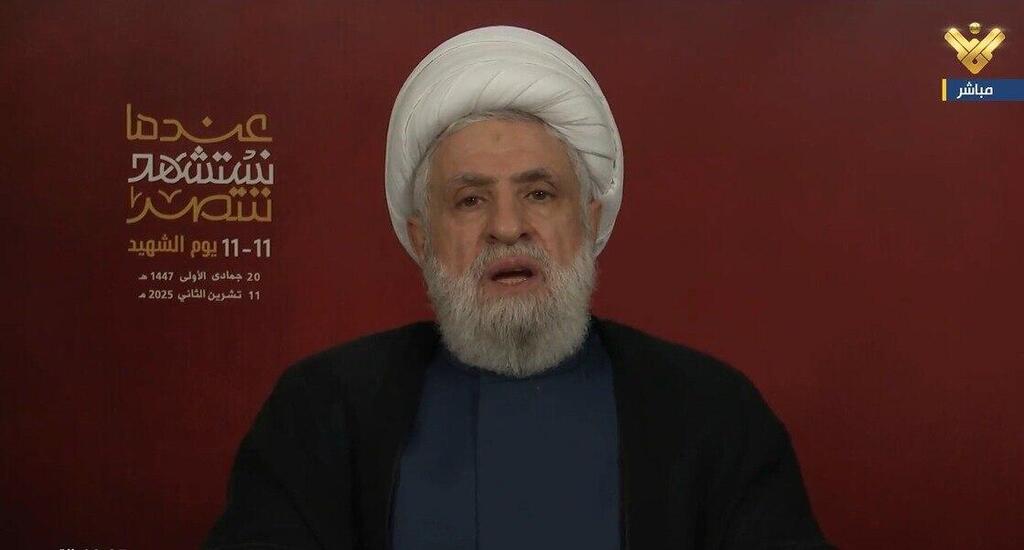
Hezbollah Secretary-General Naim Qassem
The IDF acts independently in two specific scenarios: One, when real-time intelligence indicates an ongoing arms smuggling operation that requires immediate action. In such cases, Israel typically carries out airstrikes while notifying the coordination mechanism, which maintains teams both in Lebanon and at the IDF’s Northern Command.
Second is when the Lebanese army refuses to enter areas it designates as "private property." In these cases, too, Israel often acts unilaterally. Nonetheless, Israeli officials emphasize their commitment to maintaining the American-led coordination framework, as it has proven effective. The IDF goes to great lengths to notify the mechanism before independent strikes to avoid harming Lebanese soldiers or UNIFIL forces.
Despite Hezbollah’s continued rearmament efforts, Israel remains cautiously optimistic that rising domestic pressure within Lebanon will eventually force the group to agree to disarm—not only in the south, where it has signaled limited willingness to do so, but throughout the country.
Israel continues to monitor developments closely. The Northern Command is prepared to enforce the ceasefire—or revise its posture should Hezbollah’s current defiance persist. While no immediate military escalation is expected, mainly due to the Trump administration’s insistence on exhausting diplomatic channels first, a shift in Israel’s approach could come as early as the start of next year.