


This is a special kind of enemy. It is not only Israel’s enemy, but the enemy of the entire world, even if much of the world refuses to understand it.
This is not simply state against state, or army against army. It is a state facing an ideology, one built on destruction and victimhood.
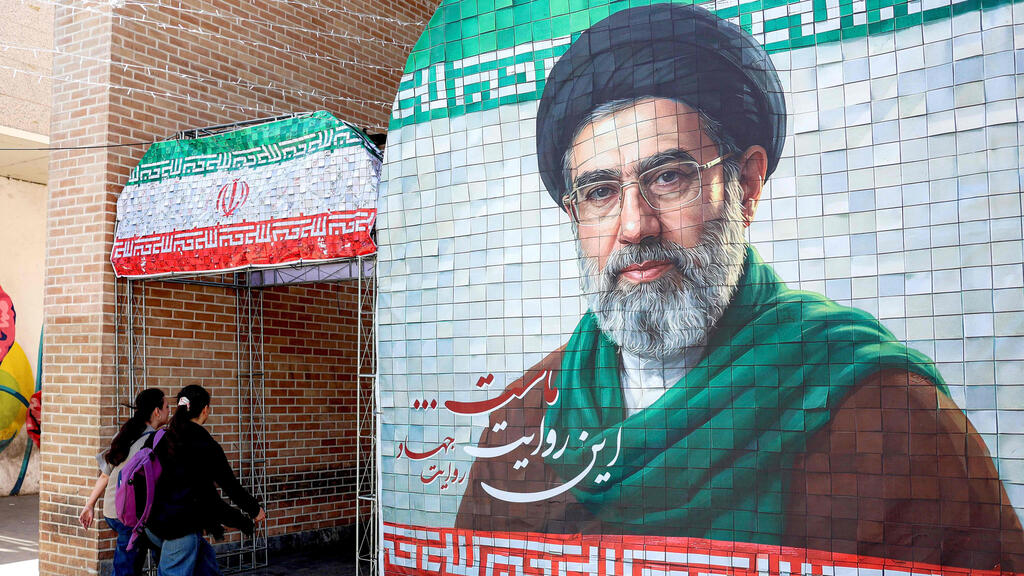
In a war against ideology, calculations of military balance become less relevant
(Photo: AFP)
When Hezbollah fired its first rockets in the current round on March 2, against the will of most Lebanese, it knew the equation in advance. Whatever damage it caused Israel, and damage was caused, the damage to Lebanon itself would be at least 100 times greater.
Most villages in southern Lebanon are destroyed because of Hezbollah. Lebanon has thousands of dead because of Hezbollah. It has close to a million displaced people because of Hezbollah. The country is on the brink of civil war because of Hezbollah.
Did that deter them? Of course not.
Iran and Hezbollah, and to some extent Houthi Yemen as well, are one entity with one ideology. The same is true of jihadist movements, Sunni and Shiite alike. The same is true of Hamas.
Yes, Hamas had illusions about conquering Israel. But Yahya Sinwar and the rest of the leadership knew in advance that the result would be the destruction of the Gaza Strip. Even after those illusions collapsed, when something could still have been salvaged by releasing the hostages and accepting a ceasefire, they chose to continue.
Because ideology matters more. An ideology of destruction.
War against an ideology is far more complicated. In such a war, all calculations about the balance of power become less relevant. That is why the claim that if Israel only responds with enormous force and Tehran burns, Iran will beg for a ceasefire, is an illusion and a misunderstanding.
That is exactly what the United States and Israel did, with massive firepower, over 38 days. Did it help? Again, they were not impressed.
When it comes to Iran, the ideology of destruction has an additional dimension. The destruction is not only self-inflicted. It extends as far as Iran’s reach allows.
With the power it still has left, Tehran is managing to damage the global economy by closing the Strait of Hormuz, through which one-fifth of the world’s energy passes. Despite the ceasefire, only last week it caused serious damage to Kuwait’s airport and, even before that, to a nuclear power plant in the United Arab Emirates.
Iran feels it has the upper hand
Add to this Donald Trump’s eagerness to reach an agreement, the approaching midterm elections, the World Cup that is about to begin, and the anti-American and, of course, anti-Israeli information machine, and Iran feels it is on top.
Just as Israel never fully completed the mission against terrorist groups, and was always forced to stop, the same thing is happening in this current round. Not because it is right to stop, but because public pressure is lining up in full force alongside Hamas, Hezbollah and Iran.
Had World War II been fought the way wars against jihad, Iran and terrorism are fought today, the Allies would have been accused of war crimes and the Nazis would be ruling the world.
This is not simple, because the Iranian people do not interest the Iranian regime. Nor do they interest those who permanently demonstrate against Israel and the United States.
No one has yet invented the method of sterile strikes against a regime that do not harm the people. If you strike not only a missile warehouse but also infrastructure, the people are harmed. War is cruel. Once, that was understood.
When Harry Truman, then president of the United States, realized that Japan was continuing to shed the blood of Allied soldiers, he chose the most brutal steps, from carpet bombing Tokyo to dropping atomic bombs on Nagasaki and Hiroshima.
Today? The World Cup has not even begun, but Iran is already winning the warm-up match.
Iran and its proxies must be defeated. They are a cancer. It harms Israel, and its metastases are spreading across the world. Israel’s war is just. But it is a difficult war. It is a world war, but without allies.
It is not over. Not even close. More is coming.
Was it important to strike in Dahiyeh while taking the risk of an Iranian response? We have been there too. We struck there too. Hezbollah’s temporary submission came mainly after the pager operation and the killing of Hassan Nasrallah and the senior command.
But giving up is also not an option. This is a Sisyphean war.
Hezbollah can and must be isolated through a diplomatic chokehold, together with Lebanon’s leadership and the Lebanese people, who are ready for a peace agreement. This is a historic shift. With today’s Syria, which is also sounding new tones and views Hezbollah as an enemy, there is a window of opportunity.
 Ben-Dror YeminiPhoto: Avigail Uzi
The question is whether Prime Minister Benjamin Netanyahu will be wise enough to use it.
Above all, when Israel enters another round against Iran, it must remember that it is alone.
Trump? He has dressed up as the UN secretary-general, with his “demand from both sides to immediately stop the fire.” Assuming this is not deception, it is foolishness.
There is concern that, against the background of opposition inside the United States itself, Trump is becoming trapped inside a defeatist approach. Under Trump’s new logic, Truman should have issued a “demand from Churchill and Hitler to immediately stop the fire.”
Iran and its proxies must be eradicated. They are a cancer. They harm Israel, and their metastases are spreading throughout the world.
Israel’s war is just. But this is a hard war. It is a world war, without allies.
It is not finished. The next chapter will come.