

In 1962, the Cuban Missile Crisis erupted after the United States discovered that the Soviet Union was building a nuclear missile base in Cuba. U.S. President John F. Kennedy responded by imposing a naval blockade to prevent the base from becoming operational.
The Soviets sent their ships toward the blockade in an effort to break it. For 13 days, the world stood on the brink of a confrontation between nuclear superpowers, one that could have escalated into World War III.
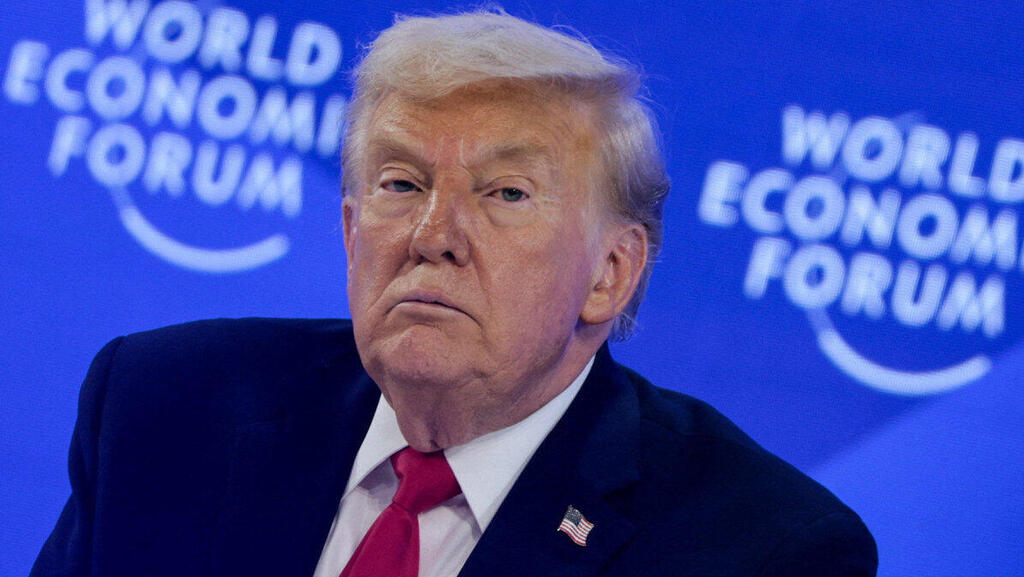
U.S. President Donald Trump
(Photo: Jonathan Ernst/Reuters)
Kennedy held extensive consultations with professional advisers, chose his public statements carefully and conducted negotiations with creativity and restraint. On the one hand, he enforced the naval blockade decisively and continued to build up forces. On the other, he sent clear signals of willingness to negotiate a resolution.
In the end, the crisis was resolved through understandings reached in negotiations. The Soviets withdrew their forces and dismantled the forward missile base in Cuba, while the Americans quietly removed their nuclear missiles from Europe.
U.S. President Donald Trump, who is now managing a crisis with the Iranian regime, faces a similar strategic choice: Is the objective the overthrow of the Iranian regime, or the removal of the threats emanating from it — namely, halting the ballistic missile project and securing the transfer of hundreds of kilograms of enriched uranium still in Iran’s possession?
Around Iran, significant U.S. forces are now being deployed: aircraft carriers, special forces and combat aircraft.
Trump initially appeared inclined to support popular protests in Iran, hoping to help topple the regime and prevent mass bloodshed. However, following consultations with professional advisers and colleagues, he revised his position. He came to understand that regime change is neither simple nor quick, and would require extensive effort and prolonged involvement.
As a result, it increasingly appears that Trump has opted for an alternative strategy: neutralizing the regime’s threats, with an emphasis on the nuclear danger.
Among Iranians who took to the streets and were killed in large numbers by Revolutionary Guard forces, voices of bitterness have begun to surface on social media. Some accused Trump of betrayal.
“Trump promised again and again that he would shoot the man who shot me,” one protester wrote. “Tens of thousands were killed waiting for the ‘help on the way’ that never arrived.”
Another wrote: “I lost my home and my father-in-law because I trusted him. Now my life is destroyed because of empty promises.”
The purpose of Trump’s current actions appears to be to apply pressure on Supreme Leader Ayatollah Ali Khamenei. If rhetorical pressure combined with the deployed forces does not suffice, Trump may order a demonstration strike — designed to show seriousness and signal the regime to return to the negotiating table.
The military buildup is also meant to prepare for escalation that could follow such a strike, including the need for a sustained exchange of blows on both sides.
Operation Rising Lion lasted 12 days. The Cuban Missile Crisis lasted 13 days. If a cycle of strikes develops, Trump is likely to aim for a short confrontation lasting no more than two weeks, followed by a return to negotiations.
In 1962, Kennedy managed the crisis through a measured, incremental and process-driven approach. President Trump, by contrast, is pursuing crisis management based on deterrence, pressure and the pursuit of rapid achievements.
Despite the stark differences in the psychological profiles of Kennedy and Trump, both demonstrate an ability to make calculated decisions and a willingness to pursue objectives without being dragged into all-out violent confrontation.
Col. (res.) Doron Hadar previously served as commander of the IDF’s Negotiation and Crisis Management Unit