

While global attention remains fixed on wars and geopolitical tensions across the Middle East, Qatar continues to pour vast sums into projects designed to shape its image for decades to come.
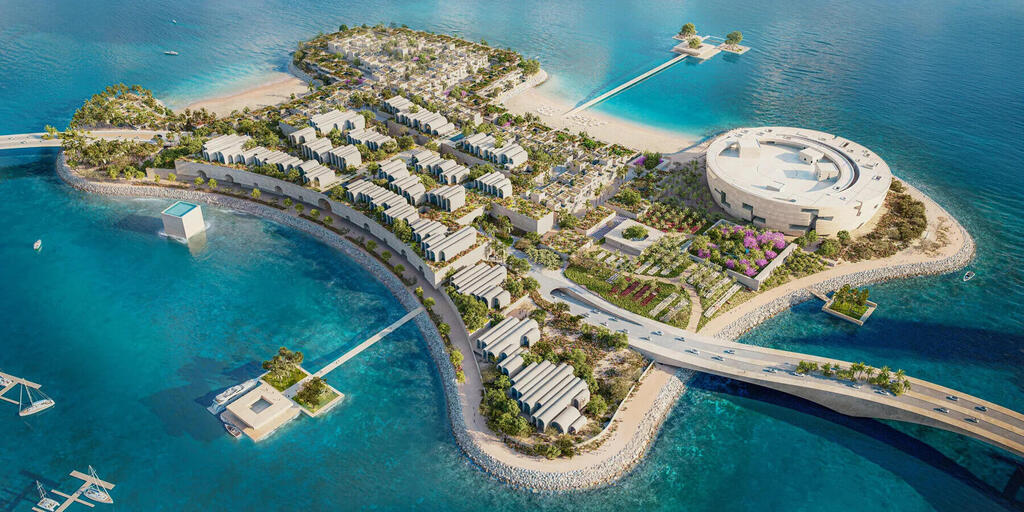
The emirate, considered one of the world’s wealthiest countries thanks to its enormous natural gas reserves, recently unveiled one of the most ambitious urban development projects in its history: a new master plan for an artificial island in Doha that is set to become an upscale district combining culture, leisure and residential life.
The project will include a museum of Orientalist art, a permanent home for an Art Basel branch, a food market, hotels and, naturally, luxury waterfront villas.
Behind the ambitious project lies a clear objective: to position Qatar not only as an energy powerhouse and influential diplomatic player, but also as one of the world’s emerging and most influential cultural capitals.
Originally built to host visitors during the 2022 World Cup, the island is now intended to serve Qatar’s future. Al-Maha Island, which covers about 230,000 square meters, was built in 2022 on reclaimed land north of Doha as part of the development of Lusail. It opened ahead of the World Cup with a promenade, restaurants, beach clubs and hospitality venues.
Qatar now plans to completely transform its character. Instead of remaining a temporary entertainment complex, the new master plan will turn it into a complete urban district combining international cultural institutions, housing, commercial space, hotels, public areas and parks.
The goal is to create an active urban center operating throughout the day and year, rather than functioning solely as a tourist destination.
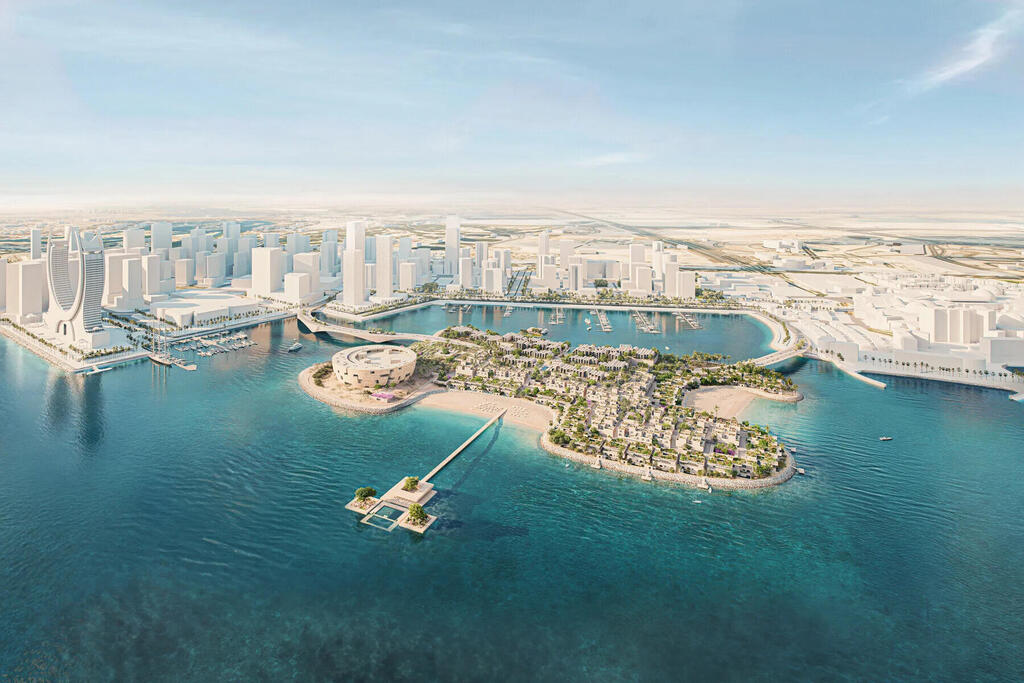
Al-Maha Island. Built for the World Cup and now undergoing a complete transformation
(Illustration: Courtesy of Herzog & de Meuron)
Al-Maha Island is expected to to begin taking shape in 2028
(Illustration: courtesy of Herzog & de Meuron)
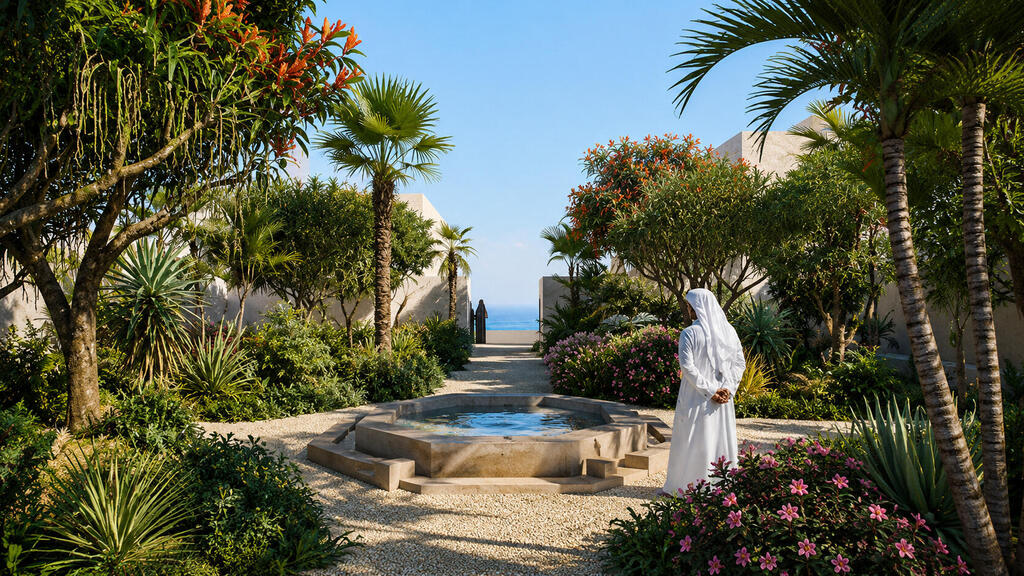
The buildings will be constructed from local materials, including sand and rock
(Illustration: Courtesy of Herzog & de Meuron)
A man-made island
The ambitious plan, whose implementation is expected to begin in 2028, was designed entirely by Swiss architectural firm Herzog & de Meuron, which was also responsible for the design of the new National Library of Israel in Jerusalem.
The architects sought to create a design language inspired by Qatar’s local building traditions, while accommodating a wide range of uses across the island, from housing and commerce to cultural institutions.
The plan incorporates regional architectural types, including courtyard homes, townhouses connected by narrow shaded alleys, walled gardens and monolithic earth-toned buildings. "This island is man-made, and land-making has a totally different connotation here," architect Jacques Herzog said, according to Designboom. "We want this to be integrated into the project concept and the buildings to be made with local materials, such as sand and rock, so that it feels like a whole piece, not just something we brought in," he added.
The transportation system also reflects the project’s planning philosophy, under which public space is intended primarily for pedestrians. The island will be accessible by water transport, as well as by dedicated pedestrian and vehicle bridges. Once visitors enter, however, motor traffic will be barely noticeable.
Thanks to the island’s elevated topography, all transportation systems and infrastructure will be placed underground, while the surface will be devoted to pedestrians, plazas, parks and public spaces. This will preserve open views of the sea and the reefs surrounding the island, without roads or parking lots separating visitors from the waterfront.
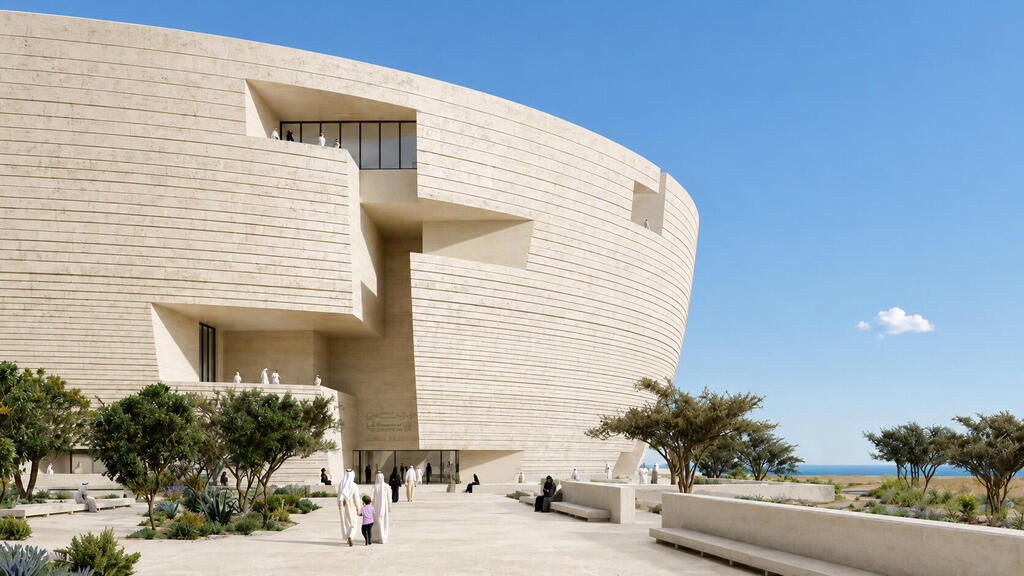
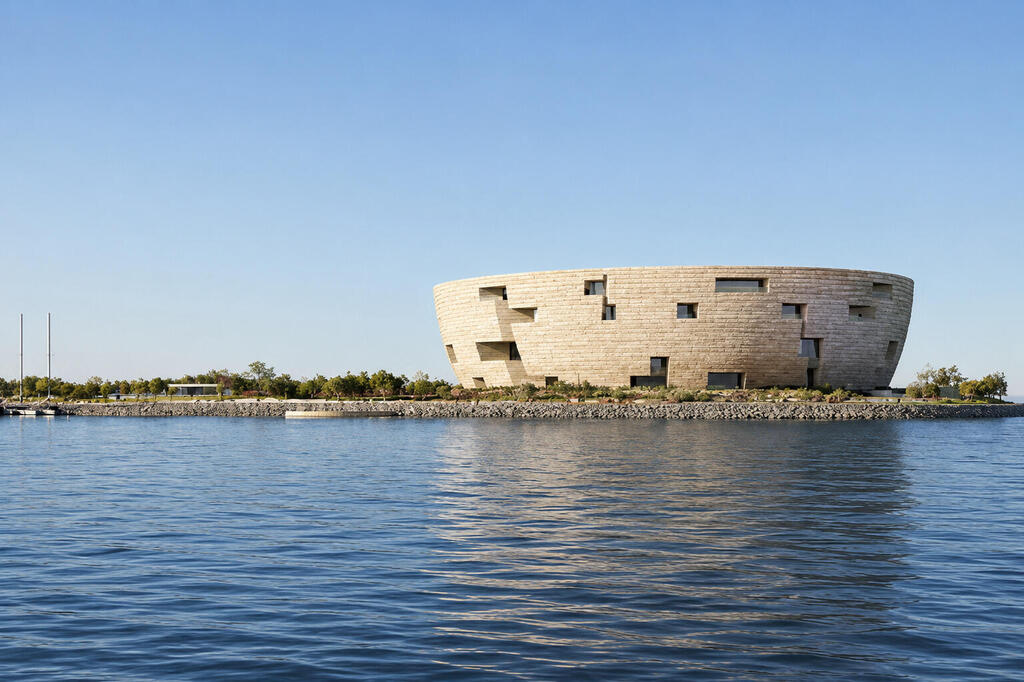
The Lusail Museum, designed in the form of a full moon and crescent
(Illustration: courtesy of Herzog & de Meuron)
A moon-shaped museum
The centerpiece of the project will be the Lusail Museum, which is set to rise at the southern edge of the island and display one of the world’s largest collections of Orientalist art.
The building, also designed by Herzog & de Meuron, consists of three intersecting spherical forms that create two distinct volumes, one resembling a full moon and the other a crescent. Its facade will be built from local sand and rock in an effort to reduce the use of imported construction materials and lower the project’s carbon footprint.
Recessed openings in the facade will provide natural shade from the Gulf’s intense sun while framing panoramic views of the sea and the Lusail skyline. The design draws inspiration from the shading and massing principles of traditional Islamic architecture and translates them into a contemporary architectural language adapted to the desert climate.
"When we first presented the museum plan, it was intended for a different location. But because of its architectural qualities and the importance of the collection, we decided to move it to Al-Maha," Sheikha Al-Mayassa bint Hamad bin Khalifa Al Thani, daughter of Qatar’s former emir and chairwoman of Qatar Museums, said recently. The Economist once described her as the most influential woman in the art world.
According to Al-Mayassa, the museum’s new location is intended to serve as the anchor of the entire project. "This is one of the few places in Qatar where foreigners can purchase homes and land, so we planned the island as a complete ecosystem that includes residential areas, a boutique hotel and a small market combining modernity with local tradition," she said.
Al-Mayassa said Qatar’s ambition to strengthen its standing as a cultural center is not limited to importing international art institutions, but also includes an effort to preserve and showcase regional craft traditions.
As part of the project, the developers plan to incorporate works by artisans from across the Middle East into the buildings’ interiors, including Palestinian artists, as well as creators from Syria, Afghanistan and other countries in the region.
The intention is to give local craft traditions a prominent place, from woodwork and stonework to textiles and ceramics, and integrate them into the island’s contemporary architecture. The aim is to create a bridge between traditional art and the new cultural institutions that will be built there.
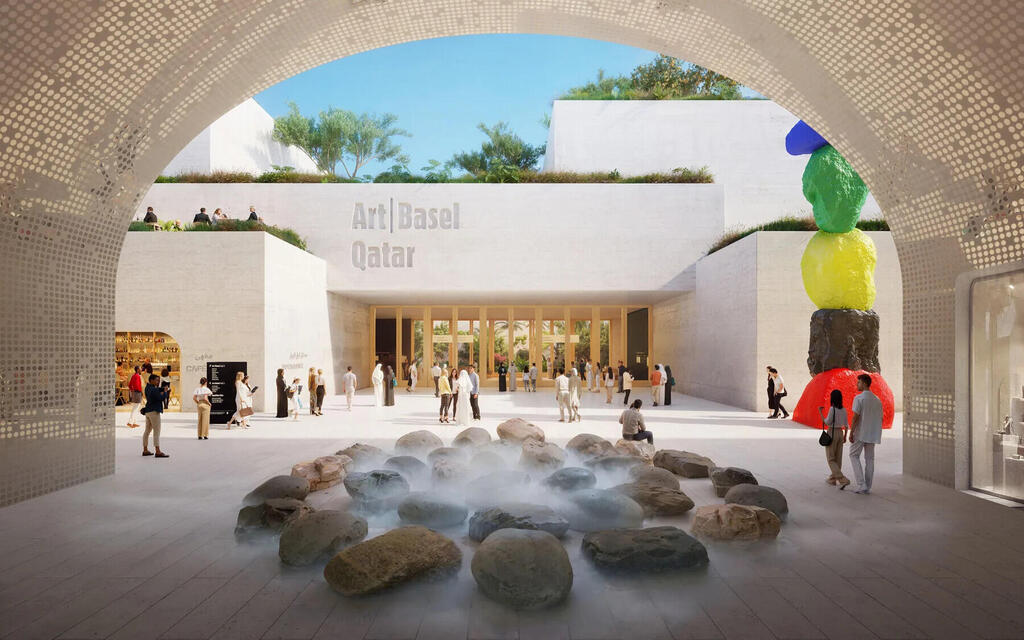
The ultimate seal of approval: Art Basel
(Illustration: Courtesy of Herzog & de Meuron)
The clearest sign of Qatar’s growing influence
One of the most dramatic elements of the plan is the permanent arrival of Art Basel in Qatar. For the first time in its history, one of the world’s most important and influential art fairs will be held regularly in an Arab country, after more than five decades in which it operated only in Basel, Miami, Hong Kong and Paris.
The move has drawn criticism from some figures in the art world, who argue that it is another example of the growing influence of Qatari wealth over international cultural institutions. Unlike traditional art fairs held inside enclosed convention centers, however, Qatar plans to extend the event far beyond the exhibition halls.
Alongside a central venue hosting international galleries, the plan includes exhibitions, installations, events and performances spread across the island, from its plazas and promenade to its restaurants and public spaces. The entrance bridge to Al-Maha will serve as the gateway to the entire fair, aiming to blur the boundary between exhibition space and the city itself.
For the planners, the project is an attempt to redefine the art fair model and transform it from a contained exhibition space into a complete urban experience in which art is embedded throughout the public realm.
‘We are extremely excited to embark on this shared journey,’ Art Basel CEO Noah Horowitz said when the partnership was announced. According to Horowitz, the Qatar project is not merely a geographic expansion of the fair, but an effort to build a new model connecting international cultural institutions with the local and regional art scene.
"We are not simply joining something that already exists. We are building it together with our partners,"he said. "Creating deep connections with new regions, artists and institutions is one of the most exciting things we can do."
Horowitz added that the new fair would seek to provide a platform for artists from the Middle East, North Africa and South Asia, and turn Qatar into a meeting point between the international art market and artistic communities that have so far received more limited exposure.
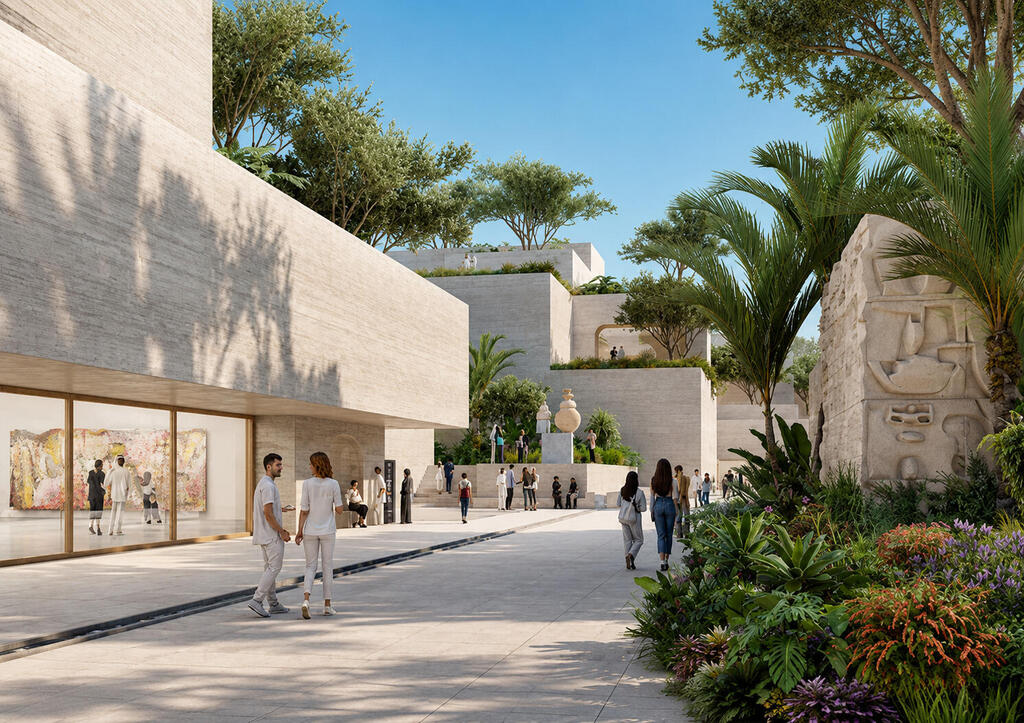
The plan combines culture, leisure, tourism and luxury housing
(Illustration: Courtesy of Herzog & de Meuron)
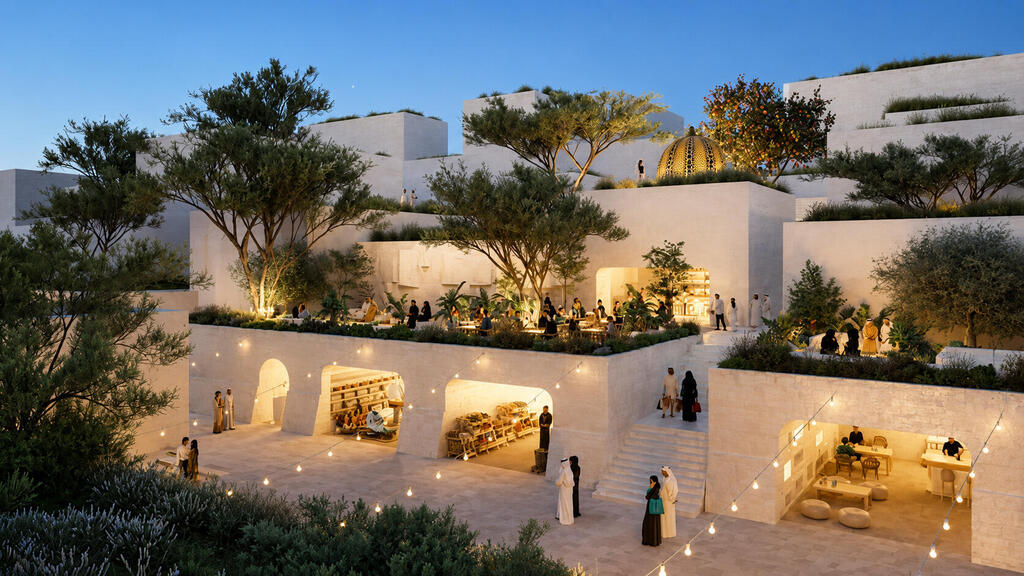
The goal is to attract tourists, collectors and art enthusiasts from around the world
(Illustrations: Courtesy of Herzog & de Meuron)
If the plan is carried out as envisioned, Al-Maha will become far more than another artificial island in the Gulf. For Qatar, it is an attempt to prove that architecture, culture and urban planning can become strategic tools no less powerful than natural gas or diplomacy.
In recent years, the emirate has invested billions in the World Cup, museums, universities and international cultural institutions. Now it seeks to bring all those ambitions together in a single district designed to attract tourists, collectors, artists and investors from around the world.
The remaining question is whether Al-Maha will become a vibrant cultural district capable of reshaping the global art map, or whether it will be remembered primarily as another display of economic power.