

A few years ago, a couple approached Noa Brik and Gilad Raveh of the architecture firm Brik Raveh Architects. They had purchased a 13-dunam (roughly 3.2-acre) plot in a farming community in central Israel and wanted to build a home that would serve not only themselves and their youngest daughter, who still lived at home, but also their three adult children and their families.
“In most of our projects, there’s some existing reference point—challenges of size, topography or neighboring houses,” says Brik. “Here, we were given a blank slate. And every architect knows that’s the hardest starting point. Where do you begin?”
A single-level home built on a farmstead in central Israel
(Video: Nimrod Levy)


“One of our first decisions,” adds Raveh, “was to design a 300-square-meter [3,230-square-foot] single-level home. Then we structured the house around two perpendicular axes. One runs northward along a large wall of natural fieldstone, opening to the surrounding endless landscape. The other axis connects the home’s private and shared areas.”
These foundational decisions led to a dramatic design feature: an oversized concrete roof that both defines and shelters the house. In certain areas, such as above the pool, the roof transforms into a pergola-like structure, filtering sunlight and creating architectural drama. “Structurally, it was a challenge,” Raveh notes, “because we wanted to create a thin, wing-like edge.”
Gallery
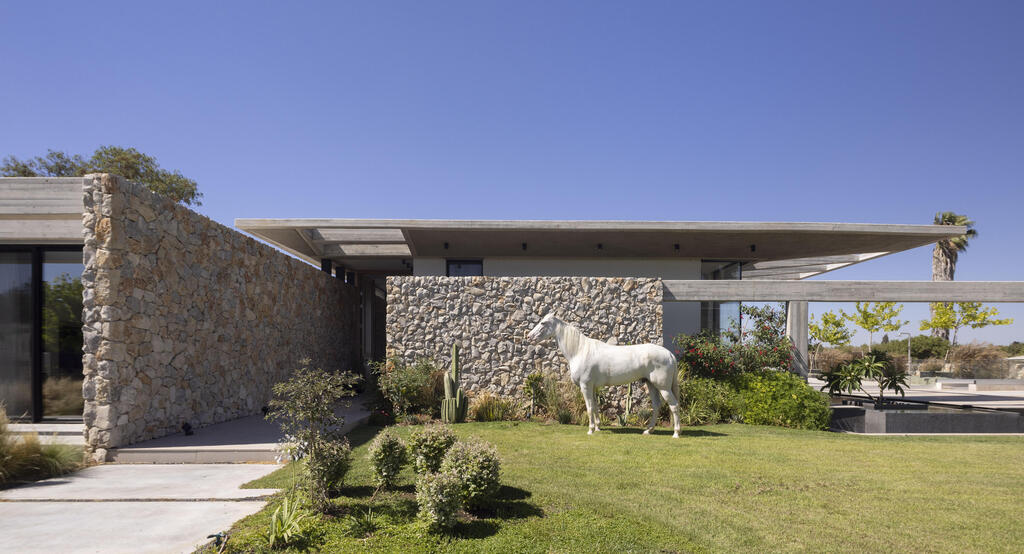
A 13-dunam farm plot in central Israel, complete with a white horse that likes to visit
(Photo: Nimrod Levy)
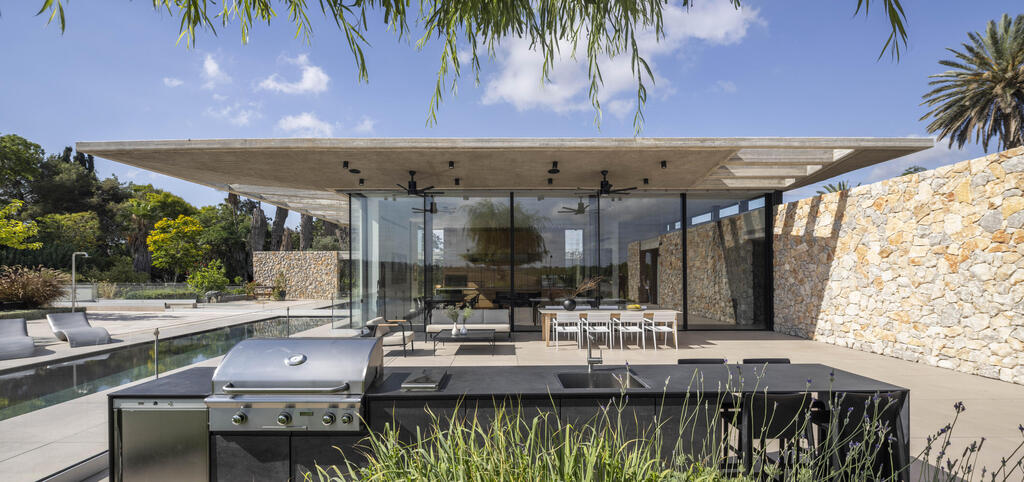
The 300-square-meter home is designed entirely on one level
(Photo: Nimrod Levy)
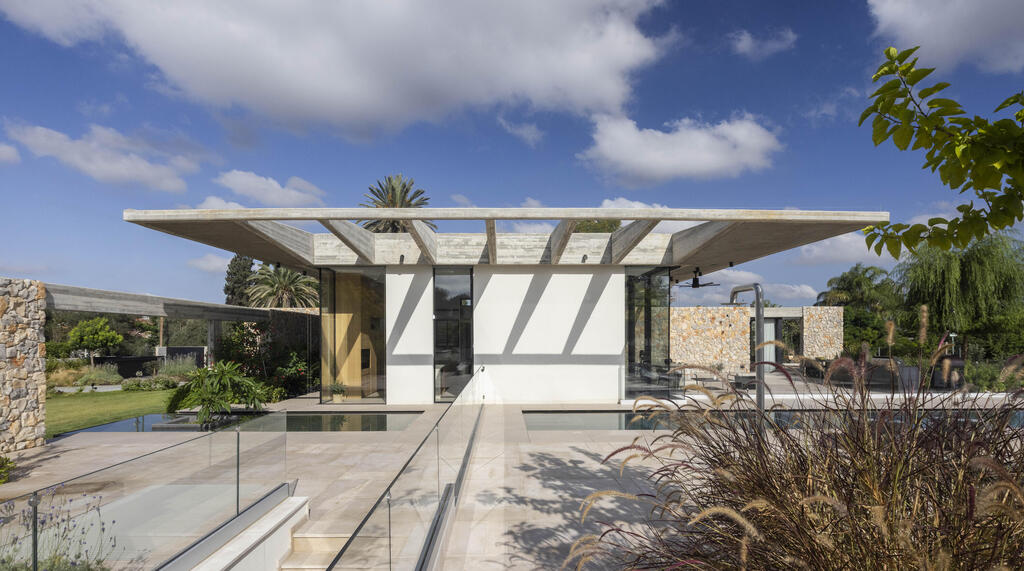
The structure is organized around two perpendicular axes
(Photo: Nimrod Levy)
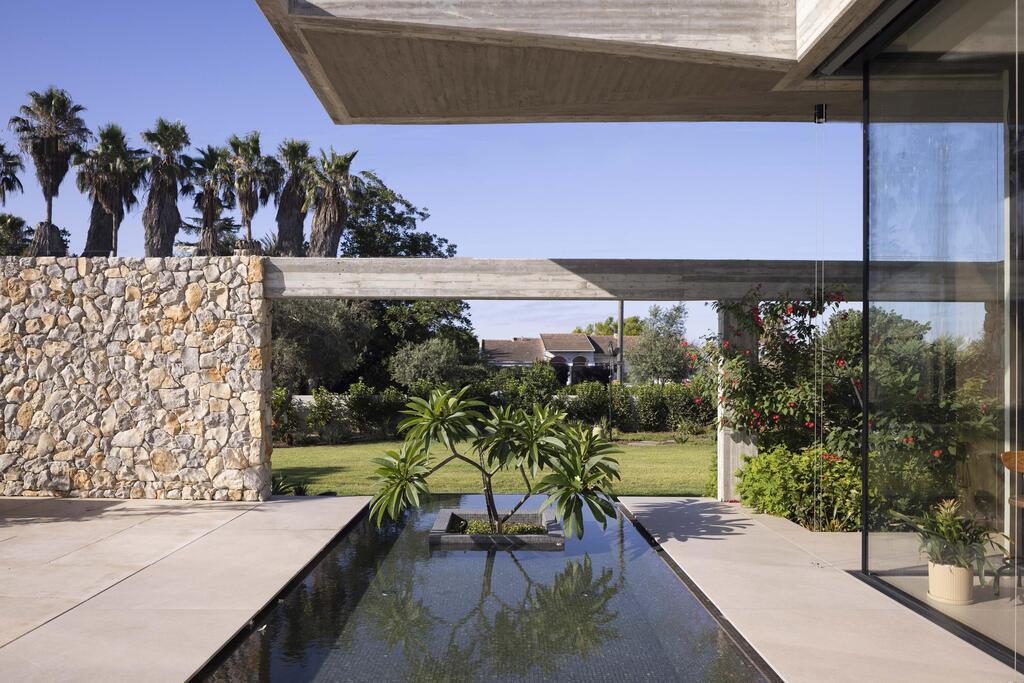
A large stone wall marks the home's central axis
(Photo: Nimrod Levy)
Entertaining by the fireplace and grand piano
The house is approached from the street via a long path of exposed concrete slabs. It begins in the front garden, then runs alongside a prominent stone wall that marks the main axis of the home. A second stone wall, perpendicular to the path, screens the house from the street without severing it completely. Between the two walls, a garden appears to spill into the home through tall glass doors by the kitchen.
Entering through a custom wood door—crafted by the Fogel carpentry studio, which also built all the home’s cabinetry—visitors are immediately drawn to the far end of the space, where a large glass wall frames sweeping green views.
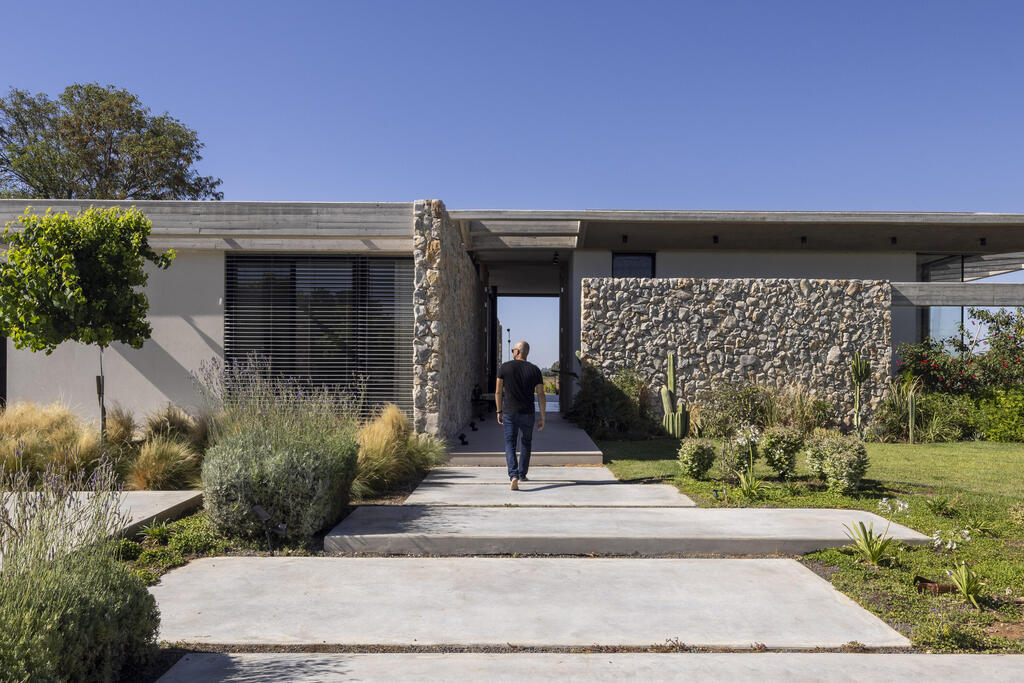
The entry path is made of exposed concrete slabs
(Photo: Nimrod Levy)
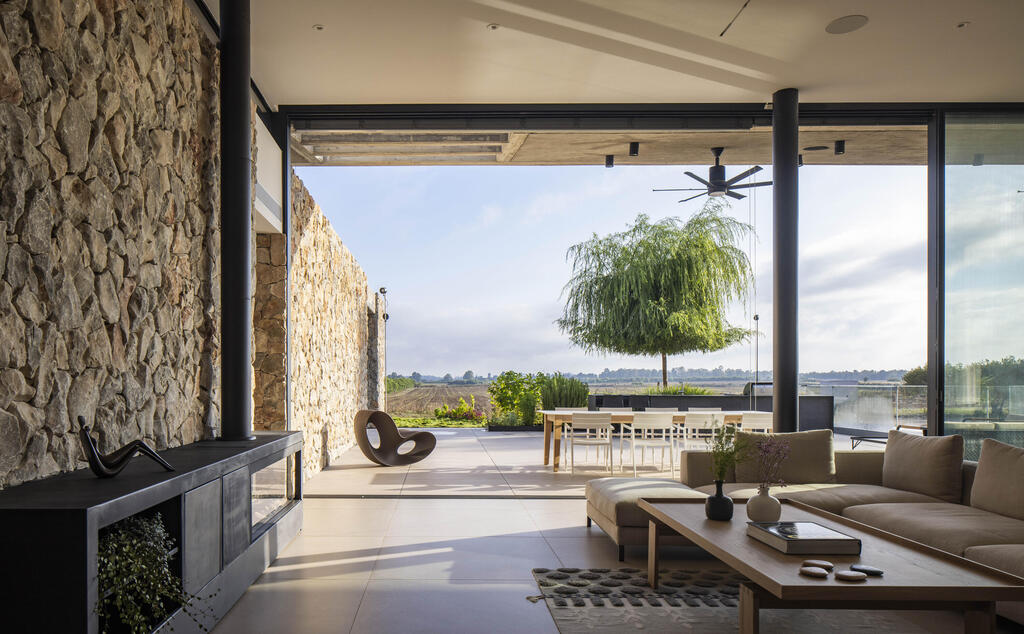
The spacious living room faces a large iron fireplace
(Photo: Nimrod Levy)
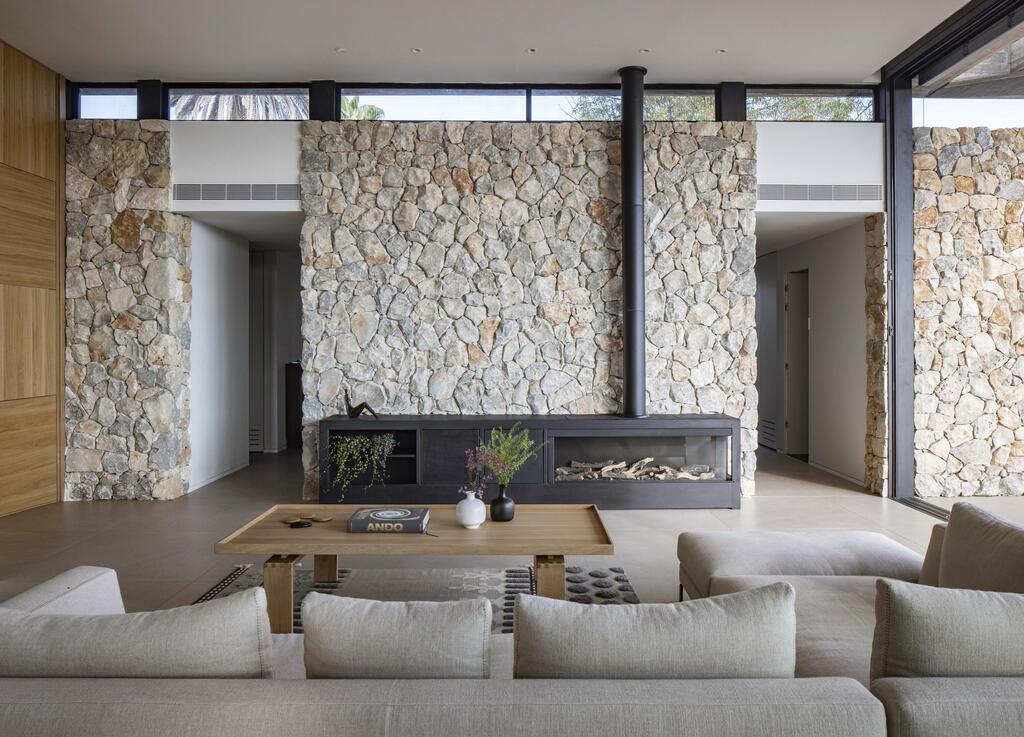
Gathering points for the extended family were a key design focus
(Photo: Nimrod Levy)
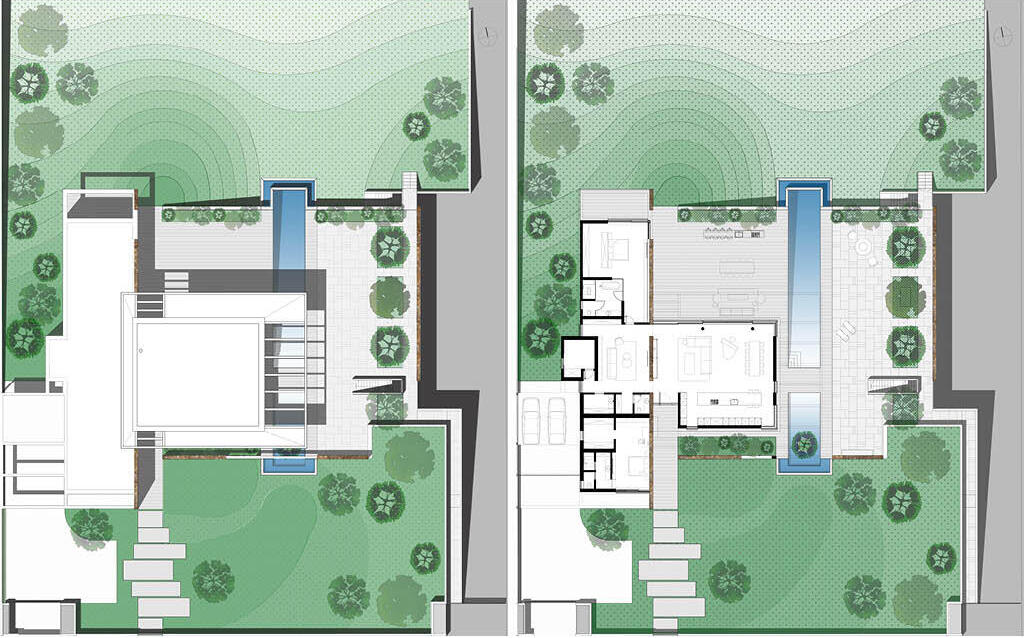
Floor plan: roof included at left, removed at right
(Illustration: Brik Raveh Architects)
Inside, the stone wall continues along the interior, concealing the bedroom wing on one side. On the other side lies the expansive communal space, surrounded by large glass walls. Here, the spacious living room centers around a prominent iron fireplace set against the stone wall and a grand piano positioned between it and the large dining area.
Both the fireplace and the piano serve as gathering points for the extended family, who visit often—an important consideration for the homeowners.
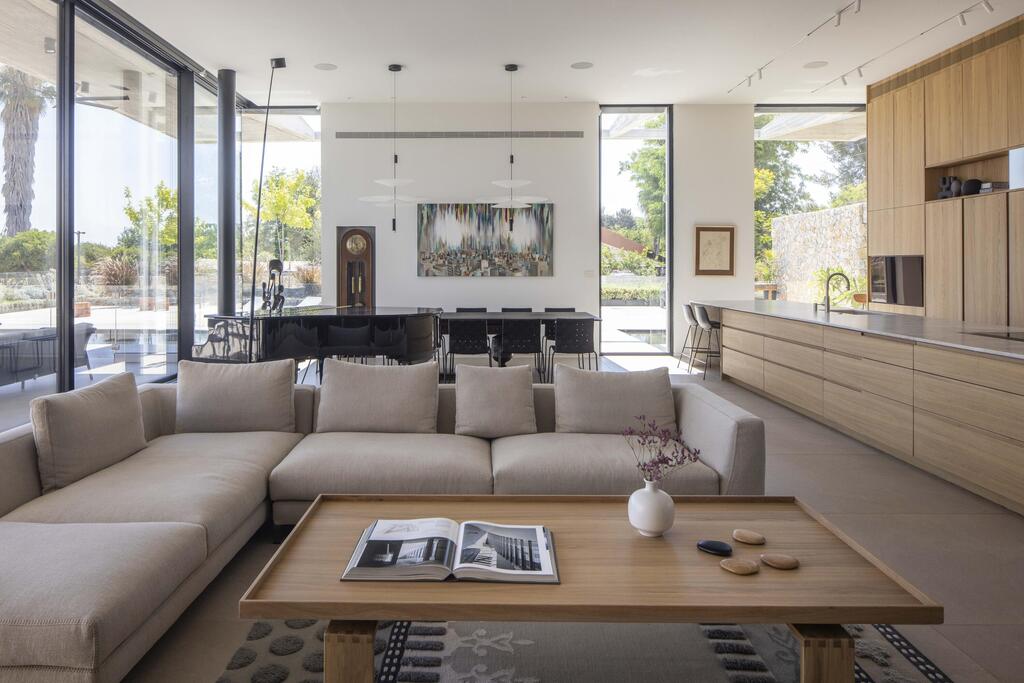
The kitchen, living room, dining area and piano share a unified space
(Photo: Nimrod Levy)
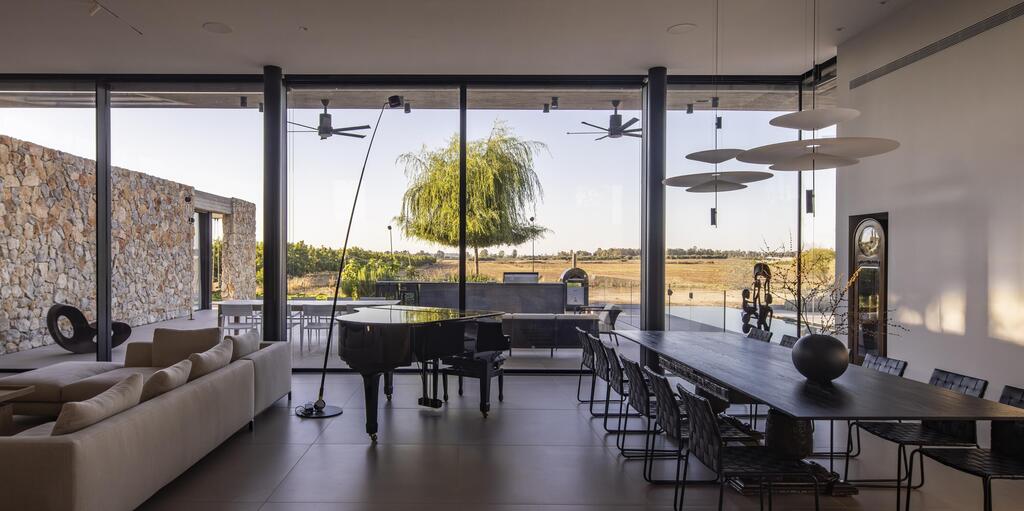
The home was designed for frequent hosting around a central axis
(Photo: Nimrod Levy)
The kitchen features a tall wall of wood cabinetry that spans the full height of the space, flanked by two slim, vertical windows that bring the outside garden indoors. Facing it is a massive wooden island, where the family gathers for coffee and light meals. On the right, an additional run of dark cabinetry adds contrast and visual interest to the space.
A swing on the private terrace
On the far side of the stone wall begins the home’s more intimate zone. It starts with a spacious family room and continues into a self-contained unit where the couple’s daughter—still living at home—resides. There's also a reinforced safe room (mamad) that doubles as a guest bedroom for grandchildren who visit from time to time.
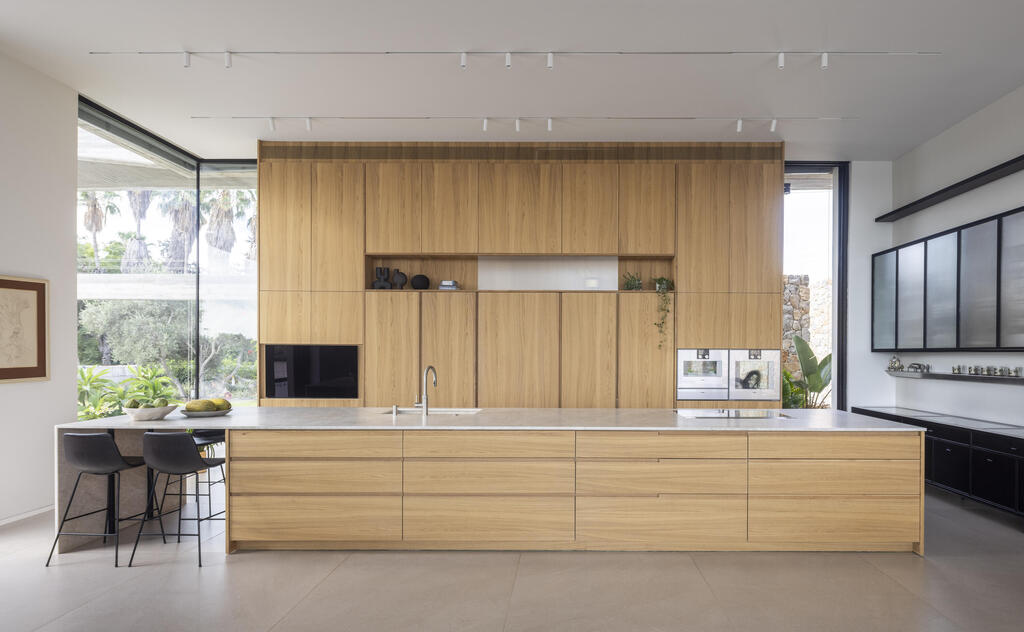
The kitchen features light wood cabinetry
(Photo: Nimrod Levy)
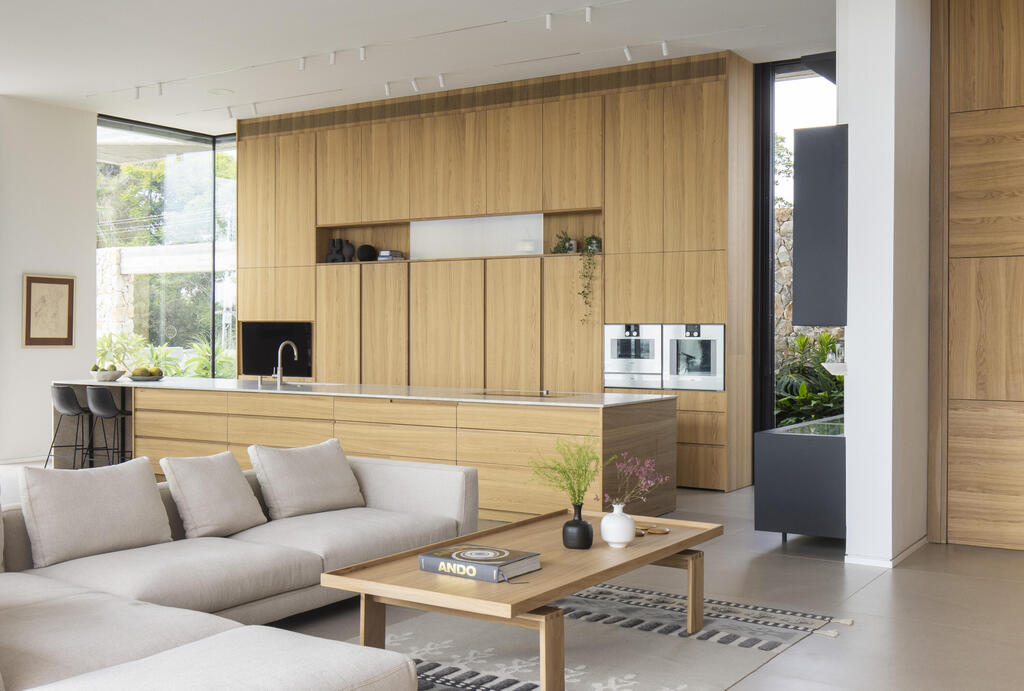
Tall, narrow glass panels frame the kitchen with views of the garden
(Photo: Nimrod Levy)
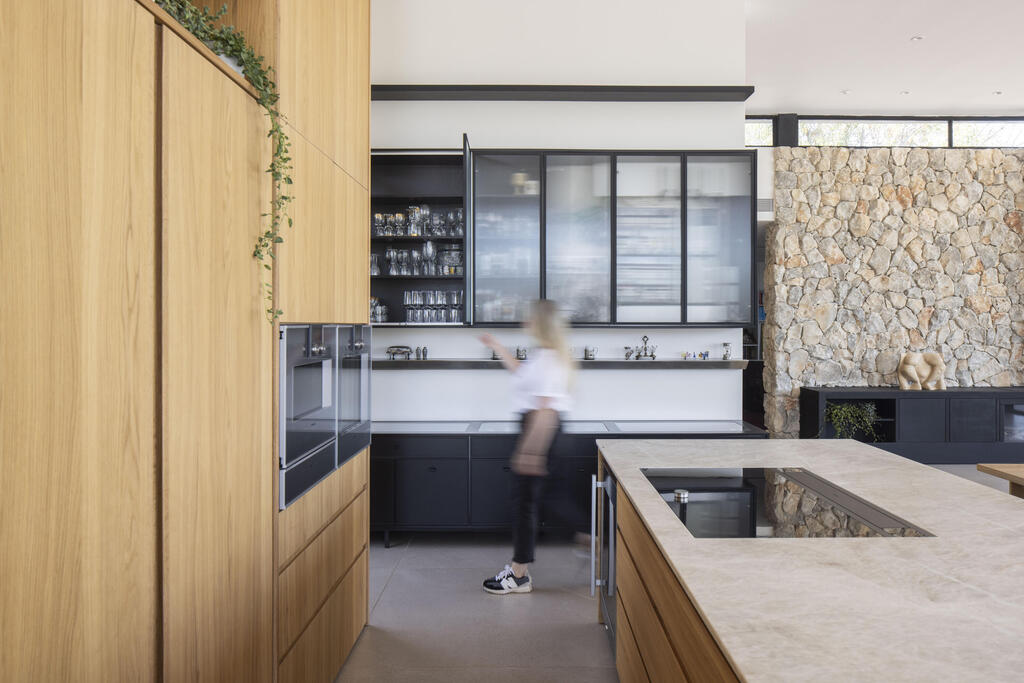
A contrasting dark cabinet run adds visual interest to the kitchen
(Photo: Nimrod Levy)
The master suite was designed as a retreat from the bustle of the extended family, which frequently gathers at the house. It opens to the surrounding landscape, visible even from the freestanding bathtub in the en-suite bathroom, and includes a private terrace.
“During the planning phase, the couple didn’t quite see why they needed their own private terrace—it felt unnecessary with such a large yard,” recalls Brik. “But after moving in, they told us they use it often and really enjoy it. They even hung a swing from the exposed concrete beams of the roof.”
The bathroom continues the home’s use of natural materials, with grooved stone cladding and a solid wood vanity. A decorative lattice screen provides partial privacy while preserving a view of the outdoors.
Sipping wine by the pool
But the centerpiece of the property is outdoors—the expansive, lush plot that includes a vineyard planted by the couple, visible to the north of the home.
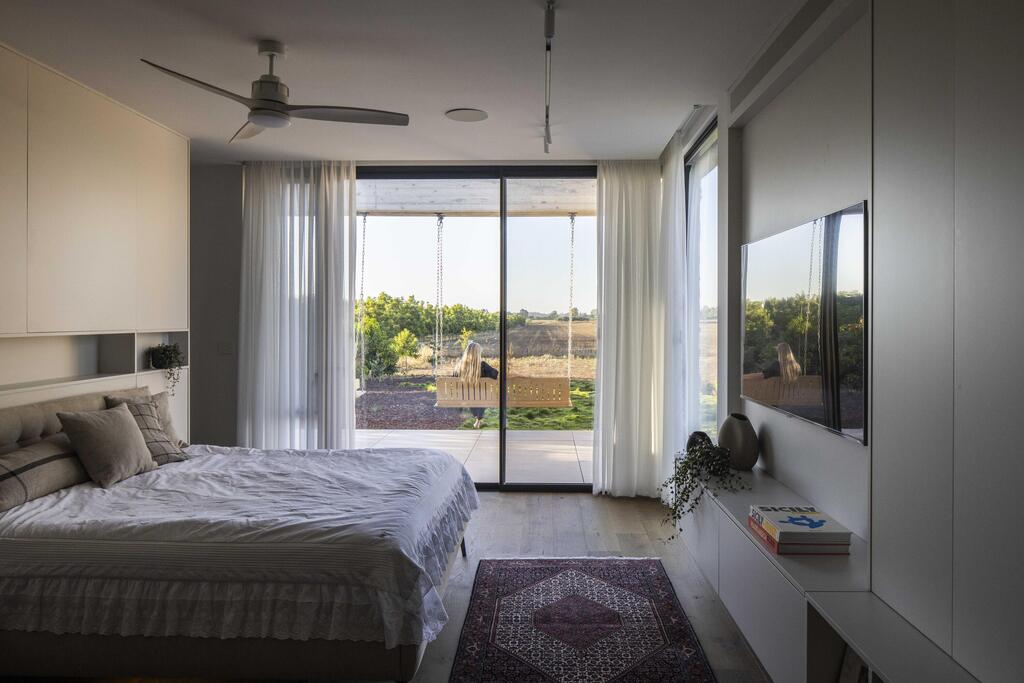
The couple’s bedroom opens to a garden terrace with a swing
(Photo: Nimrod Levy)
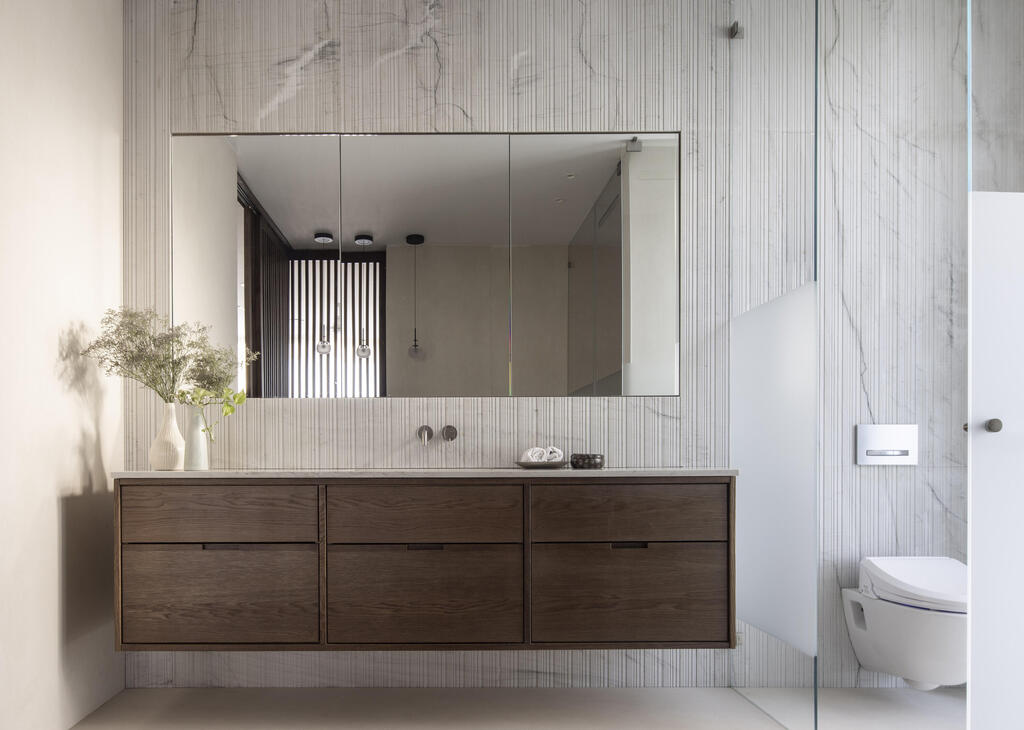
The en-suite bathroom features natural materials and soft lighting
(Photo: Nimrod Levy)
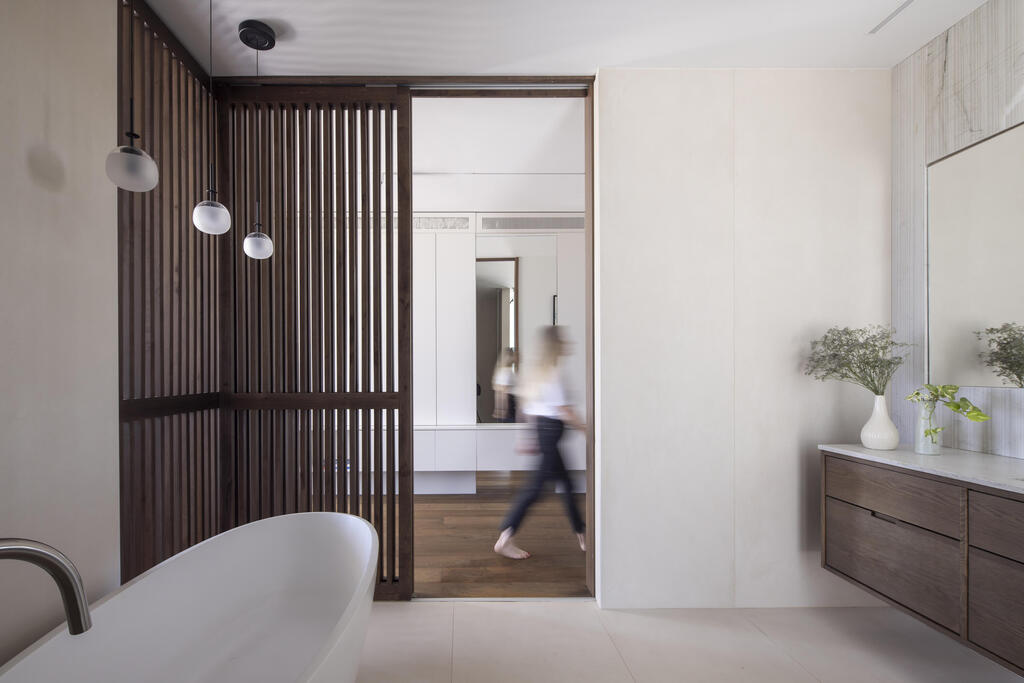
Bright and dark tones complement a freestanding tub
(Photo: Nimrod Levy)
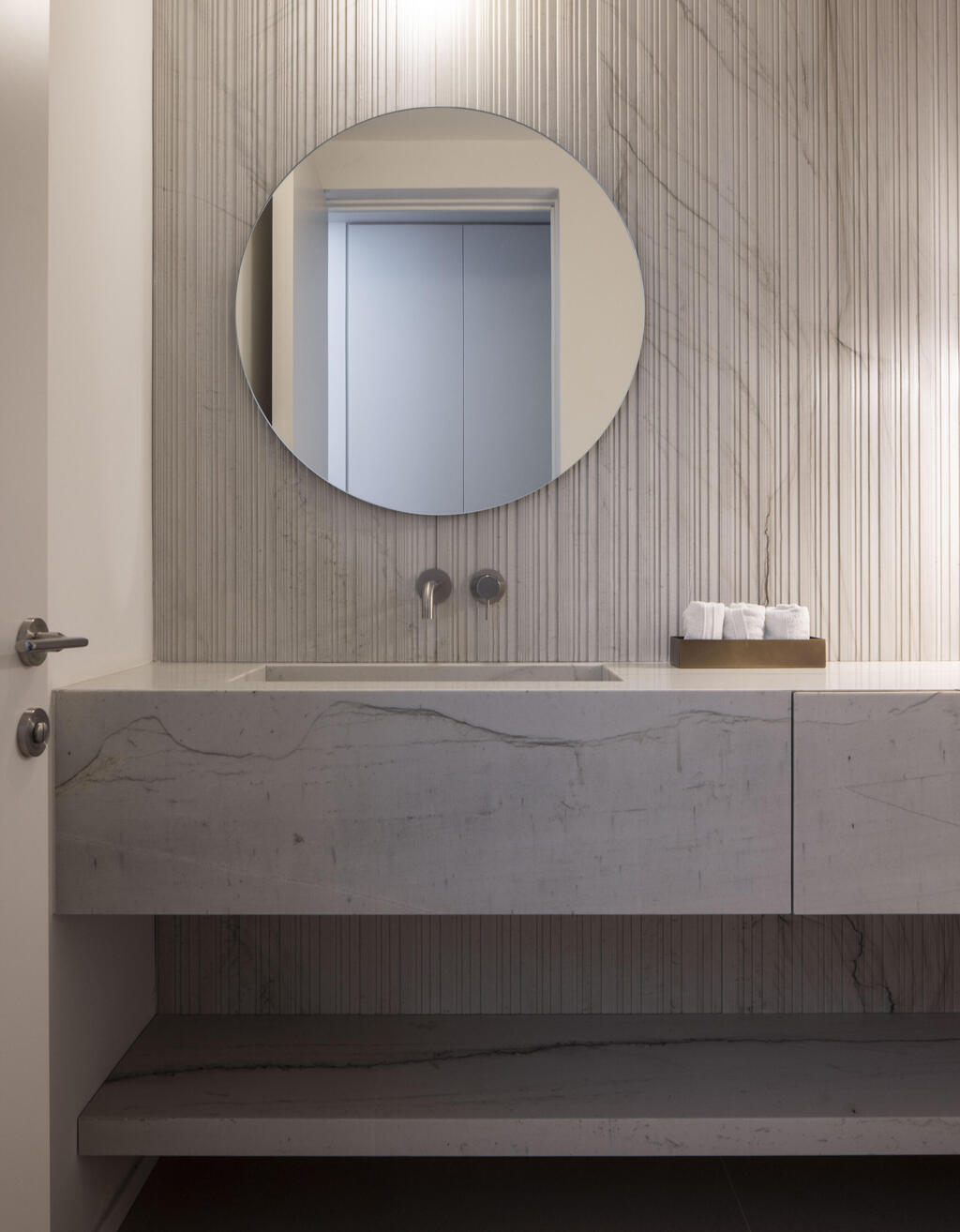
Another full bathroom is included in the home
(Photo: Nimrod Levy)
The pool area, too, received special attention. “We divided it into two sections,” explain Brik and Raveh, “a main pool and a toddler pool, since hosting the extended family was a central design goal.”
Both are infinity pools, each ending in its own waterfall, so the gentle sound of cascading water accompanies visitors even before they enter the home.
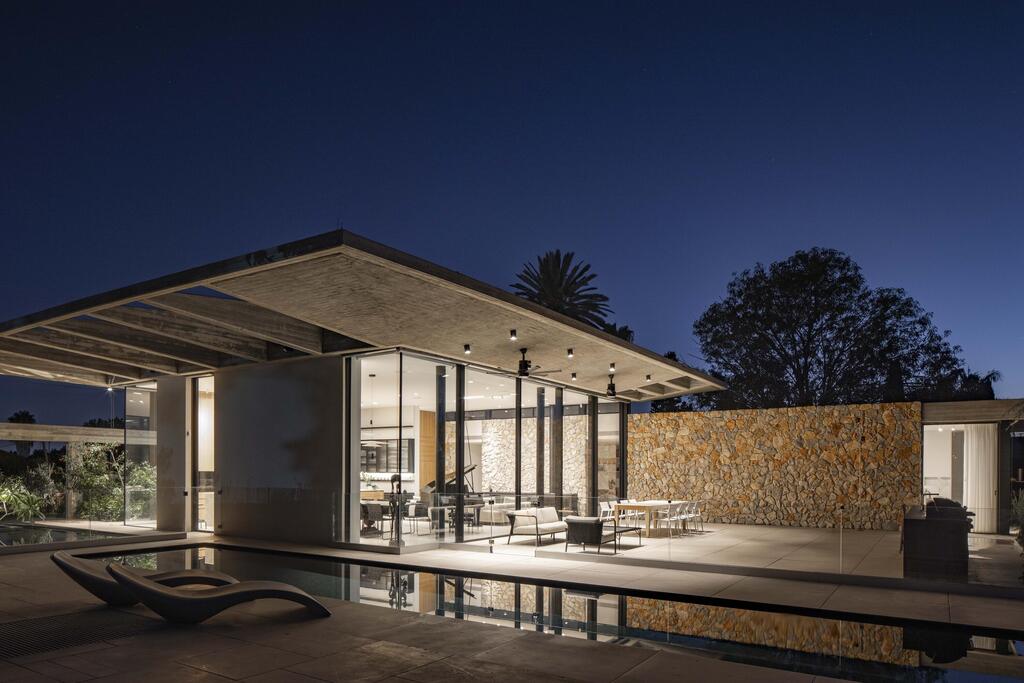
Infinity pools and waterfalls were added at the architects’ recommendation
(Photo: Nimrod Levy)
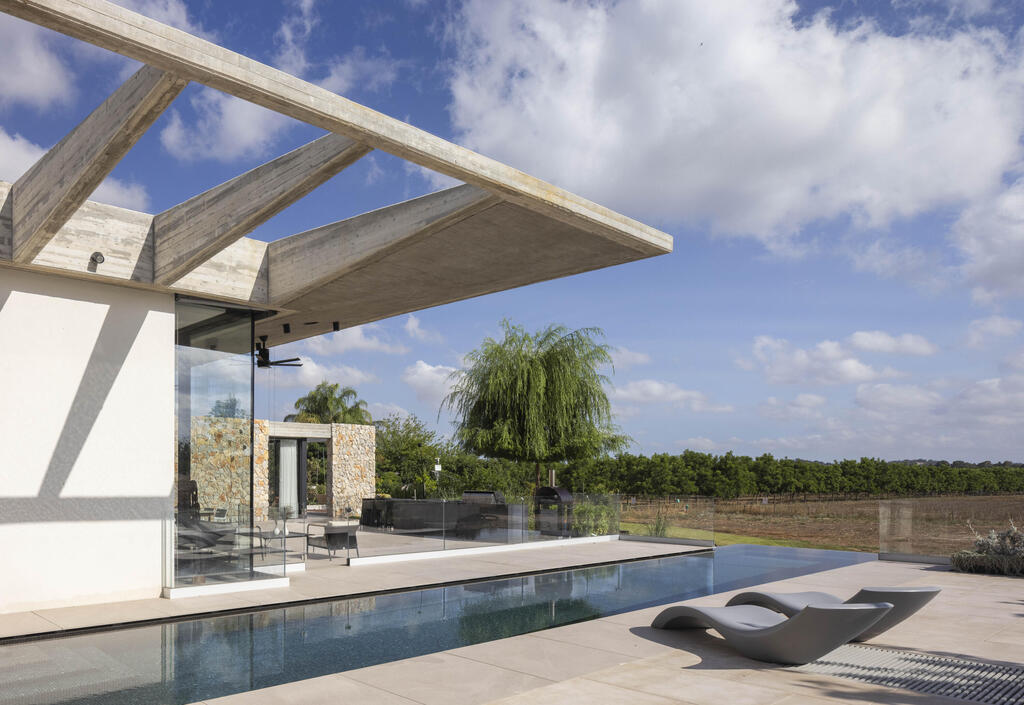
In the background, the vineyard planted by the homeowners
(Photo: Nimrod Levy)
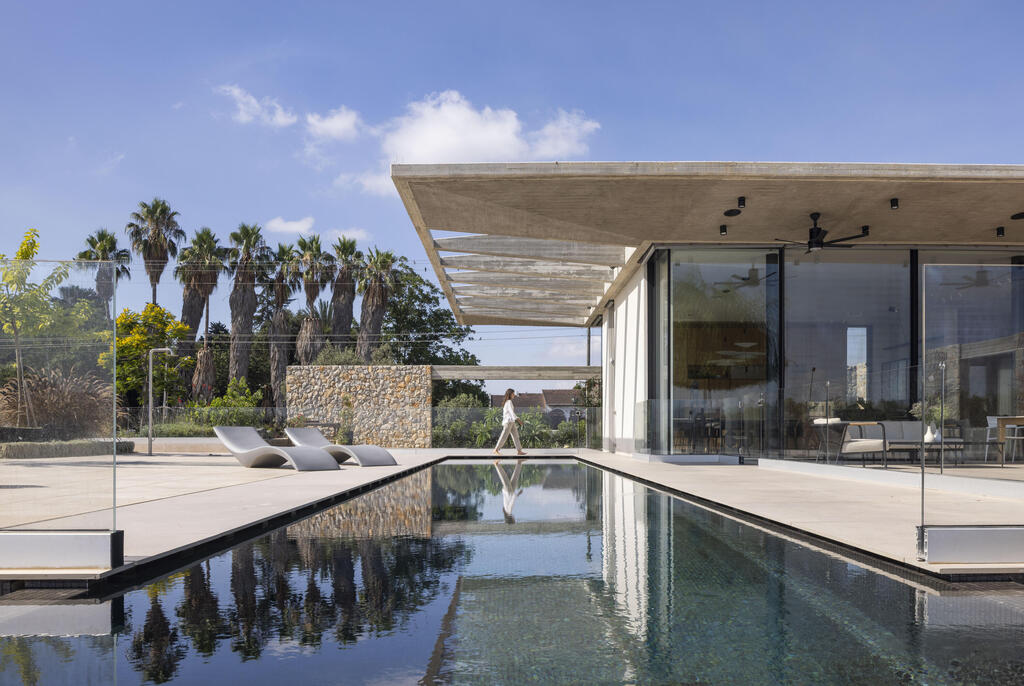
A toddler pool was included for visiting grandchildren
(Photo: Nimrod Levy)
“At first, the homeowners didn’t quite understand why the waterfalls and infinity pools were so important,” says Brik. “But we insisted. Now they love it. They send us photos of themselves sipping wine by the pool at sunset or sitting with family by the fireplace. That’s what moves us. Those are the moments we design for, when everything we promised they’d experience in their daily life becomes reality.”