


New Yorkers are already used to seeing each new skyscraper subtly reshape the city’s skyline. But every so often, a project emerges that sparks outrage far beyond the usual architectural debate.
In recent years, Manhattan has become a laboratory for ultra-thin luxury towers built for a tiny number of wealthy residents and rising to extreme heights in the heart of the crowded city. For some, they symbolize innovation and New York’s relentless evolution. Others see them as evidence of a city gradually losing not only its character, but also the iconic views and skyline angles that made Manhattan one of the world’s most recognizable urban landscapes.
Now, a new tower is fueling anger even before construction is complete, reigniting debate over who truly benefits from high-rise development, and what happens when luxury towers begin to dominate the skyline itself. And how does all this connect to Israel, Russia and one of Manhattan’s most iconic projects?
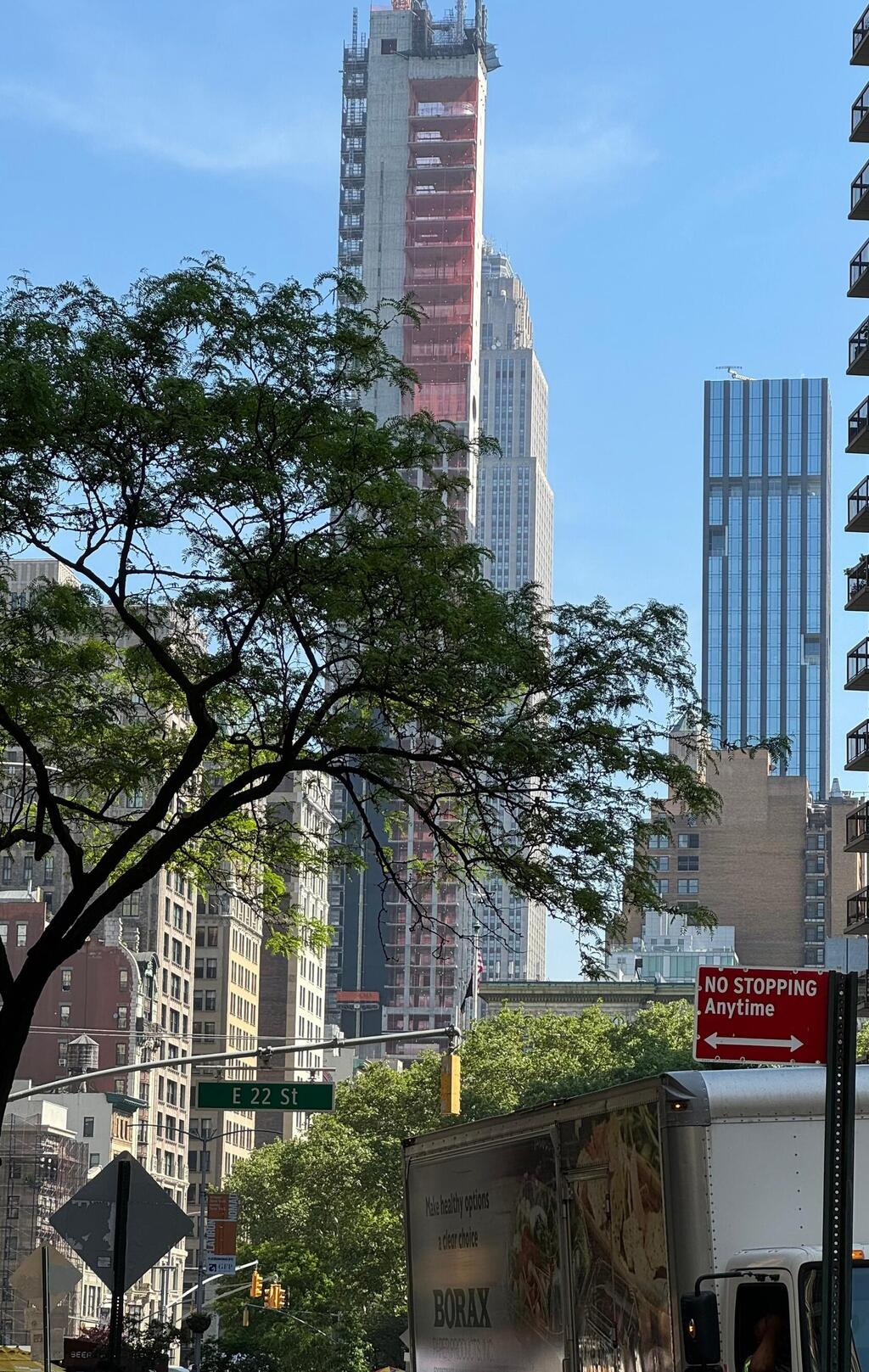
262 Fifth Avenue blocks one of New York City’s iconic landmarks
(Photo: Warren Eisenberg, shutterstock)
The 'pencil tower' trend for billionaires
The tower now at the center of the controversy is called 262 Fifth Avenue, one of the narrowest and most striking skyscrapers built in New York in recent years.
Construction on the project, which rises about 260 meters (853 feet) with 54 floors, is nearing completion in Manhattan’s trendy NoMad neighborhood near Madison Square Park. The building joins the wave of so-called “pencil towers” that have transformed Manhattan’s skyline over the past decade, ultra-slim skyscrapers designed exclusively for the wealthy elite.
Prominent examples of the trend include 432 Park Avenue, often referred to as a “billionaires’ tower,” Steinway Tower, considered one of the world’s thinnest skyscrapers, and Central Park Tower, the tallest residential building in the United States. In keeping with the model typical of such luxury towers, 262 Fifth Avenue was designed with a very limited number of sprawling apartments, with some floors dedicated to a single residence.
The building’s unusual proportions, impossibly narrow and exceptionally tall, made it one of the city’s most talked-about projects long before construction neared completion, but also one of the most controversial.
To make way for the tower, two existing buildings along Fifth Avenue were demolished. At the same time, a 12-story historic building from the early 20th century was preserved and incorporated into the base of the new project.
The decision to preserve the older structure was intended to create a dialogue between the street’s historic fabric and the contemporary skyscraper rising above it, while somewhat softening the dramatic presence of the new tower within the urban landscape.
Above the historic base rises an ultra-thin tower made of glass, aluminum and steel, with a minimalist facade and clean lines that further emphasize its extreme proportions. The upper section includes a prominent beam-like element connecting parts of the tower and creating a distinctive silhouette on the Manhattan skyline.
The combination of a massive historic base and a relatively light, slender tower creates a sharp architectural contrast that has become one of the project’s defining features.
Blocking one of the city’s symbols
Long before its first residents move in, the tower has already sparked widespread public backlash across New York.
The main focus of criticism has not necessarily been the building’s height or luxury apartments, but rather the fact that it dramatically alters one of the city’s best-known and most photographed views.
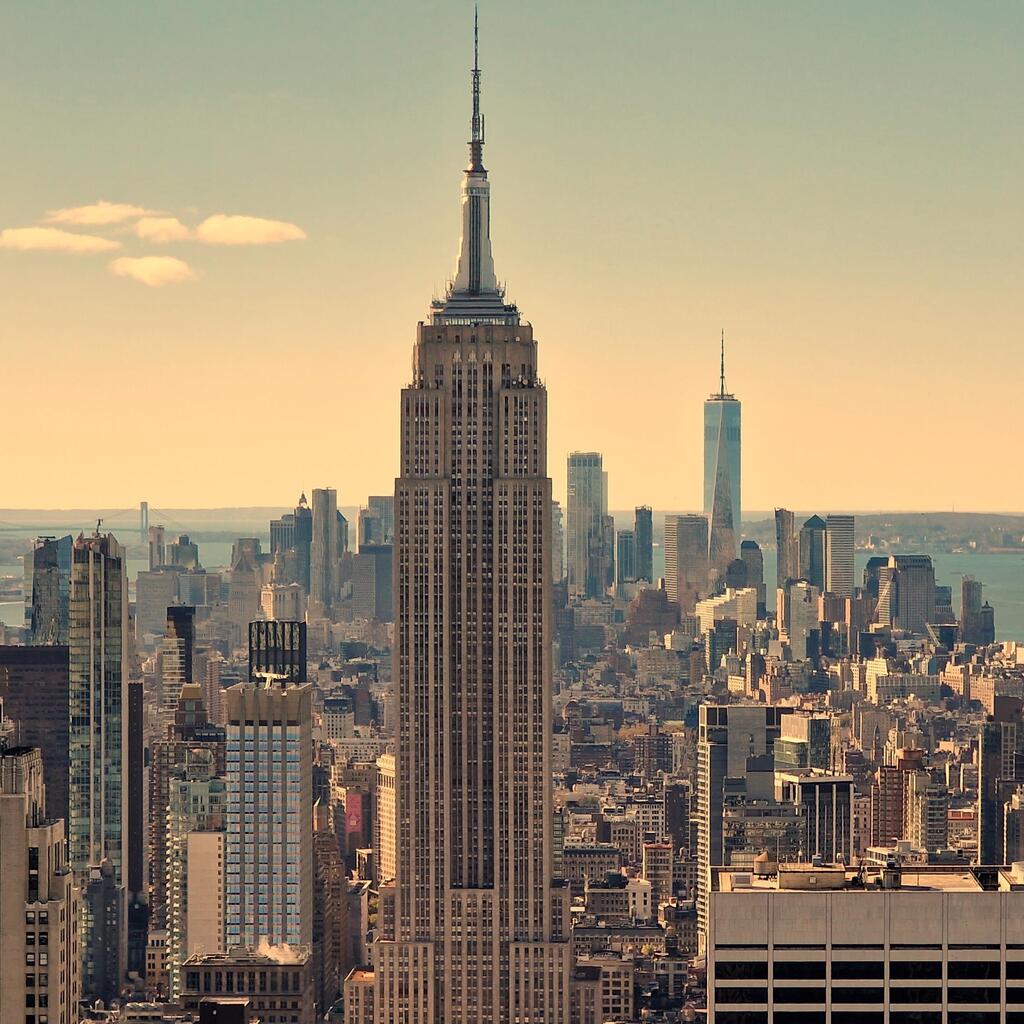
For years, Madison Square Park was considered one of the most iconic vantage points for viewing the Empire State Building. Today, however, the new tower blocks a significant portion of that view.
For many New Yorkers, this is about more than just another luxury real estate project. They argue that the city is gradually losing not only its historic skyline, but also its architectural identity and public space in favor of anonymous luxury towers aimed at the world’s wealthy.
In a viral video that has already amassed more than 6 million views, 254,000 likes and 100,000 shares on an Instagram page called “FU 262 5th Ave – Rage Page,” created in protest against the project, the person filming wonders why “the city’s most iconic spot” was destroyed and why the beloved Empire State Building is being hidden behind what he angrily calls a “piece of crap” project.
In recent months, viral social media posts have also urged New York City’s new mayor, Zohran Mamdani, to intervene and push back against the continued spread of ultra-thin luxury towers in Manhattan.
Some posts portrayed the building as a symbol of a New York built for billionaires and foreign investors rather than for the city’s residents. Others focused on the damage to the historic skyline and urban views associated with Manhattan.
Videos documenting the tower during construction have also circulated widely online, accompanied by especially harsh reactions. One post claimed that “they built a building so terrible that it affected New Yorkers’ mental and physical health. Ugly buildings make us sick.”
Although Mamdani has not directly addressed the project, he has in recent years voiced sharp criticism — largely economic in nature — of Manhattan’s luxury tower culture and of real estate projects he says are built primarily for billionaires and wealthy investors rather than city residents.
Additional criticism has focused on the tower’s unusual design and extreme proportions. American architecture critic Christopher Bonanos described the structure as looking “like it was designed by a pencil company”, a jab at its elongated shape associated with Manhattan’s “pencil tower” trend.
Other critics argued that the project has become a broader symbol of the city’s housing crisis. While New York struggles with a severe shortage of affordable housing and steadily rising prices, luxury towers containing very few apartments for an extremely wealthy population continue to rise across the city.
Alongside the criticism, some have argued that change is inseparable from New York’s constant evolution. They note that the city’s skyline has changed throughout its history, and that buildings provoking opposition today may eventually become an accepted part of the urban landscape.
Still, the debate surrounding 262 Fifth Avenue has reignited broader questions about the limits of high-rise construction in New York, the city’s planning regulations and the balance between economic development and preserving public space and urban identity.
As for finding a good, photogenic view of the Empire State Building, videos have already appeared online reassuring viewers that plenty of other angles and locations still offer unobstructed views of the iconic tower.
A Russian architectural firm’s first US skyscraper
Behind the ambitious project is Israeli-Russian businessman and real estate developer Boris Kuzinez, who spent years assembling the land on which the tower was built by gradually acquiring and combining several adjacent lots along Fifth Avenue.
The tower was designed by Moscow-based architectural firm Meganom, considered one of the most prominent and influential firms currently operating in Russia.
Founded in 1998 by architect Yuri Grigoryan, the firm became known for large-scale projects combining contemporary architecture, urban planning and historic preservation. Although Meganom is a highly recognizable name within Russia’s architectural scene, it has yet to achieve the same status in the West as leading firms in North America and Europe.
Among the firm’s major recent projects are the expansion of the Pushkin State Museum of Fine Arts, renovations within the Kremlin Museums complex, urban development plans along the Moscow River, new pavilions in Gorky Park and the transformation of the historic ZIL automobile factory complex in Moscow.
For Meganom, the tower marks a particularly significant milestone: it is the firm’s first project in the United States and also the tallest skyscraper ever designed by a Russian architectural firm in America.
The project website describes the tower as including “26 full-floor and duplex residences designed to maximize space, natural light and privacy. Each residence features column-free interiors and panoramic open views of the Manhattan skyline, creating a rare sense of openness in the city.”
In keeping with the project’s exclusive character, prices are, to say the least, far from ordinary. Single-floor simplex apartments start at about $7.5 million, mezzanine apartments begin at roughly $8.75 million, while duplex units spanning two floors start at approximately $18 million.