

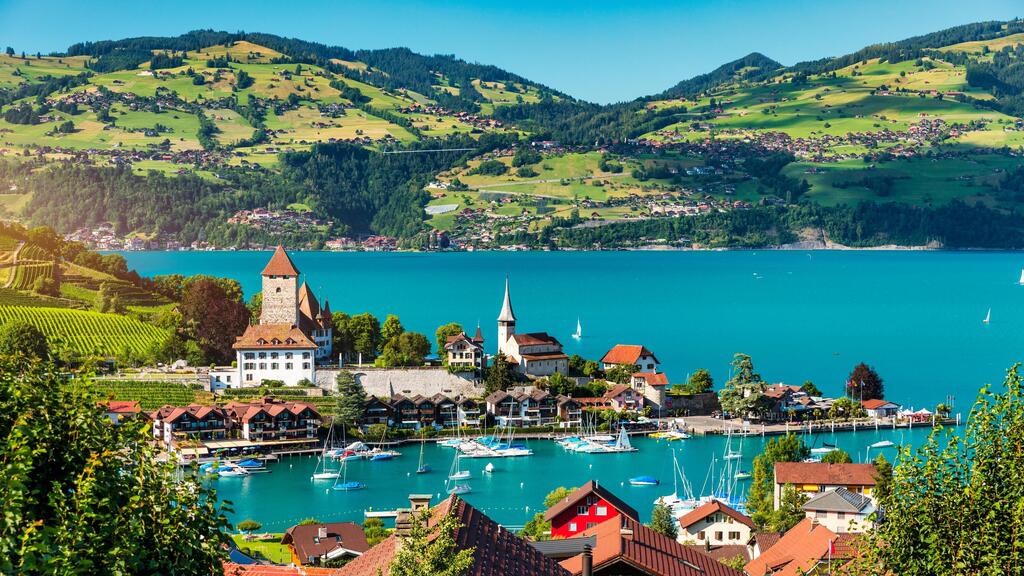

At a time when wars are once again becoming part of global reality, the issue of civilian protection is returning to the center of the public agenda. The war between Russia and Ukraine, the civil war in Sudan, fighting in eastern Congo and the war involving the United States and Israel against Iran all highlight how shelters and emergency infrastructure can be a matter of survival for millions of people.
Yet alongside these conflict zones are countries where war seems almost unimaginable. One of the most prominent is Switzerland — a country associated above all with political neutrality, stability and diplomatic isolation, a principle that has become a central part of its national identity for centuries. Precisely for that reason an intriguing question arises: how is it that the country often considered the most neutral in the world is also one of the most fortified when it comes to shelters and civilian protection infrastructure?
Gallery
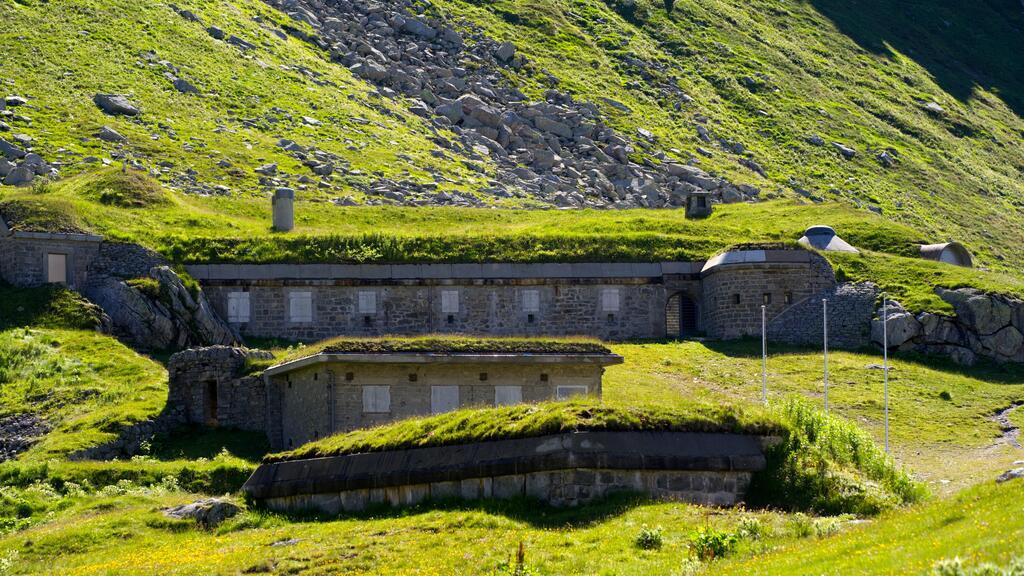
Not uncommon to hike in the mountains and find bunkers; Switzerland
(Photo: Michael Derrer Fuchs, Shutterstock)
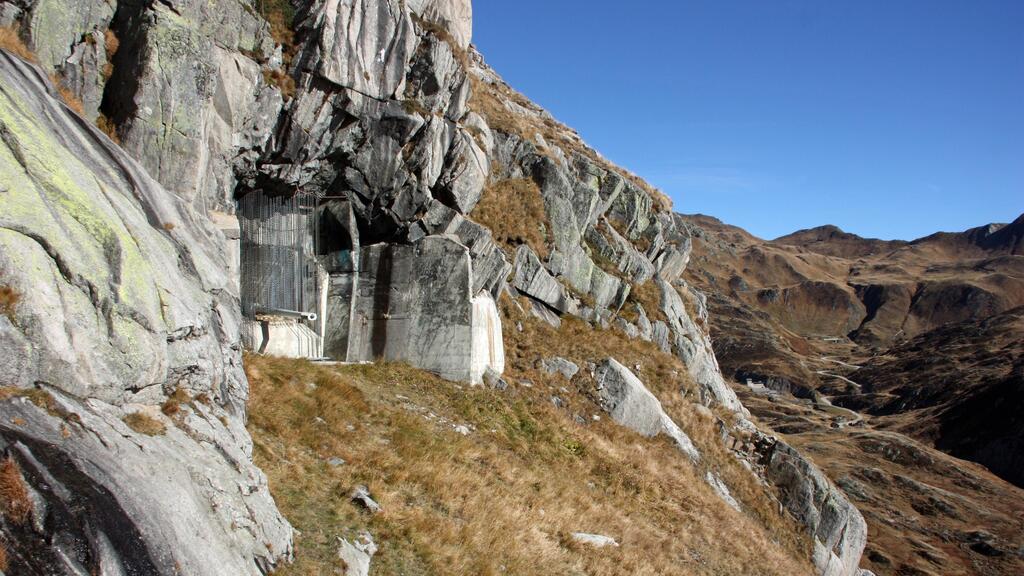
Bunker Gotthard pass at Swiss Alps
(Photo: danmi1, Shutterstock)
It may be hard to grasp, but Switzerland is likely the only country in the world that systematically prepared even for the scenario of nuclear war, and where every one of its roughly 9 million citizens is guaranteed a place in an atomic shelter. In nearly every residential building in the country — whether in a city or a village — going down to the basement reveals an especially heavy armored door, sometimes dozens of centimeters thick. Behind the door is a carefully designed nuclear shelter equipped with gas filters, specialized ventilation systems and infrastructure intended to allow people to remain inside for extended periods in the event of a nuclear disaster or chemical attack.
According to official Swiss government data, there are currently more than 370,000 private shelters across the country located in residential buildings, public institutions and other structures, alongside about 5,000 large public shelters in cities. Altogether, the shelters provide a safe space for every one of the country’s residents — an unusual figure on a global scale that makes Switzerland one of the most protected countries in the world.
It is not uncommon to hike in the mountains and encounter iron doors set into a green mountainside leading to reinforced concrete shelters. Tourist guides often explain during tours how the shelter system is embedded throughout Switzerland — in cities, villages and across all 26 cantons.
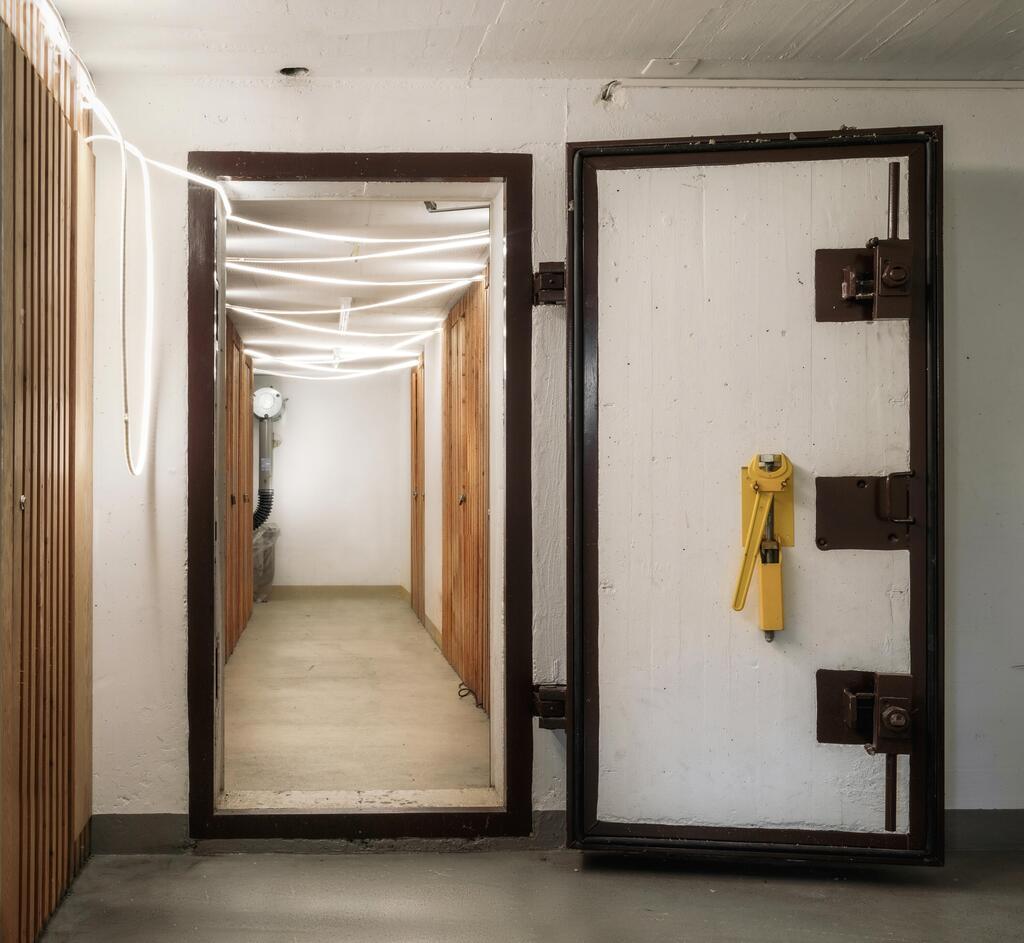
A typical shelter in a residential building in Switzerland; equipped for extended stays in emergencies, used for storage in routine times
(Photo: sophiecat, Shutterstock)
In peacetime, the shelter is a wine cellar
One of the main reasons for Switzerland’s unusual shelter network dates back to the Cold War, when fears of nuclear conflict in Europe became a real threat. In response, Switzerland enacted a civil defense law in 1963 requiring every new residential building to include a standard nuclear shelter in the basement, or alternatively to pay into a public fund used to build shelters in the area.
The decision was not based only on a specific fear but on a broader security concept that the state must protect not only the military but also the civilian population. Over decades, shelters were built in almost every new construction project, gradually creating a vast network of private and public shelters.
The law influenced not only security policy but also architecture. For decades, the shelter became an integral part of Swiss building design. Every new residential structure was planned with a protected space in the basement, often next to underground parking. This affected structural design, wall thickness, ventilation systems and the organization of underground spaces.
In that sense, Swiss protection is not expressed through unusual standalone bunkers but rather embedded in everyday architecture. Basement levels in thousands of residential buildings function in daily life as storage spaces — wine storage being one of the most common uses — along with pantries, laundry rooms with washing machines and dryers or bicycle storage rooms. Yet behind the armored doors lies a national emergency infrastructure: an architectural system ready to change function in the event of disaster.
The goal: confuse the enemy
The roots of Switzerland’s security concept go even deeper. As early as the 19th century, the country adopted a policy of “armed neutrality”: avoiding involvement in wars between other states while simultaneously investing in military and defensive preparedness to defend itself if necessary.
As part of this approach, fortifications and defensive installations were built over the years throughout the Alps to deter potential invaders. These included bridges designed to be destroyed at the push of a button to block invasions and the removal of directional road signs to confuse an enemy.
Even after the nuclear threat faded toward the end of the 20th century, Switzerland chose not to dismantle its bunkers. They are maintained so they can be activated quickly in an emergency. In recent years, amid the war in Ukraine and rising tensions in various regions of the world, Switzerland’s shelter system has again drawn public interest, highlighting how deeply rooted the belief remains that even neutrality does not eliminate the need to prepare for the possibility of war.
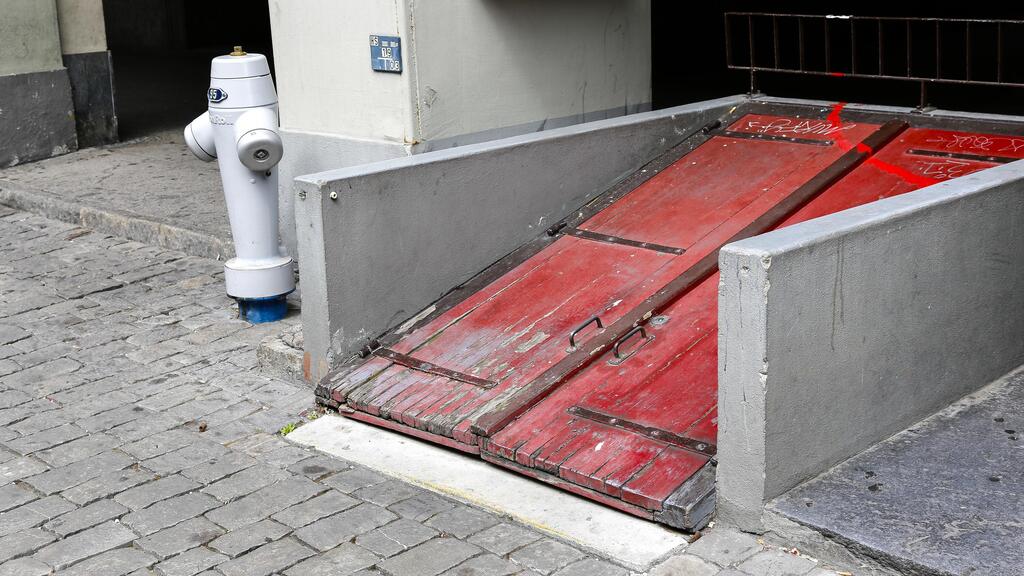
Entrances to protected basements can be seen on the streets, in this case in the city of Bern
(Photo: marekusz, Shutterstock)
Sleeping and tasting cheese in a military bunker
Over time, some of the old military bunkers and fortresses across Switzerland lost their original purpose. Structures once built to protect soldiers, equipment and weapons from bombardment have been transformed into unusual civilian spaces.
Across the country, former bunkers have been converted into museums, cultural venues, art galleries and even hotels. One notable project is Hotel La Claustra, a small hotel carved into a former military bunker in the Gotthard mountains. Where military installations once stood, guest rooms, a restaurant and lounge areas now occupy large chambers carved directly into the rock.
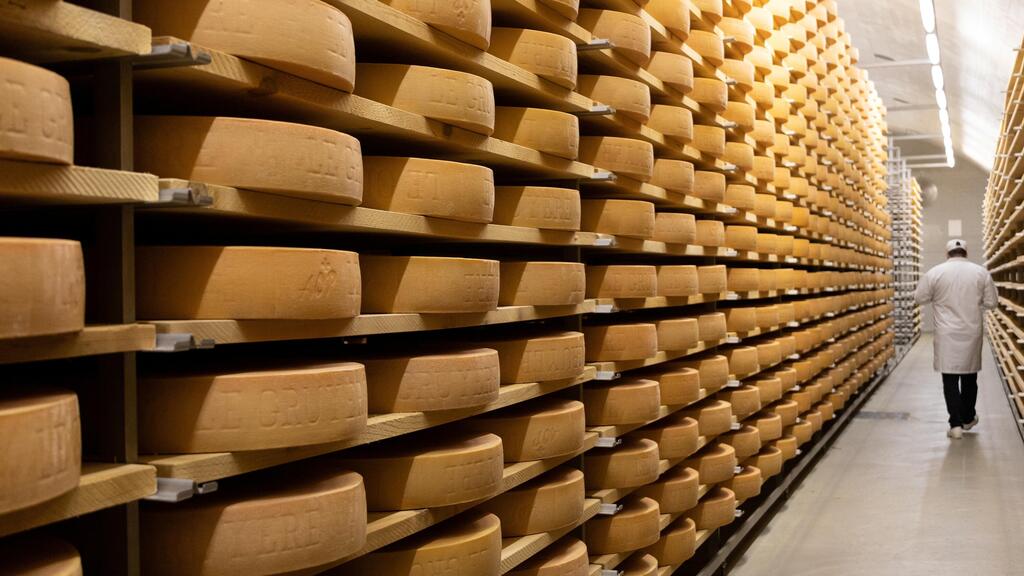
Cheese aged in caves that are actually bunkers
(Photo: Jeewa A, Shutterstock)
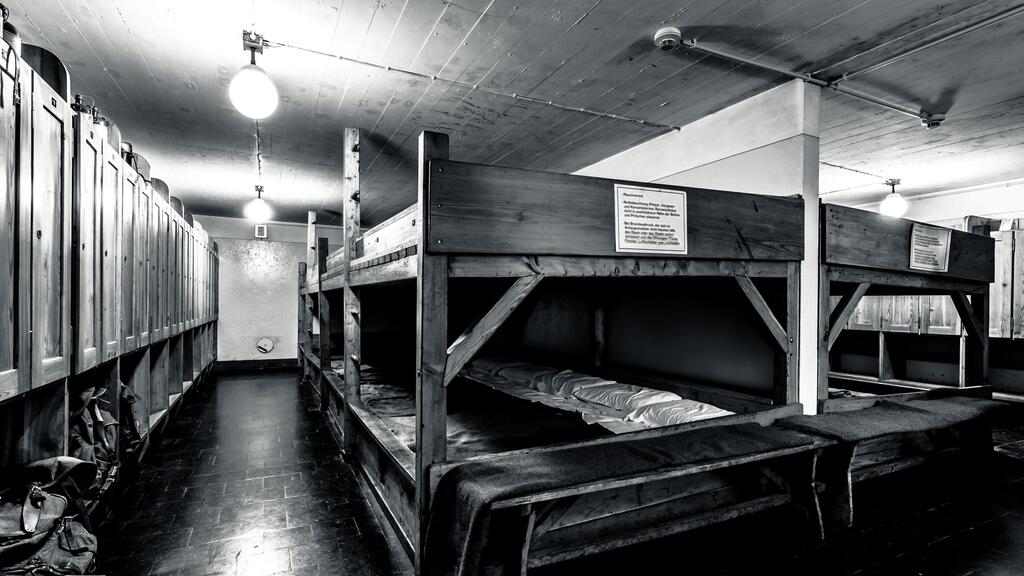
A bunker converted into the Sass San Gottardo museum
(Photo: DominikPhoto, Shutterstock)
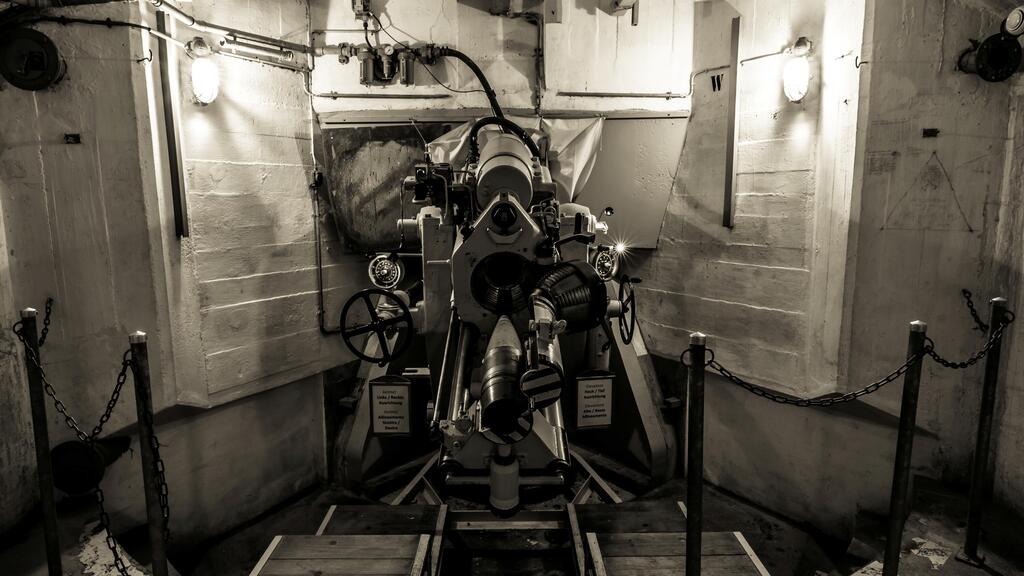
Some of the defensive weapons remain; Sass San Gottardo
(Photo: DominikPhoto, Shutterstock)
The hotel opened in 2004 and includes about 17 rooms, some minimalist and others designed as spacious suites within the original bunker spaces. The site also includes a restaurant, conference center and hospitality areas that take advantage of the dramatic underground atmosphere. One of the most striking elements is the spa area, with pools and baths fed by natural spring water from the region — giving the once-rugged military structure an almost meditative character.
Another notable example is the Sasso San Gottardo project at the St. Gotthard mountain pass. The site originated during World War II as part of Switzerland’s secret fortification network at the strategic Alpine pass linking northern and southern Europe. Command rooms, firing positions and long tunnels were carved inside the mountain to defend the country in case of invasion.
Later, the fortress lost its military role but instead of being abandoned it was turned into a museum open to the public. Visitors can now walk through thick concrete corridors and massive underground chambers displaying exhibitions about Swiss military history alongside scientific and artistic displays. The project illustrates how infrastructure created for defense can become a cultural and educational space.
Some bunkers have found more practical civilian uses. Former military structures across Switzerland have been converted into underground mushroom farms, cheese-aging cellars and food storage facilities. The physical conditions inside bunkers — thick concrete walls, stable temperatures, controlled humidity and lack of natural light — create ideal environments for growing mushrooms such as shiitake or aging hard cheeses.
One notable site is the Kaltbach Caves beneath a sandstone hill near Lucerne, which serves as a major cheese-aging facility. The caves house more than 22 million kilograms of Emmental and Gruyère cheese aging in complete darkness under the supervision of expert cheesemakers. Natural airflow, stable temperature and high humidity create ideal conditions in which the cheeses develop complex flavors and character. Visitors can tour the tunnels, see the storage chambers and sample the products.
Another hidden layer of Cold War infrastructure lies beneath the streets of Zurich. Beneath the city’s central railway station, Zürich Hauptbahnhof, a massive civil defense bunker was built in the 1960s designed to shelter up to about 20,000 people in the event of nuclear war.
The facility was planned as a complete underground living space and includes advanced ventilation and air filtration systems, food and supply storage, medical infrastructure, sanitation facilities and sleeping areas designed to allow thousands of people to remain underground for extended periods. The bunker is not regularly open to the public, though occasional tours are offered during civil defense events or architecture festivals. Its presence beneath one of Europe’s busiest train stations illustrates how Switzerland’s emergency infrastructure is embedded within everyday urban systems — a hidden layer of the city meant to remain invisible until needed.
The tension between pastoral calm and war
Not all underground structures in Switzerland originated from military infrastructure. Contemporary architecture sometimes adopts the same logic of protected spaces built into mountainsides.
One example is Villa Vals, a luxury residence constructed almost entirely inside a mountain slope in an Alpine village. Designed by the Dutch architecture firm SeARCH and the Swiss firm CMA, the house was integrated directly into the topography. Instead of a building rising above ground, most of the spaces are carved into the mountain, with only a large circular facade facing the valley revealing the home’s presence.
Entry to the villa is through an underground tunnel passing through a nearby barn, while interior spaces open toward a panoramic window framing the dramatic Alpine landscape. Although not a bunker in the military sense, the project demonstrates how Alpine architecture continues to adopt principles of concealment and construction within the mountain. The villa serves as a vacation rental and can even be booked through Airbnb.
Ultimately, the significance of Switzerland’s shelters is not only about public safety but also about a culture of long-term planning. In a country where pastoral landscapes and political and economic stability are often taken for granted, there remains a pragmatic understanding that stability can change quickly.
Perhaps for that reason Switzerland chose to embed emergency preparedness into everyday architecture — not as a temporary response to crisis but as a permanent element of civilian infrastructure.
In that sense, comparison with Israel is almost unavoidable. While in Israel protective infrastructure emerged from a prolonged and complex security reality, in Switzerland it was built largely out of a desire to prevent future surprises. The two countries differ greatly in history and circumstances, yet both demonstrate that architecture ultimately concerns not only housing, landscapes and aesthetics but also a society’s ability to prepare for what may come.
In Israel, however — despite living under a constant security threat — not every citizen has access to a protected space. At least one-third of the country’s residents must make do without nearby, adequate or standard-compliant protection.