


There is no shortage of unusual materials in contemporary design, but every so often a raw material appears that manages to surprise even those who thought they had seen it all. In recent years, used tennis balls have joined that list. Usually discarded shortly after a match, they are being transformed, in the right hands, into raw material for furniture and design elements with a distinctive presence.
The choice of this unconventional material takes on added meaning ahead of the Wimbledon tennis tournament in London, one of the world’s biggest sporting events, where about 55,000 tennis balls are used and replaced throughout the competition, which runs from June 29 to July 12. Beyond aesthetics, the use of discarded balls reflects a broader trend in design: the search for new ways to think about waste, materials and the relationship between sustainability and contemporary creation.
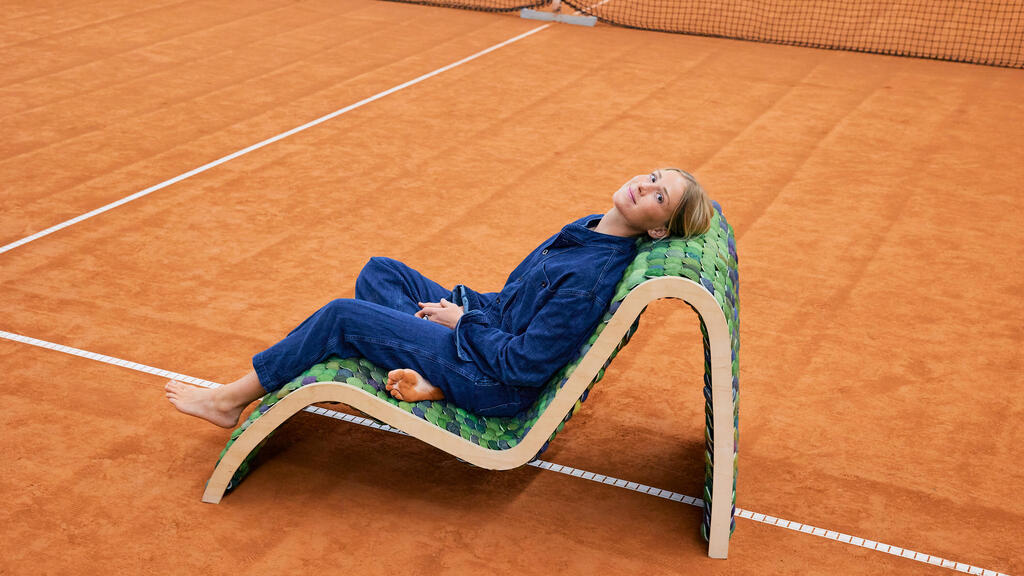
In recent years, a new approach has been gaining ground in the design world, one that seeks not only to recycle materials but also to preserve their identity, signs of use and original qualities as an integral part of the new product. Instead of breaking the material down completely or erasing its past, more and more designers are choosing to highlight the story it carries: the wear, texture, color and material memory accumulated over time.
In this way, ordinary objects that may seem worthless are transformed into raw materials with a distinct character and a unique visual language. Tennis balls stand out within this trend. Their recognizable color, rough outer surface and elastic structure allow them to combine visual, tactile and acoustic qualities with a broader environmental statement.
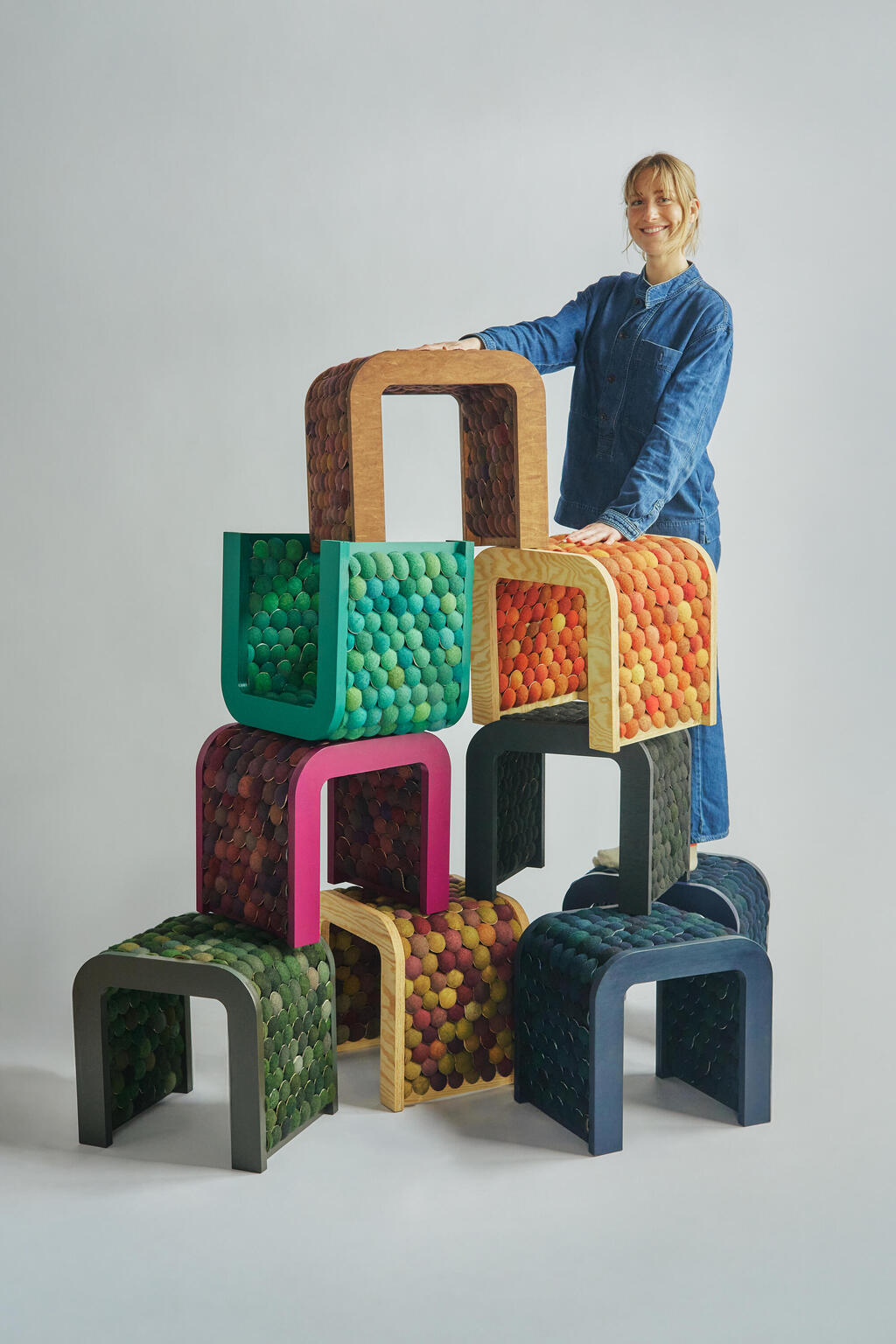
Mathilde Wittock, founder of MWO Studio, Belgium
(Photo: Rodolphe de Brabandere)
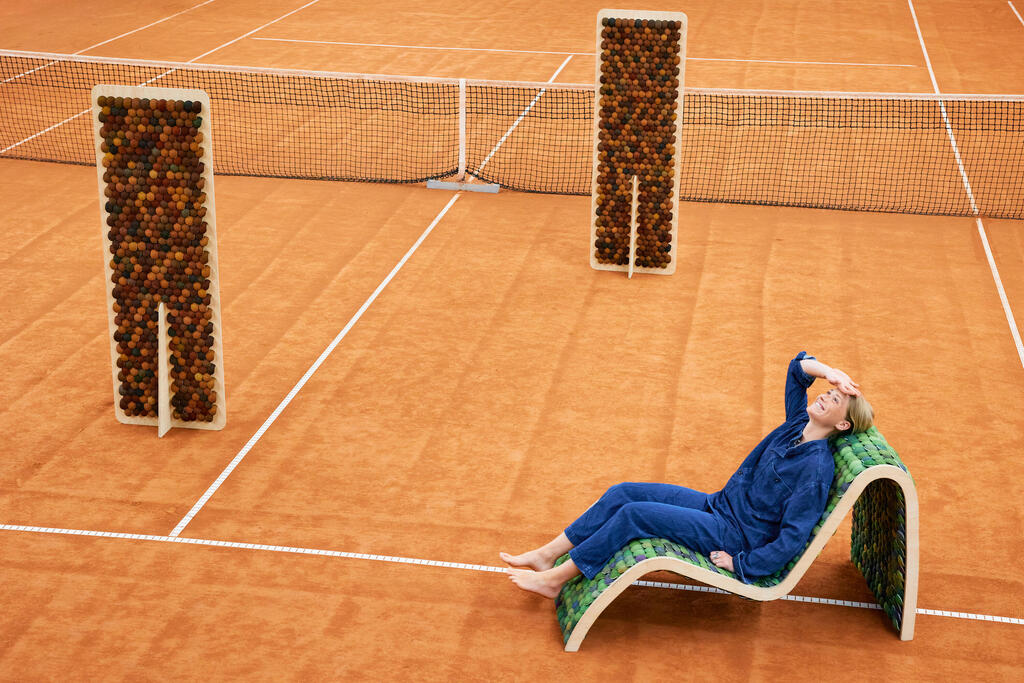
Armchairs and acoustic partitions made from a common material: worn-out tennis balls
(Photo: Rodolphe de Brabandere)
The dark side of the white sport
Among the designers working in this spirit is Mathilde Wittock, a young Belgian designer and graduate of the prestigious Central Saint Martins design school in London, who completed a bachelor’s degree in product design and a master’s degree in bio-design in 2021.
After graduating, she founded MWO Design, where she develops work focused on the study of unexpected materials and the search for new uses for everyday waste. At the center of one of her best-known projects are used tennis balls, which she collects from courts and turns into furniture such as benches, chairs and partitions, as well as acoustic elements in a range of colors, including yellow, orange, green, blue and burgundy.
Instead of shredding the material or concealing its origin, she chooses to preserve the balls’ shape, texture and original qualities, making them a central element in the visual language of her work. And the price? From 500 euros per piece.
In an interview, Wittock said the project was also born out of a desire to address the enormous amount of waste generated by the global tennis industry. According to her, about 400 million tennis balls are thrown away worldwide every year, while only around 1% are recycled.
Producing a tennis ball takes five days and requires about 24 different steps, but its lifespan is only about nine matches, which means tennis, as a sport, has a huge waste problem, she said in an interview.
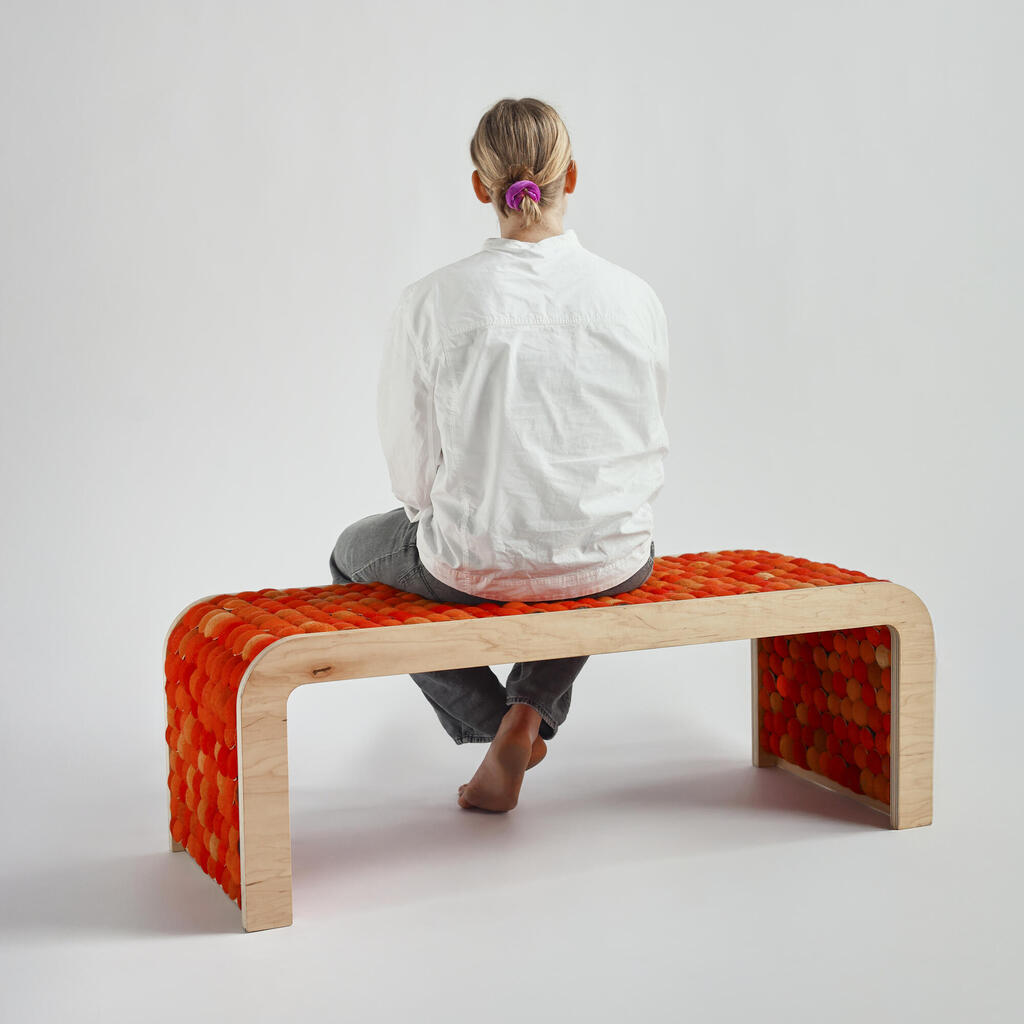
A bench
(Photo: Rodolphe de Brabandere)

Another bench
(Photo: Courtesy of MWO Design)
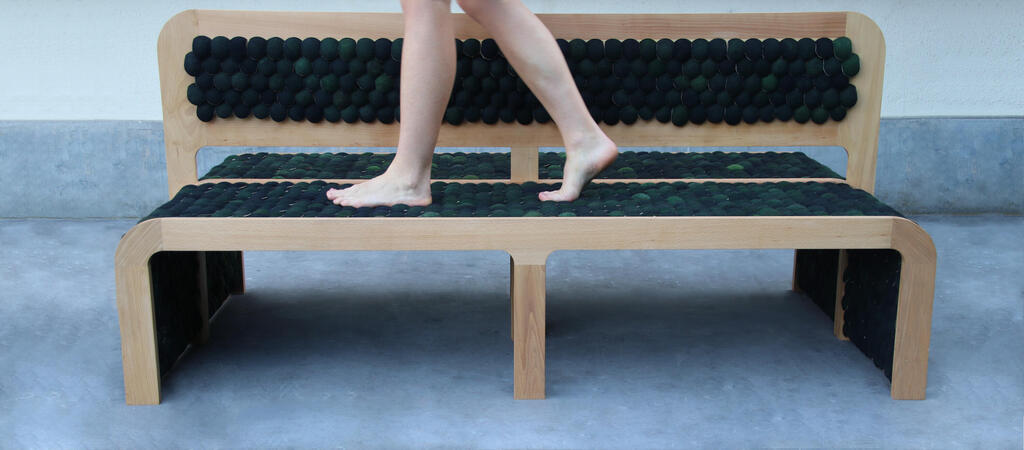
And another one. Each piece uses tennis balls in a different color
(Photo: Courtesy of MWO Design)
New furniture with old signs of wear
Her work combines material research, sustainable design and technological experimentation, in an effort to prove that even materials considered waste can become resources with aesthetic and functional value. Through her work, she seeks to challenge the way the design industry defines raw materials and examine how everyday objects discarded after only brief use can be given entirely new lives. Instead of treating waste as something to hide or break down, she makes it a central part of the design language itself, including the signs of wear, colors and history the material carries.
Since completing her studies, her work has gained international exposure and been presented on various design platforms and in exhibitions. She continues to develop solutions based on circular economy principles and on a renewed examination of the relationship between material, use, consumption and waste in contemporary design.
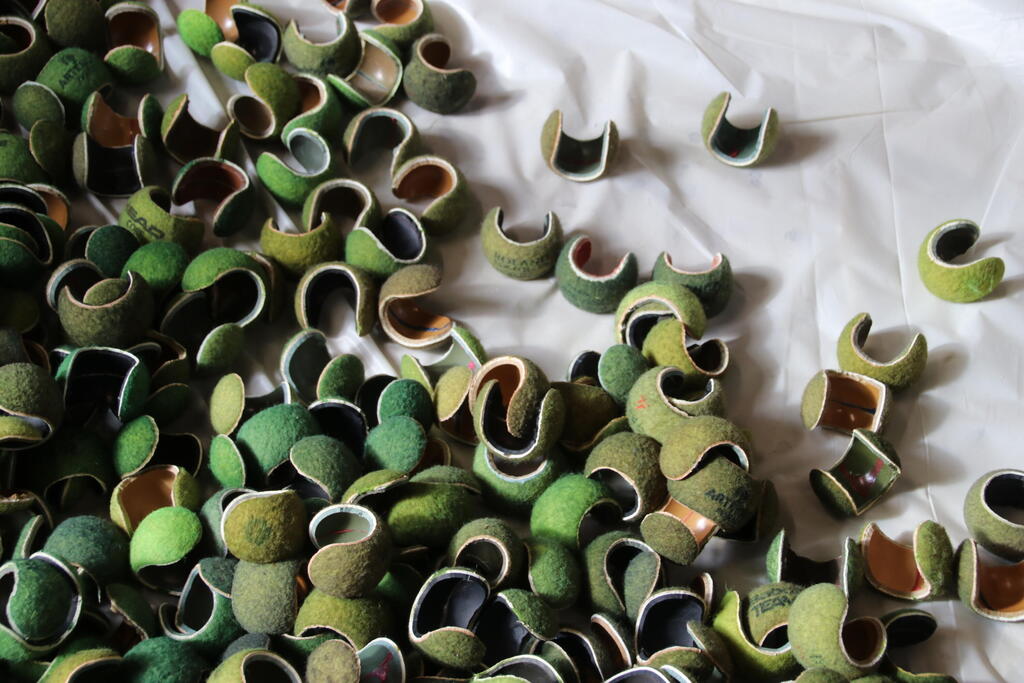
The process begins with the manual collection and sorting of hundreds of used tennis balls
(Photo: Courtesy of MWO Design)
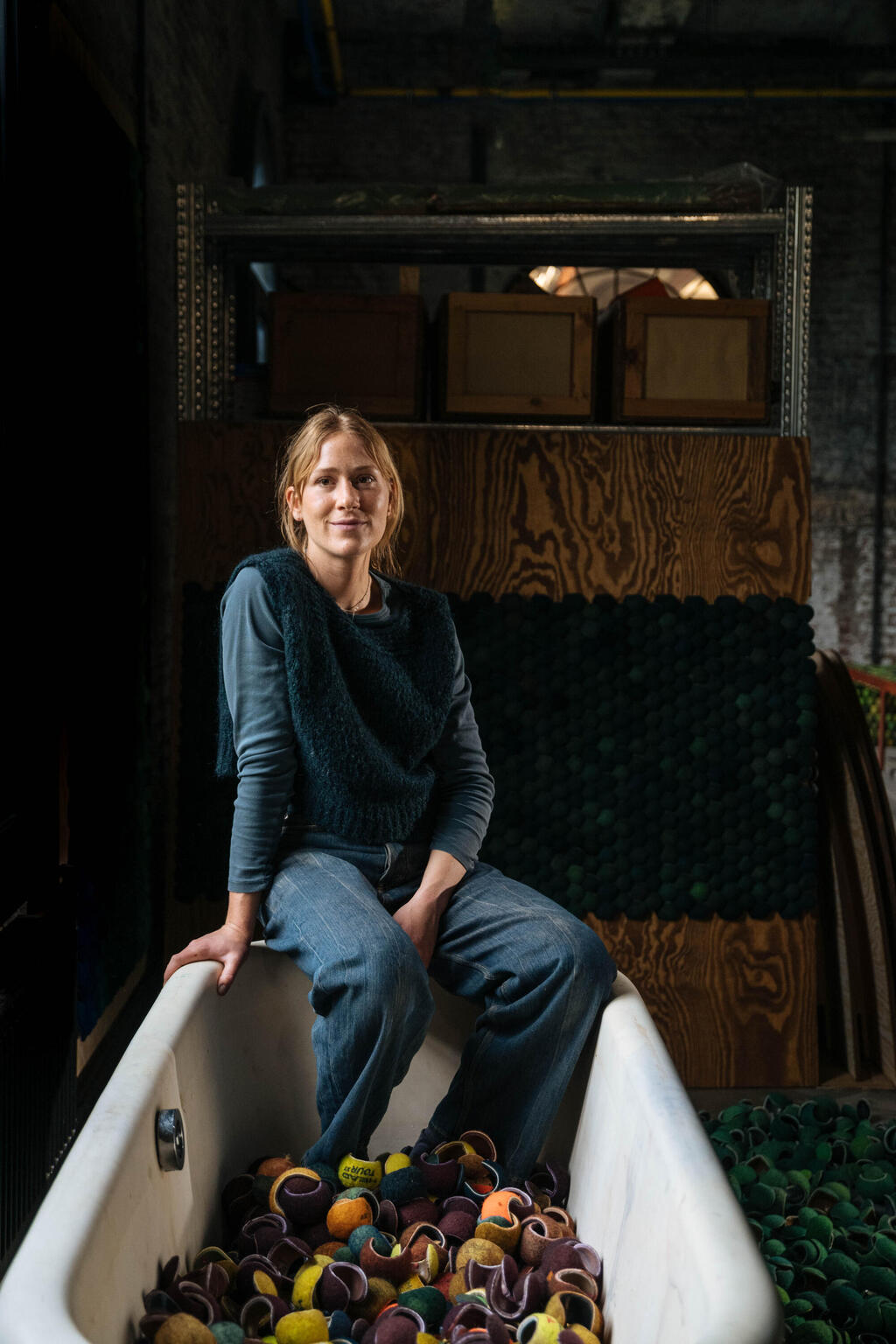
Instead of polluting the environment Wittock gives the balls a new life
(Photo: Seppe Elewaut)
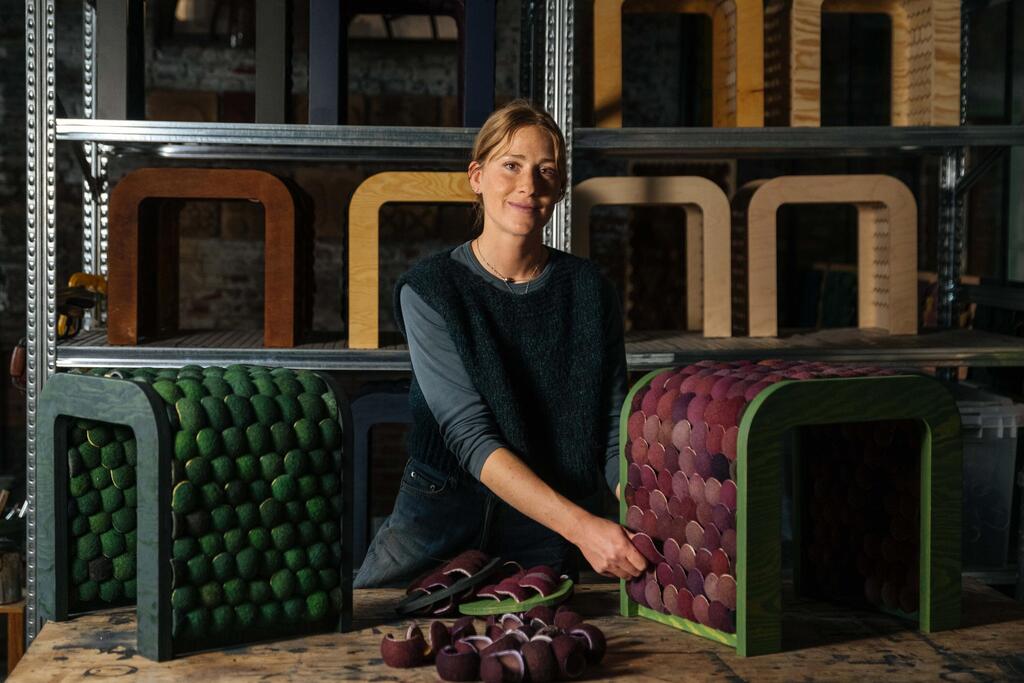
Wittock assembles the processed balls onto an aluminum or wooden frame
(Photo: Seppe Elewaut)
The process begins with the manual collection and sorting of hundreds of used tennis balls, which she gathers and receives for free, each with its own unique color, degree of wear and surface texture.
She then cuts the balls along the white seam and removes brand logos, making it possible to integrate the material into a wide range of applications. Next, she creates custom frames, partitions, and dedicated furniture surfaces (such as birch, oak, or metal) into which the deconstructed balls are embedded to form a flexible, highly textured layer that serves as an alternative to traditional textiles and upholstery, which also provides strong acoustics.
She says that most existing recycling methods for tennis balls rely on complete material breakdown, such as burning off the outer layer or grinding the rubber, a process that effectively destroys the material’s original properties and, as one might expect, also pollutes the environment.
The finished pieces are far from looking like a student project or a DIY creation. Instead, they resemble high-end furniture items with an impressive sculptural presence. Over the years, she has developed a series of benches, chairs, lounge armchairs, partitions and acoustic panels in which the tennis balls create colorful surfaces with a distinctive three-dimensional texture.
In some works, the balls’ familiar yellow hue is retained, while in others they are dyed in varying shades and transformed into pixel-like elements that build patterns and surfaces. The result merges functionality, comfort and acoustics with a bold visual language that blurs the boundaries between furniture, material research and art installation.
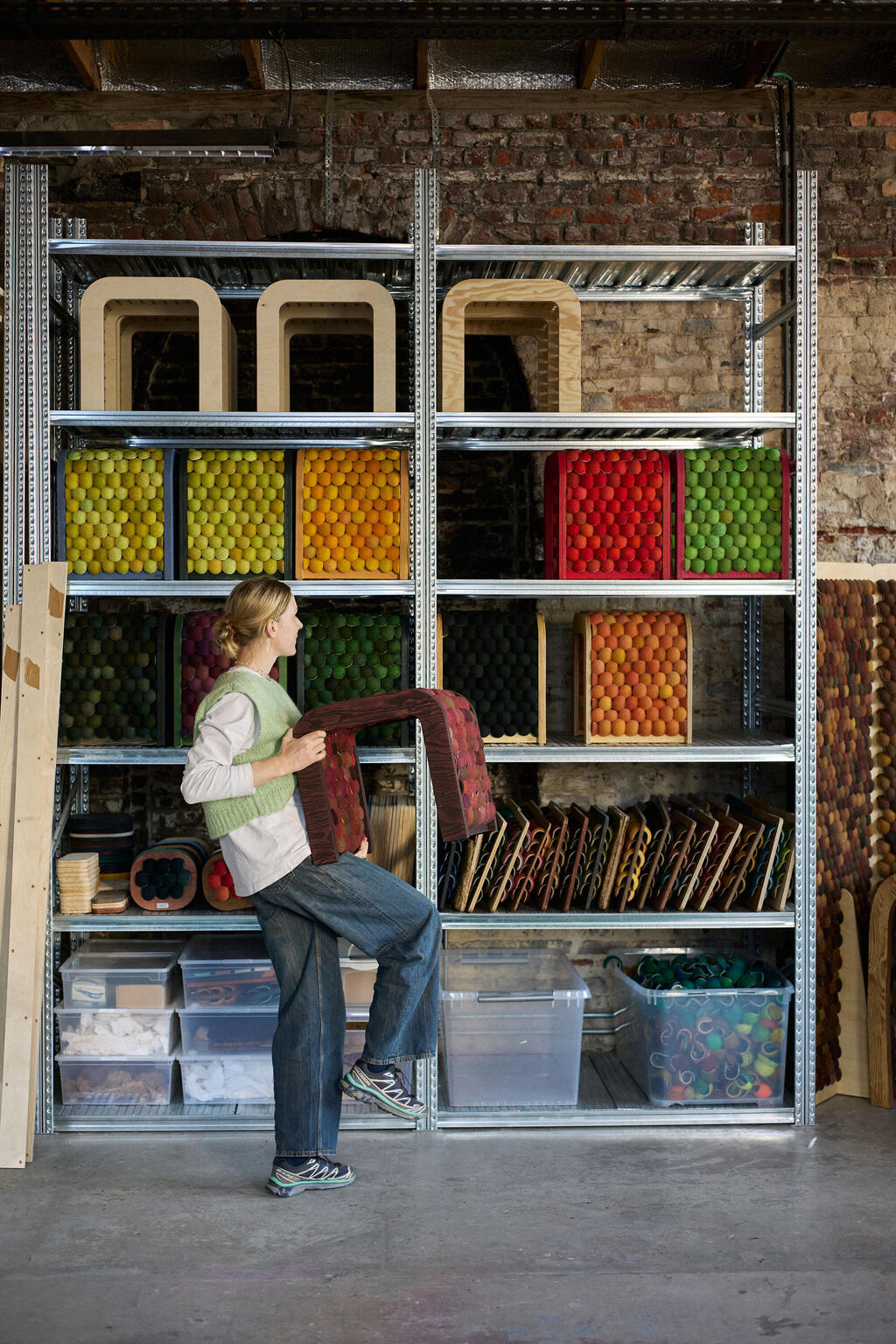
The balls are dyed in varying shades and transformed into pixel-like elements
(Photo: Seppe Elewaut)
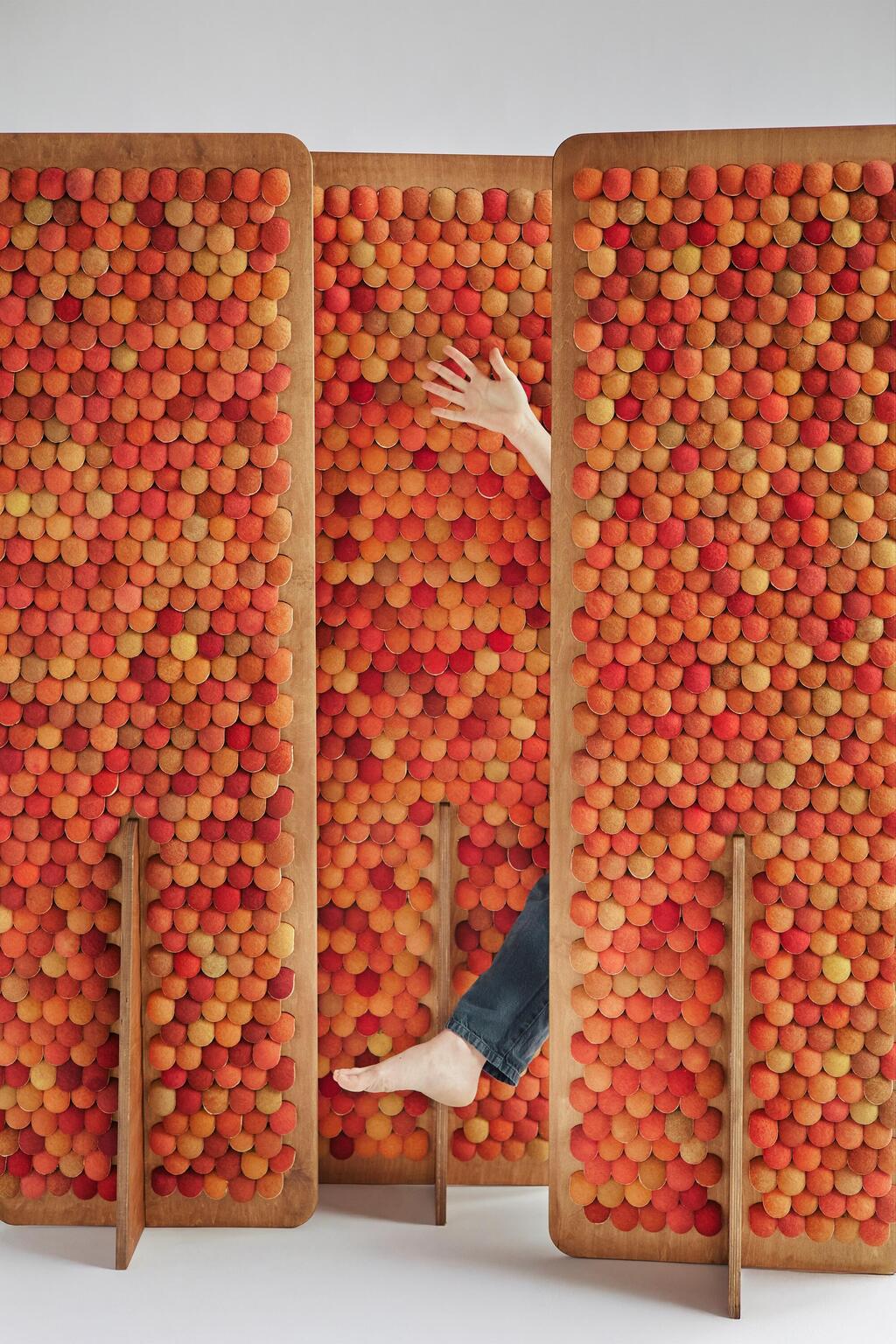
Acoustic partitions, MWO Studio, Belgium
(Photo: Rodolphe de Brabandere)
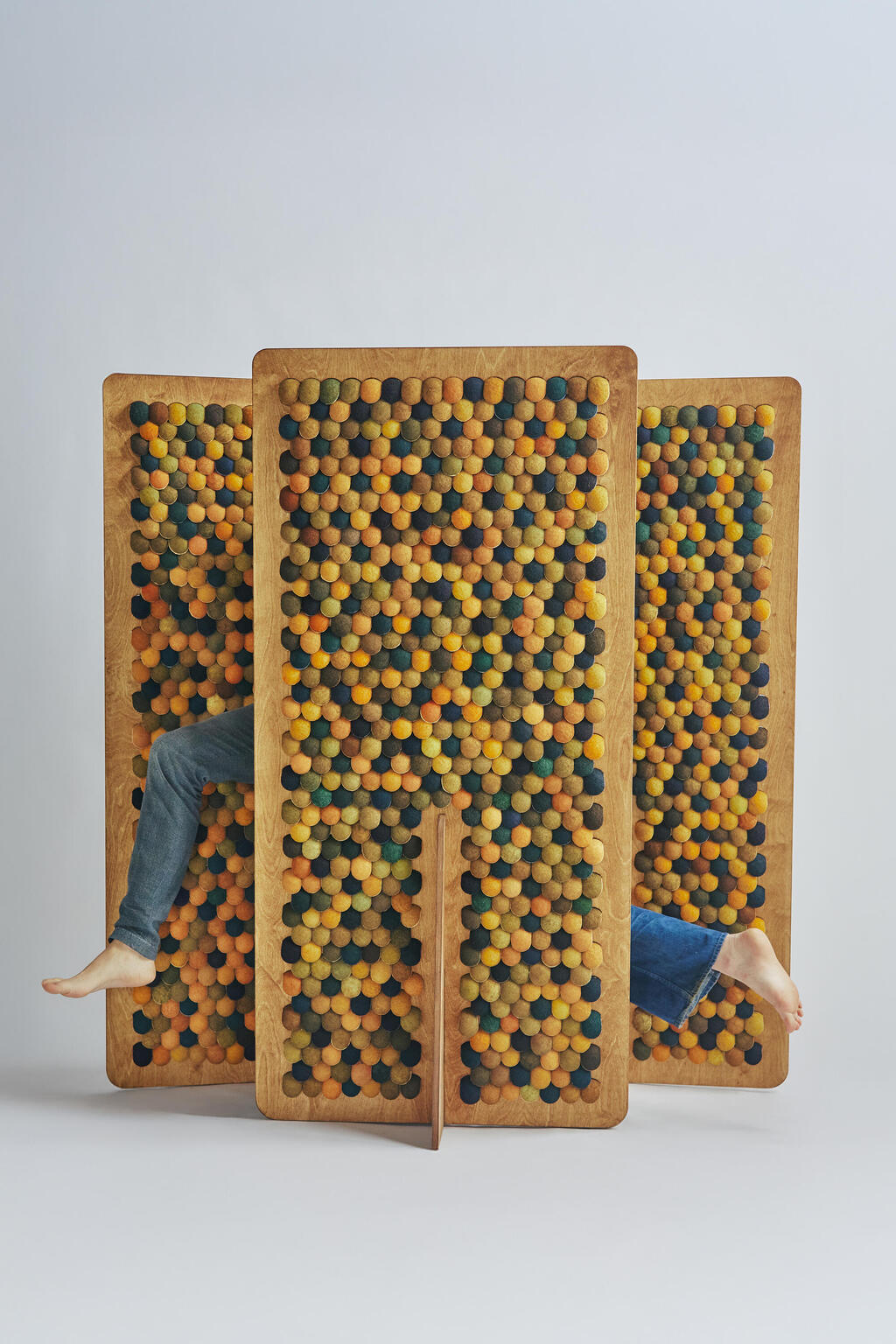
Each piece specifies how many tennis balls were used in its production
(Photo: Rodolphe de Brabandere)
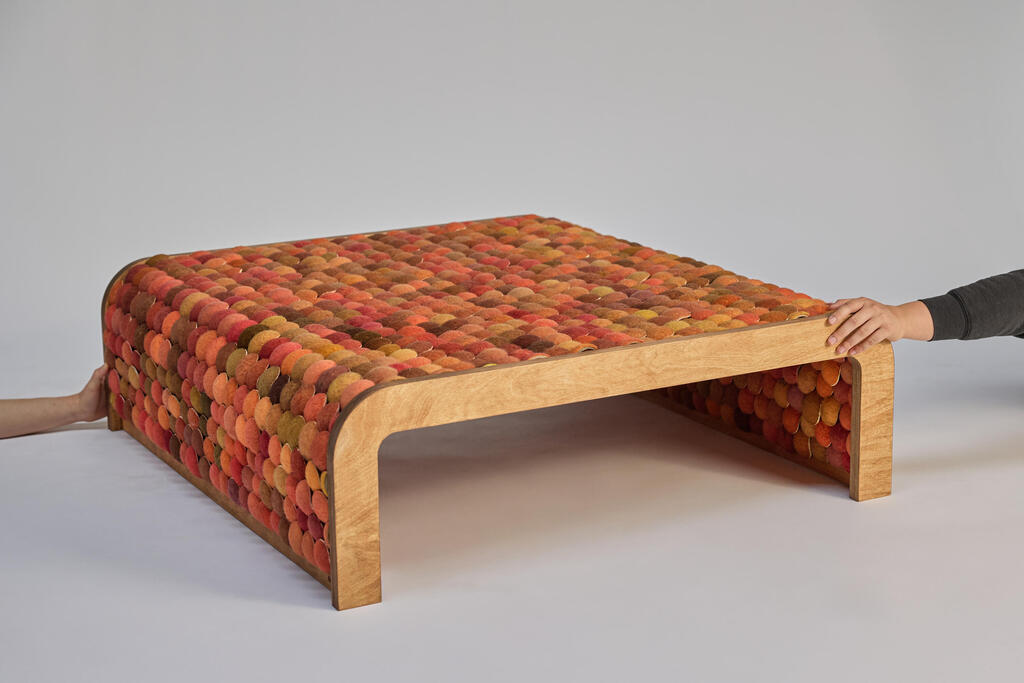
Coffee table, from 500 euros per item
(Photo: Rodolphe de Brabandere)
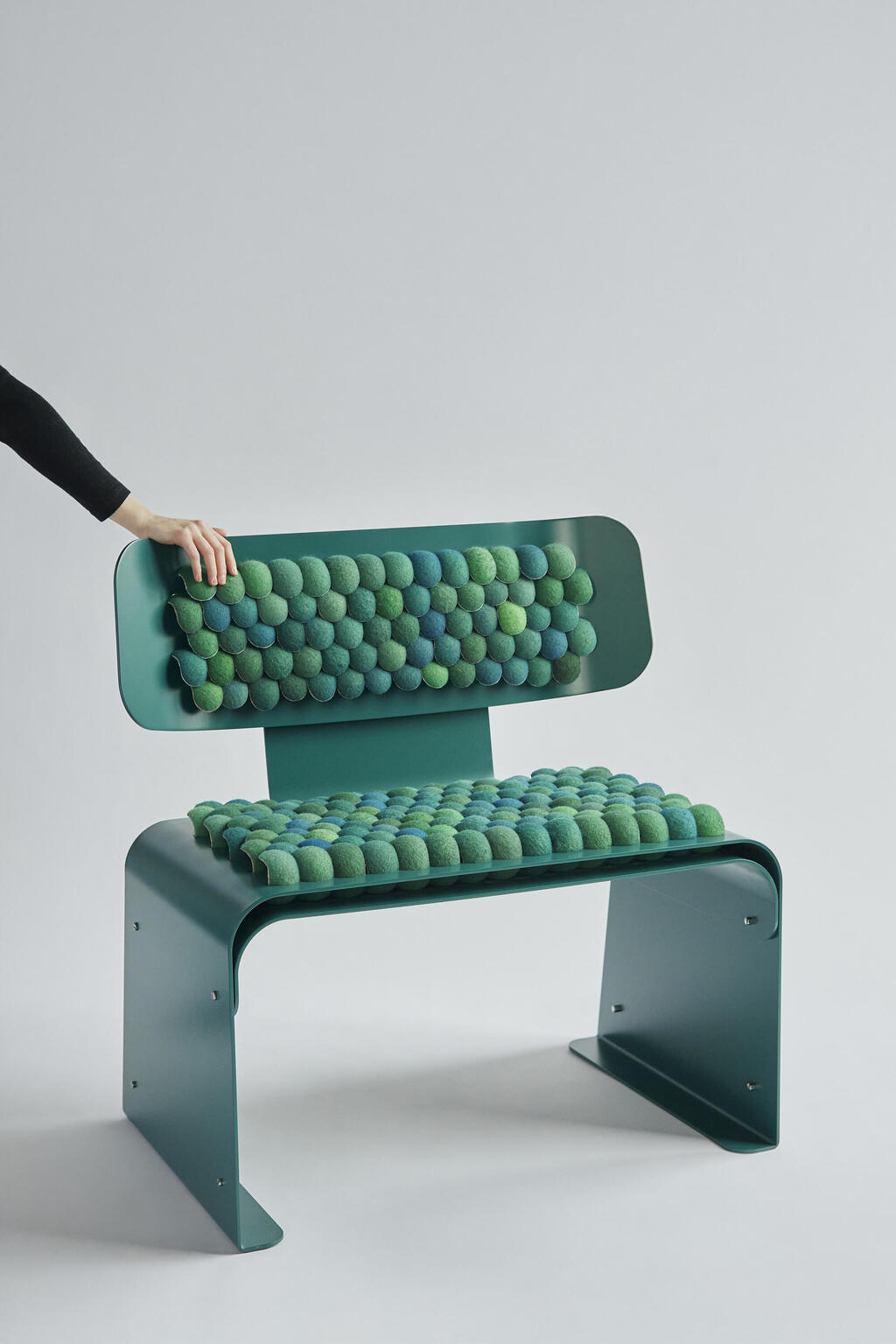
Aluminum chair with a tennis-ball seat
(Photo: Courtesy of MWO Design)
The gold of tomorrow
Beyond the design aspect, Wittock also sees her projects as an attempt to propose a broader perspective on the future of design. According to her, regenerative materials, whether waste-based or biological, will become the “gold of tomorrow.”
She speaks of a future in which recycled materials return to the center of the design process, with production, collection and processing systems based on local and renewable resources. In an interview, she said that in landfills we can find almost everything we need, and that there is therefore no reason to continue digging into the earth and destroying landscapes and natural resources when so many valuable materials already exist around us, waiting to be reused.
In each piece, she also specifies how many tennis balls were used, along with an estimated calculation of the CO₂ emissions reduced through the upcycling process.
Although still early in her career, Wittock is already setting out a defined vision for the path she wants to pursue. She says her dream is to keep creating new value for materials through science, design and art. She views materials themselves as carrying emotional and sensory weight that is as significant as the objects they ultimately form, conveyed through touch, scent, color and the sounds they generate.
Wittock, who has a particular interest in how sound affects both people and the environment, hopes to one day establish a joint team of materials researchers and designers to develop ecological and sensory solutions for interior spaces.
In a world where climate change and waste are creating growing challenges, her work seeks to rethink the relationship between design, industry and environment, and to explore how even materials considered waste can become part of a new design vision.