


In an era when most people listen to music through headphones or home speakers, often alone, the shared experience of live performances in packed halls with grand stages and live orchestras seems to be fading. Music now accompanies our walks, work, and travels, often losing its weight as a unique event and human encounter.
And yet, despite this shift, the world is now witnessing a renewed investment in large-scale cultural venues that aim to restore music’s physical and communal dimensions. These projects attempt to reframe the basic act of listening, not through screens, but in a space shared by hundreds or thousands of people.
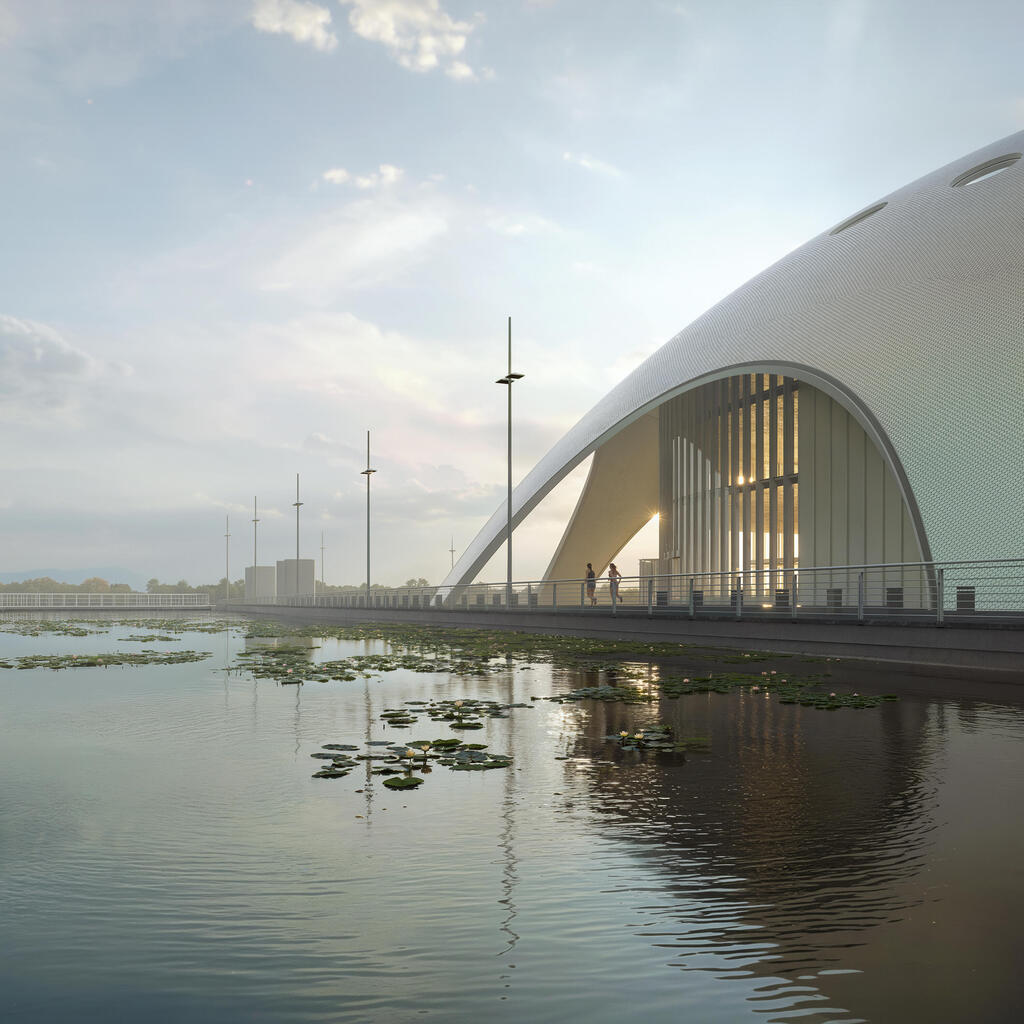
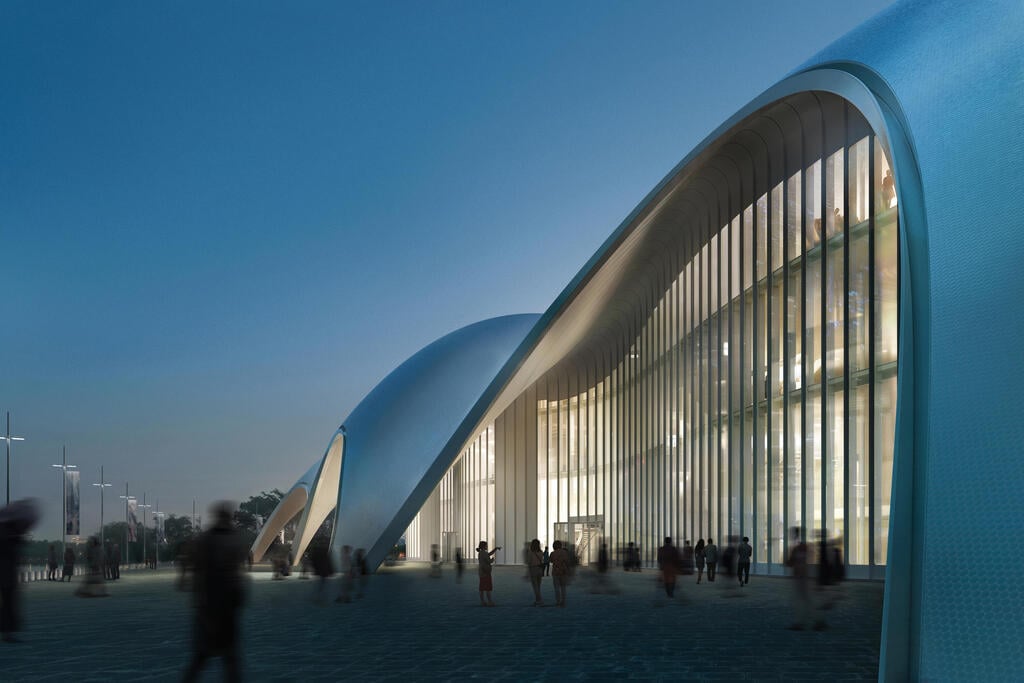
The opera house is inspired by the pearls once harvested in the area
(Illustration: Renzo Piano Building Workshop)
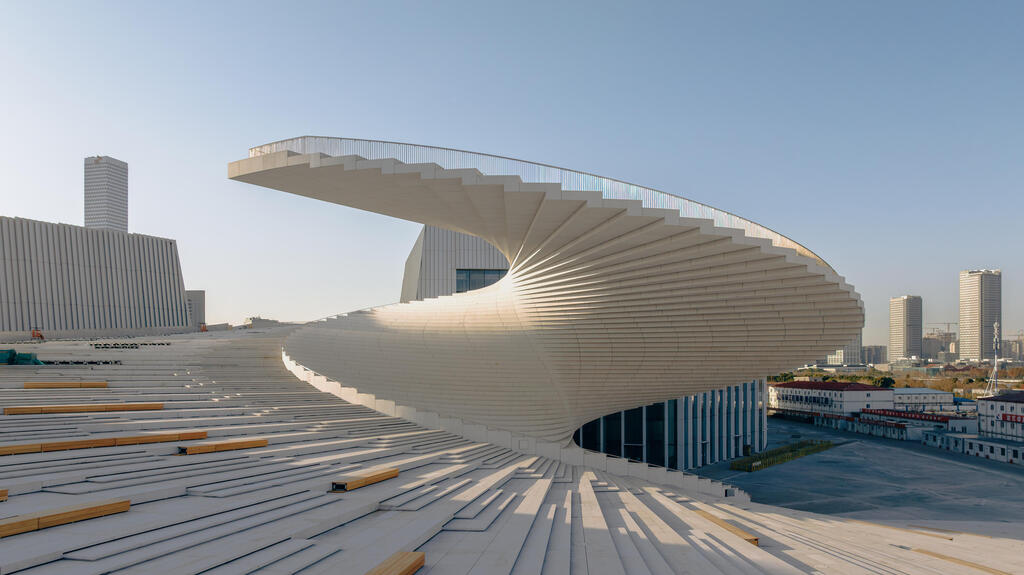
The new opera house in Shanghai rises like a spiral into the sky
(Photo: Yumeng Zhu)
One such example is the construction of a new opera house in Hanoi, part of a broader trend of designing and building new opera houses across the globe.
This trend isn’t unique to Vietnam: in the past decade, many cities around the world have funneled significant budgets into opera houses, cultural centers, and concert halls as part of broader cultural strategies and efforts to shape urban identity (this phenomenon also extends to spacious museums and other cultural hubs.)
In Shanghai, a new opera house with sculptural architecture emphasizes the city’s status as a global cultural center; in Taiwan, a vast performance complex has opened in recent years, housing several auditoriums under one roof; and in Kuwait, a major cultural center, including an opera house, museums, and theaters, has been built as part of a national branding initiative.
Even in Saudi Arabia, which Finance Minister Bezalel Smotrich imagines as all deserts and camels, a new opera house is currently under construction in Riyadh. It is one of the country’s most ambitious projects, integrated into a network of public spaces, gardens, and museums, designed to elevate Riyadh’s standing as a global cultural capital.
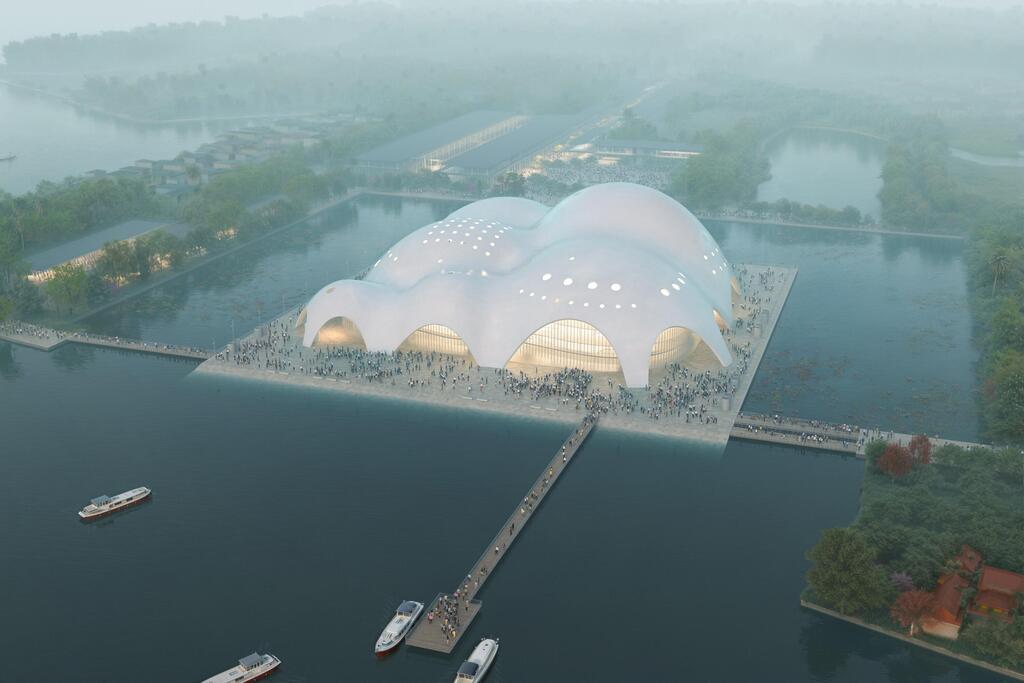
New opera house in Hanoi
(Illustration: Renzo Piano Building Workshop)
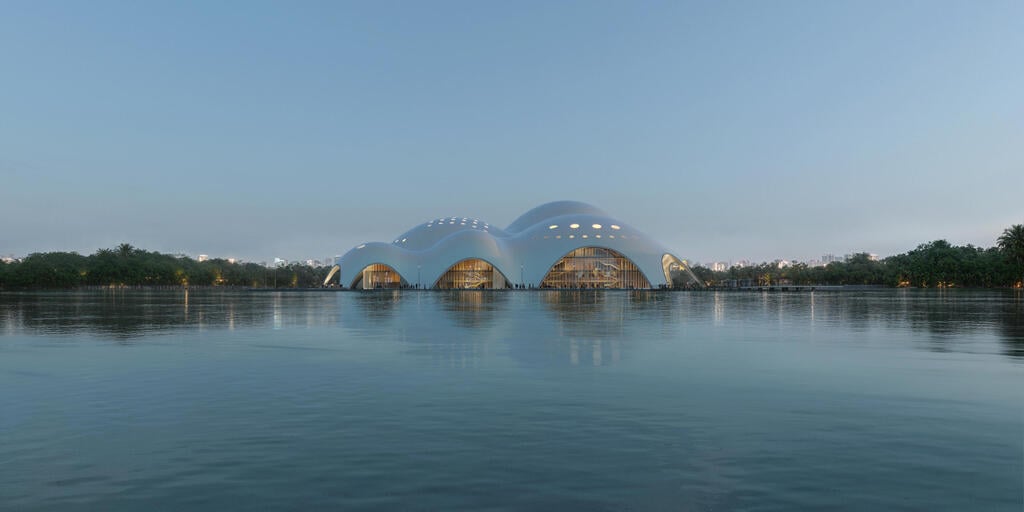
Restoring music’s physical dimensions
(Illustration: Renzo Piano Building Workshop)
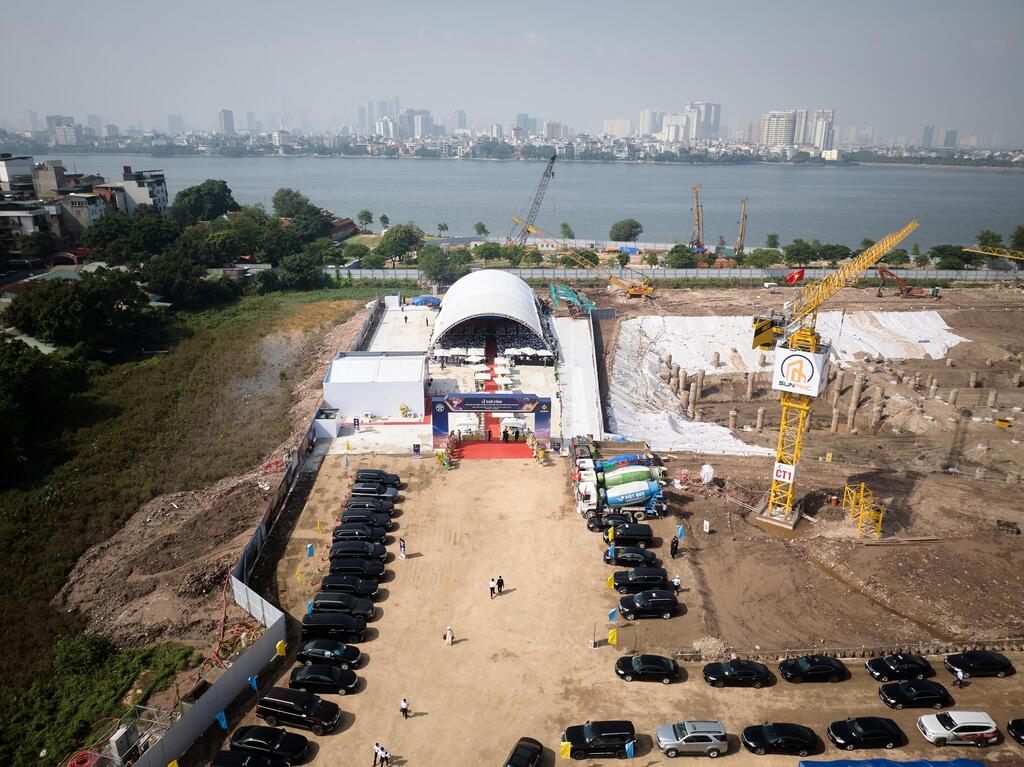
New opera house built in Hanoi
(Illustration: Renzo Piano Building Workshop)
The old world adapts to the new
For many cities, cultural buildings are no longer just venues for music; they are strategic tools for crafting an urban image and generating economic growth. In a post-pandemic reality where opera and concert attendance have declined globally, the architecture of opera houses has taken on renewed significance.
These structures have become icons (there’s no single body compiling global opera statistics, but data from key institutions - Opera Europa in Europe, OPERA America in the U.S. and Canada, and Operabase for global production data -shows a 27% drop in opera attendance compared to pre-COVID levels).
Cities now recognize that a striking, unconventional, and internationally visible building can draw attention, attract tourists, create “Instagram moments,” encourage guided tours, and put a city on the global cultural map. New opera houses and cultural halls are no longer used as just performance spaces, but also function as public areas, such as rooftop promenades, green parks, and tourist destinations that don’t require a ticket. These venues offer more than just "content"; they deliver a full urban experience, thus justifying their immense cost.
So, opera, perhaps one of the genres most closely associated with the “Old World”, is being reimagined as a project of urban futurism. Not necessarily because of the music, but because of the architecture that frames it.
That vision is now taking shape in Hanoi. Construction of a new opera house in the city, designed by the renowned architect Renzo Piano, has recently begun. It is called the “Island of Music” (Isola della Musica), as the venue sits on a man-made floating island in Hồ Tây (West Lake), a large lake in the city’s north.
The area, once home to oyster fishermen who traded in rare pink, orange, and white pearls, is undergoing a major urban renewal. About 13,000 square meters of land were dredged to create the island, which will feature a main opera hall with 1,800 seats, a 1,000-seat multipurpose performance space, a cultural and arts park, and recreational areas. The ambitious and distinctive project is scheduled to open in 2027.
A main opera hall with 1,800 seats, a 1,000-seat multipurpose performance space
(Illustration: Renzo Piano Building Workshop)
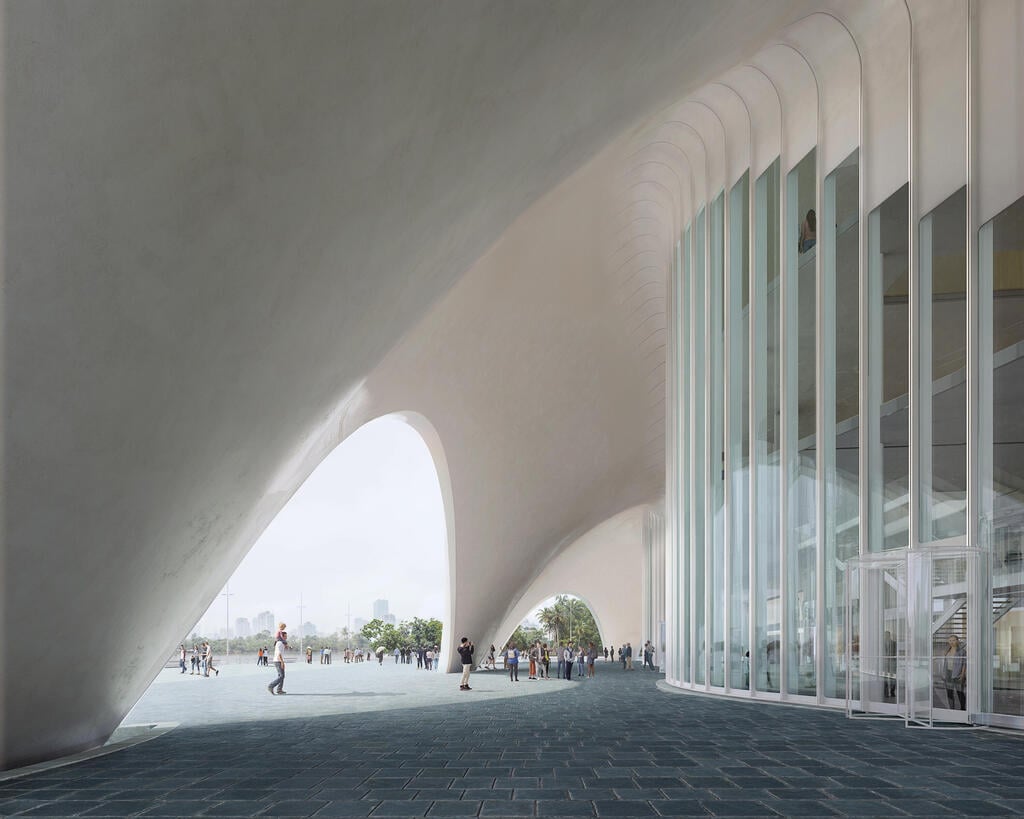
Built on a man-made island. Hanoi
(Illustration: Renzo Piano Building Workshop)
A twisting shell as tribute to oysters
Beyond the fact that the opera house is built on an artificial island in the middle of a lake, its architectural design is among the project’s most striking features. The building, constructed from concrete in a polygonal form, is designed to resemble a twisted shell, a nod to the oysters once common along Hanoi’s shores. This natural inspiration isn’t just aesthetic, but a theme that defines the entire composition.
The volumes of the building curve and spiral around each other, with façades that reveal interior functions in a nearly sculptural fashion. The organic design avoids rigid symmetry, favoring forms derived from natural growth patterns and refined mathematical relationships.
Behind this flowing appearance lies a highly complex engineering process. Architects and engineers developed parametric models to balance poetic design with structural efficiency. The concrete shell is optimized to bear heavy loads, suited to the local climate, and resistant to seismic activity, critical in a region prone to earthquakes. This design approach also helped reduce construction costs and optimize production on-site.
The new opera house is part of a broader renewal project around Hanoi’s lake. As part of the initiative, surrounding water features, including the lotus pond of Pho Linh Pagoda and Thuy Su Lake, will be restored with native lotus plants to revive the landscape’s cultural and ecological character.
Additionally, eight new boat docks will be built along the shoreline to enable future urban water transport. One dock will connect directly to the opera house, allowing access by foot, car or boat. The plan envisions a rich, accessible public space where the building, landscape, and city coexist as a living system, rather than isolated islands of separate functions.
The Hanoi opera project, designed by Renzo Piano, one of the most influential figures in global architecture and winner of the 1998 Pritzker Prize, bears the hallmark of his style. Piano is renowned for a sensitive, human-centered approach to design, aiming to create structures that are not just visual icons but integral parts of the urban and natural fabric in which they exist.
He often works with light, natural materials, and lightweight structural systems, frequently drawing inspiration from natural phenomena such as waves, clouds, shells, and sunlight, transforming them into architecture that is precise, technological, and refined.
Piano is the mind behind some of the world’s most iconic buildings, including the Centre Pompidou in Paris (designed alongside Richard Rogers, redefining the relationship between architecture, city, and public, which is now undergoing extensive interior renovations), the Shard in London, the auditorium Parco della Musica in Rome, and the Whitney Museum of American Art in New York.
Across his works, Piano demonstrates a unique ability to balance delicacy with engineering ambition, creating buildings that seem to float while relying on meticulous and complex planning systems. In Hanoi, this approach continues: the new opera house features sculptural, flowing forms reminiscent of a shell, yet is supported by an efficient, precise structural system that allows openness, optimal acoustics, and a direct connection to the surrounding landscape.
It’s not a sealed-off, monumental object, but rather a space that seeks dialogue with the lake, the vegetation, and the public. It invites people to stay, move, and listen. In this sense, the opera house is not just a stage for music, but rather a part of how Hanoi seeks to redefine itself: as an open, modern city, embracing water, culture, and human connection.
On a broader level, Hanoi’s new opera house reflects a growing urban aspiration found around the world: to create culture through architecture, and to define a city’s image through a single building.
Such initiatives always walk a fine line between cultural prestige and political or economic statements, but in Hanoi, the effort feels like a genuine call for a future where music, water, and city life move in the same rhythm. Whether the opera house becomes a new international symbol or simply a place where locals pause to hear a melody, it is already helping to redefine what public culture means in an age where sound is reclaiming physical space.
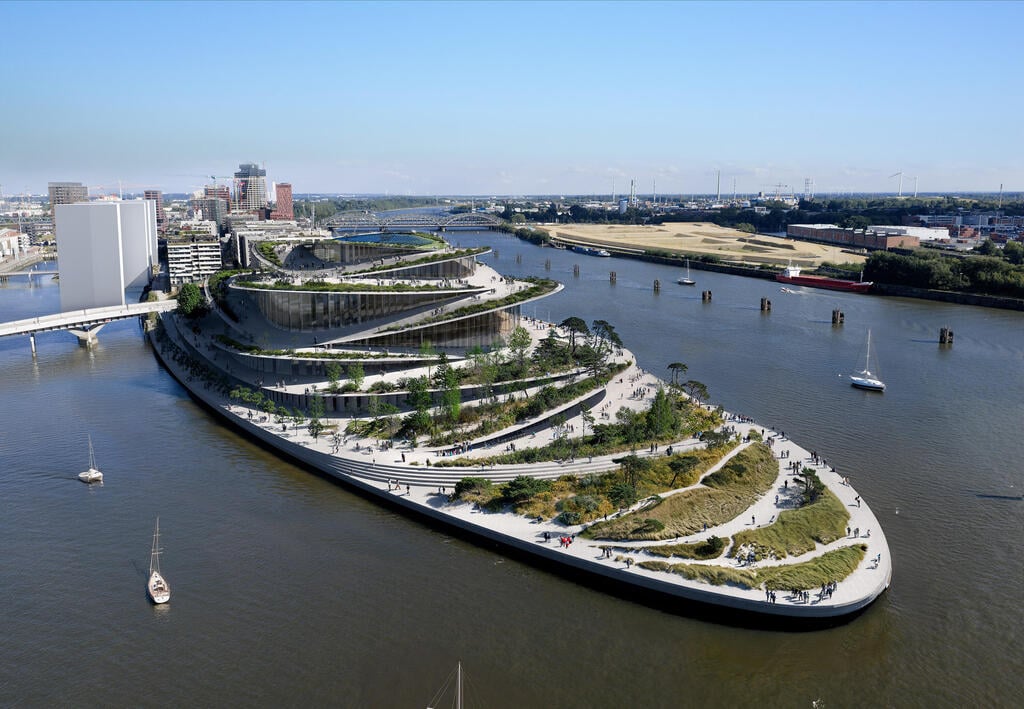
New Hamburg state opera NHO concept coastal
(Illustration: Yanis Amasri, BIG)
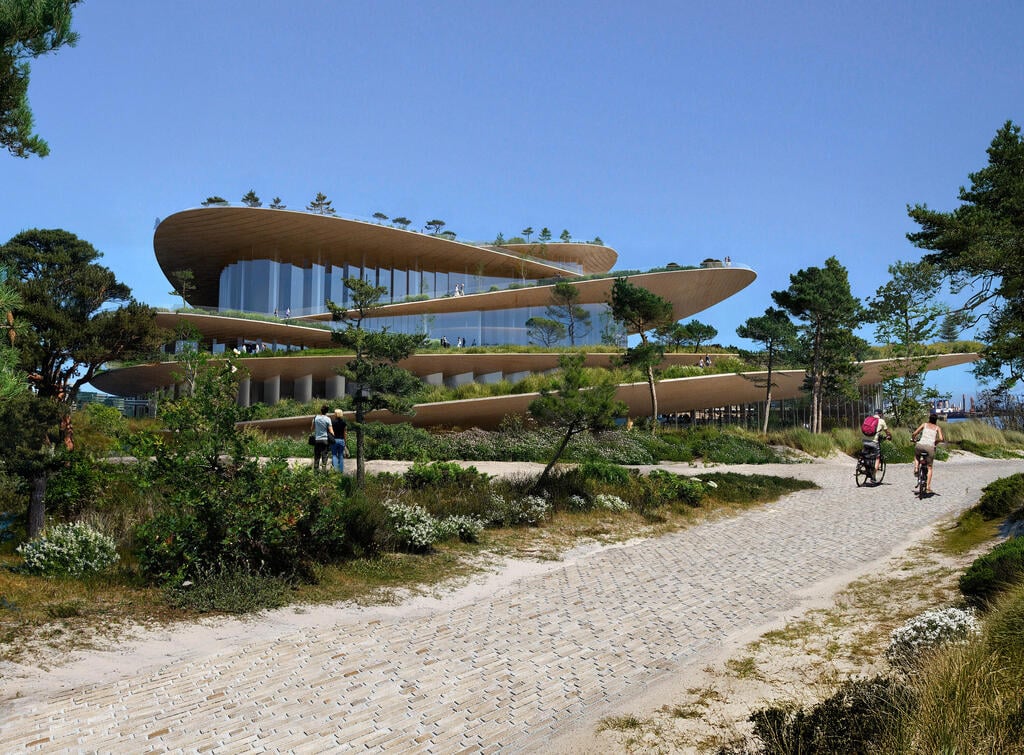
New opera house planned in Hamburg
(Illustration: Yanis Amasri, BIG)
A new opera house planned in Hamburg
While construction of the Hanoi opera house is in full swing and is expected to become one of the city’s international cultural landmarks, the global opera scene continues to evolve elsewhere. This week, the first renderings were released for another ambitious project: a new opera house in Hamburg, Germany.
In recent years, Hamburg has invested heavily in strengthening its status as a global cultural city, and this new project fits seamlessly into that strategy. It’s a large-scale public initiative aiming not only to build a new opera venue but to redefine the relationship between a major cultural institution and the public space surrounding it.
Hamburg has already demonstrated how a cultural project can drive urban identity and economic growth. Since its opening in 2017, the Elbphilharmonie, designed by Swiss architecture firm Herzog & de Meuron (also responsible for the National Library of Israel), has become the city’s unofficial icon and one of the world’s most advanced and striking cultural buildings.
Its debut generated wide acclaim in the international architectural community, and despite significant construction delays and a tripling of its original budget, it is now considered a resounding success both architecturally and civically.
The new opera project is positioned in the wake of that success. The planned building will span about 45,000 square meters and is set to replace the city’s aging 1950s-era opera house with a modern facility meeting the highest standards of acoustics and technical infrastructure. It will be built on one of Hamburg’s piers, in a port area that has seen rapid redevelopment in recent years, with new residential neighborhoods, cultural centers, commercial spaces, and public buildings.
The design is striking: a landscape of concentric terraces (circles or lines that share a common center) that rise from the ground like sound waves and spread outward toward the harbor. The result is a three-dimensional “architectural park” that is open and public on all sides, offering views of both the old and new cityscapes as well as the industrial port.
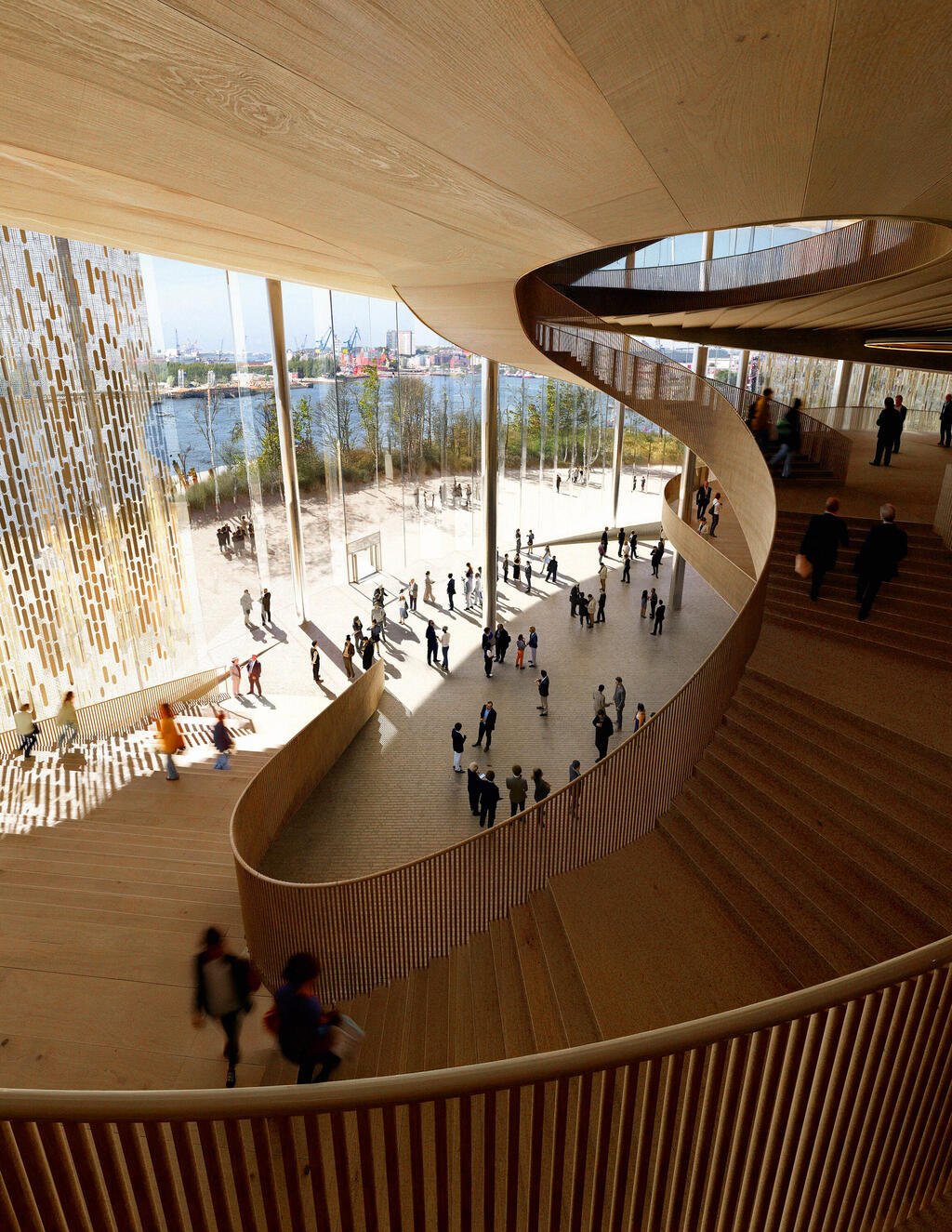
Concentric terraces in the Hamburg new opera house
(Illustration: Yanis Amasri, BIG)
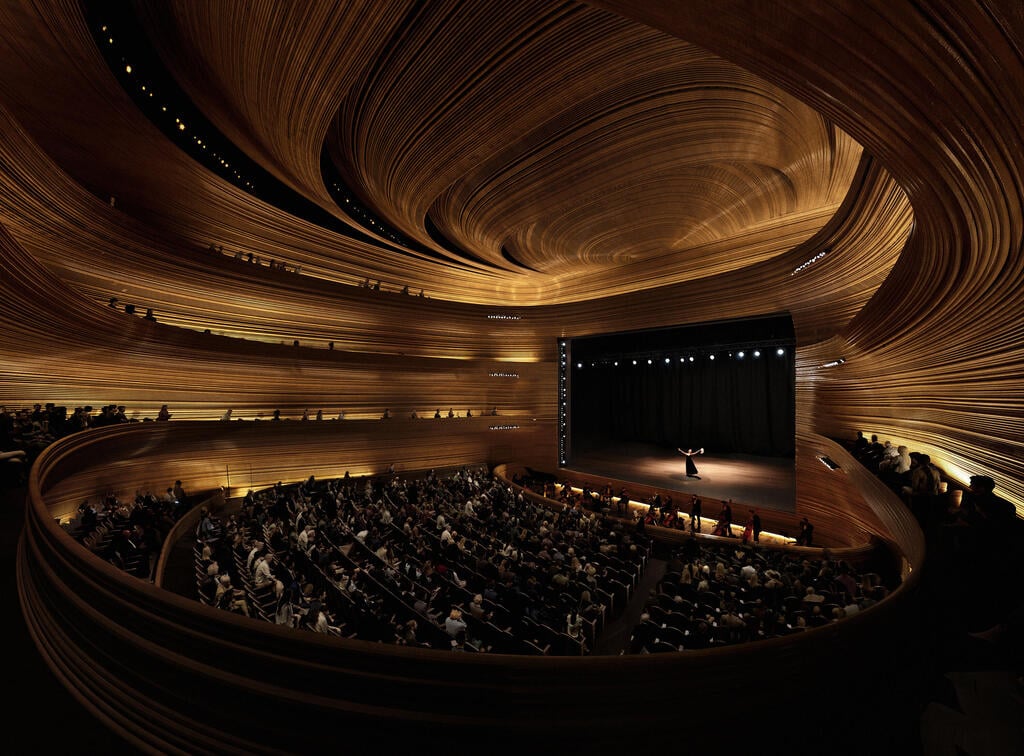
Curved lines
(Illustration: Yanis Amasri, BIG)
The park surrounding the opera house is designed as a dynamic landscape system, shaped by the natural movement of water in the area. Sloped terraces, vegetated dunes, and wetland gardens help slow and absorb water flow. Dedicated water basins collect rainwater, creating habitats for wildlife, aquatic plants, and other native species.
Behind the design is star architect Bjarke Ingels, one of the most prominent figures in contemporary architecture and founder of the Danish firm BIG. Known for his innovative approach and his willingness to challenge planning conventions, Ingels merges architectural fantasy with urban logic.
"We are honored to have been chosen to imagine this key puzzle piece in the transformation of Hamburg", said Ingels, upon releasing the imagings.
The centerpiece of the project is the main auditorium, whose design continues the theme of curved lines. It is wrapped in horizontal wooden cladding, creating a continuous, warm, and unified covering. "The main hall is the heart of the project: a space with state-of-the-art acoustics and perfect sightlines to the stage. Concentric wooden rings shape the hall and its balconies and dissolve the divide between performers and audience, between reality and illusion", Ingels added.