


The government is moving to address a long-standing infrastructure bottleneck that officials say has delayed construction of more than 100,000 housing units, as part of broader efforts to boost housing supply and lower living costs.
A provision included in the economic arrangements bill submitted to the Knesset last week targets one of the housing market’s most persistent obstacles: the shortage of wastewater treatment capacity needed to support large-scale residential construction and urban renewal projects.
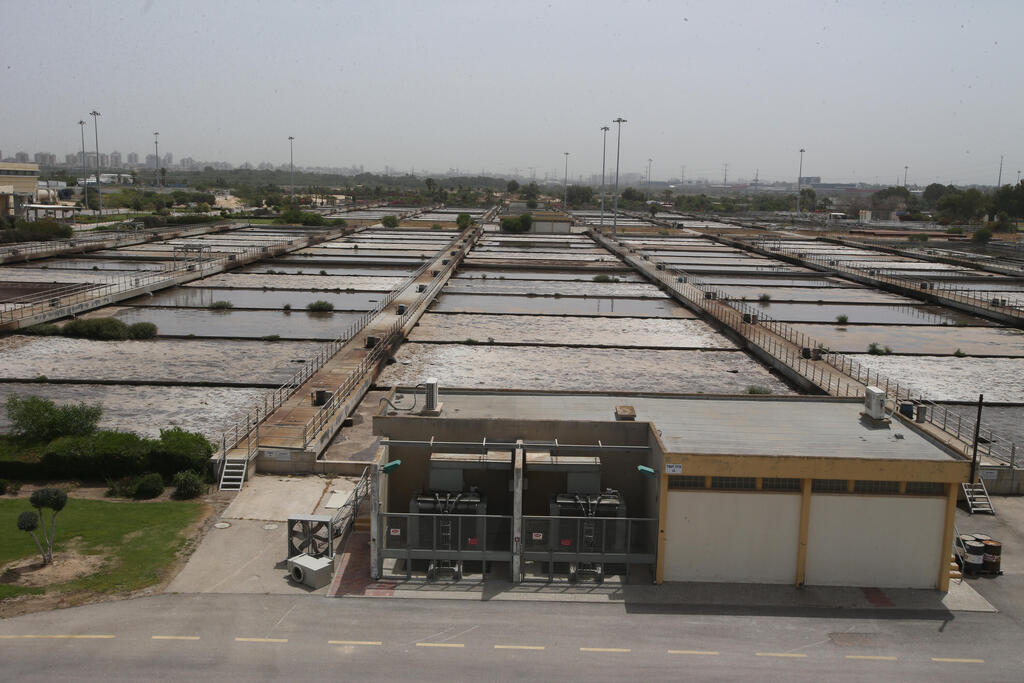
(Photo: Shaul Golan)
The Finance Ministry said the lack of adequate sewage treatment infrastructure has prevented the approval and marketing of hundreds of thousands of housing units nationwide, particularly in high-density developments.
Under the 2026 economic plan, a new financial and regulatory framework is proposed to accelerate the construction and expansion of wastewater treatment plants. Officials said the move is intended to reduce housing costs, strengthen economic growth and improve public health by addressing environmental risks linked to insufficient sewage treatment.
“The removal of sewage infrastructure constraints will increase housing supply and help reduce housing costs, which are a central component of the cost of living,” the plan states.
The sewage system has become a major limiting factor for development, as construction of new housing units is not permitted without full wastewater treatment solutions. Insufficient infrastructure has also raised environmental and health concerns in areas where population growth has outpaced sewage capacity.
Officials cited several factors behind the growing strain, including rapid population growth, uneven geographic distribution of residents, regional sewage constraints and aging infrastructure requiring upgrades.
Responsibility for sewage treatment is divided among multiple entities, including local authorities and regional operators. There are about 85 large wastewater treatment facilities and roughly 100 smaller ones. According to government assessments, fragmented responsibility has slowed development of treatment and conveyance systems, delaying housing projects exceeding 100,000 units in the near term — an issue previously highlighted in a state comptroller’s report.
As part of reforms approved in 2025, private and government-owned companies were, for the first time, allowed to operate sewage utilities. The new proposal would expand that approach by issuing licenses through public-private partnership tenders to finance, build and operate wastewater treatment plants.
Construction industry representatives say private-sector involvement is essential. The builders’ association has voiced support for build-operate-transfer models, while cautioning that even if the plan is approved, years could pass before new facilities become operational.
Industry officials say the shortage has already caused economic damage, reducing construction output, local authority revenues and state tax income.
Major infrastructure firms with experience in public-private partnerships said such models allow faster execution and better long-term planning by integrating construction and operation under a single entity.
The move comes as planners seek to close a widening gap between housing approvals and infrastructure development. Under the strategic housing plan through 2050, the country is expected to require about 4.8 million approved housing units, including roughly 1.83 million beyond current planning levels.
Earlier this month, the National Planning and Building Council approved steps to advance a nationwide infrastructure framework aimed at removing planning obstacles and accelerating development of key facilities, including wastewater treatment plants, to unlock thousands of housing units.
Officials involved in the planning effort said the strategy focuses on expanding existing treatment facilities rather than building new ones, in order to preserve open land while increasing capacity. The approach is intended to support urban renewal and large-scale residential construction.
Planners say accelerating sewage infrastructure development is critical to ensuring that housing construction can keep pace with demographic growth and urban demand in the coming decades.