


Over the past 20 years, home prices have jumped 130%, while household income has risen by only 45%, according to a new study by the Shoresh Institution for Socioeconomic Research published Wednesday. The study says this reflects a deep structural failure in the housing sector, stemming from a persistent gap between Israel’s population structure and number of households, and the pace of construction and mix of homes being built. The study was conducted before the outbreak of the Swords of Iron war, which further deepened the housing crisis.
“For decades, the number of households in Israel has grown faster than the number of homes, households have become smaller and the rental market has expanded,” the study’s authors wrote. They said these trends increased demand for housing even without an unusual rise in population, placing sustained pressure on home prices and rent. Between 2000 and 2022, home prices rose by about 130%, while households’ net income increased by only about 45%. Rent climbed by about 40%.
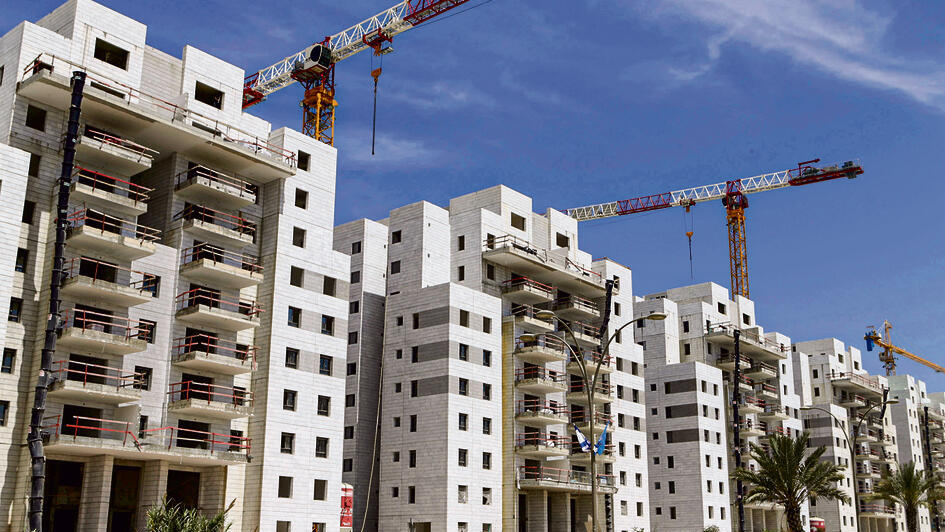
Apartment construction
(Photo: Amit Shaal)
The study, written by Shoresh researcher Yael Mishly, uses data from the Central Bureau of Statistics, the Bank of Israel, the National Economic Council and the Construction and Housing Ministry, and includes an analysis of long-term trends in housing prices, household income and more.
According to the findings, since the early 1970s, the number of households in Israel has grown by about 350%, while the population grew by only 290%. The increase stems, among other things, from a decline in household size, the aging of the population and a rise in the number of single and divorced people. This means the number of homes needed is growing faster than the population.
Between 2001 and 2022, the share of one-person households rose by about 2.7% and two-person households by about 2.3%, while the share of large households fell by about 5%. According to the study, this means that even when the population grows at a moderate pace, the number of homes needed rises faster.
A social and economic problem
Alongside the decline in household size, the study found that Israel’s rental market has expanded significantly and has become a central form of housing even among older age groups. During the period examined, the share of people living in rental housing rose from 30% to 49% among those ages 25 to 34, from 15% to 32% among those ages 35 to 54 and from 11% to 18% among those ages 55 to 64. In other words, renting is no longer only a temporary solution for young people, but a major housing market for large segments of the population.
The study also found that for more than three decades, the number of homes built has failed to keep pace with the growth in the number of households. According to the National Economic Council, Israel needs about 65,000 homes a year from 2026 to 2030, a figure expected to gradually rise to about 73,600 homes a year in 2040 to 2045. Since 2020, housing starts for new apartments have averaged about 63,500 a year — below demand. In 2025, housing starts rose to 74,300, but that was an exceptional year and does not reflect the long-term average.
The study’s author explains that Israel’s construction mix does not match the structure of its households. Despite the decline in household size and the increase in small households, construction is still tilted toward large apartments. In recent years, four- and five-room apartments have accounted for about 45% of housing starts in Israel. Over the past five years, the share of these apartments fell by about 2%, but the construction mix still does not match household structure.
As a result, the study’s author says, Israel’s housing burden remains especially high, particularly among low-income households. About 54% of households in the lowest income quintile spend more than 40% of their disposable income on rent, one of the highest rates among OECD countries. “This figure shows that the housing crisis is a social and economic problem, one that weighs especially heavily on weaker populations,” the study said.
Prof. Ayal Kimhi, vice president of the Shoresh Institution, said: “The housing crisis is not only a construction crisis. It is a policy crisis. The state plans residential construction, but not the apartments people need, not at the pace required and not within a comprehensive long-term rental and housing market policy. Without a change in approach by the government and planning authorities, the housing crisis will become a permanent structural problem for the Israeli economy.”
First published: 12:15, 04.29.26