

As antisemitism and anti-Israel sentiment rise in many parts of the world, more Diaspora Jews are looking at Israel not only as a national home, but as a place to put down roots in a tangible way. One of the clearest expressions of that trend is growing interest in buying agricultural homesteads, known in Hebrew as nahalot, in Israeli moshavim.
For many buyers, this is not simply a real estate transaction. It is a declaration of identity, a way to reconnect with the Land of Israel, create a family legacy and secure an asset that may carry personal and financial value for generations.
Gallery
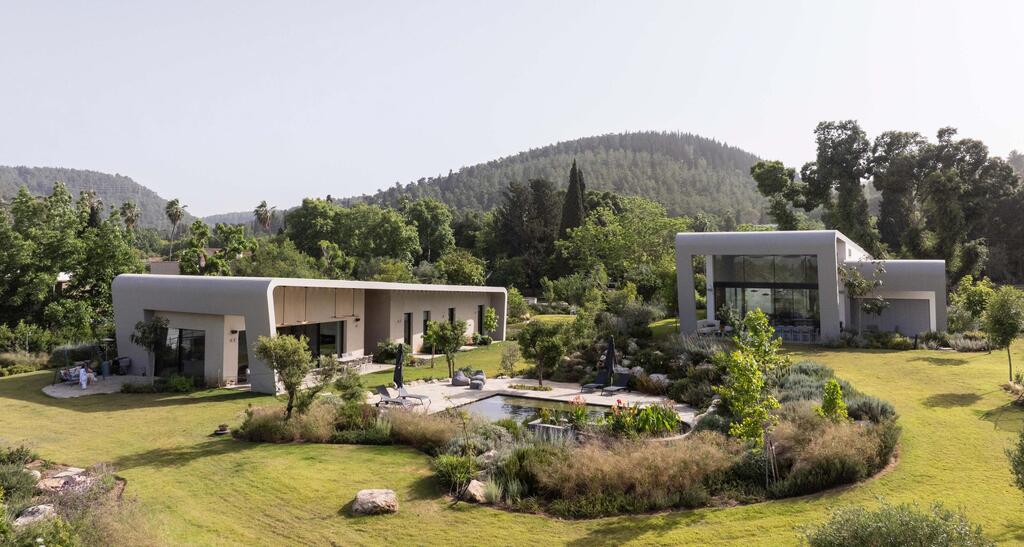
For many buyers, this is not simply a real estate transaction. It is a declaration of identity
(Photo: Nimrod Levi)
But buying a homestead in a moshav is not comparable to purchasing a standard apartment in Tel Aviv or a house in a suburban neighborhood. These properties sit at the intersection of land law, planning rules, tax policy and community life. For foreign buyers and new immigrants in particular, that makes early professional guidance essential.
Most homesteads in moshavim are not owned outright in the conventional sense. They are typically held under long-term lease arrangements with the Israel Land Authority, while also being governed by the bylaws and internal rules of the local cooperative association. That means a buyer is not just acquiring land or a home. The buyer is stepping into a layered legal framework that includes the seller, the state, local planning bodies and the moshav itself.
Nearly every significant step in the life of the property can require outside approval. Transferring rights, subdividing land, adding residential units or changing land use often requires consent from the Israel Land Authority, and in many cases also involves substantial advance payments. A deal that appears simple on paper can quickly become far more complicated once those approvals and obligations come into view.
That complexity becomes even more important as interest grows in splitting homesteads, creating additional housing units or dividing rights among family members or multiple purchasers. On the surface, these possibilities can make a homestead look like a flexible and attractive investment. In practice, however, not every homestead can be subdivided, and not every planning approval translates into recognized property rights.
(Photo: Amit Gron)
The differences between statutory subdivision, physical subdivision and the allocation of rights are not technical footnotes. They can determine whether a buyer is acquiring something real and enforceable or pursuing a planning concept with little practical value. Local rules, including Regulation 12A and various Israel Land Authority Council decisions, often shape the answer. This is one of the clearest areas in which early legal advice can protect a buyer from costly assumptions and help turn potential into realizable value.
A homestead purchase also carries a social dimension that many outside buyers do not initially anticipate. In a moshav, buying property often means joining a living community with its own identity, expectations and internal decision-making structure. In some cases, buyers must pass through an acceptance committee, win approval from the cooperative association and receive authorization from the general assembly.
For buyers from abroad, this process can be especially significant. It may involve scrutiny of community fit, family structure and the intended use of the property. A purchaser may arrive focused on contract terms and tax exposure, only to discover that community approval is just as important to completing the deal. Handling that stage carefully can help avoid delays, misunderstandings and outright rejection.
Taxation is another area where the gap between expectation and reality can be wide. A homestead is not taxed in the same way as a standard residential apartment. Purchase tax may depend on the legal character of the asset, whether it is treated as a residential unit, broader residential property, agricultural land or a family farm. For new immigrants, benefits may be available, but timing matters. The relationship between the purchase date and the date of immigration can significantly affect tax liability.
Additional tax issues may arise later in the process. A subdivision or allocation of rights can create a taxable event. Buyers also need to distinguish between agricultural rights and residential rights, which may carry different tax treatment. Capital gains tax and betterment levy may come into play as well, especially in net deals in which the buyer takes on tax obligations that would normally fall on the seller. In this kind of transaction, tax planning is not a side issue. It is part of the deal itself.
The contract reflects all of these layers. A homestead purchase agreement is not merely a standard real estate form with a few extra clauses. It must address obligations toward the seller, obligations toward the Israel Land Authority, compliance with cooperative association rules, alignment with zoning and planning requirements and current and future tax exposure. Drafting and reviewing such an agreement requires focused expertise in agricultural land and moshav transactions, not just general familiarity with real estate law.
That is why, for many Diaspora Jews and new immigrants, buying a homestead in a moshav is both deeply meaningful and unusually complex. It can be an investment in belonging, continuity and long-term value. But it can also become a legal and financial trap if approached casually or with the assumptions that apply to ordinary residential property.
With the right preparation, the picture changes. A buyer who understands the legal structure, the planning limits, the tax consequences and the community process can move forward with clarity and confidence. In that sense, the transaction becomes more than a purchase. It becomes a deliberate act of building a future in Israel, one grounded not only in aspiration, but in careful and informed decision-making.
For those seeking not just a property but a foothold in Israel’s agricultural and communal life, a moshav homestead can offer exactly that. The opportunity is real. But so is the need for precision.