

In the Israeli home, nature is neither a luxury nor a decorative accessory. It is an essential cultural, emotional and human need, and should be regarded as a fundamental value in residential architecture. The climate, natural light, urban density and Israeli society's deep connection to the landscape all call for an architectural approach that recognizes that a home cannot exist as a sealed box, disconnected from its surroundings.
Vegetation, particularly trees, carries profound emotional significance. Trees are deeply rooted in our collective and personal memories: childhood groves, familiar pathways, the scent of rain-soaked earth and afternoons spent playing beneath their shade. These memories do not remain in the past. They continue to shape our present, influencing our sense of belonging, security and well-being at home. When nature becomes an integral part of our living environment, it creates a meaningful connection between memory and contemporary life.
Gallery
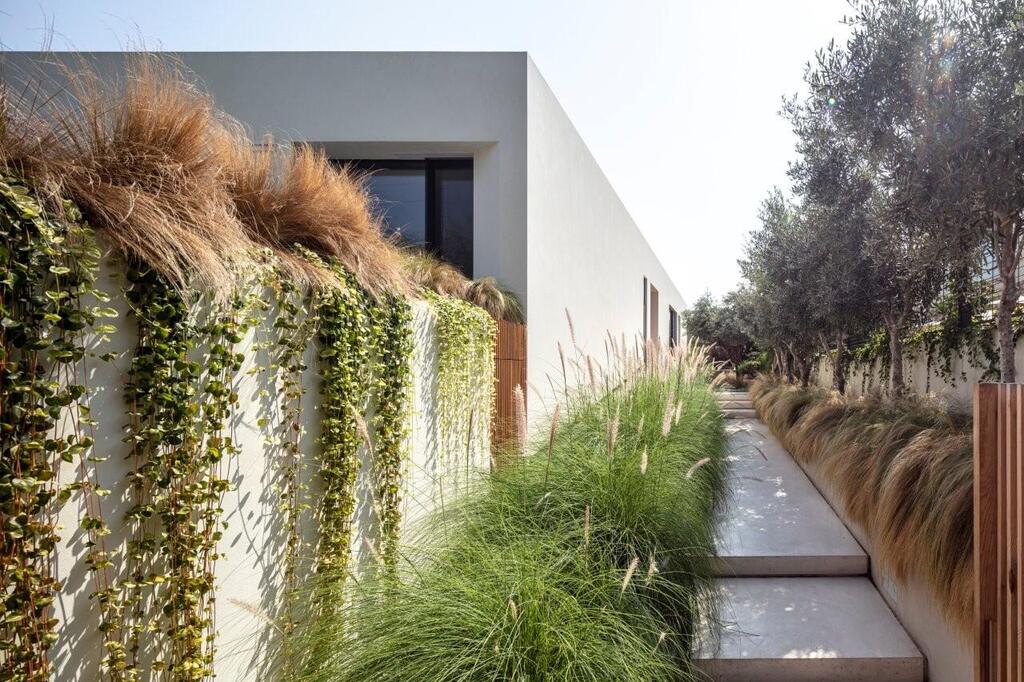
In the Israeli home, nature is neither a luxury nor a decorative accessory
(Photo: Amit Geron; Architecture: Ronnie Alroy)
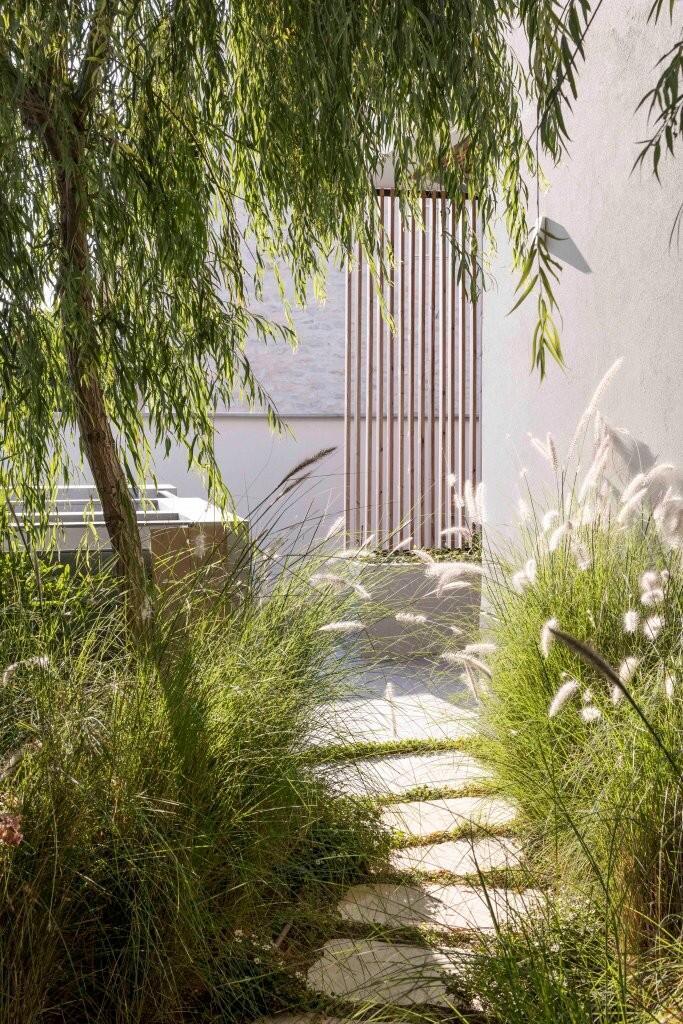
Vegetation, and trees in particular, carry profound emotional significance
(Photo: Amit Geron; Architecture: Ronnie Alroy)
From an architectural perspective, designing with nature at the center does not begin with plants as decorative elements. It begins with the understanding that the landscape is an inseparable part of the architecture itself. Vegetation frames views, creates soft boundaries, filters sunlight, influences airflow and shapes the experience of inhabiting a space. It establishes an ongoing dialogue between interior and exterior, allowing the home to become a living, evolving and breathing environment.
In projects we are currently designing, nature serves as an organizing principle. In one residence, a tree-lined axis extends through the house, from the entrance, through the living and entertaining areas and into the garden, with every space oriented toward it. In another, the living areas are arranged around an open courtyard, allowing the garden to penetrate the very heart of the home. In both cases, vegetation is not an external addition but an essential component of the architectural concept.
The everyday presence of nature within the home has a profound influence, even when we are not consciously aware of it. The sight of leaves through a window, the sound of wind moving through branches and the shifting patterns of natural light throughout the day and across the seasons create an emotional and sensory connection to our surroundings. They ground us in time and place, offering a sense of stability in an ever-changing world. Vegetation connects us to the rhythms of life: blooming and shedding, growth and renewal. It reminds us that the home belongs to a much larger living system.
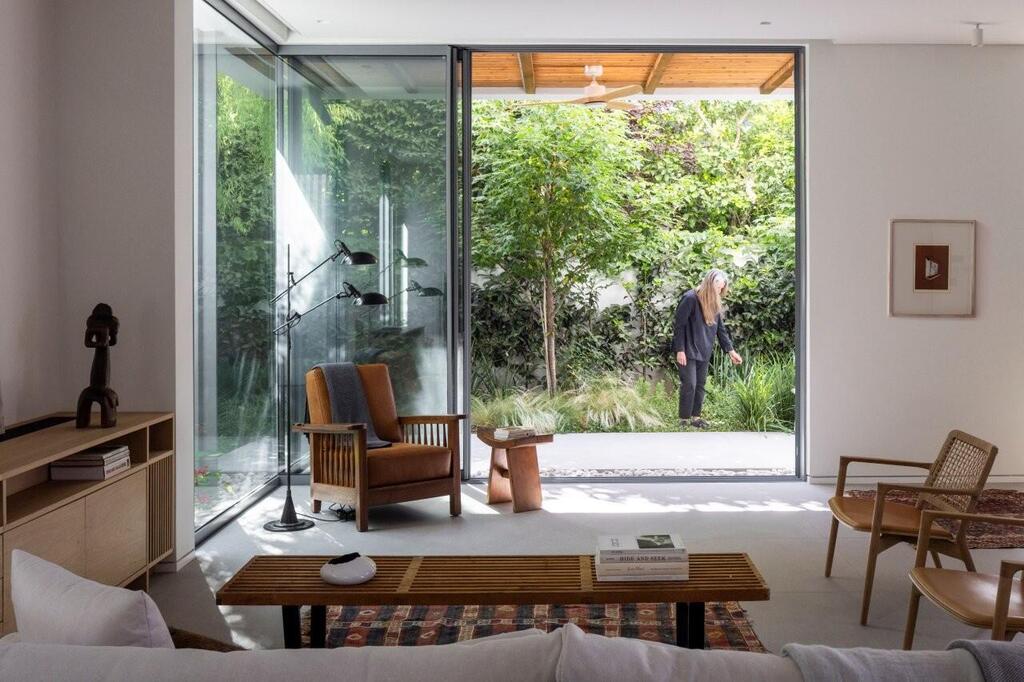
The living areas are arranged around an open courtyard, allowing the garden to penetrate the very heart of the home
(Photo: Amit Geron; Architecture: Ronnie Alroy)
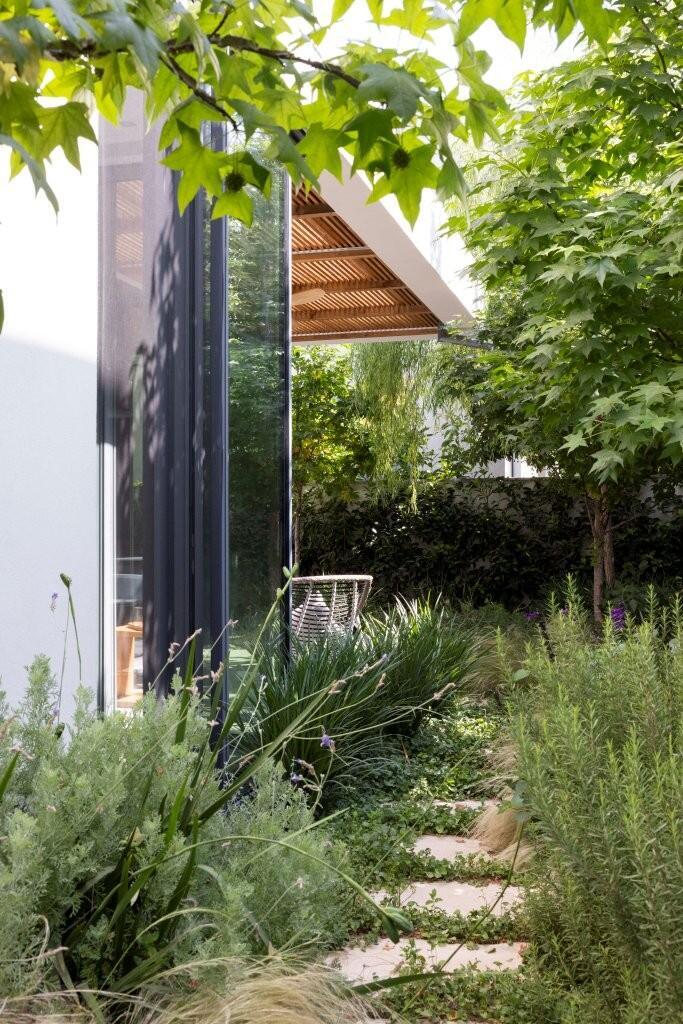
In public, cultural and artistic spaces, vegetation can also serve as an organizing element and a mediator between people and their environment
(Photo: Amit Geron; Architecture: Ronnie Alroy)
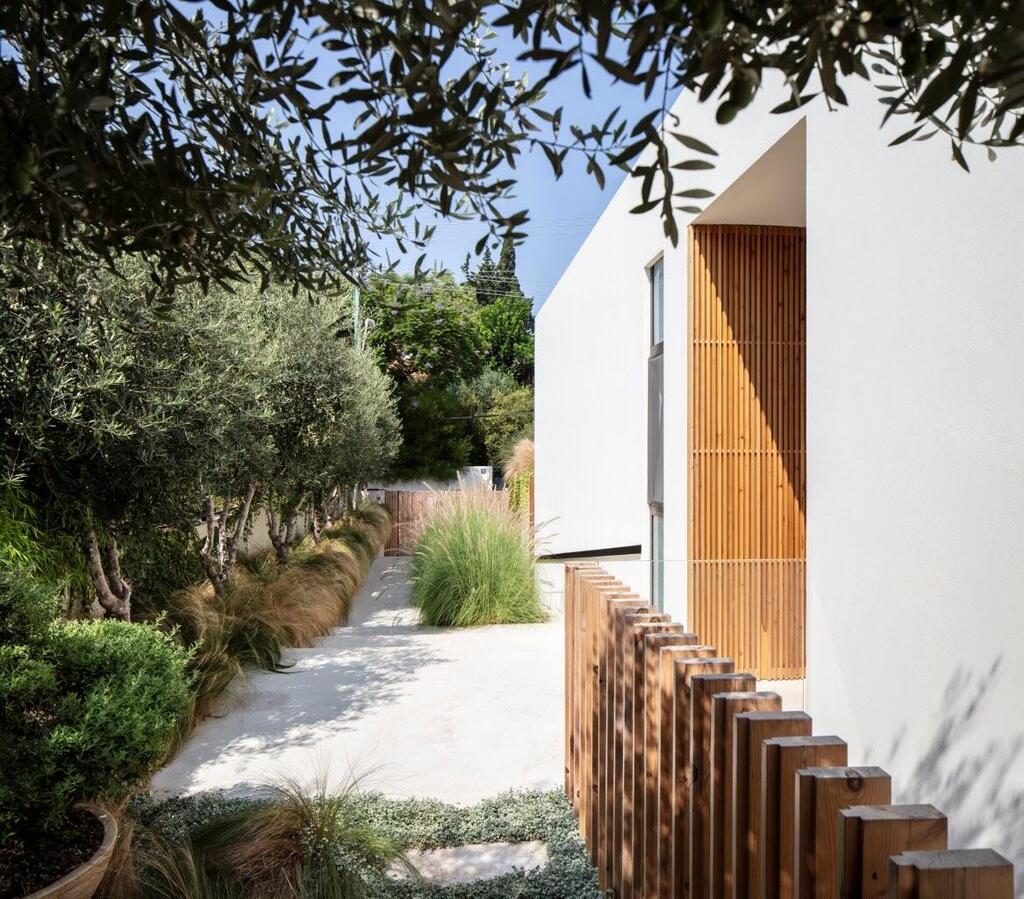
A thoughtfully designed Israeli home is one that allows nature to become part of everyday life
(Photo: Amit Geron; Architecture: Ronnie Alroy)
The importance of nature in architecture extends beyond private residences. In public, cultural and artistic spaces, vegetation can also serve as an organizing element and a mediator between people and their environment. When a building becomes part of a continuous green landscape, it is no longer perceived as an isolated object but as an integral part of its setting. The result is an architectural environment that respects its surroundings and enriches the experience of those who inhabit it.
In Israel's increasingly dense urban reality, where rapid development and economic pressures often dictate design decisions, it can be tempting to sacrifice nature in the name of efficiency. Yet this is precisely where a clear architectural position is required: nature does not compete with functionality; it enhances it. It improves quality of life, softens the built environment and contributes to both physical and emotional well-being.
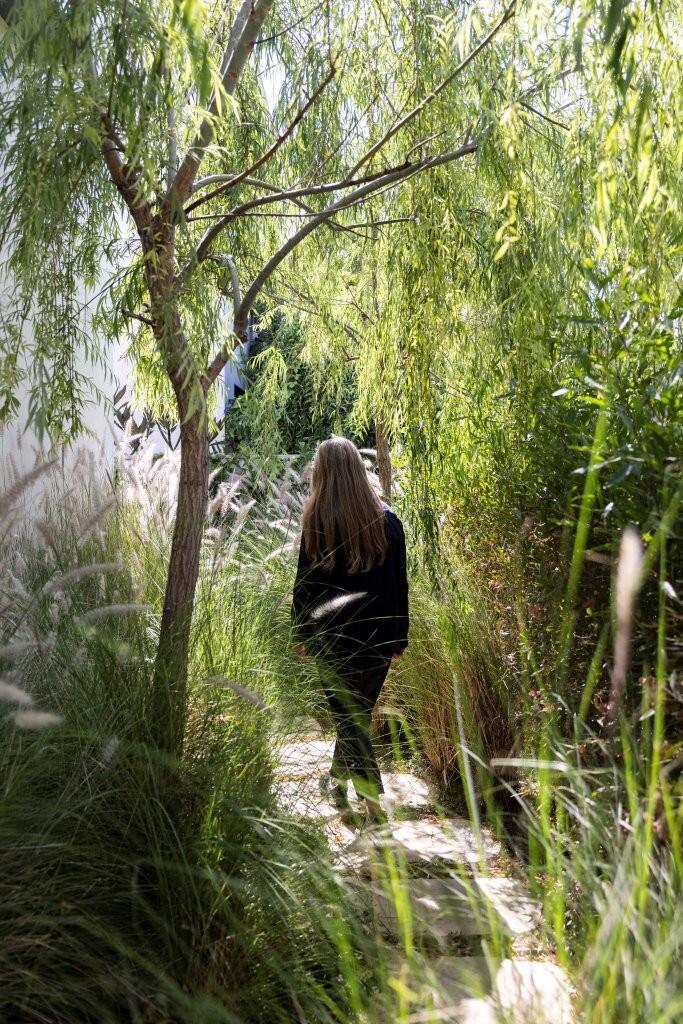
When the landscape enters the home, a quiet and enduring connection emerges
(Photo: Amit Geron; Architecture: Ronnie Alroy)
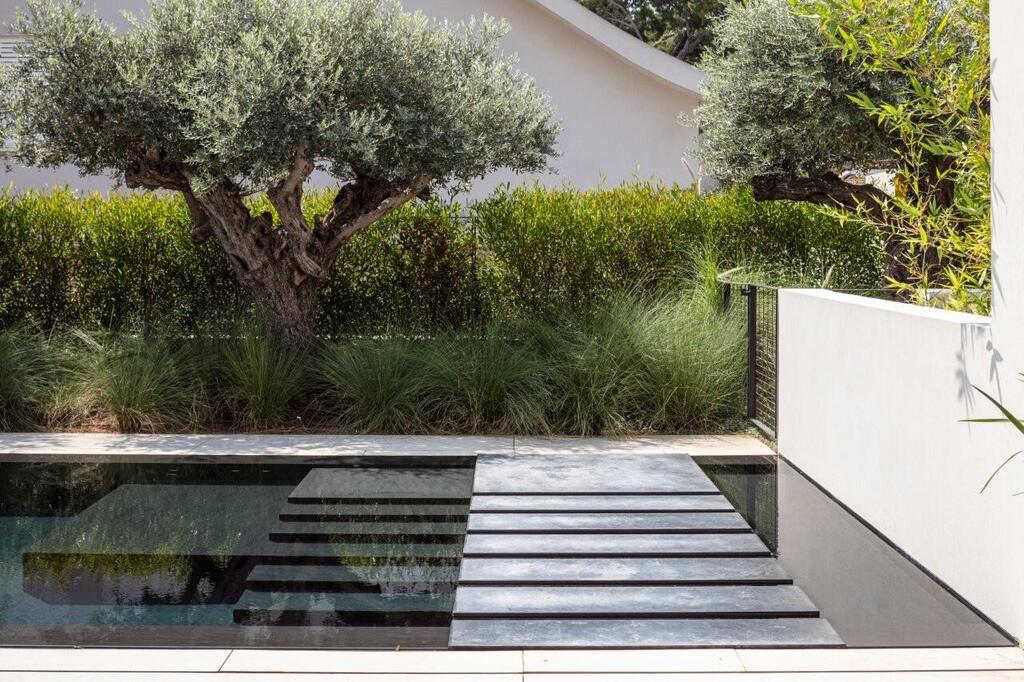
Vegetation connects us to the rhythms of life
(Photo: Amit Geron; Architecture: Ronnie Alroy)
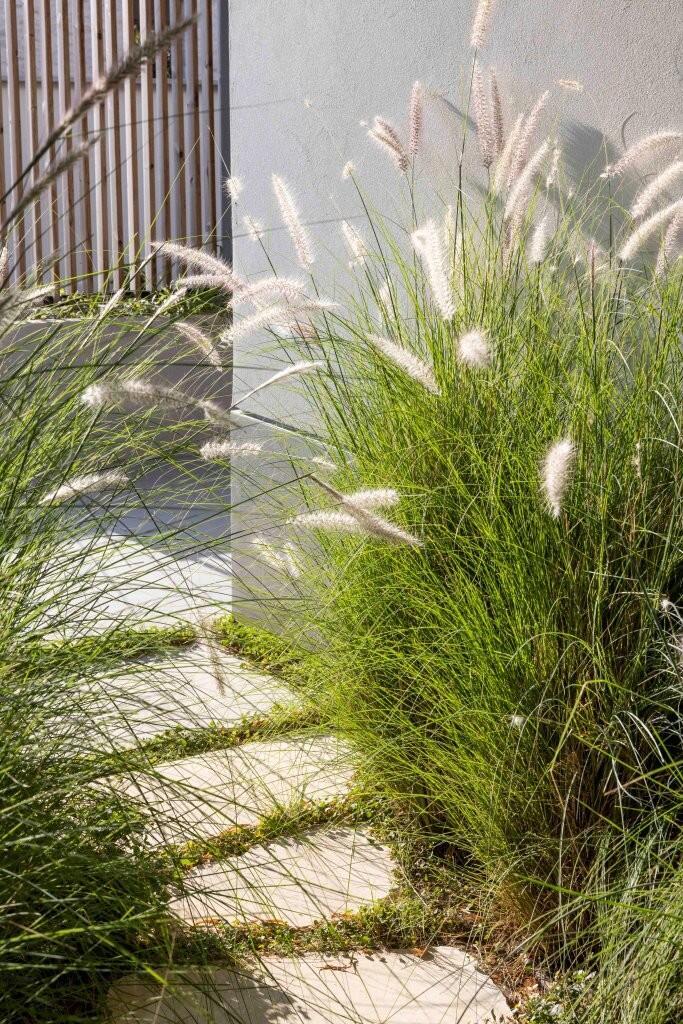
Vegetation is not an external addition but an essential component of the architectural concept
(Photo: Amit Geron; Architecture: Ronnie Alroy)
A thoughtfully designed Israeli home is one that allows nature to become part of everyday life, not as a romantic gesture, but as a fundamental architectural element. Architecture that responds to the landscape recognizes nature's potential to create belonging, meaning and a richer living experience.
When the landscape enters the home, a quiet and enduring connection emerges, one that accompanies us, evolves with us and becomes an inseparable part of our personal story.
Architect Ronnie Alroy is a graduate of the Technion – Israel Institute of Technology and holds a master's degree from Columbia University in New York. She also serves as a design studio instructor at the School of Architecture at Tel Aviv University.