

Imagine having a home on wheels, one you can take anywhere on a whim. One day, you park right on the shoreline, enjoying a sea view from your bedroom window; the next, you drive to a forest in the Golan Heights or the wild desert landscape of Mitzpe Ramon in southern Israel. That dream was recently realized by Reef Har Even, who bought a truck and, with his own two hands, transformed it into a stylish, cozy, functional and inspiring home.
Har Even, a 24-year-old bachelor from Karmiel in northern Israel, is known locally from his appearance on the previous season of the reality TV show “Love Island.” In recent years, he has accumulated not only screen time and romantic mileage, but also extensive experience in construction, renovation and entrepreneurship, mainly through businesses he founded himself.
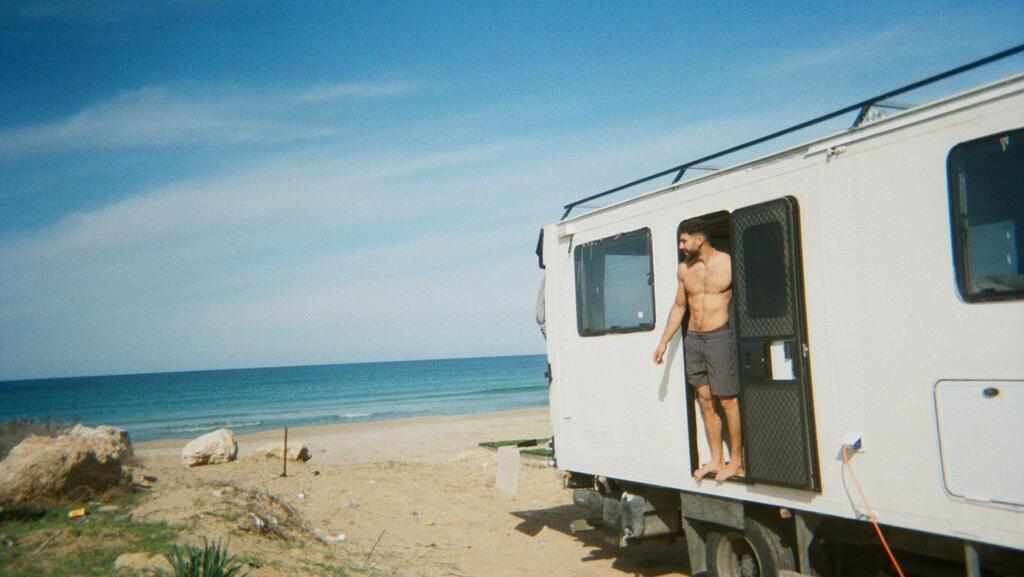
Reef's home on wheels
(Video: Reef Har Even)


Despite his young age, Har Even has established and runs several successful ventures, including Dream Complex, a network that includes a Pilates studio, a gym and ice baths; a vacation cabin he owns called Chateau Kinneret, located in Tiberias; and 'Hanagrya', an events hall in Karmiel. “I build everything myself. For example, Hanagrya was a building that once served as a carpentry workshop where my grandfather worked,” Har Even says. “After he passed away, the place became a storage space that no one used. I just started building everything there from scratch — floors, walls, ceiling, design and renovation — until I turned it into an events hall.”
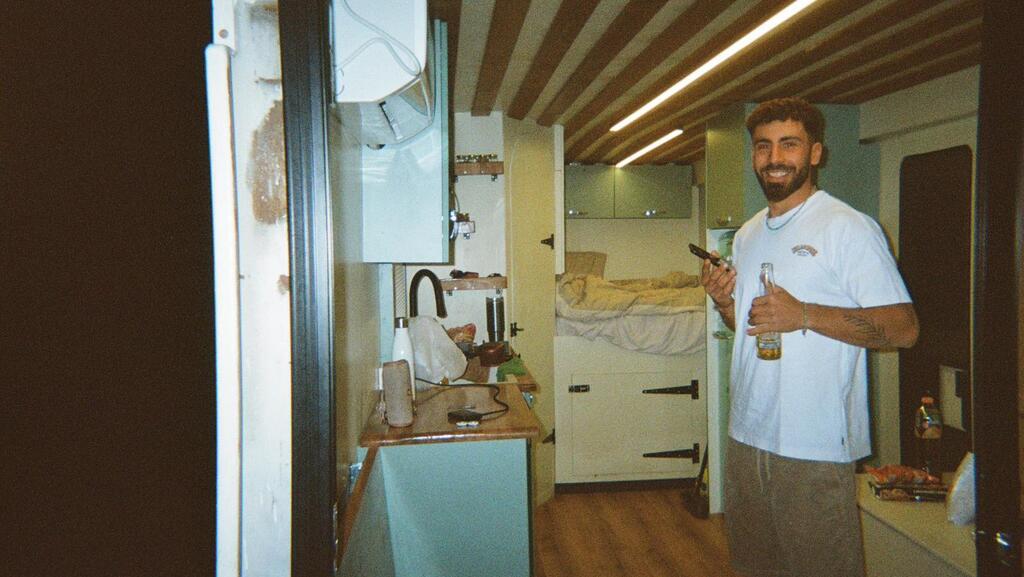
(Photo: Reef Har Even)
Where did your construction skills come from?
“The truth is that today everything is available, and you can learn how to build and renovate online. I didn’t grow up in a hands-on household. My father didn’t work with his hands, but my grandfather was a carpenter, and I probably inherited it from him. I also took the tools from him. By age 14, I was already building things on my own, taking apart scooters, welding frames and building go-karts from scooter engines. From there, it just evolved.”
About three months ago, he embarked on a new project and decided to turn a truck into a home. “I was exposed to people abroad who did this and designed homes out of trucks and caravans,” he says. “In Israel, on the other hand, I felt everything was very technical and cold. You enter a caravan and everything is ‘dead,’ with no life and no feeling of home. Abroad, people really live in these mobile homes for years, invest in design and put character and soul into them. That’s what motivated me to create something that doesn’t really exist here yet. It was also always my dream. I always dreamed of living by the sea, and the truck allows me to take my home with me and live wherever I want.”
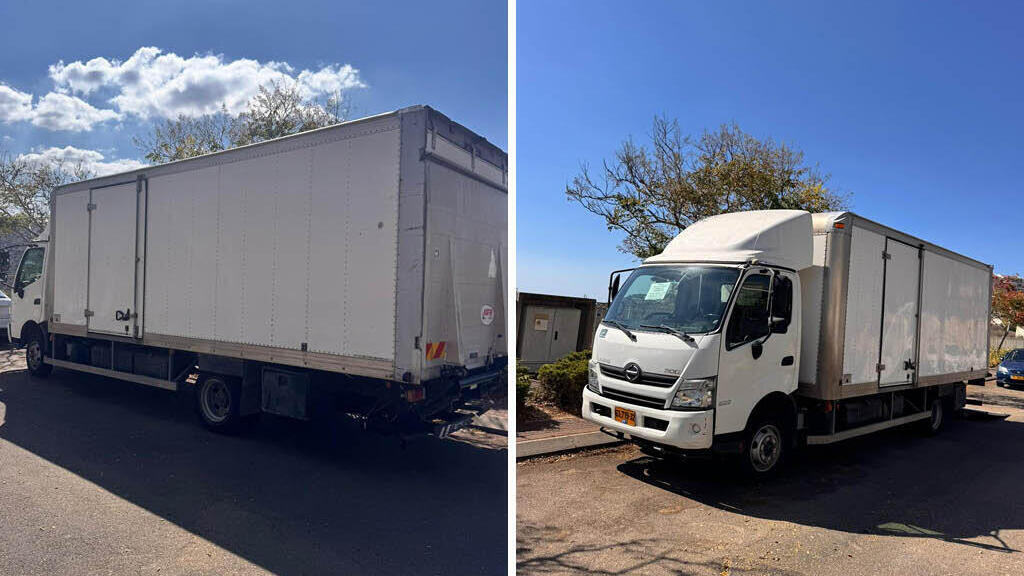
This is how it looked at the beginning: a standard truck
(Photo: Reef Har Even)
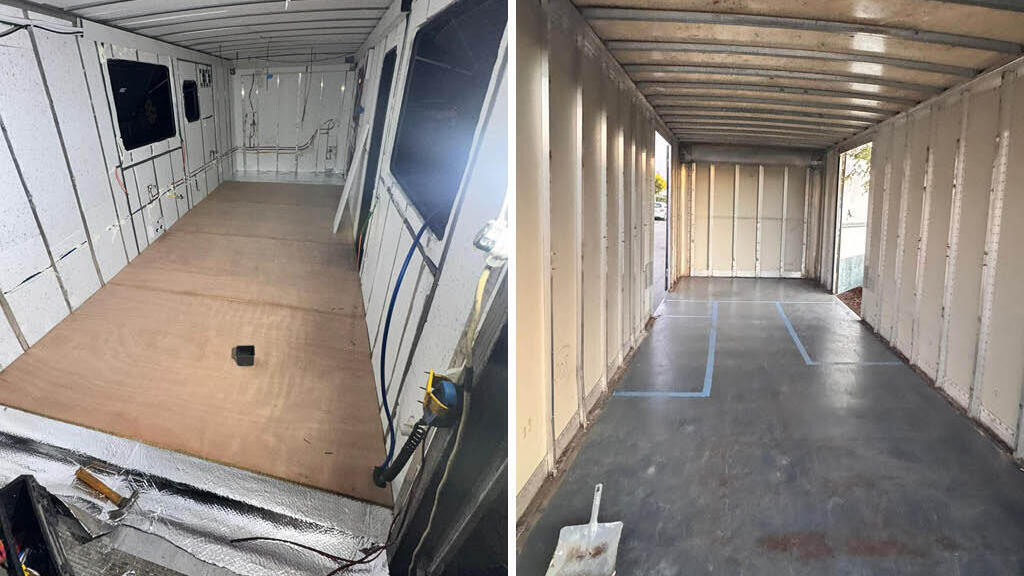
The start of the renovations
(Photo: Reef Har Even)
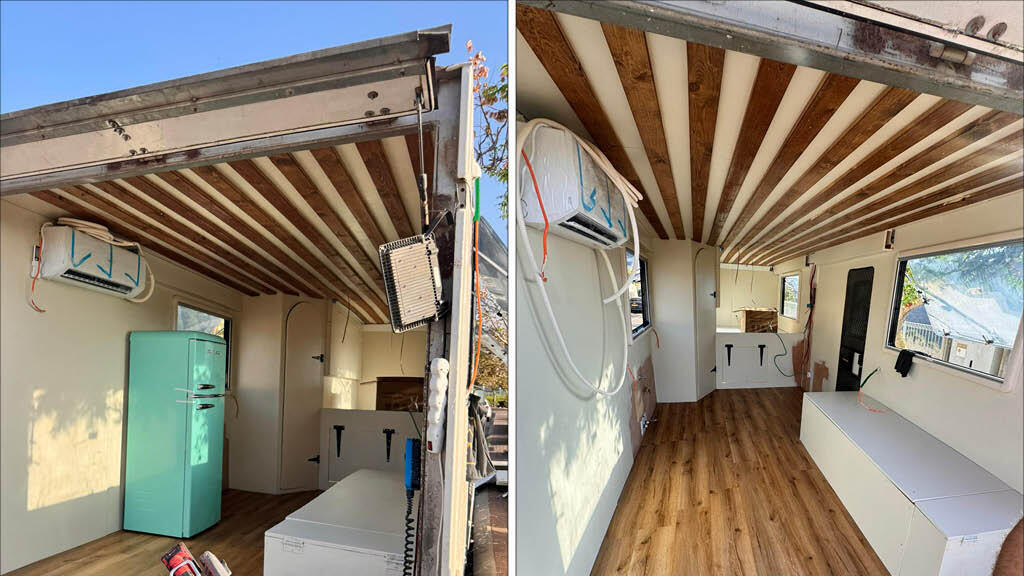
Installation of flooring, ceiling, walls, carpentry, air conditioning and a bathroom
(Photo: Reef Har Even)
Why not just rent an apartment by the beach?
“I thought about it, but it’s not worth it. I did a simple calculation: Even if I rented an apartment for 6,000 shekels a month, within three years I’d reach the same investment as with the truck. So I preferred to live in a home that’s really functional on every level and doesn’t make me feel like a sucker paying so much money. And on top of that, it’s a home that can travel with me. I can live wherever I feel like, move every day if I want, without paying for water, electricity or municipal taxes. Just insurance and the annual vehicle inspection.”
On the way to becoming a moving work of art
To turn a standard truck into a livable mobile home, Har Even planned, designed and built the entire project over just more than a month, working intensively 12 to 16 hours a day. It started with me buying a truck even before I had a truck license,” he recalls. “A friend brought it to my house, and from there I just started working. Planning was a major part of the project. I handled all the infrastructure — insulation, wall cladding, shower and waterproofing, water systems, a solar system — literally everything a home needs. I even took care of small details, like locks for the kitchen drawers so they won’t open while driving.”
As part of the process, he also renovated the truck’s exterior. “In Israel there are very clear laws for licensing a truck for residential use, with a long list of requirements for what has to be installed properly,” he says. “By law, you have to completely seal the original truck doors or remove them. I decided to remove them and replace them with a uniform metal panel so the side would be smooth and aesthetic, which was very important to me from a design perspective. I also plan to paint the truck, and I even commissioned an artist to do a special piece, so the truck will basically become a moving work of art.”
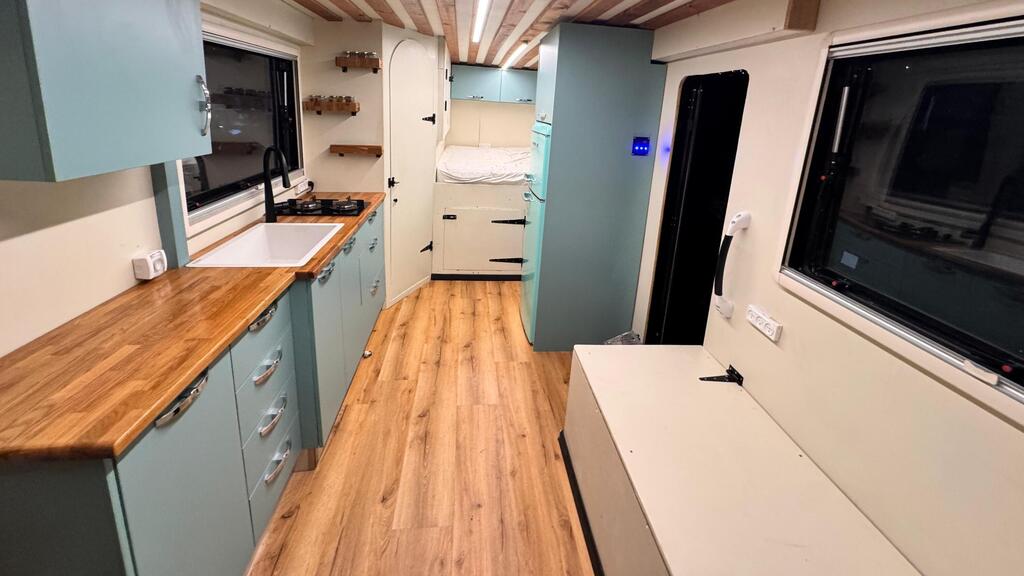
A fully equipped space for cooking, sleeping, bathing and living
(Photo: Reef Har Even)
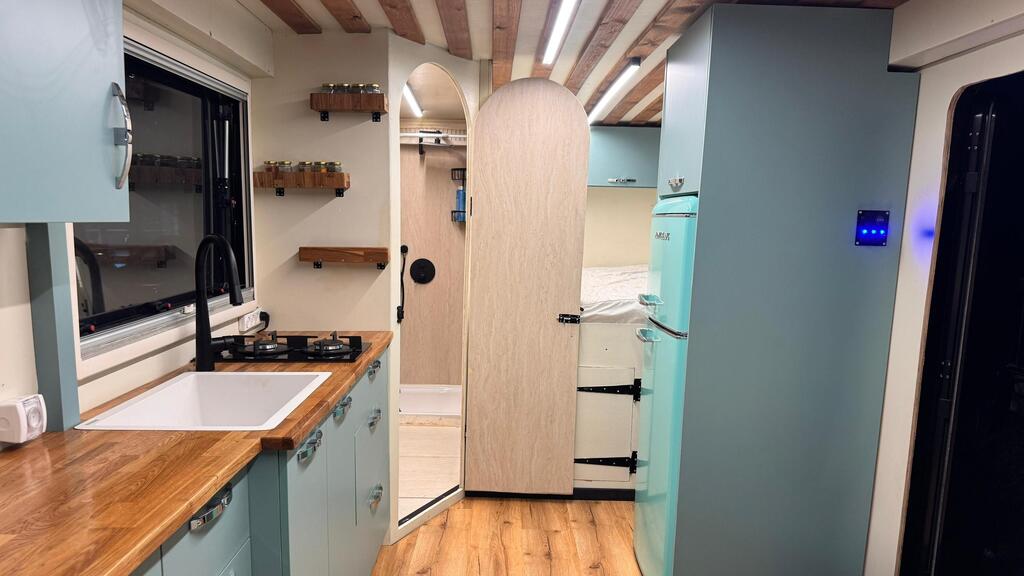
(Photo: Reef Har Even)
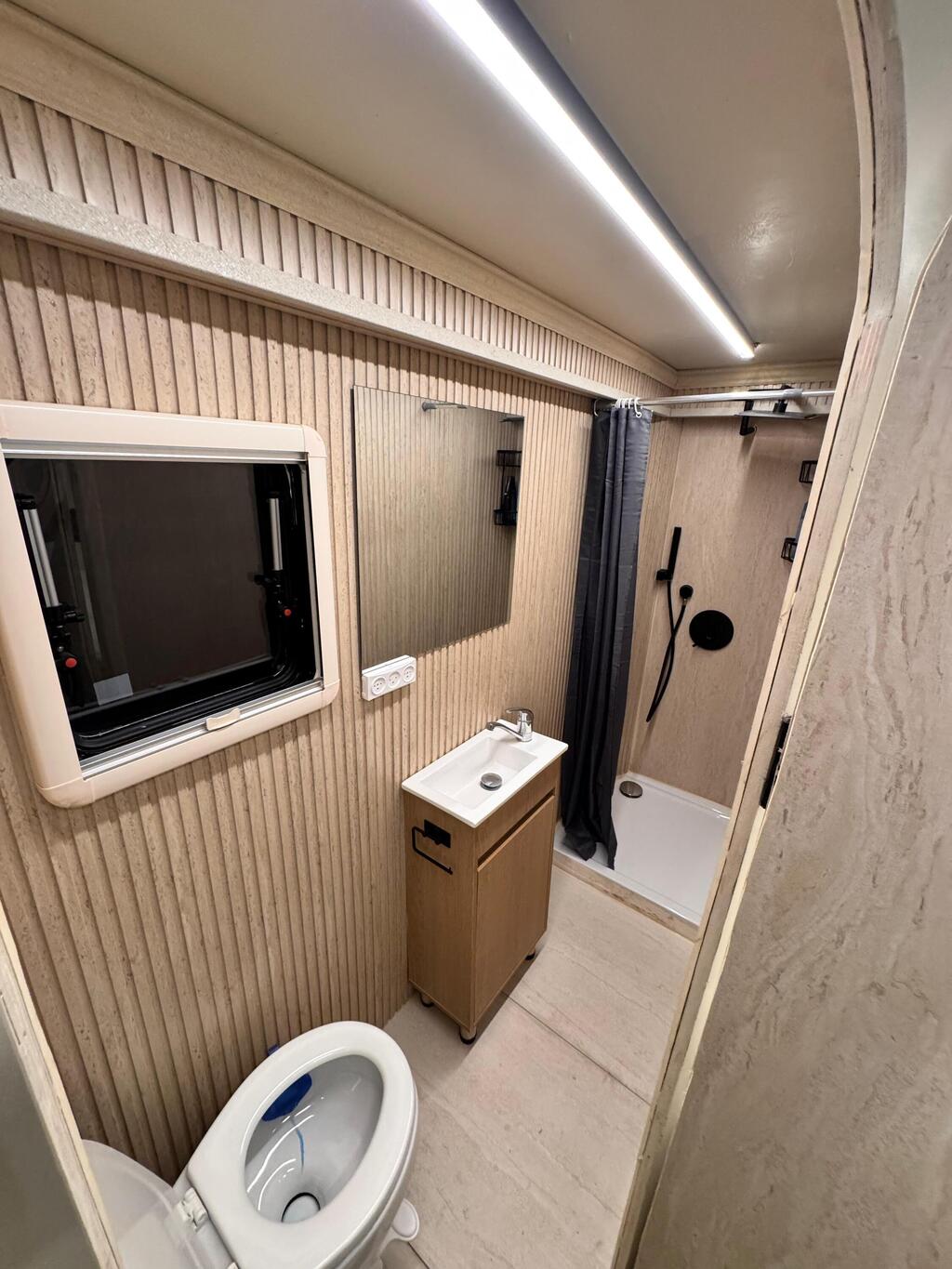
A bathroom, including a window and hot water
(Photo: Reef Har Even)
There is also an outdoor shower with hot water
The truck, measuring 6 meters by 2.3 meters, provides Har Even with an interior space of 14 square meters. According to him, it is divided into two parts: the front cab for driving, and the rear living area, which he calls a “dry box.” In the living space, Har Even incorporated everything needed for a comfortable, functional home, including a bed 1.4 meters wide and 2 meters long, a spacious bathroom measuring 2.3 meters by 90 centimeters — “much bigger than the bathrooms in most Tel Aviv apartments,” he notes — and a 2.5-meter-long kitchen that he built himself. The truck also includes space for his motorcycle, with a special ramp that allows it to be loaded and unloaded easily. Under the bed is a large storage compartment that uses the entire base area and is used to store surfboards and other items, alongside gas-powered water heaters.
The water system is carefully planned and holds 400 liters of water, enough for roughly a week of consumption for one person, with the option to increase capacity as needed. Cold water is pumped to all points in the home, passes through a gas heater and returns as hot water to all usage points, including the shower, bathroom sink, kitchen sink and an outdoor shower. Used water is collected in a black-water tank that is easily maintained by opening a sewage hatch.
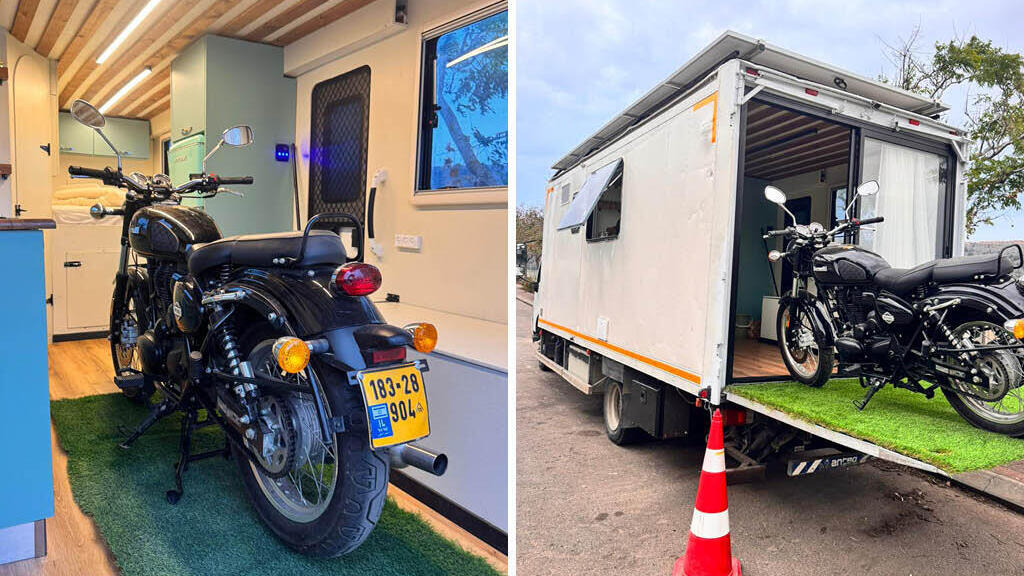
There is also space for a motorcycle
(Photo: Reef Har Even)
The kitchen is equipped with everything needed for cooking — a stovetop, utensils, drawers and a large work surface that allows for maximum comfort even in a limited space. The entire system is built on a principle of full functionality, giving Har Even all the experiences of a regular home, but in a compact, mobile form adapted to life on the road. He defines the design style as vintage, featuring turquoise retro cabinets and refrigerator, a wooden floor, exposed wooden beams on the ceiling and an arched door to the bathroom.
What were the main challenges?
“The challenge is waking up every day and realizing you’ve taken on a very big project, and the work isn’t always easy,” he says. “It’s physical work that lasts many hours. Someone who doesn’t love this simply can’t do it. Anyone who doesn’t have a passion for working with their hands or satisfaction from seeing a finished product won’t understand the feeling. For me, the satisfaction is enormous when I see something that starts as steel profiles and turns into a product. Of course it’s challenging, but it suits people who like to challenge themselves.”
What were the costs?
“I think the entire build cost a little more than a quarter of a million shekels,” he says. “The truck itself cost me about 65,000 shekels, and I invested another 185,000 shekels in construction and upgrades. The price of the truck itself varies: A secondhand truck can cost between 250,000 and 300,000 shekels, and if it’s a newer truck, the price obviously goes up.”

Reef Har Even
(Photo: Ariel Goz)
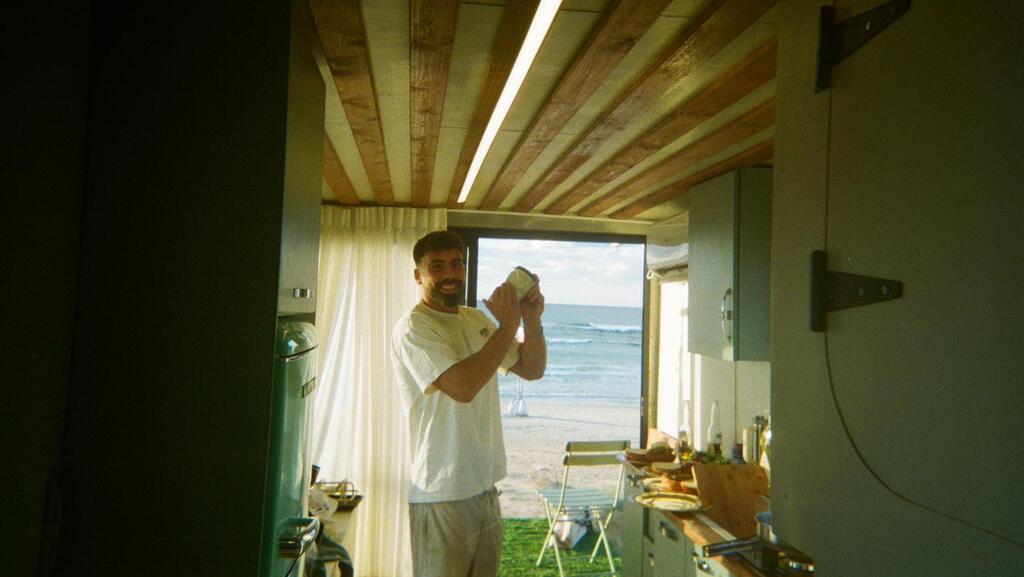
The view is priceless
(Photo: Reef Har Even)
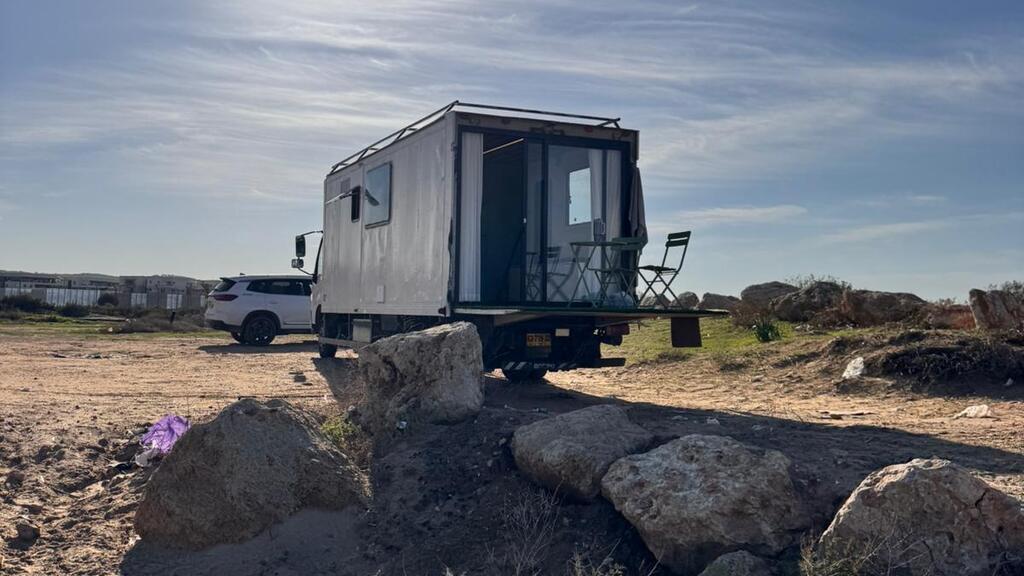
(Photo: Reef Har Even)
While renovating and designing the new home, Har Even also obtained a truck license within three weeks. After traveling around Israel with it for about a month and then taking a break in Thailand, he is now weighing his next step. “I still haven’t decided whether I’ll go back to living in the truck or rent it out as a vacation unit,” he says. In the meantime, he documents the transformation process on his Instagram account through a series of videos.
“I got very positive responses. People wanted me to post more episodes, said it was interesting and that it’s a dream. On the other hand, there were also many critical responses, mainly about laws and regulation. People are right — sometimes the state closes beaches or restricts access. But I think there’s huge potential here for amazing tourism in Israel. We have so many great places to see, and you can go from the desert to snow in the same day, with your home always with you, without complicated planning like in big countries, without needing a two-week trip. On one hand there’s a lot of support; on the other, there’s opposition, mainly because the state wants everything to generate revenue. But the positive responses show there’s an audience that dreams about experiences like this.”
What’s your advice for people who want to build a home like this?
“It’s important to believe that everything is possible. There are no limits — the only limitation is ourselves and our thoughts. If you have desire and persistence, you can get anywhere and make any dream come true.”
First published: 21:45, 01.25.26