


New data from the Central Bureau of Statistics and the Finance Ministry’s chief economist point to a sharp drop in real estate transactions in September, especially for new homes. At the same time, findings show that developers have resumed offering promotions and financing benefits, though these incentives have yet to stem the decline in sales.
Despite the bleak data, developers are optimistic, suggesting that these benefits will soon bring buyers back to sales offices, especially in the wake of the ceasefire and amid pressure from top business leaders on the Bank of Israel to cut interest rates.

A new study by the Geocartography Knowledge Group, which looked into what might prompt buyers to re-enter the market, found that about 70% of potential homebuyers would purchase a property in the coming month if they were offered a 15% discount.
The survey, conducted ahead of the Real Estate Appraisers Association's conference set to open Tuesday in Eilat, shows that most buyers (57%) are searching for homes priced up to 2 million shekels (about $620,000).
Just 6.5% are willing to pay more than 3.5 million shekels (about $1,084,000). Around 30% of current house hunters are looking for apartments with up to three rooms, a 20% rise compared to the past two months.
Dr. Rina Degani, owner of the Geocartography Institute and lead researcher on the survey, explained that “buyers want to reduce risk. They prefer a first apartment that is smaller and cheaper, requiring less financial commitment.”
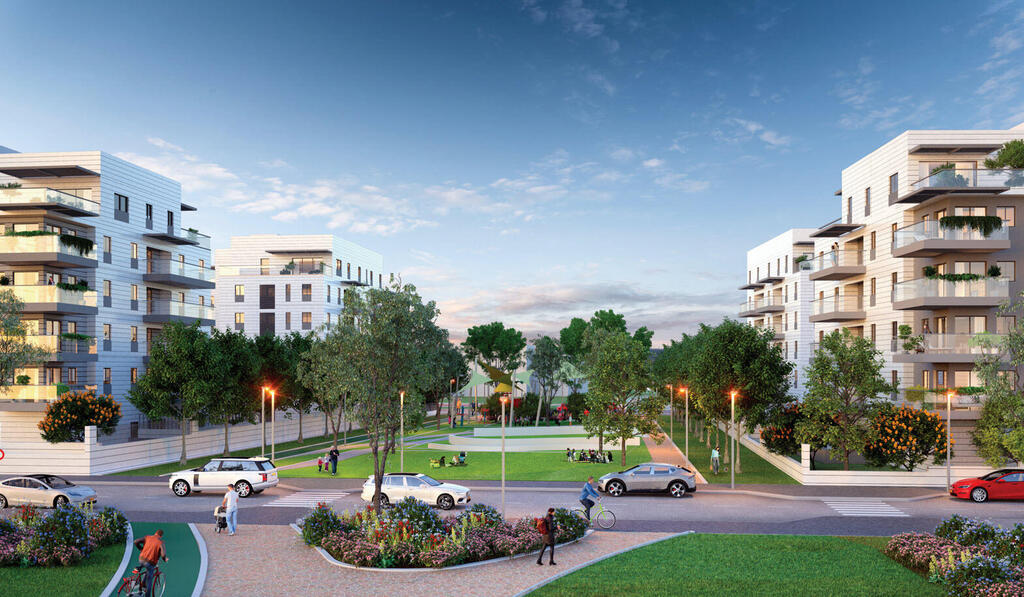
(Illustration: N-trace)
When participants were asked what kind of offers would seriously influence their decision to buy, about 60% of respondents said a discount of 5% to 10% off the price would motivate them.
About 43% cited renovations and upgrades, such as new kitchens and bathrooms, worth up to 250,000 shekels. Roughly 36% said they would seriously consider buying if offered fully furnished homes or a furniture budget of 150,000 to 300,000 shekels. About 26% favored either an additional parking space or an extended home warranty of up to 15 years.
Respondents were also asked what is currently holding them back from purchasing a home. Some 45% said prices are still too high. Another 18% cited economic uncertainty, while 12% said they are waiting for prices to fall. Eleven percent noted difficulties with financing, and 6% said they have yet to find a suitable home.
The market is showing early signs of recovery
“The market is showing early signs of recovery, but very cautiously,” said Degani. “First-time homebuyers are the first sign of renewed activity, but we still need a real price drop or significant promotions to bring momentum back to the housing market."
Nehama Bogin, chair of Israel Real Estate Appraisers Association, said the survey results underscore the persistent demand in Israel’s housing market. “Economic uncertainty and the war led to a slowdown, but as time passes, the market is bouncing back.
 Nehama Bogin Photo: Nir Shaharbani
"If we want to avoid another surge in prices like we saw during the COVID era, the government must promote a real, comprehensive solution for the long-term rental market,” she said.
“There are many couples, families and singles who want to rent with long-term stability under regulation and aren’t looking to buy", says Bogin. "That’s the direction we need to head in; it’s already happening in Western countries, and there’s no reason Israel should be any different."
Rakefet Lahav, Rakefet Lahav. VP – Marketing and Sales at Almog Group said that “in recent months, following the end of the war, we’ve seen more responsiveness to advertising, and buyers are gradually coming off the fence.
"Some potential buyers remain hesitant, waiting to see if interest rates drop. Those who have already decided to purchase are looking for move-in dates far in the future, and those projects are easier to sell. In competitive areas, the name of the game is benefits; people are looking for real discounts and good pricing relative to competitors."
 Rakefet Lahav Photo: Anat Kazula
She added, “The marketing challenge is to present an offer that helps the buyer understand why this specific deal is worthwhile right now, making clear that this is an opportunity not to miss.
"In some projects with delayed occupancy, we’re offering benefits like customization options, which create cost certainty and peace of mind, so buyers don’t face unexpected expenses when they move in. These incentives definitely help close the deal."
Dan Kachanovsky, founder and CEO of Israeli Real Estate Center, said, “Demand for homes hasn’t disappeared, but in a market where prices are dropping, buyers are in wait-and-see mode. The fact that many are willing to buy soon if they receive a slightly better deal than what’s currently available shows that demand is real, but it’s just being held back.
In this case, strong promotions like price cuts or subsidized loans could push potential buyers to buy. But the day we see a real return to sales offices will be the day buyers feel that waiting means missing out as prices rise. We’re not there yet."
 Liran Sela Photo: Idan Maoz
Liran Sela, CEO and founder of Sela Investments and Finance, noted that financing benefits can appear to be a win-win: “Buyers pay the same price for the apartment but benefit from perks like zero or ultra-low interest rates, bridge loans and deals that, in practice, reduce the cost of the home. The buyer gets subsidized financing, the developer signs a deal and moves inventory, and the bank gets its interest up front without a formal price cut."
However, Sela warned that these promotions can have a downside: “Developers are taking on significant new financing burdens, the likes of which we haven’t seen before. And the real blow could fall on the secondhand market. Private sellers can’t offer these kinds of benefits or flexible conditions, which creates direct competition between new and resale homes, and that may push down prices for the latter."