


Is one of Tel Aviv’s most prominent symbols of luxury, the YOO Towers, facing a serious safety risk? A lawsuit filed with the Tel Aviv District Court warns of potential structural damage to parts of the towers after apartment buyers discovered severe alleged construction violations.
The lawsuit claims that actions taken by an apartment seller could endanger not only a single unit but the entire building.
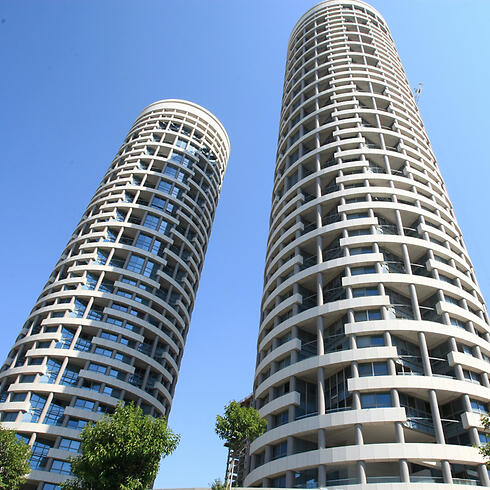
YOO Towers
(Photo: Shaul Golan)
The lawsuit centers on a sales agreement signed last year between a couple and the owner of an apartment in one of the towers, valued at approximately 7 million shekels. After making a 700,000-shekel down payment, the buyers allege they later discovered that the seller had removed a reinforced blast wall protecting the entrance to the apartment’s safe room during pre-sale renovations.
According to the lawsuit, the wall was removed without the required approvals from the Home Front Command and the Tel Aviv local planning and building committee.
The blast wall, located opposite the safe room door, is designed to block blasts and fragments caused by an external explosion, such as a missile or rocket strike, to protect both the safe room's blast door and the people sheltering inside.
After the discovery, the seller and buyers signed an additional document in which the seller agreed to replace the safe room door with a blast-resistant door so the buyers would have no further claims on the issue.
However, the buyers argue that the demolished wall is a structural wall that supports the building, and its removal could severely compromise the tower’s stability. They allege the seller deliberately misled them by concealing this fact and falsely declaring in the sales contract that there were no construction irregularities and that all renovation work was carried out by licensed professionals with the required permits.
In the lawsuit, the buyers accuse the seller of false representations and fraud. They therefore sought to cancel the contract and demanded the return of their deposit along with reimbursement of expenses. At that stage, the seller sued the buyers, claiming they were required to pay the remaining balance for the apartment.
The buyers responded with a counterclaim supported by a structural engineer’s expert opinion, which stated that demolishing the protective wall posed a real danger to the structural stability o the building or parts of it and substantially increased structural risk.
The plaintiff's representatives said the case involves a serious safety hazard. The removal of the wall, which is part of the YOO Towers’ structural skeleton, harmed the building’s stability and its resistance to earthquakes, posing a risk not only to the apartment in question but also to apartments above it and to the entire structure.
They described the case as a deliberate concealment of material defects that endanger human life. Under the law, they said, a property seller is required to actively disclose the true condition of the asset to buyers, including any defects.
They added that a real estate seller is not permitted to rely on a buyer’s declaration that the property was inspected and purchased “as is.” They argue that the seller not only failed to disclose material information about the apartment that was well known to him, but even went as far as to state the opposite in the sales contract, declaring there were no construction irregularities and that all renovation work carried out before the sale had the required permits and licenses.