


Tiberias is dreaming of a different future. After years of persistent neglect and political chaos, the city is trying to lift its head and redraw its future. The ambitious plan includes investing hundreds of millions of shekels in restoring tourism, building 7,000 new housing units, constructing eight new hotels around the Sea of Galilee and thoroughly renovating the promenade.
But alongside the glossy development plans, officials in Tiberias are also mindful of the city’s location along the Syrian-African Rift and are pushing urban renewal as a way to save lives in the event of a deadly earthquake.
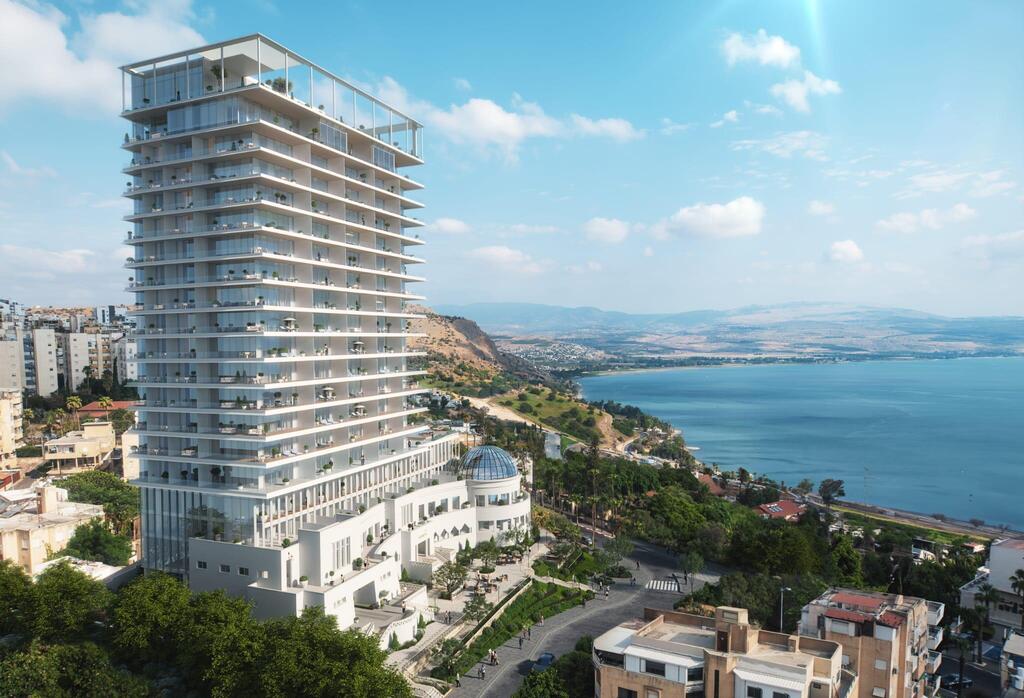
“Urban renewal is not just another real estate project. It is about saving lives,” said Tiberias Mayor Yossi Naba’a, following a government decision to expand assistance for urban renewal in northern Israel.
According to Naba’a, hundreds of buildings in the city could collapse in an earthquake, but the urban renewal model used in outlying areas still does not receive sufficient state support. At the same time, he is promoting an ambitious plan for Tiberias that includes urban renewal, thousands of new housing units, rehabilitating the tourism industry and attracting jobs.
“After every such disaster around the world, I cannot sleep at night,” he said. “There are nearly 600 buildings here that would simply collapse in a magnitude 6.5 earthquake. If we experience a magnitude 6 or 7 earthquake, there could be 1,830 deaths within half a minute. That is a figure I must raise everywhere — in the government, Knesset committees and every possible discussion.”
Two decades of political chaos
Naba’a took office after years of instability in the city.
“We had just come through about 20 years of political chaos,” he said.
Upon entering office, he decided to adopt almost all the plans advanced by the state-appointed committee that had run the city, including an umbrella agreement signed with the government and infrastructure development plans for the neglected city.
“I said I would implement 95% of the plans because if I started changing everything, we would lose years,” he said.
At the same time, he brought his election rival, Aviv Yitzhak, into the coalition.
“I told him: We can fight for five years and continue holding the city back, or we can work together and move it forward.”
According to Naba’a, the municipality’s work centers on four main areas, with three currently at the top of the agenda: urban renewal, the umbrella agreement and tourism development.
Fifteen urban renewal complexes are already being advanced, with significant progress reported in four of the plans, though it is clear that even then it will take years before construction begins.
“Some of the plans have already been submitted for approval, some are in advanced planning stages and some have passed the local planning committee and are now before the district committee,” he said. “We are working with the Government Authority for Urban Renewal and advancing every plan we can.”
However, he argues that the government still applies the same tools used in central Israel to outlying areas.
“The state has failed to understand that in the periphery, urban renewal cannot be viewed solely through an economic lens,” he said. “We spent about five months preparing a policy document and the required construction multipliers here are very high.
“The district committee also finds it difficult to accept 30-story towers, but we are trying to find a balance. In the end, we sometimes reach 25 stories because this is first and foremost about saving lives.”
Naba’a believes urban renewal alone is not enough. He cited a model previously examined in Ashkelon under which the government would fund the reinforcement and protection of existing buildings at a cost of about 350,000 shekels per housing unit. In return, a warning note would be registered against the property until it was sold.
“I did not understand why that model did not advance,” he said. “I wanted to bring it to Tiberias as a pilot because the state has almost stopped reinforcing buildings, while I have hundreds of structures that need either reinforcement or urban renewal.”
At the same time, the municipality is advancing the umbrella agreement, which includes 7,000 new housing units planned across five neighborhoods. Some of the neighborhoods are already under construction and others are nearing the marketing stage.
“We still have about 4,000 housing units left to market,” Naba’a said. “At the same time, we are building roads, schools and infrastructure.”
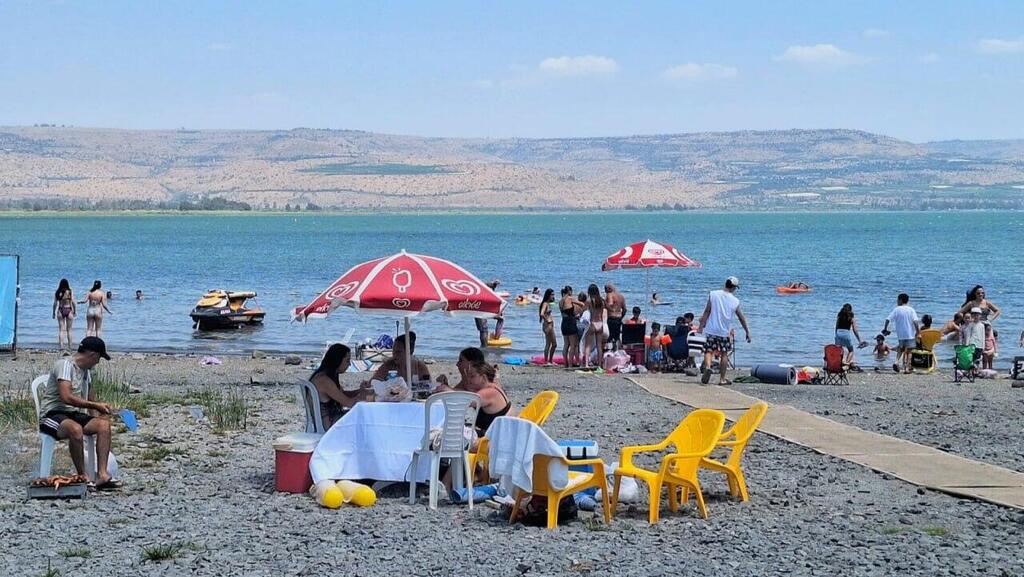
The Sea of Galilee
(Photo: Oshri Ben Dor, Kinneret Cities Association)
The urban renewal plans are also being tailored to the character of individual neighborhoods. In Shikun Daled, for example, which is home to ultra-Orthodox communities, part of the renewal plan is intended to meet the needs of that population.
“The buildings there are also in a condition that requires renewal,” he said. “When rehabilitation is needed, it does not matter who lives there.”
Alongside residential construction, Naba’a is presenting a vision for restoring Tiberias’ status as a tourism city. He said more than 200 million shekels has already been invested in renovating the promenade along the Sea of Galilee.
“We removed all the stalls that blocked the view of the lake and built a new promenade,” he said. “In Eilat, it took seven to 10 years to remove the stalls. Here, it took 70 days. We did it in cooperation with the business owners.”
Nearly eight new hotels around the Sea of Galilee are now in the planning or construction stages, he said. Two major projects are being advanced in Tiberias itself, alongside the renovation of the Club Hotel.
“Developers believe in Tiberias,” he said. “It is hard work. It is not something that happens all at once. It is built layer by layer and requires a great deal of faith from residents and the state. Tiberias deserves to return to its former glory.”
Three defense plants awaiting approval
The mayor also addressed the war in northern Israel and Tiberias’ role during the evacuation of border communities. He said the city absorbed between 16,000 and 17,000 evacuees, primarily from Kiryat Shmona, Shlomi and communities across the Galilee.
“Living for a year in a 22- to 25-square-meter hotel room is not easy,” he said. “We embraced the evacuees throughout the entire period. When I meet them today, they mainly talk about the warmth they received from local residents.”
About 90% of the city’s shared public shelters were also renovated, he said.
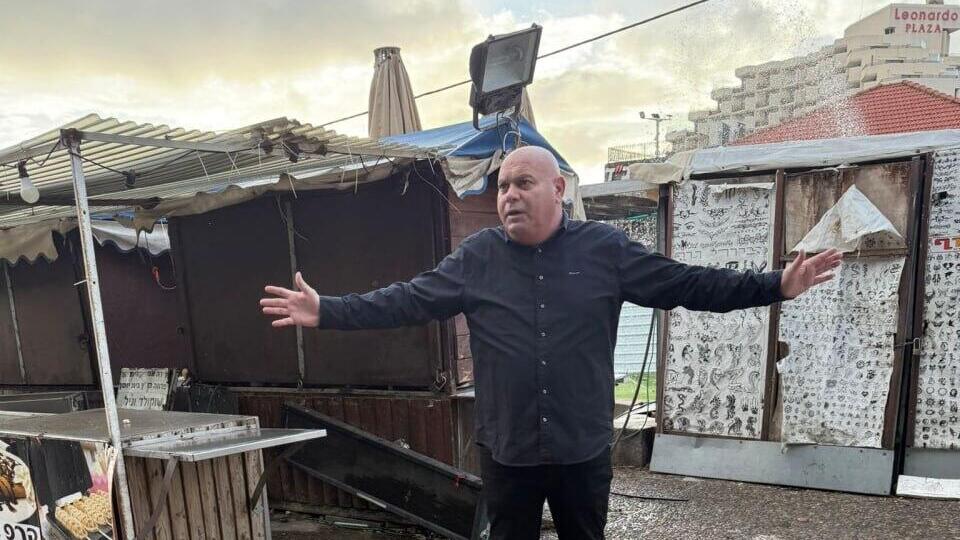
Naba’a at the site of demolition and renovation work on Tiberias’ Alon Promenade
(Photo: Tiberias Municipality’s Facebook page)
Regarding the government’s new decision to support urban renewal in northern Israel, Naba’a said it is still too early to know how much funding each local authority will receive, but he views the decision as a first step.
“Tiberias and Safed are especially in need of urban renewal because of the Syrian-African Rift,” he said. “Assistance of about 180,000 shekels per housing unit for developers will improve the economic feasibility of the projects. It is only the tip of the iceberg, but it is a good start.”
Alongside housing and tourism, Naba’a has set another goal: employment.
“We have succeeded in attracting three defense plants that are now in the approval and land allocation stages,” he said. “One of my greatest challenges is bringing more jobs to Tiberias.”