


Interest surrounding Nvidia’s planned new campus in Kiryat Tivon appears to be gaining momentum among investors, even though the site is not expected to be operational for about five years and employ some 10,000 workers. The nationwide real estate agency Anglo Saxon reports that a local property owner recently decided to cancel a signed sales agreement with investors after the apartment had been on the market for about six months.
The decision, said Alon Zohar, an Anglo-Saxon franchisee for Kiryat Tivon, Migdal HaEmek and Ramat Yishai, was based on the owner’s belief that property prices would rise sharply within a year or two.
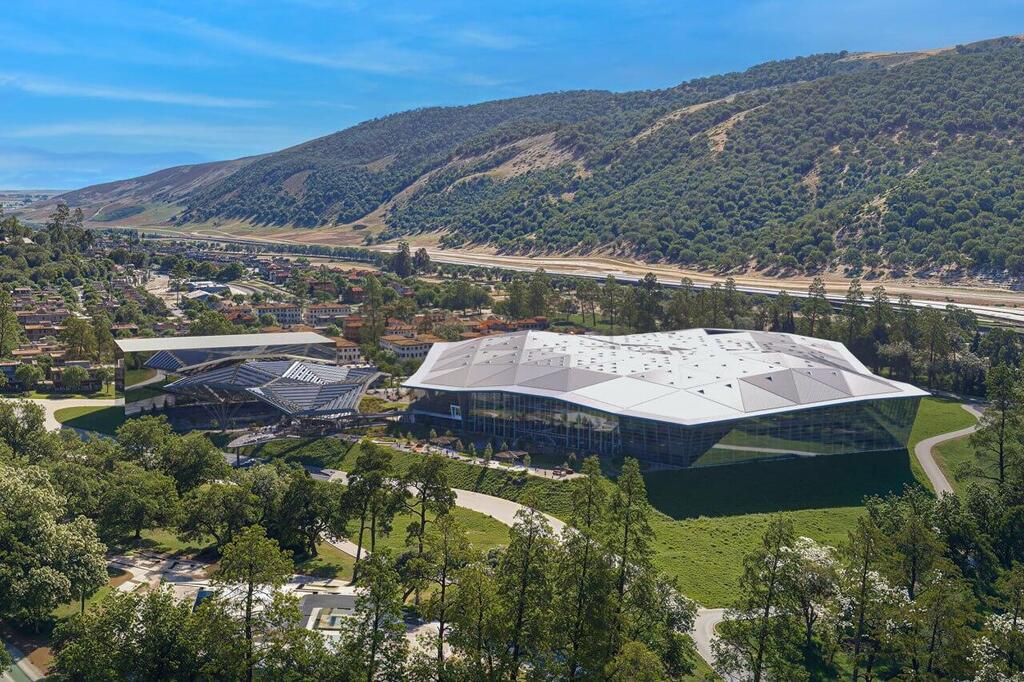
Illustrations of Nvidia’s planned campus in Kiryat Tivon
(Illustrations: Nvidia)
In a separate deal, the real estate agency recently completed the sale of a secondhand three-room apartment on Arik Sharon Street in the Tzel Oranim neighborhood of Kiryat Tivon for about 1.85 million shekels (about $590,000).
The apartment measures 75 square meters and includes a 17-square-meter balcony. It is located on the third floor of a three-story residential building with an elevator and parking. The unit is in a relatively new neighborhood, about three years old, adjacent to the site where Nvidia’s campus is expected to be built.
It was purchased as an investment following reports of the chipmaker’s arrival. According to data from the Madlan real estate website, three-room apartments in Kiryat Tivon are currently priced at around 1.64 million shekels.
Since the announcement of the Nvidia campus, Zohar told ynet, the firm has seen a sharp increase in inquiries about purchasing apartments in the area, not only from Kiryat Tivon but also from nearby Ramat Yishai and Migdal HaEmek. Many buyers, he said, have already factored in the expected impact of the Nvidia project on the local housing market, particularly investors from central Israel seeking properties for investment and even future residence.
According to Zohar, Anglo Saxon is identifying stronger demand and moderate price increases, especially in newer neighborhoods, a trend he expects to intensify as construction of the campus progresses. Nvidia, he said, is a mega-company whose presence is likely to generate wide ripple effects in employment, commerce and housing, drawing new and higher-quality populations to the area, partly at the expense of central Israel.
 Alon ZoharPhoto: Courtesy of Anglo Saxon
As for the Tzel Oranim deal, Zohar said it was a clear-cut investment transaction driven by Nvidia’s entry into the area. Most interested buyers, he added, are investors from central Israel and the surrounding area who are rushing to close deals ahead of anticipated price hikes, focusing mainly on three- and four-room apartments priced up to about 3.5 million shekels.
Zohar also noted a recent sale of a four-room apartment on Tidhar Street in the Ya’arat HaEmek neighborhood of Migdal HaEmek. The 115-square-meter unit, with a 14-square-meter balcony, is located on the first floor of a four-story building constructed in 2019 under the government’s discounted housing program.
It sold for about 1.59 million shekels after being on the market for roughly four and a half months, below its original asking price of 1.64 million shekels. Migdal HaEmek is about a 10-minute drive from Kiryat Tivon, and a quick-moving investor identified the potential and completed the purchase within a short time.
Appraiser and attorney Erez Cohen said Nvidia’s expected arrival in Kiryat Tivon has the potential to bring about a big structural change in the regional housing market. Beyond the immediate impact on employment, he said, the move strengthens a northern employment anchor and places entire communities back on the demand map, a process seen in the past around major high-tech employment hubs in Israel.
Cohen pointed to the expansion of Intel’s operations in Kiryat Gat, which led within several years to housing price increases of tens of percent in the city and surrounding areas, well above the national average. The rise in housing prices and rents, he said, typically stems from the combination of a strong employment anchor, transportation accessibility and planning supply that has failed to keep pace with demand.
 Erez CohenPhoto: Omer Koren
As an example, Cohen cited the Karmei Gat neighborhood, where apartment prices climbed over the past four to five years from about 1.25 million shekels to roughly 2 million shekels, while rents rose by an average of about 30%. Another example is Yokneam, where the establishment of large technology employers gradually shifted demand from a local to a regional market, driving sustained increases in both home prices and rents.
Nvidia’s global stature gives it particularly strong drawing power, Cohen added, meaning the impact is expected to be broad and gradual, first in the rental market and later in purchase prices. This is likely to be felt most strongly in communities able to respond quickly on the planning and construction fronts. Given that Kiryat Tivon is characterized largely by low-density single-family housing, he said, it may struggle to keep up with expected demand, pushing spillover demand into nearby communities such as Migdal HaEmek, Nesher, Haifa and the Haifa Bay area.
Dror Toren, CEO of the residential division at America Israel, which is developing the CREATE project in Kiryat Ata with 664 housing units across four towers and 25 boutique buildings, said Nvidia’s campus represents a major game-changer for the entire region. Its impact, he said, is already being felt in the marketing of the company’s residential project in the Kalaniyot neighborhood of Kiryat Ata, less than a 15-minute drive away.
 Dror TorenPhoto: Alan Chapelski
Proximity to a top-tier international employment center, Toren said, creates certainty and sharpens the region’s long-term potential, both for home upgraders and for investors who identify market trends. The Nvidia announcement, combined with transportation and employment development, is boosting demand from engineers and high-tech professionals seeking quality housing close to leading employment hubs.
The campus announcement, he concluded, is also attracting additional target audiences, including support professions looking to live in high-quality projects at attractive price levels while benefiting from the city’s development, including improved transportation access through major traffic arteries, new roads and a planned street-level light rail line.