


The most sought-after neighborhood for renters in summer 2026 was Neve Sha’anan in Haifa. It was followed by Nahlaot in Jerusalem and central Herzliya, with the Lev Tel Aviv neighborhood only in fourth place, according to an analysis of rental demand in Israel this summer.
The review, based on data from the Madlan real estate platform, examined demand for rental housing from the beginning of July through the end of August this year compared with the same period last year. In all, 1,614 neighborhoods across the country were surveyed in an effort to answer two questions: Which neighborhoods are currently the most in demand for renters, and where has demand risen most sharply compared with last summer?
The ranking was not based solely on the total number of people who showed interest in apartments in each neighborhood. Madlan examined inquiries generated by rental listings — contact forms, phone calls and WhatsApp messages — with each person counted only once. The analysis also measured actual supply, meaning the number of rental listings active in each neighborhood, not just the listings that received inquiries.
The ranking is based on a combined index of three factors: the total volume of inquiries about rental properties in the neighborhood, the number of inquiries per listing and the number of property views. The aim was to prevent large neighborhoods from automatically rising to the top simply because they have a large number of apartments and listings, while also preventing a very small number of listings in a tiny neighborhood from artificially boosting its ranking.
At the top of the list is Neve Sha’anan in Haifa, followed by Nahlaot in Jerusalem, central Herzliya, Lev Tel Aviv and Ramot Remez in Haifa. Further down are the "Quiet Center" neighborhood in Petah Tikva, Herzliya’s Central Green neighborhood, Ahuza in Haifa, Tel Aviv’s Old North in its southeastern section and the northern section of the Old North. Haifa accounts for six of the top 20 spots, while Tel Aviv has seven, though they are ranked lower.
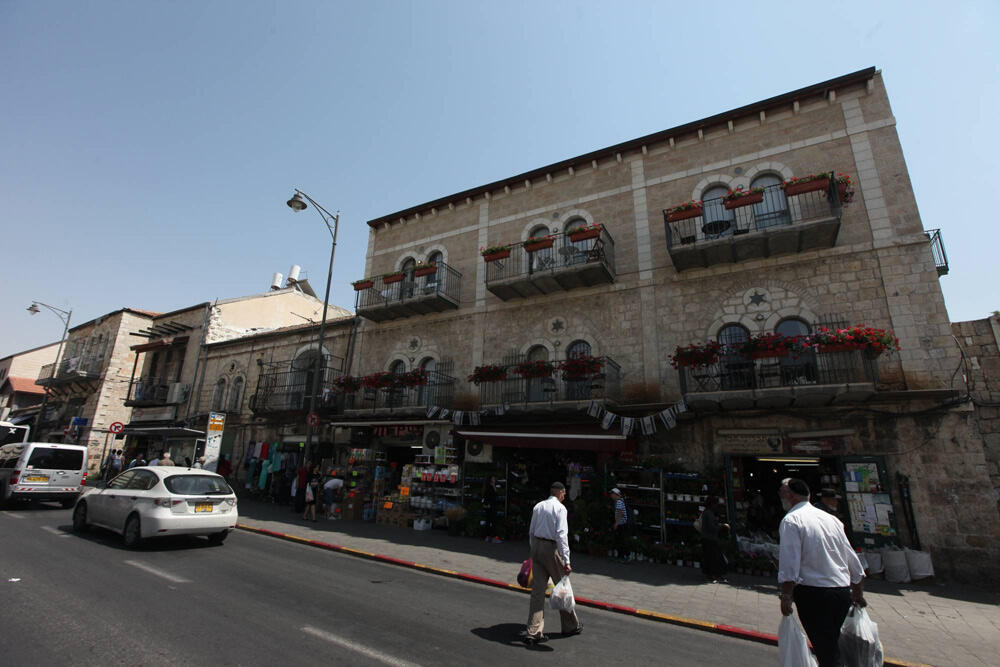
Jerusalem's Nachalont neighborhood
(Photo: Gil Yohanan)
Further down the list are downtown Jerusalem in 11th place, Haifa’s Carmel Center in 12th, Neve Avivim in Tel Aviv in 13th and Sarona in 14th. Northwest Bat Yam ranks 15th, followed by Yad Eliyahu, the Diamond Exchange district in Ramat Gan, Florentin, Upper Hadar and West Carmel in Haifa.
Tal Kopel, CEO of Madlan, which conducted the analysis, believes there is a clear common denominator among the neighborhoods that reached the top.
 Tal KopelPhoto: Merav Rigler
“We see that the list of the most sought-after neighborhoods is a very urban list, close to city centers if not actually in them,” he said. “There are no new neighborhoods or high-rise tower neighborhoods on it, which says something about renters’ preferences at the moment: People who rent want to live close to where things are happening, and quiet matters less to them.”
Sharon Eshel, an Anglo-Saxon franchisee in Haifa, addressed the neighborhood at the top of the list and said: “Neve Sha’anan is the largest neighborhood in Israel and currently leads demand in Haifa. It is close to the Technion and the university, so there are many students who already have begun looking for apartments there ahead of the coming academic year.”
Eshel added that “Neve Sha’anan is undergoing significant urban renewal and has a large supply of new apartments with protected rooms. In the current market, where there are few home purchases, people prefer to rent an apartment with a protected space. The neighborhood offers a relatively inexpensive alternative to Carmel, with rents ranging from about 3,000 shekels ($994) to 7,000 shekels ($2,318) a month, meaning there is a mix of older apartments and higher-quality units that have undergone renewal.”
 Sharon Eshel Photo: Philip
Eshel said that “in general, we are seeing a dramatic 20%-30% increase in rental prices in Haifa compared with last year. The growing need for protected spaces has led to a huge jump in rents for new apartments compared with last year. These are sums we have never seen in the city before.”
A shift in demand
But the ranking of the most sought-after neighborhoods tells only half the story. The analysis also compared summer 2026 with the corresponding period in 2025 to identify where demand changed most significantly.
Lev Tel Aviv’s western section led the increase in inquiries per listing, with a 116% jump compared with last summer.
It was followed by Herzliya’s Central Green neighborhood, up 76%, and Ahuza in Haifa, up 70%. In the Flea Market and North Jaffa area, inquiries per listing rose 59%, while Yad Eliyahu rose 57%, Bavli 53% and southwest Bat Yam 53%. In the southern city center of Kfar Saba, the increase was 49%.
Madlan explains that an increase in the total number of inquiries in a neighborhood does not necessarily indicate a genuine strengthening of demand. If many more apartments were listed for rent at the same time, the number of inquiries can rise without increasing competition among renters for each apartment. The rise in inquiries per listing helps identify places where pressure from renters has genuinely increased relative to supply.
 Erez CohenPhoto: Omer Koren
“Demand in the rental market shows that renters today are not looking only at Tel Aviv, but also at high-quality, accessible alternatives in other cities," according to appraiser and attorney Erez Cohen. "Haifa, Jerusalem and Herzliya stand out, while in Tel Aviv demand remains strong mainly in the central neighborhoods. The meaning is that the rental market remains active, but it has become much more selective and dependent on location and the value renters receive for the price.”
Cohen added: “The slowdown in home purchases is pushing the rental market upward in both transaction volume and prices. More households are postponing purchases and remaining in rental housing, and this is reflected in the high demand in a range of neighborhoods across the country. Rental demand is therefore no longer a phenomenon that characterizes only central Israel. There is considerable variation within the rental market, and beyond location and apartment quality, the presence of a protected room is creating a preference for newer neighborhoods or those undergoing urban renewal over older apartments.”