

Readers who see the title of this article may pause and ask themselves, “Wait, isn’t the war over?” The honest answer is no. While the intensity has fluctuated and we are currently in something of an intermission between major rounds, the reality is clear: the war is not yet behind us, and the security challenges Israel faces are far from resolved.
Hamas, though severely weakened, still maintains control over parts of Gaza. Hezbollah, now a shadow of its former strength, continues to violate ceasefire agreements and attempt to rearm. Iran is actively working to rebuild its ballistic missile capabilities, which is an existential threat to the Jewish state - something Israel wont watch from the sidelines. Add to this the Houthis in Yemen who are licking their wounds, and the picture becomes unavoidable. Simply put, the job is not yet finished.
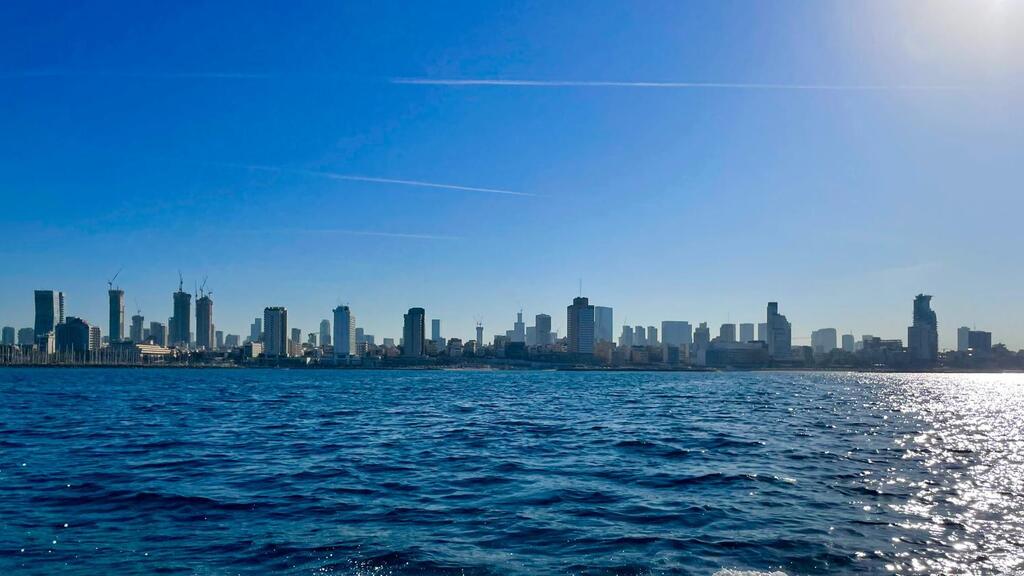
As I speak with more clients considering different cities and regions across Israel, I make it a point to visit these places myself, to gain real perspective and context beyond headlines. This past week, I spent time in Ashkelon, a beautiful coastal city with wide beaches, well-maintained parks, a strong local identity, and a sense of civic pride that is impossible to miss. Walking along the seafront with a coffee in hand, it was hard not to notice just how much potential this city has, and how much of it remains untapped. At the same time, Ashkelon carries a reality that cannot be ignored: it is the closest major city to the Gaza Strip.
For those who live there, this is nothing new. Many residents were born in Ashkelon, raised families there, and chose to stay even through the most difficult moments of the war. They love their city deeply and are fiercely patriotic. The same can be said of northern cities like Nahariya, Kiryat Shmona, Metula, and the surrounding communities.
But when I speak with new immigrants or foreign buyers looking at Israel for the first time, geography plays a different role. Not just ideologically but also psychologically.
How security shapes real estate decisions
Most people abroad do not analyze Israel the way Israelis do. They open a map. They see borders. They measure distances and they ask themselves very simple, very human questions: How close is this to Gaza? How close is this to Lebanon? How exposed does this feel?
This isn’t judgment, its human nature and instinct. And instinct plays a powerful role in decision-making, especially when it comes to where people choose to live, raise families, and invest long-term capital.
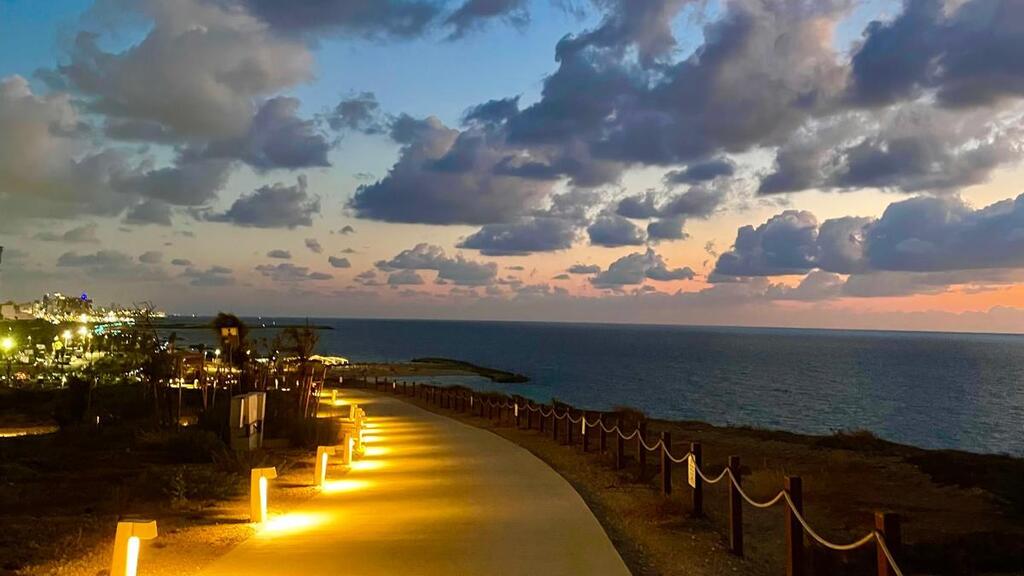
(Photo: Noah Sander)
That instinct is one of the main reasons demand has historically concentrated in the center of the country. Tel Aviv, its surrounding cities, and the broader Gush Dan area feel insulated. And perception matters. In reality, Tel Aviv itself is not particularly far from hostile areas in Judea and Samaria. For perspective, in some cases, its barely over half a marathon away in distance. But the difference lies in presence, control, and confidence. The IDF operates continuously in these territories, and that constant visibility creates a subconscious sense of stability, although Israel’s complex and ongoing security challenges are not to be underestimated.
As long as security remains a factor in people’s decision-making, cities closer to Israel’s borders will struggle to reach their full potential. Not because they lack quality of life, infrastructure, or opportunity, but because doubt suppresses demand. And where demand is suppressed, growth follows more slowly than it otherwise would.
The outcome of this war matters far beyond the battlefield
As we find ourselves in this strange in-between phase, it’s easy to slip into complacency. Life resumes. Cafés are full. Sunsets are still beautiful. But beneath the surface, the reality hasn’t changed: the job is not finished. And it will need to be finished on multiple fronts.
This is why the outcome of the war matters far beyond military headlines or political debates. It matters structurally, nationally, and economically.
There is a critical difference between a victory that requires convincing the public and an unequivocal victory that needs no explanation. A clear, undeniable victory does something very specific: it removes security from the real-estate equation and not just in policy, but in the subconscious mind. When families, investors, and new immigrants no longer pause to ask whether a city is “too close,” entire regions unlock almost overnight.
Ashkelon is a perfect example. With ironclad security, it has everything required to become one of Israel’s most desirable coastal cities: location, beaches, infrastructure, community, and scale. The same is true for Nahariya in the north, Kiryat Shmona and Metula along the Lebanese border, large parts of the Negev, and even the Golan Heights.
These areas are not fringe. They are future growth centers - places whose potential has been artificially capped by uncertainty rather than fundamentals. Remove that uncertainty, and demand will follow quickly.
The center cannot carry the country alone
Not everyone can live in the center of Israel. And just as importantly, not everyone wants to. Many people are drawn to more space, nature, quieter communities, affordability, and a different pace of life. Israel’s long-term demographic, economic, and social health depends on meaningful population growth beyond the narrow central corridor.
While we have already seen gradual movement outward from Tel Aviv and Gush Dan, one principle remains constant: as long as security is perceived as fragile, people naturally cluster inward. When security becomes unquestionable, settlement becomes instinctive. That is when cities outside the center don’t grow slowly. They grow rapidly. Land is developed, infrastructure accelerates, new communities form, and real-estate appreciation follows not through speculation, but through genuine demand.
In my view, this is not a rosy vision or an abstract ideal. It is a national responsibility. A strong, secure Israel is one that is confidently settled from north to south, not just defended from its center.
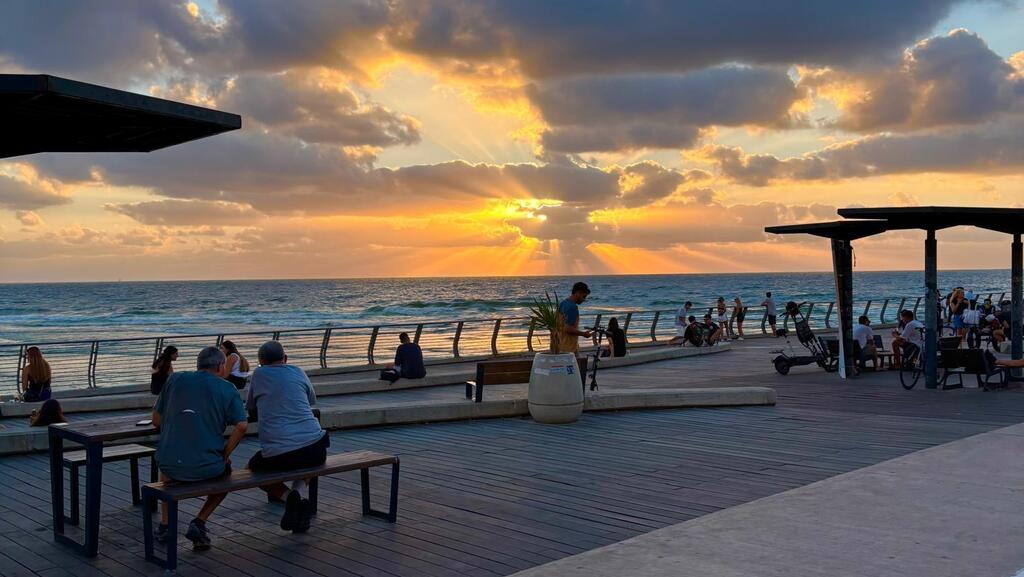
(Photo: Noah Sander)
The 'mamad' band-aid approach, not a solution
Today, every new apartment built in Israel includes a safe room (mamad), whether inside the apartment itself or on the floor. From a real-estate and planning perspective, this comes with real limitations. Mamads are typically the smallest and least flexible rooms in the apartment, restricted in layout, window placement, and design. Anyone who has reviewed blueprints for new construction knows how much they constrain planning. From a safety standpoint, the logic makes sense. From a national perspective, in my view, it reveals something intolerable. We have adapted our lives, our buildings, and our daily behavior around the acceptance that threats are permanent and this is something we simply “live with”. Meanwhile, our enemies will always be one decision away from launching attacks on our cities and communities. That is not resilience; that is containment. It reflects a mindset in which reacting to threats replaces eliminating them. Unfortunately, its this kind of thinking that led us to Oct 7th and the breakout of war.
I don’t claim to be a security expert, nor is this a policy prescription. But as someone who is deeply patriotic and invested in Israel’s future, I’ve never viewed the normalization of safe rooms as something to celebrate. To me, they symbolize a compromise we should not be willing to accept indefinitely - that life in our own country must be designed around the expectation of attack. That we are capitulating to our enemies, tolerating the ridiculous reality in which our adversaries have the opportunity to force us to scramble like wild sheep into shelters, in our own land. Something no other strong, sovereign nation would accept.
Luckily, since the beginning of this war, I believe that as a country our mindset has shifted. To one of an unapologetic, proud, and bold existence. One that is no longer willing to accept the realities that once were, one of ownership and accountability.
True security allows people to live normally, not defensively. When safety becomes structural rather than reactive, the psychology of where people choose to live changes dramatically.
The north, the south and Israel’s next growth phase
The future of Israel is not confined to the center of the country. It is in the north and in the south. It is in the Negev and the Golan Heights. It is in Judea and Samaria, and in coastal cities that remain undervalued relative to their true potential.
Once security is settled decisively and undeniably, these regions will not grow slowly. They will expand rapidly. Demographics will shift. Investment will follow. Entire cities will appreciate in value as confidence replaces hesitation. This is not speculation. This is how markets behave when a fundamental risk is removed.
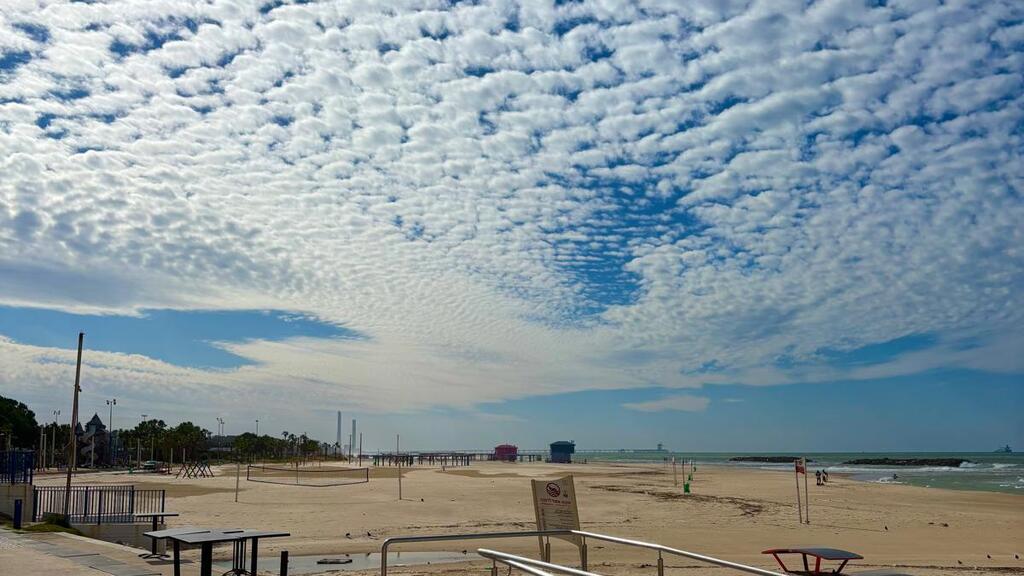
(Photo: Noah Sander)
Final thoughts
Real estate is ultimately a vote of confidence. People buy where they believe their families can grow safely, where communities can flourish, and where the future feels stable.
The stronger and clearer the victory, the faster Israel’s real-estate map will rebalance. Cities that have waited decades to reach their potential will finally do so, not because they changed, but because the reality around them did. I believe in the end, this victory will come, not because it’s comforting, but because it’s our national responsibility. Anything other than that is simply not an option we can accept.
Security is not just a military outcome. It is the foundation upon which Israel’s next chapter of growth will be built. And when that foundation is rock solid, the entire country rises with it.
Noah Sander is a Canadian-born real estate agent based in Tel Aviv, specializing in helping international buyers and new olim navigate the Israeli property market. For inquiries: [email protected], his brokerage: Daon Group Real Estate