

Most attention in interior design today goes to large spaces or dominant elements: the central sofa, the dining table, or a major artwork on the main wall. Over the years, however, I have learned that real impact, the kind that creates a precise and authentic sense of home, often lies in the small details. It is found in overlooked corners and places that take up very little floor space.
The microcosm we create in a small, limited spot, even on a narrow shelf in the living room beside a minimalist picture, can work just as well in a home office, across from the television, in a hallway, at the entrance or even in the bathroom.
A shelf like this, detached from the floor and economical in real estate, becomes an opportunity to introduce nature in a concentrated way. It allows us to create a small garden that requires few resources, yet contributes enormously to atmosphere and well-being. It is a quiet but powerful design statement that signals attention to detail and energizes any room.
For this microcosm to survive and thrive, smart and deliberate choices are essential, especially when it comes to plants. Accessibility, pot size and lighting conditions at elevated heights differ greatly from growing plants on the floor.
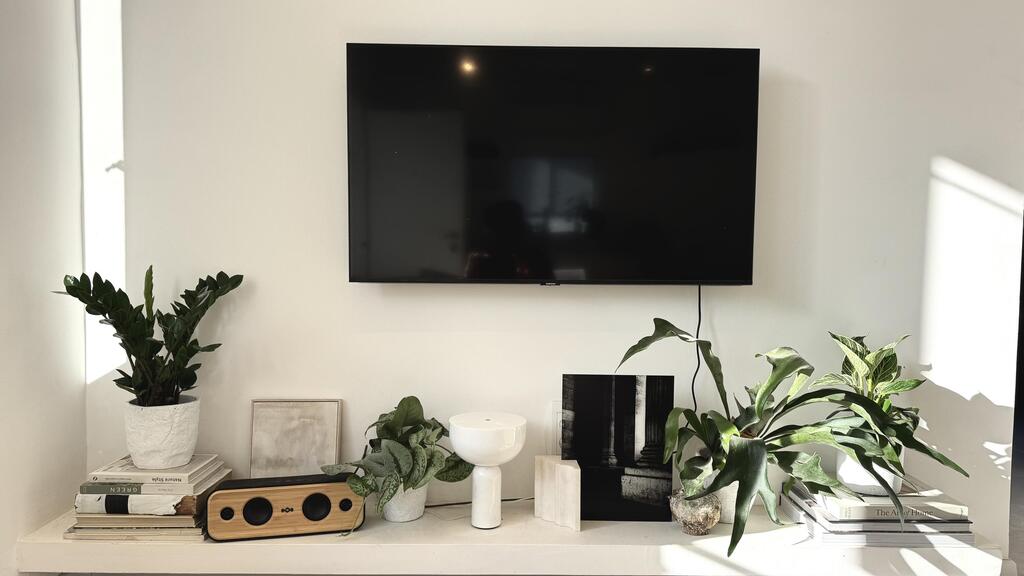
Survival champions, from right to left: Philodendron Birkin, staghorn fern, Scindapsus pictus, ZZ plant
(Amir Avdat)
Plants are the beating heart of the shelf. Upright or cascading leaves bring life and freshness to the composition, providing the organic contrast needed against the straight, rigid lines of furniture and walls. To prevent the shelf from becoming a plant graveyard, a practical approach is key. Choose small or miniature houseplants, with containers no wider than about 10 to 15 centimeters, to maintain stability and proportion.
Beyond size, what we are really looking for is forgiveness: plants that do not require urgent watering and can tolerate dry spells and indirect or limited light.
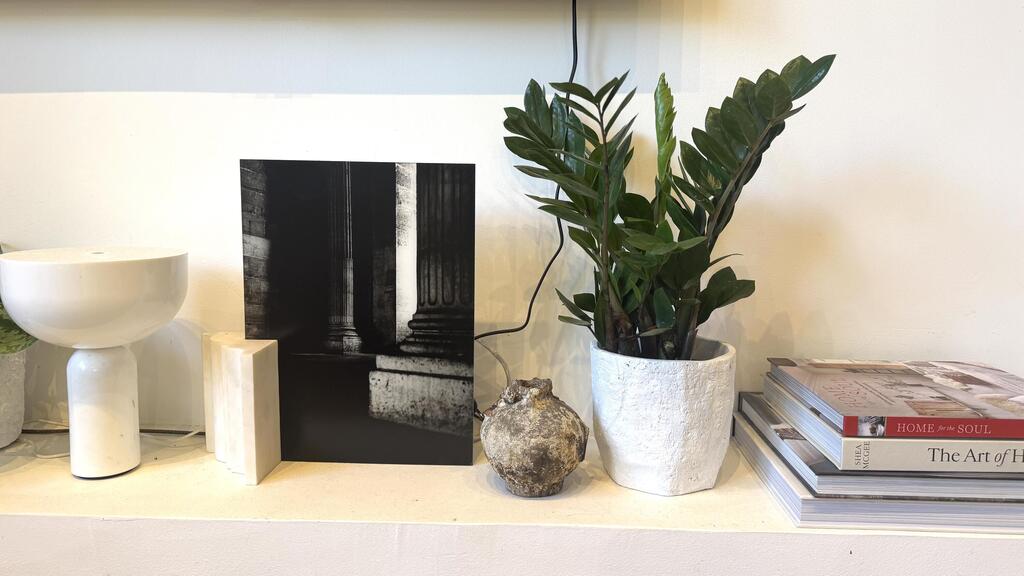
The king of resilience and upright form: the ZZ plant
(Photo: Amir Avdat)
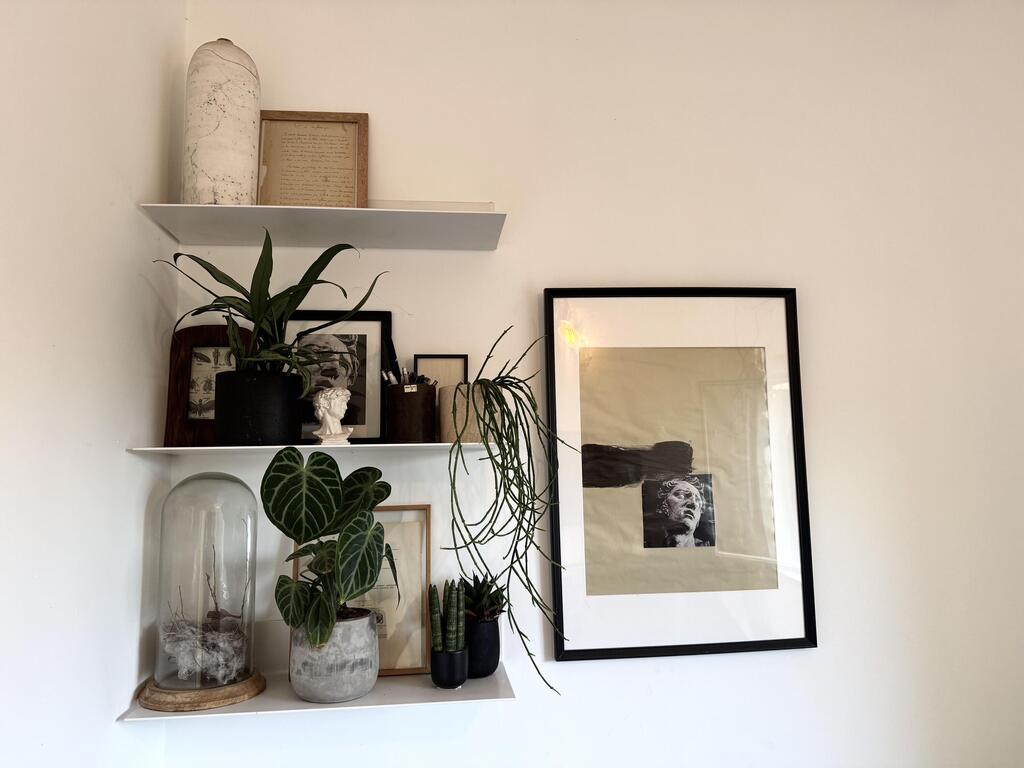
Top right: trailing rhipsalis. Lower shelf, right: Haworthia limifolia and mini ‘Straight’ sansevieria
(Photo: Amir Avdat)
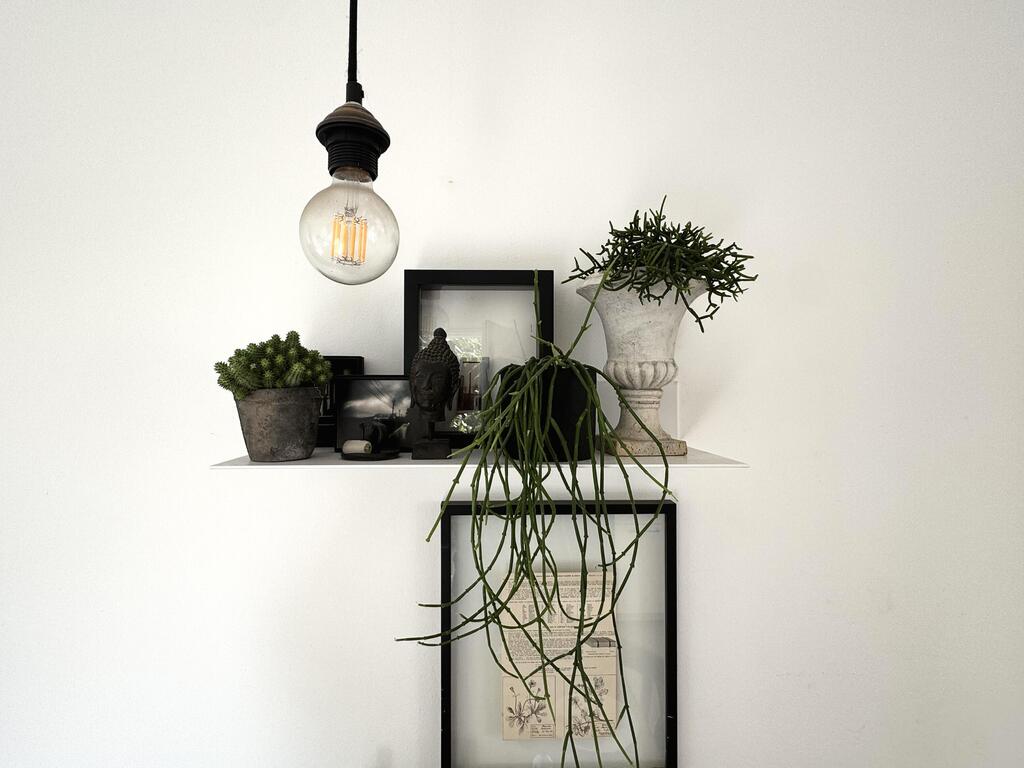
Combining upright and trailing plants on a small shelf. Right, trailing rhipsalis; left, euphorbia
(Photo: Amir Avdat)
Plants that dare to grow up: practical tips
- In my experience, especially hardy plants are the key to success on high shelves, where watering is less accessible and light is usually indirect or partial. I call them ‘the desert plants of the interior.’ They require minimal intervention.
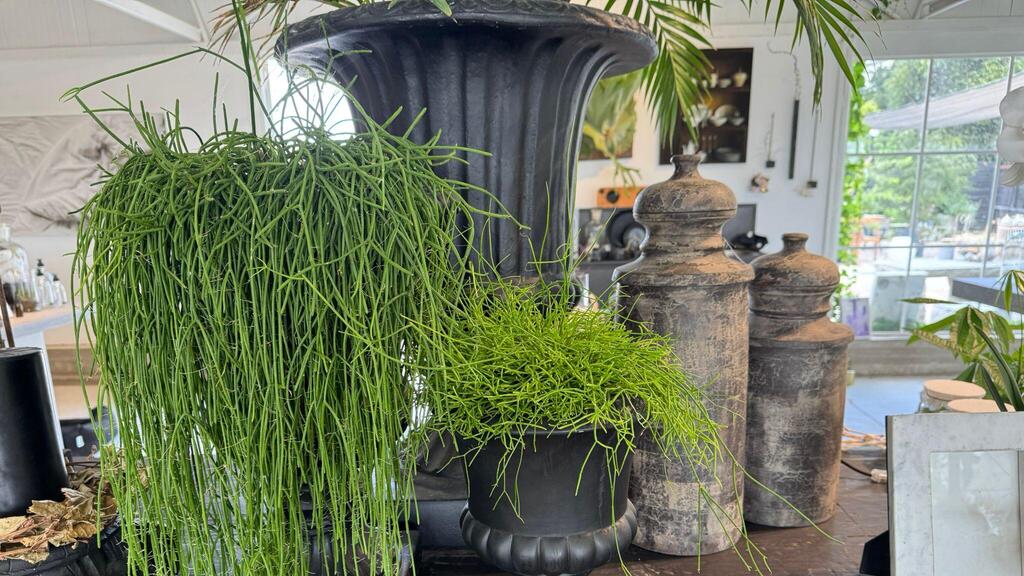
- At the top of the list are pothos, scindapsus and philodendron varieties. All are trailing, exceptionally forgiving plants that can survive in relatively low light and still thrive if you forget to water them now and then. Their free-flowing greenery softens the sharp lines of the shelf. Alongside them, I always recommend rhipsalis, trailing epiphytic cacti without spines, which add a rough, exotic texture and are true survival champions.
- To create vertical interest and drama, sculptural upright plants are essential. The ZZ plant is the undisputed king of resilience. Its orderly appearance can look almost like a work of art. Compact varieties of snake plant, such as Sansevieria cylindrica, add a clean, elegant line. Haworthia limifolia and gasteria are also worth noting. These small succulents are natural treasures, perfect for placing near books or small objects, and they emphasize refined minimalism.
- Another key insight is that composition matters. Creating a shelf microcosm requires awareness of basic styling principles, similar to architecture. Avoid clutter, vary additional elements, allow breathing space and steer clear of visual overload.
- Play with heights and shapes. Always combine trailing and upright plants. Add height by placing one pot on a small stand or a thick book to create visual hierarchy.
- Use odd numbers. An odd number of items, such as three, five or seven, is almost always perceived as more natural and harmonious than an even number. It is a design rule of thumb that holds true.
- Create textural contrast. Choose planters with different textures, such as smooth ceramic alongside rough concrete or polished metal, to add depth. Keep the color palette neutral, black, white, gray, sand, brown or cream, so the green can stand out.
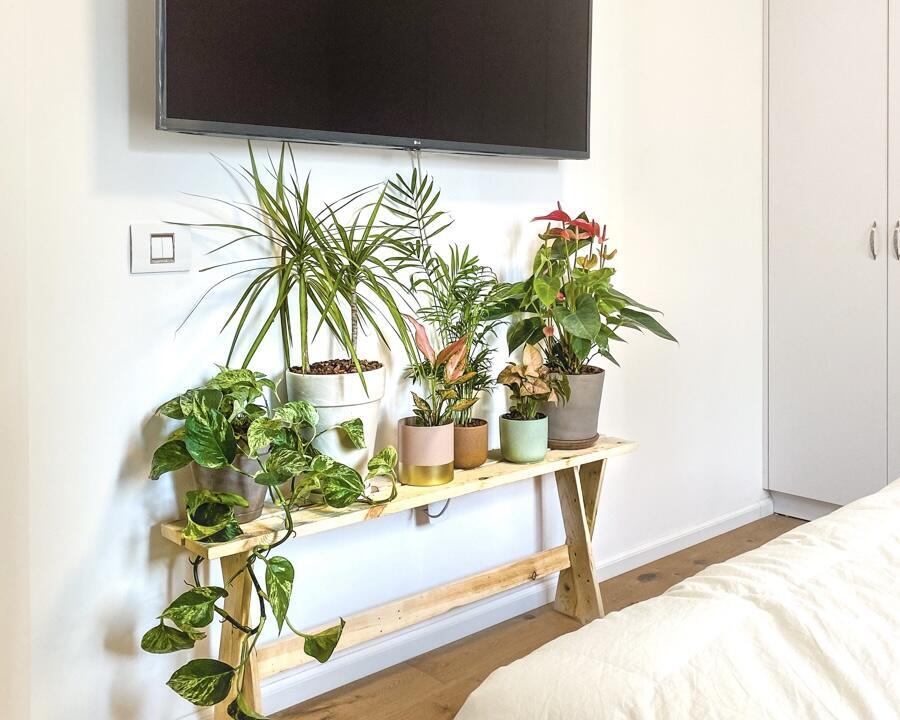
Bringing vitality and natural balance to every room, even in small doses
(Photo: Rinat Tal)
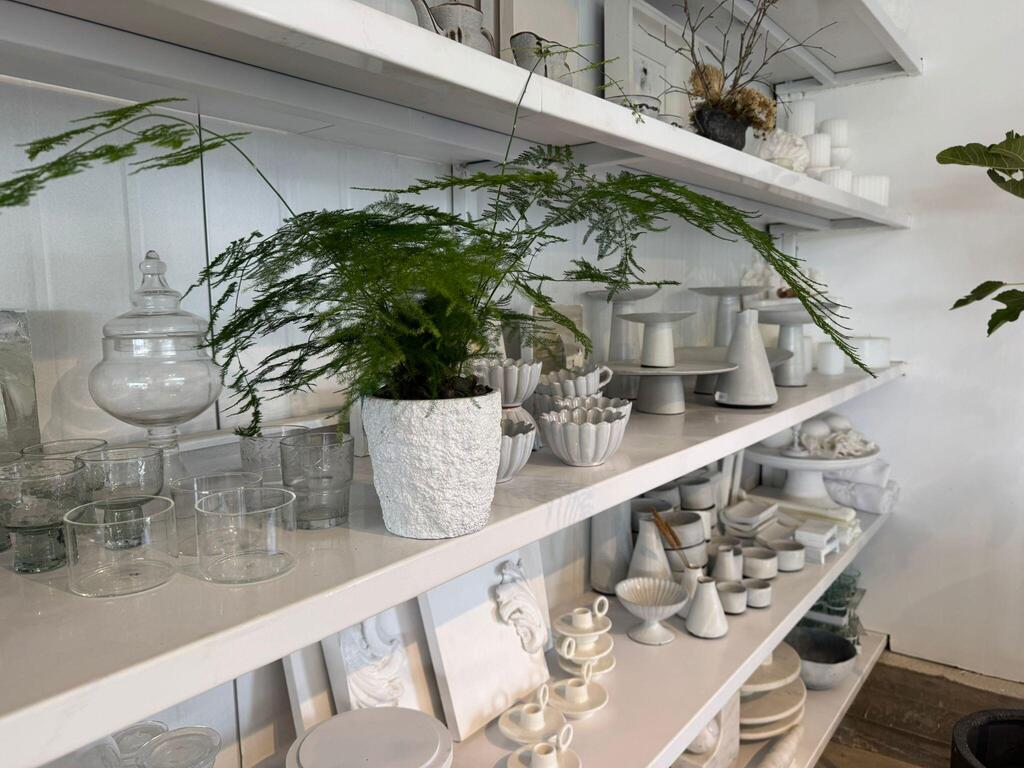
An asparagus fern on a shelf, nestled among decorative objects
(Photo: Amir Avdat)
In the end, a styled shelf is far more than a random arrangement of pots, decorative objects and books. It is a precise design statement that blends natural beauty with function and intention. It is a way to bring vitality and natural balance into every part of the home, even those corners that are often left empty.
Amir Avdat is the owner of the Mishtelet Hakfar Nursery in Moshav Yagel.