


The 2026 FIFA World Cup kicked off on June 11, marking not only the start of the largest soccer tournament ever held but also offering a glimpse into a very different vision of what a World Cup stadium can be.
For the first time, the tournament is hosted by three countries at once: the United States, Mexico, and Canada, stretching across roughly 4,000 kilometers (about 2,500 miles) from Vancouver in the north to Mexico City in the south.
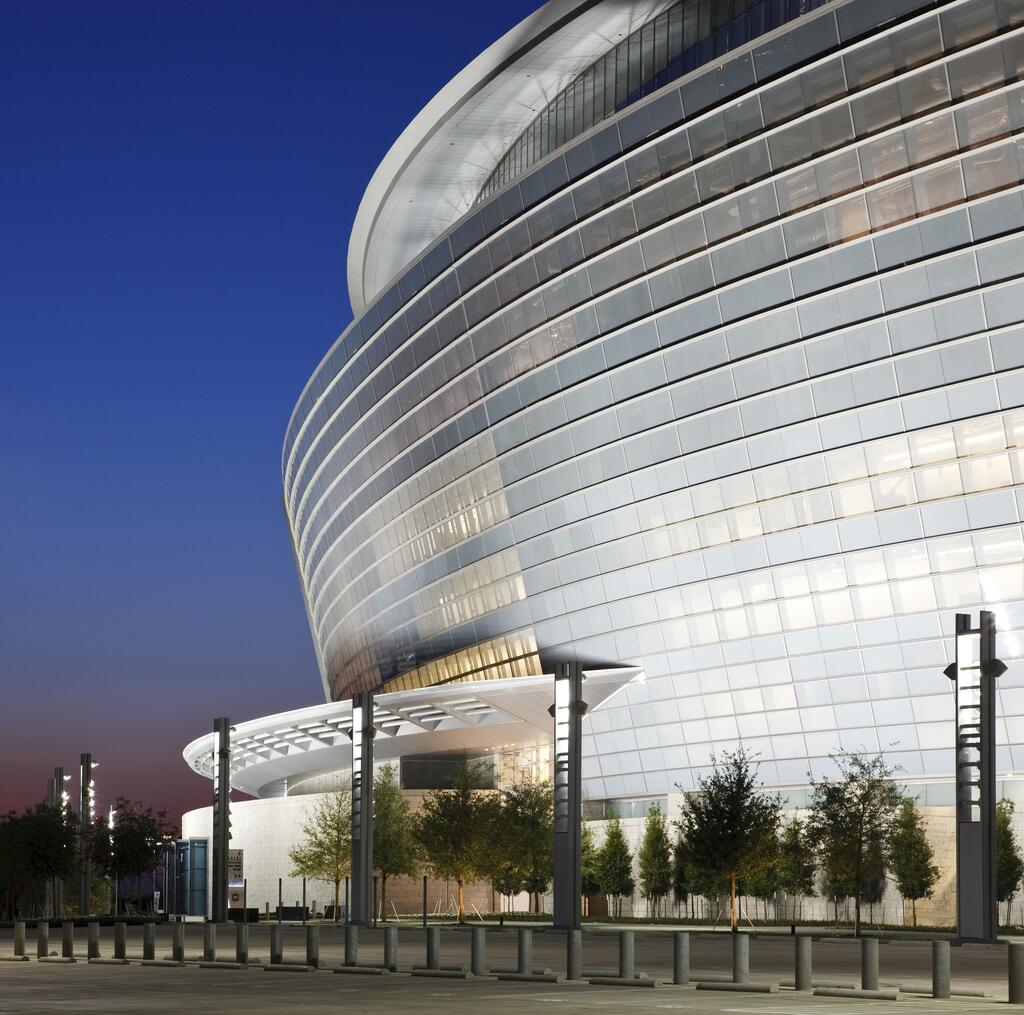
But the scale of the tournament is only part of the story. World Cup 2026 already looks, sounds, and feels different because many of its matches are played not in traditional soccer stadiums, but in giant American arenas originally built for the NFL.
These are not the intimate, steep-sided soccer grounds familiar from Europe and South America, where stands press tightly around the pitch and the crowd becomes part of the match. Many of the American venues are designed for a different sporting culture altogether: American football, with its frequent stoppages, commercial breaks, halftime shows, premium hospitality areas, and expectation that a game day is as much an entertainment event as a sporting contest.
That difference is more than cultural; it is also architectural. Several U.S. stadiums have been adapted for FIFA requirements, since NFL fields are generally narrower than international soccer pitches. Some venues, including AT&T Stadium near Dallas and SoFi Stadium in Los Angeles, required changes such as raising the field level or removing front-row seats in certain areas to meet soccer dimensions.
Sports or entertainment? A mix of both
The result will be a World Cup played in venues that often feel closer to futuristic entertainment complexes than to classic soccer grounds. They are larger, higher, more technologically dense and packed with giant screens, luxury suites, lounges, bars, restaurants and retail spaces. In many cases, the stadium is no longer just the place where the game happens. It is part mall, part media machine, part civic landmark and part spectacle.
The cultural clash begins with the name of the sport itself. In most of the world, the game is football. In the United States, it remains soccer, because “football” belongs to another sport entirely. That linguistic divide reflects something deeper: a meeting between the world’s most popular game and a country whose dominant sports venues were built around a different idea of pace, crowd behavior and entertainment.
AT&T Stadium in Arlington, Texas, home of the Dallas Cowboys, may be the clearest example of that American mega-stadium culture. With more than 80,000 seats, a retractable roof, vast glass facades and one of the largest video boards ever installed in a sports venue, the stadium feels less like a soccer ground than a monument to American sports entertainment.
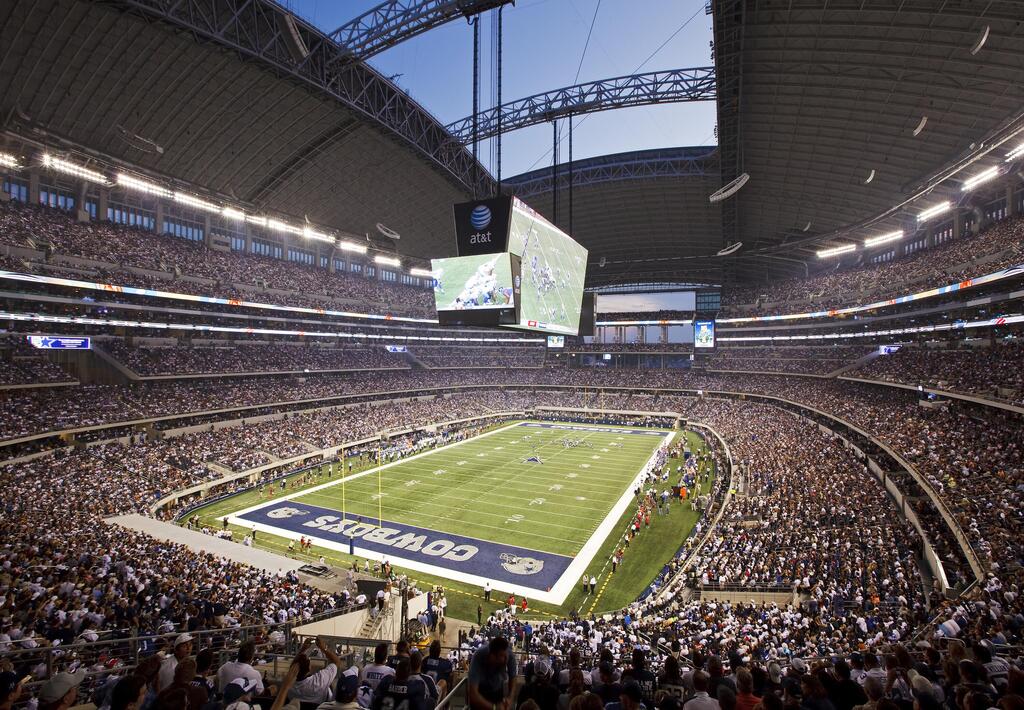
AT&T Stadium courtesy of HKS
(Photo: Blake Marvin)
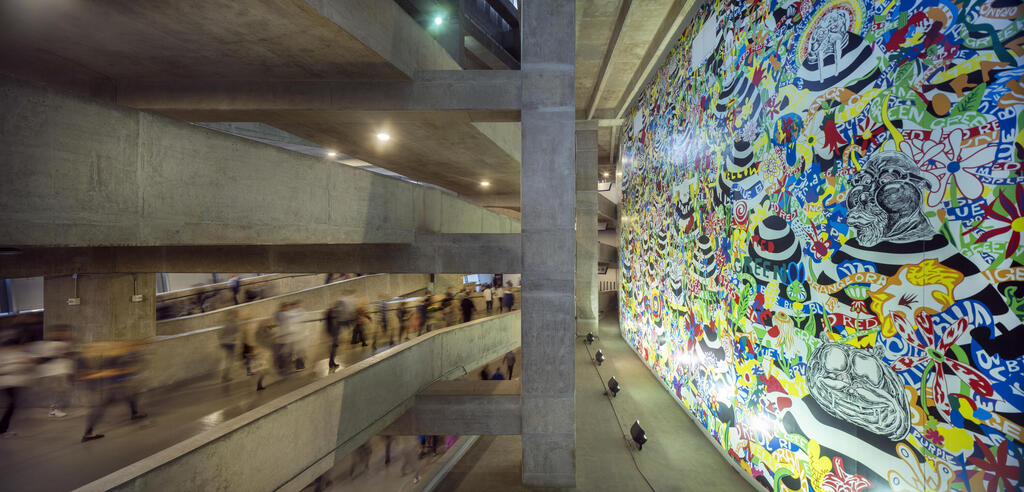
AT&T Stadium courtesy of HKS
(Photo: Nic Lehoux)
Designed by HKS, one of the world’s largest architecture firms, the stadium is defined by enormous steel arches that support its roof and give the structure a dramatic, almost spacecraft-like profile. Its interior spaces can feel closer to a luxury convention center than a traditional stadium, with wide concourses, premium hospitality zones and a scale designed to overwhelm as much as to accommodate.
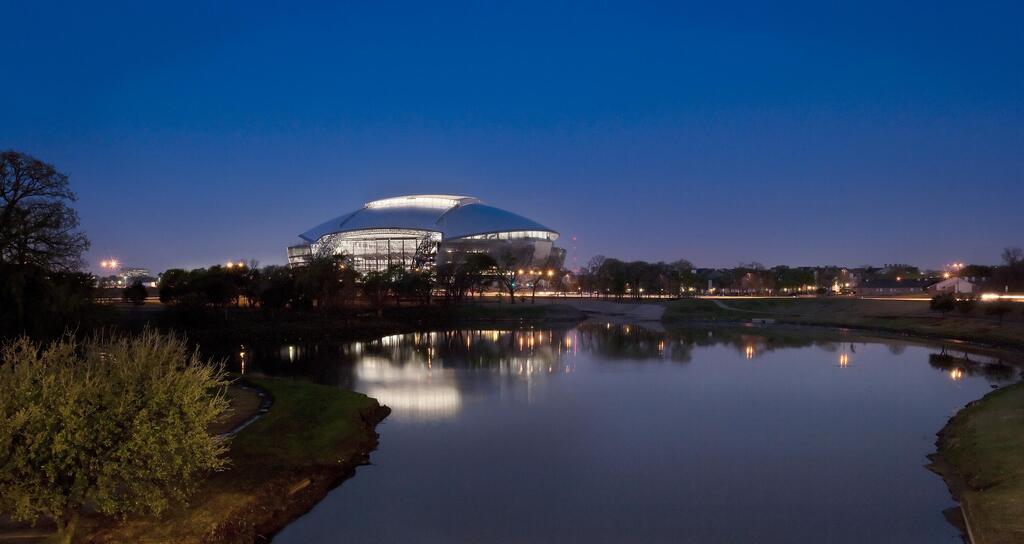
AT&T Stadium courtesy of HKS
(Photo: Blake Marvin)
AT&T Stadium captures a central idea behind many of the venues that will shape the 2026 tournament: the stadium is not merely a container for the match. It is a machine built to surround the viewer with sound, screens, branding, comfort and spectacle.
That idea is taken even further at SoFi Stadium in Inglewood, near Los Angeles. Opened in 2020 and home to the Los Angeles Rams and Los Angeles Chargers, SoFi is one of the most ambitious sports venues built in recent years. With about 70,000 seats and a vast translucent roof canopy, it looks more like a covered futuristic city than a conventional stadium.
From the outside, SoFi’s wave-like roof and semi-transparent skin give it the feel of an enormous cloud or spacecraft hovering over the site. Unlike many older soccer stadiums, whose exteriors can be industrial and blunt, SoFi was designed to create a sense of event before spectators even reach their seats.

SoFi Stadium
(Photo: Nic Lehoux)
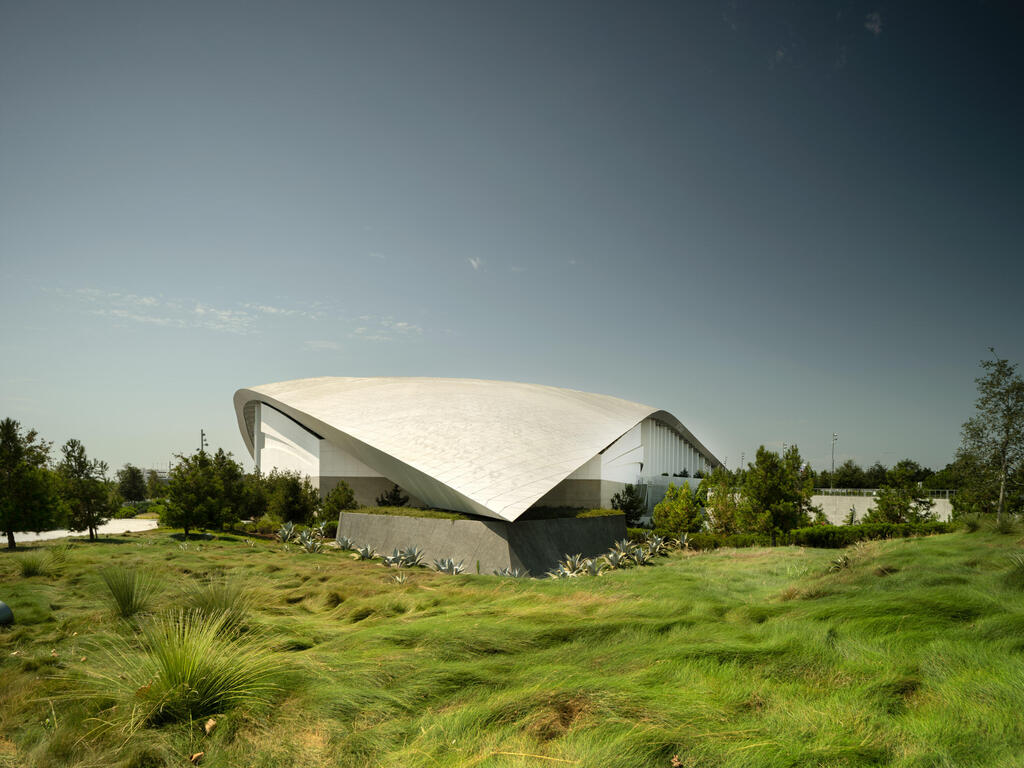
SoFi Stadium
(Photo: Nic Lehoux)
Inside, the technological effect is even stronger. Suspended above the seating bowl is a massive oval video board that wraps around the stadium's center, turning the air above the field into another layer of the performance. The public areas are broad and polished, closer in atmosphere to a tech campus than a compact sports ground.
Like AT&T Stadium, SoFi was designed by HKS, and the connection is visible. Both venues are monumental, highly engineered and built around the idea that a stadium should deliver an immersive entertainment experience, not just host a game.

SoFi Stadium
(Photo: Bruce Damonte)
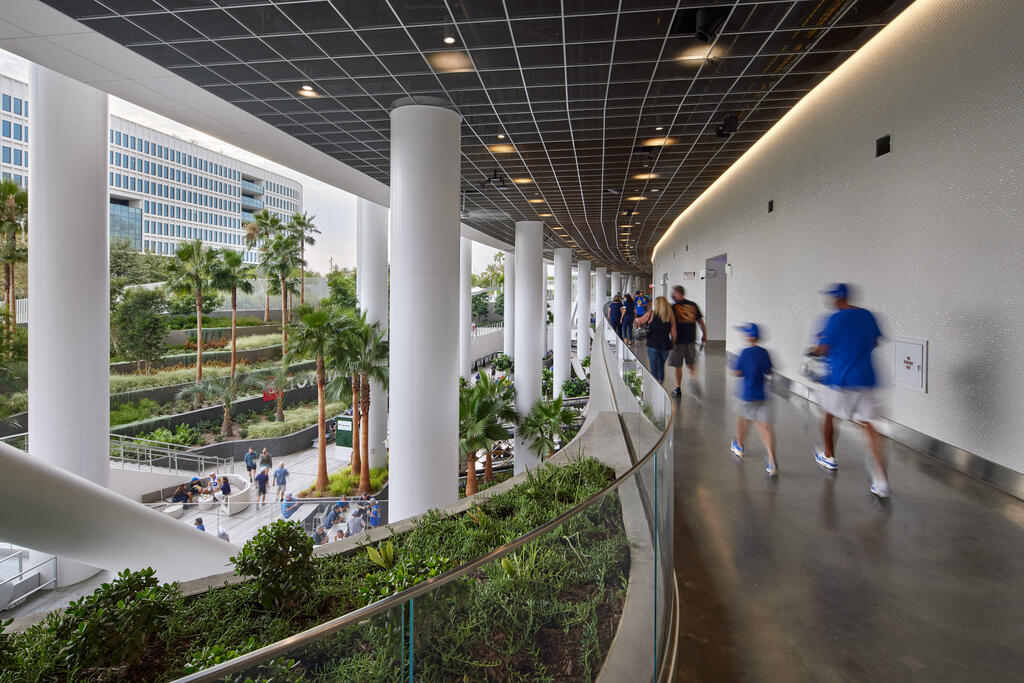
SoFi Stadium
(Photo: Bruce Damonte)
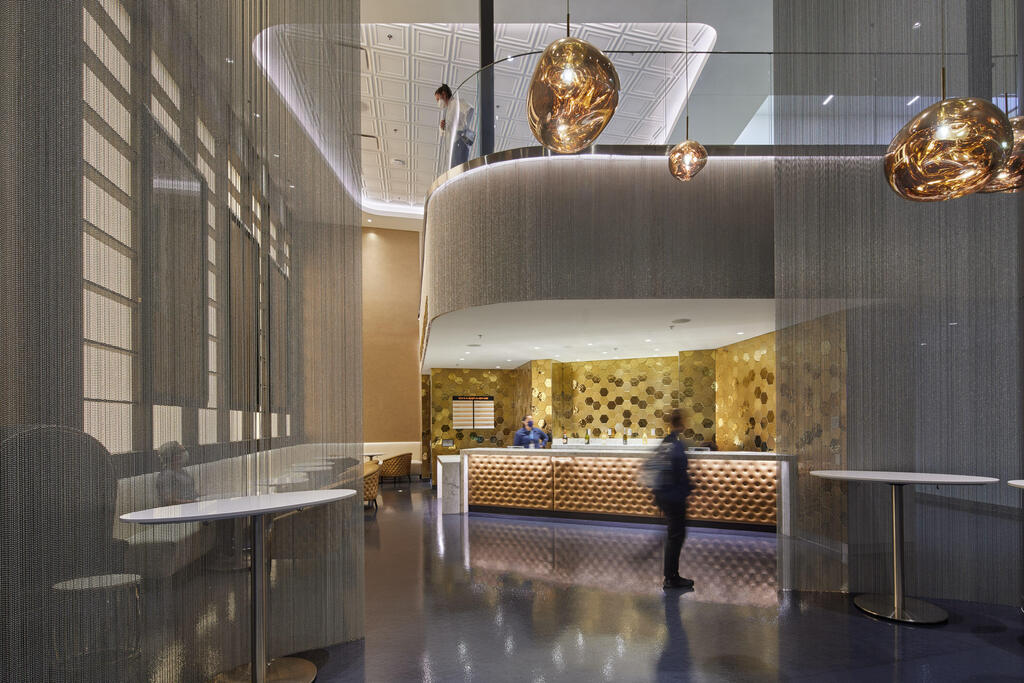
SoFi Stadium
(Photo: Bruce Damonte)
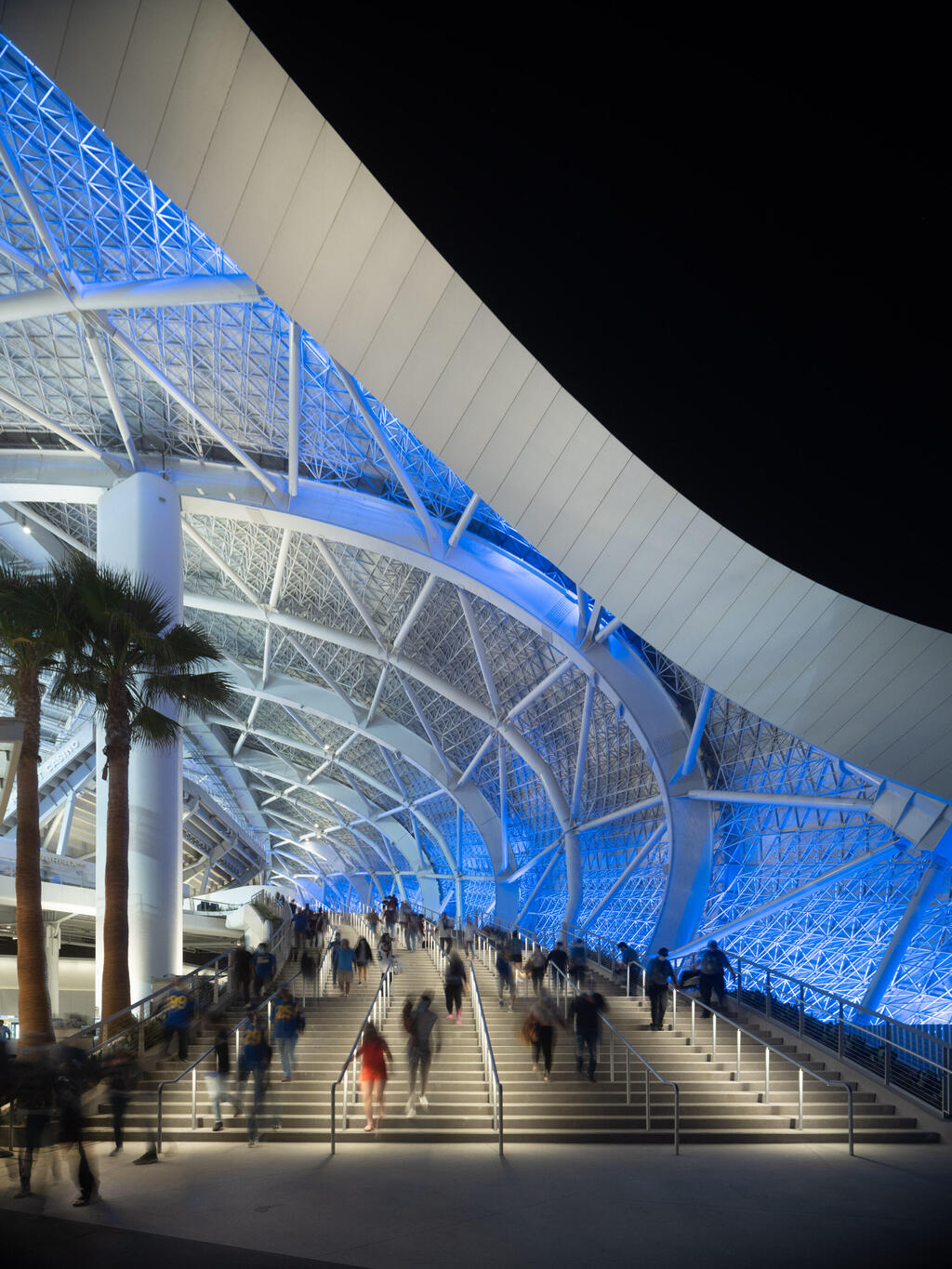
SoFi Stadium
(Photo: Nic Lehoux)
Architecture in motion
Mercedes-Benz Stadium in Atlanta offers a different but equally striking version of that vision. Designed by HOK in collaboration with other firms, the stadium is best known for its retractable roof, made of eight large panels that open and close in a circular motion reminiscent of a camera aperture.
The effect is less heavy than some other NFL venues and more kinetic. The building seems designed around movement, engineering precision and visual drama. Its dark glass and metal exterior gives it a polished, futuristic appearance, somewhere between a science museum and a high-tech civic monument.
The stadium’s designers, working with a venue that holds about 71,000 seats, sought to impress less through size alone and more through engineering sophistication and an exceptional architectural experience.
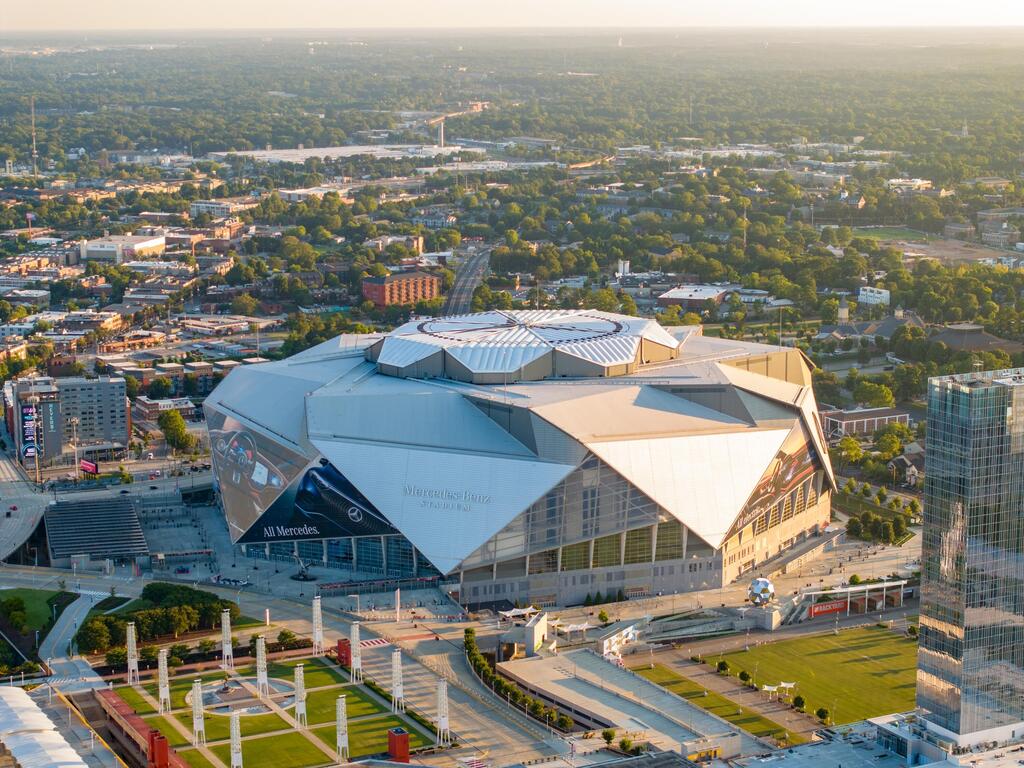
Mercedes-Benz Stadium in Atlanta
(Photo: Felix Mizioznikov, shutterstock)
Inside, a vast circular video board wraps around the roof opening, surrounding fans with information, images and atmosphere. Lighting, acoustics, crowd movement and digital media become part of the architecture itself. The stadium does not simply frame the game; it choreographs the entire experience around it.
Ultimately, World Cup 2026 may be remembered as the moment when sports architecture itself moved to the forefront, almost as much as the matches on the pitch. The upcoming tournament will bring global soccer face-to-face with a new generation of American stadiums: monumental, technologically advanced structures designed not only to hold crowds, but to create an all-encompassing experience of movement, light and sound.
Unlike traditional soccer stadiums, where architecture primarily serves the atmosphere in the stands, here the buildings themselves become an integral part of the show. In that sense, the World Cup will not merely be played inside American stadiums, but inside an entirely different planning philosophy, one in which sport, architecture and entertainment merge into a single experience.
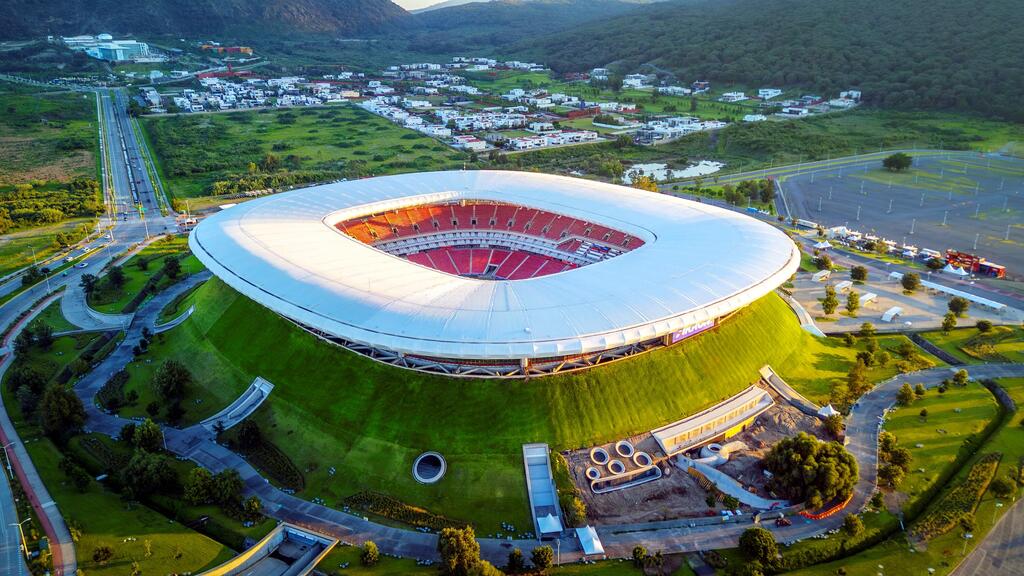
Akron Stadium at Guadalajara, Mexico
(Photo: Jorch R Orrantia, shutterstock)
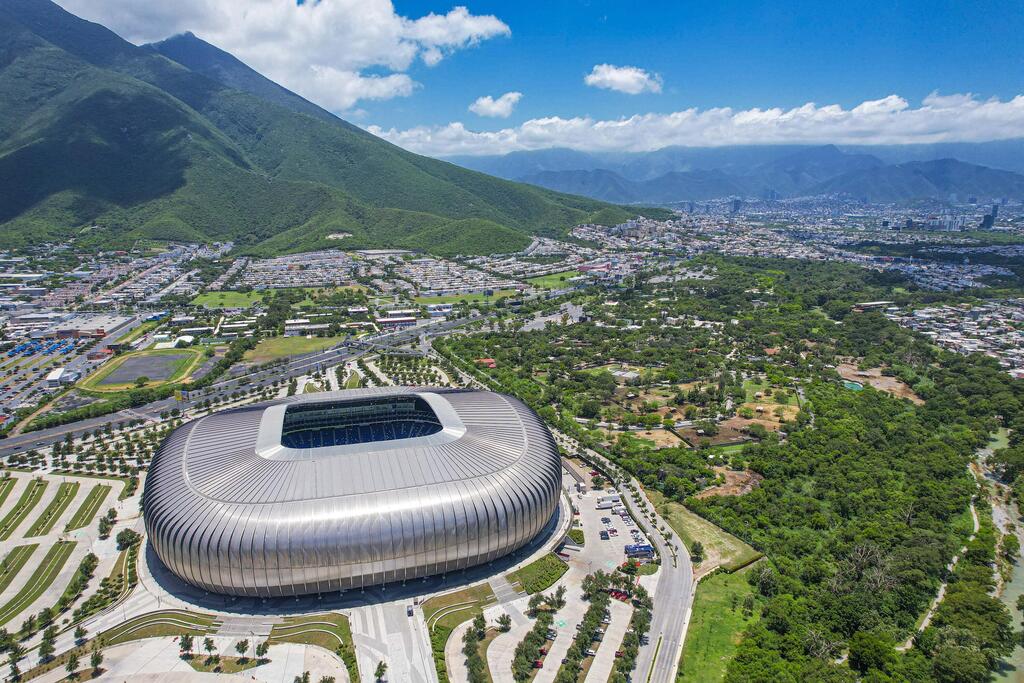
Monterrey Stadium, Aerial view of BBVA Stadium
(Photo: NortePhoto.com, shutterstock)
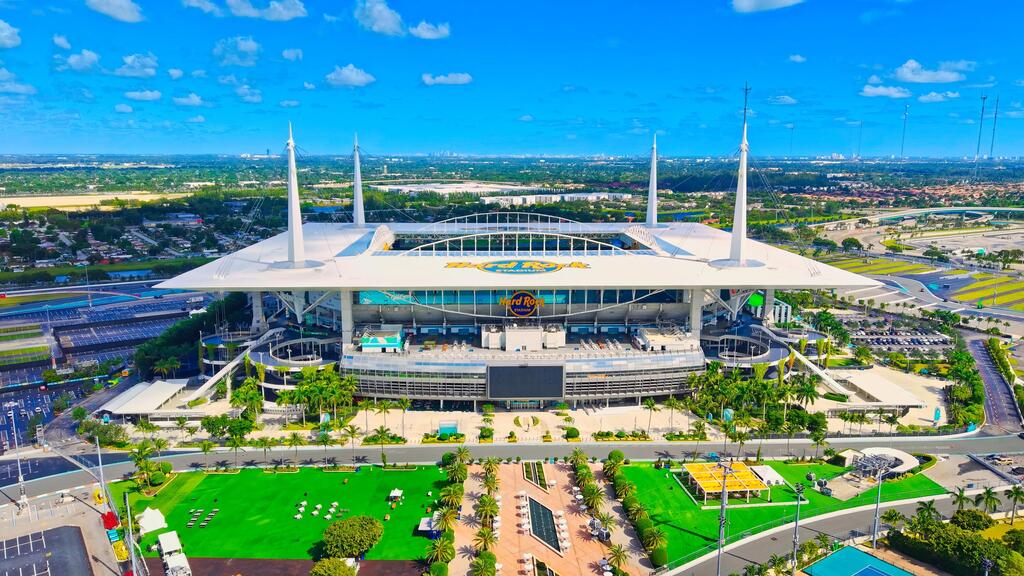
Hard Rock Stadium Miami
(Photo: 4kclips, shutterstock)
Faster, higher, stronger
The 2026 World Cup will be the largest and most expensive in history, with 48 teams competing across 16 stadiums in three countries: the United States with 11 venues, Mexico with three and Canada with two.
In the U.S., the venues include MetLife Stadium in New Jersey, which will host the final; SoFi Stadium in LA (Inglewood); AT&T Stadium in Dallas, Arlington; Mercedes-Benz Stadium in Atlanta; Levi’s Stadium in San Francisco/Santa Clara; Hard Rock Stadium in Miami; Lumen Field in Seattle; NRG Stadium in Houston; Lincoln Financial Field in Philadelphia; Arrowhead Stadium in Kansas City; and Gillette Stadium in Foxborough, near Boston.
Mexico’s venues are Estadio Azteca in Mexico City, which will host the opening match; Estadio Akron in Guadalajara; and Estadio BBVA in Monterrey.
Canada will host matches at BC Place in Vancouver, the tournament’s northernmost venue, and BMO Field in Toronto.