


Illuminating significant buildings is a powerful form of visual design, using light to “sculpt” their unique features and bring out details that remain visible even after dark. That is true around the world, and even more so in Jerusalem, where buildings from different periods, some hundreds or even thousands of years old, stand side by side.
Advanced lighting techniques in Israel and abroad are used to emphasize architectural lines, materials, details and ornamentation that can be swallowed up by daylight. Smart lighting can transform a building into an impressive nighttime work of art, adding another layer to its appearance during the day.
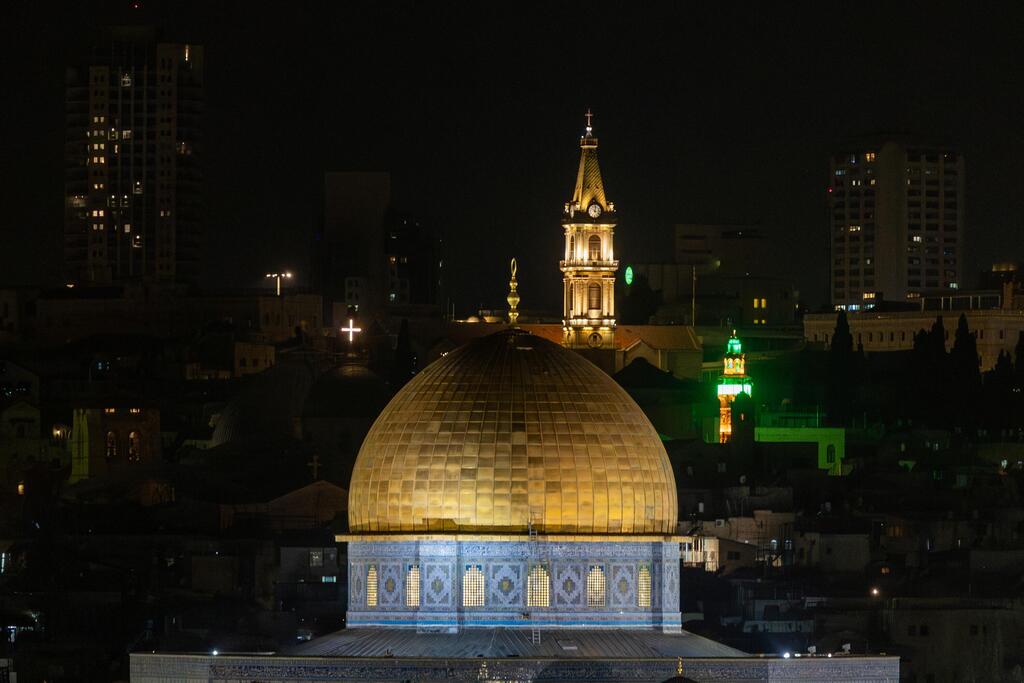
This is not merely functional illumination, but lighting that gives a building “soul,” creating a play of light and shadow that intensifies its physical presence in the urban landscape.
From both a tourism and architectural perspective, illuminated buildings become major attractions, drawing visitors after sunset and extending the hours of activity at key sites.
Cities around the world have embraced this idea long ago, and Jerusalem has followed suit: more than 20 buildings across the city have been illuminated through the work of the Jerusalem Development Authority, the Jerusalem Municipality, the Tourism Ministry, and the Ministry of Jerusalem Affairs and Jewish Tradition.
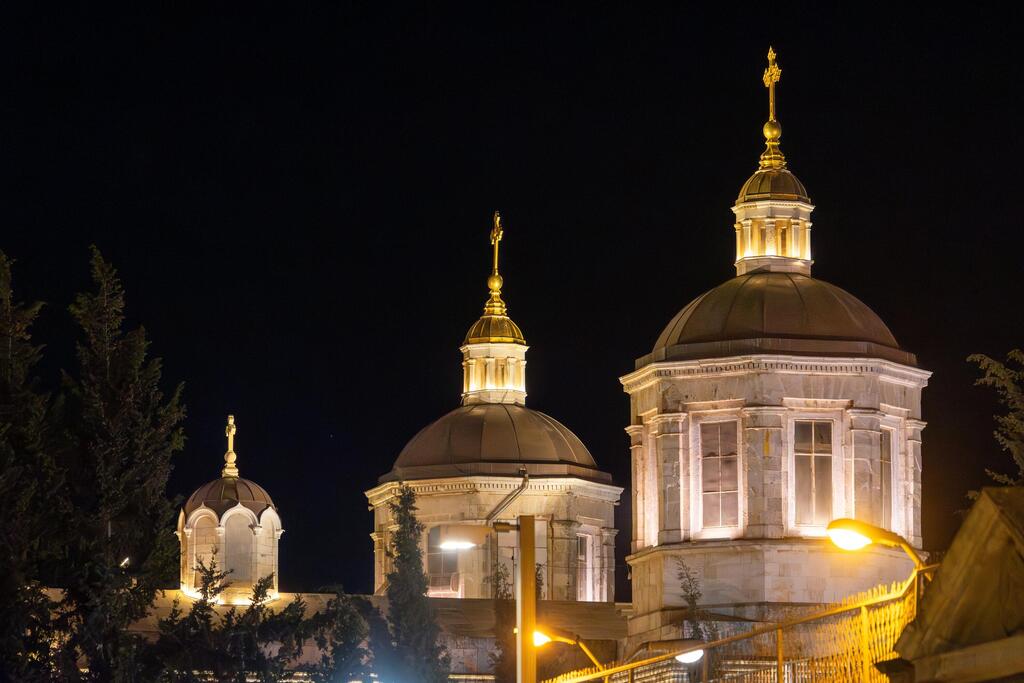
Every empire wanted a foothold in Jerusalem: The Holy Trinity Cathedral
(Photo: Dor Pazuelo)
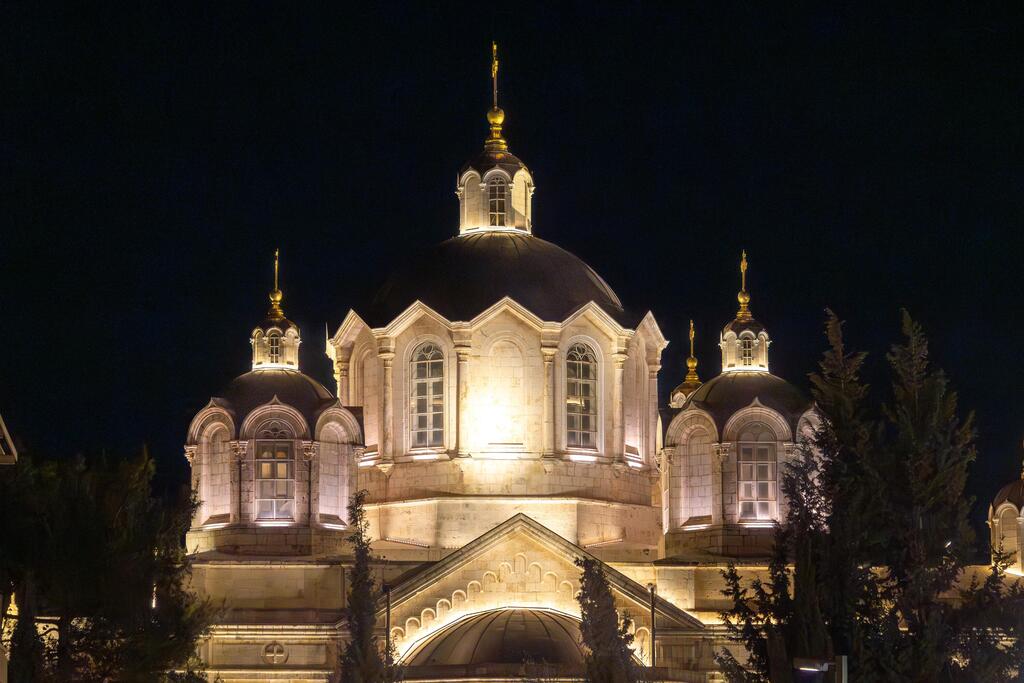
The Holy Trinity Cathedral was built at the initiative of the Russian Empire
(Photo: Dor Pazuelo)
About 10 more buildings are expected to be illuminated later, creating additional magnets for evening tours after nightfall.
For the 59th Jerusalem Day, the capital is inviting visitors to take a journey among buildings that are far more than stone and plaster. The buildings, of course, are illuminated year-round. Here are several that are worth visiting tonight as well.
Given that Jerusalem has been one of Israel’s quieter destinations over the past year, and since October 7 in particular, the city is well worth visiting year-round, not only around Jerusalem Day. Better still, these are free public-space attractions, with no opening hours or admission fees to consider.
A Russian touch: The Holy Trinity Cathedral
At the heart of the Russian Compound (known in Hebrew as the “Moskoviya,” a distortion of the word Moscow, as Jerusalem tour guide Roi Damari explains), stands the Holy Trinity Cathedral, built in 1872 at the initiative of the Russian Empire.
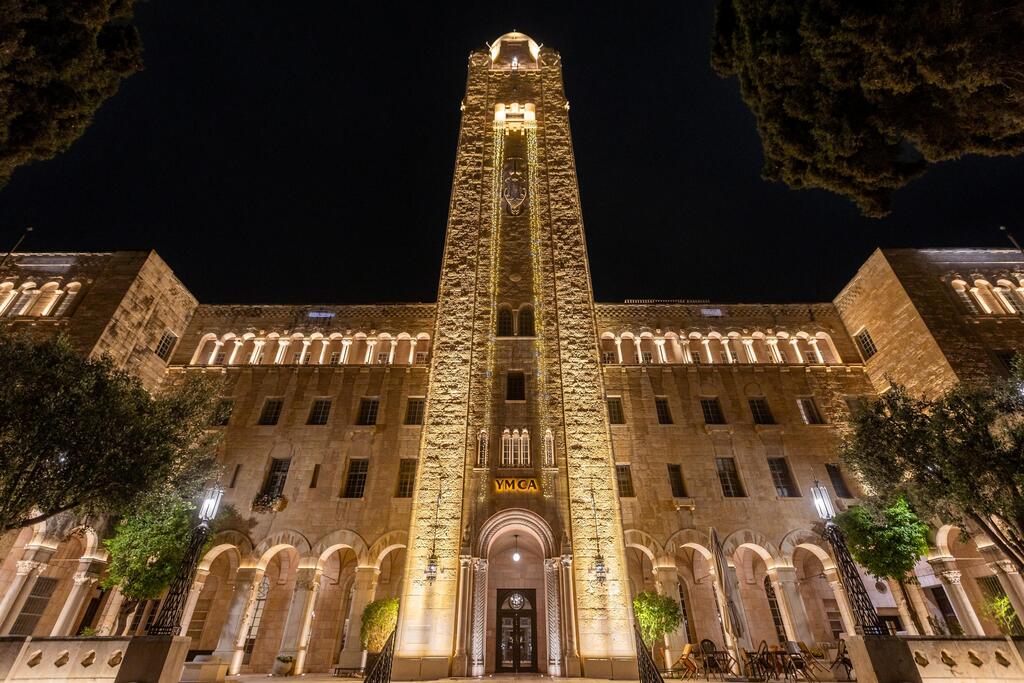
The YMCA, with motifs reminiscent of the Empire State Building
(Photo: Dor Pazuelo)
The structure, designed in a neo-Byzantine style with Russian influences, stands out for its pale Jerusalem stone and the green dome above its pointed towers. The interior is impressive, but even viewed from the outside after dark, it is a striking sight.
A symbol of coexistence: The Jerusalem International YMCA
One of the city’s best-known buildings is the YMCA on King David Street, built in 1933 for the Young Men’s Christian Association. Architect Arthur Loomis Harmon, who also designed the Empire State Building, and whose influence is clearly visible in some of the YMCA’s features, created a complex inspired by the three major monotheistic faiths associated with Jerusalem: Judaism, Christianity and Islam.
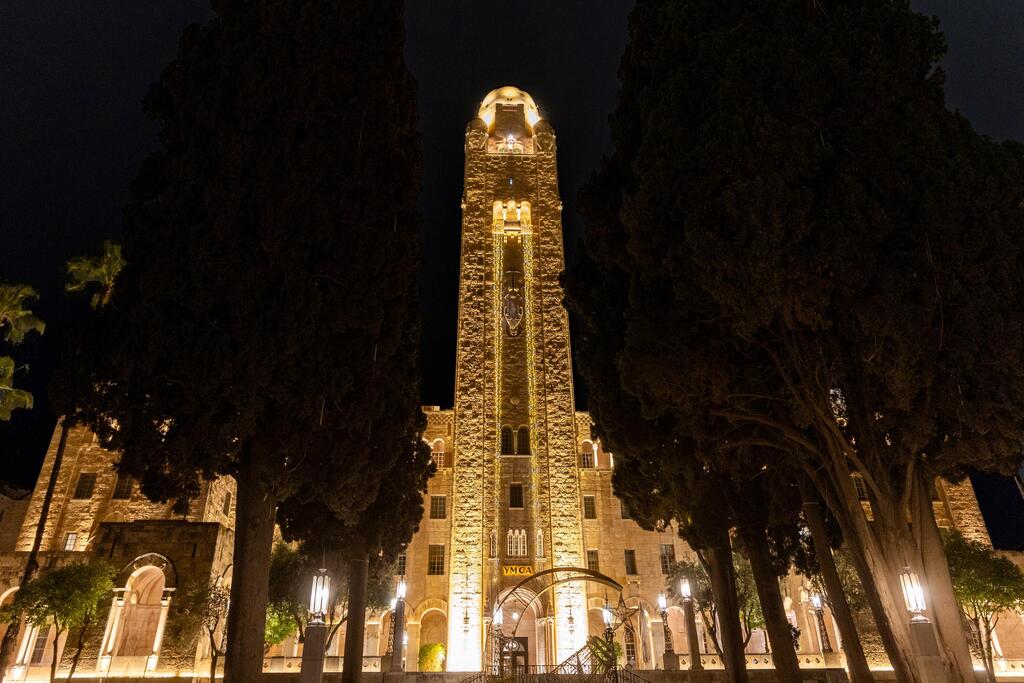
A center for culture, recreation, education and tourism: The Jerusalem Internatioanl YMCA
(Photo: Dor Pazuelo)
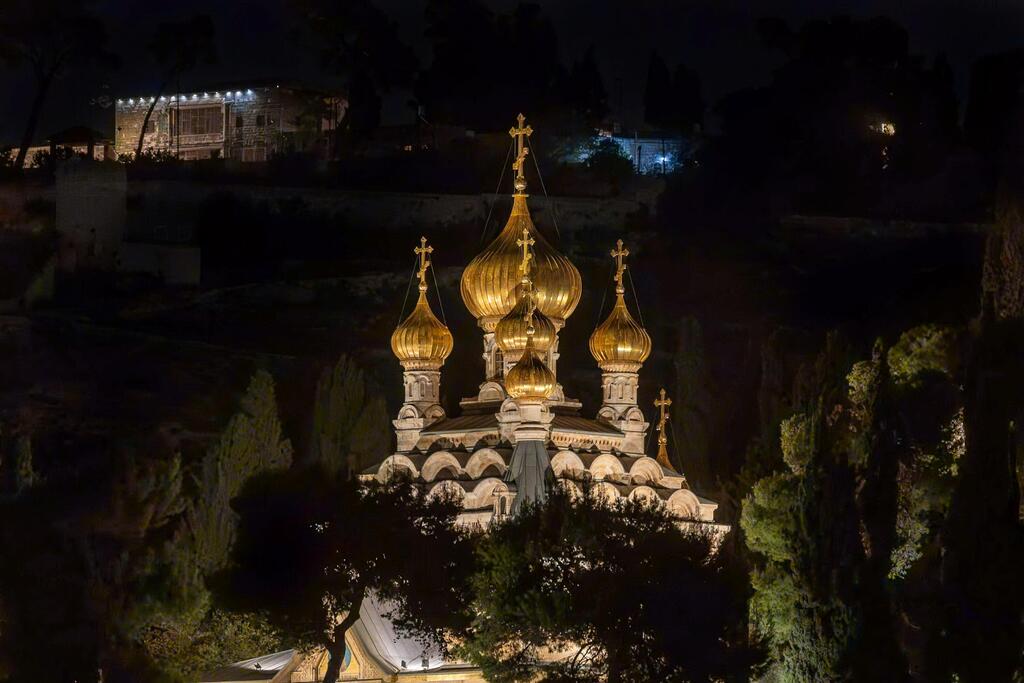
Another Russian legacy: The Church of Mary Magdalene
(Photo: Dor Pazuelo)
One of the building’s crowning features is a 40-meter bell tower that does not merely tell the time, but also “plays” music through the work of a veteran bell ringer. He is now preparing to retire and is training the next generation in the unusual profession.
Another defining feature of the Jerusalem International YMCA, though less immediately apparent visually, is its ethos of brotherhood and tolerance. It allows people of all religions and communities to take part in cultural events, including concerts and performances, sports activities, with an indoor pool and courts, and leisure events, including its well-known bustling Christmas market. It also hosts educational programming, camps and vacations, with lodging in the hostel floors of the building.
A jewel on the Mount of Olives: The Church of Mary Magdalene
This is one of Jerusalem’s most beautiful and spectacular buildings, immediately recognizable by its gleaming golden domes. The church was built in 1888 at the initiative of Czar Alexander III and his mother, Maria, in memory of Maria Alexandrovna, the wife of former Czar Alexander II, who died that year.
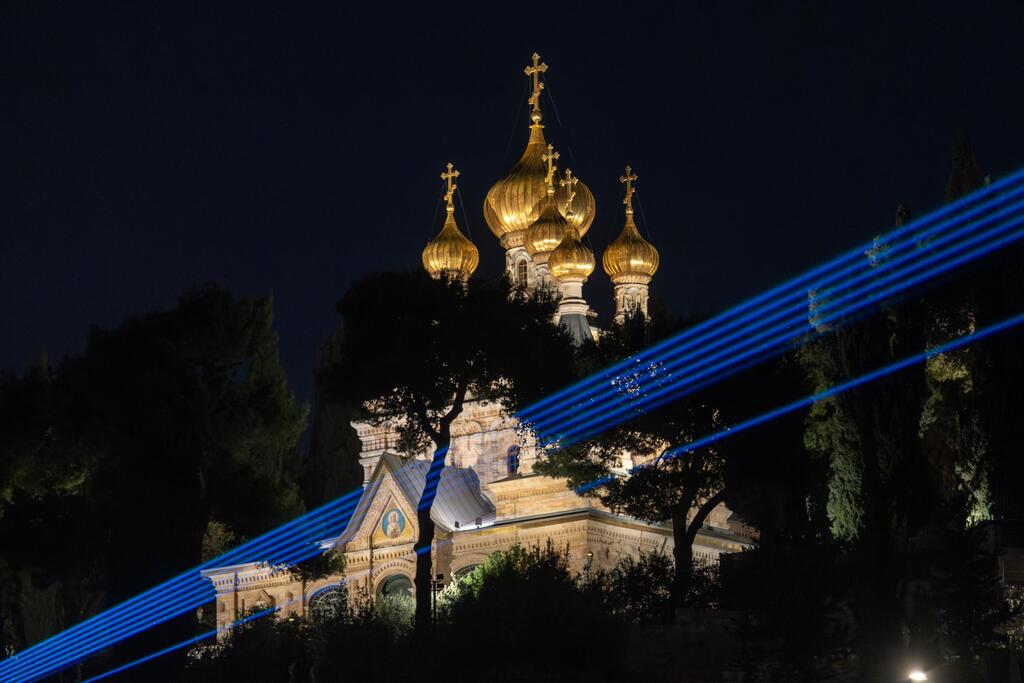
The Church of Mary Magdalene is also illuminated by laser beams from the “High Light JLM” audiovisual show
(Photo: Dor Pazuelo)
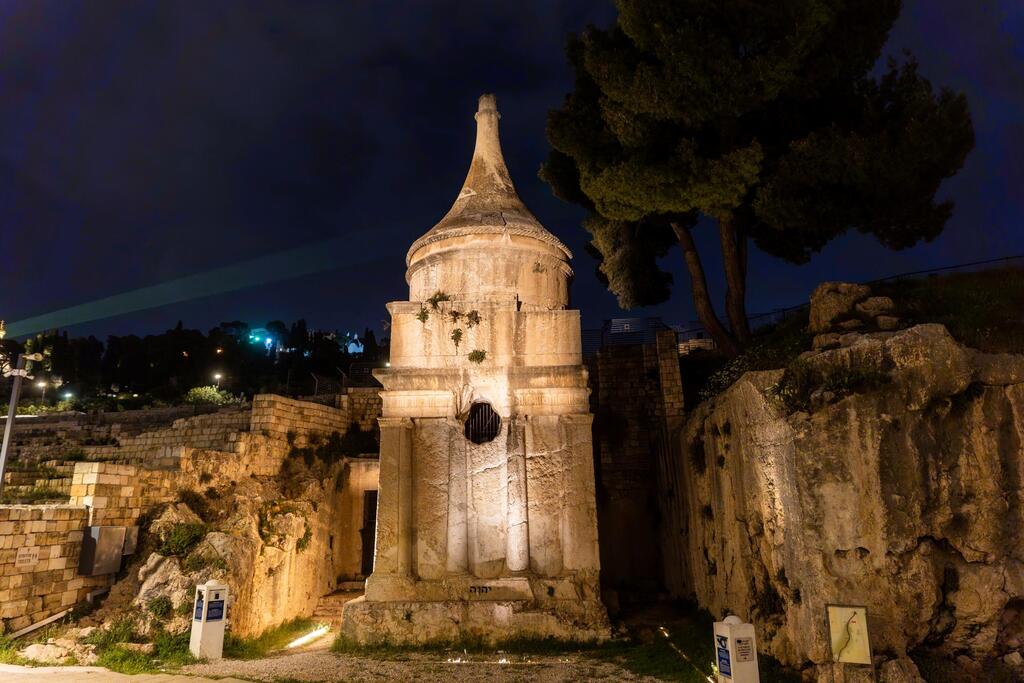
Absalom’s Tomb, a monumental burial structure
(Photo: Dor Pazuelo)
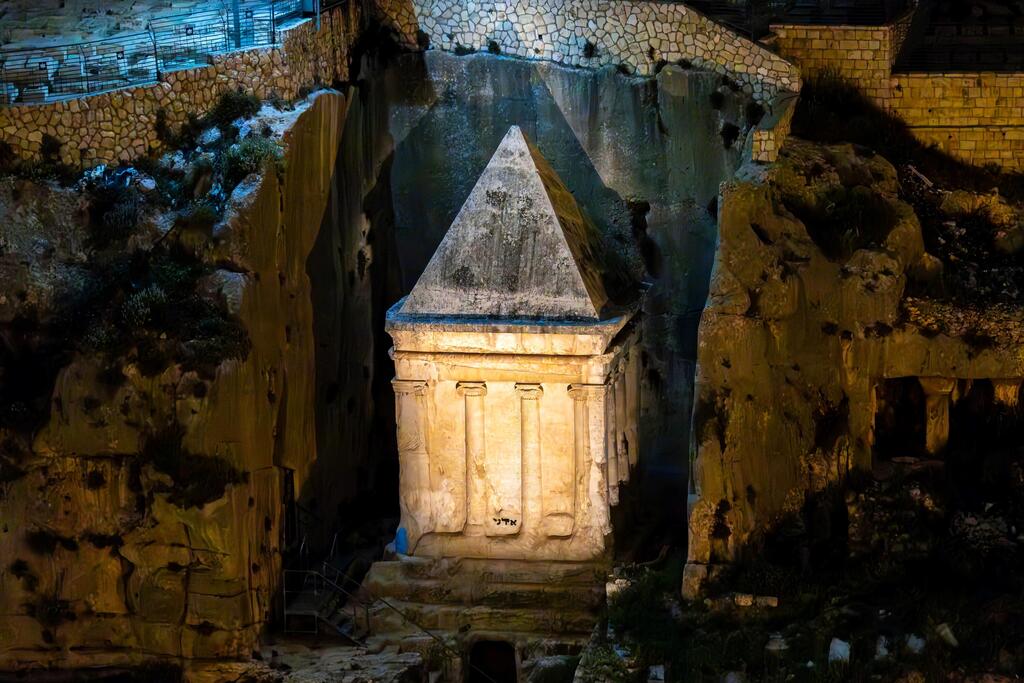
The Tomb of Benei Hezir, a priestly family
(Photo: Dor Pazuelo)
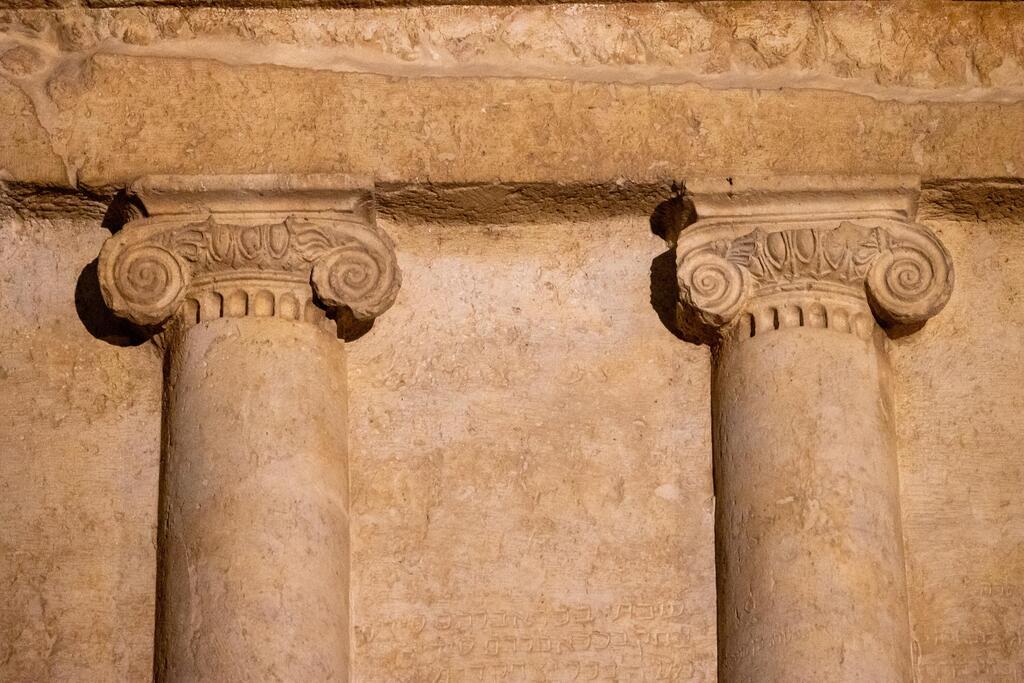
Hellenistic-Roman architectural influences can be seen up close thanks to the dedicated lighting
(Photo: Dor Pazuelo)
It was built in a distinctly Russian style, with seven gilded onion domes, an arched decorated facade, slender towers and rounded windows. The interior is no less impressive and is worth visiting if you can get inside.
The church is dedicated to Mary Magdalene, a disciple of Jesus who, according to tradition, appeared before him after his resurrection. Princesses from the Russian imperial family are buried there, including Elizabeth Feodorovna, sister of Czarina Alexandra, who was killed in the Bolshevik Revolution and later declared a saint by the Russian Church.
As a result, the site has become a pilgrimage destination for visitors from Russia and beyond. Lit up at night, the church resembles a golden jewel.
Absalom’s Tomb and the Tomb of Benei Hezir
Nearby in the Kidron Valley stands Absalom’s Tomb, a monumental Second Temple-era burial structure and a distinctive architectural landmark blending Hellenistic and Egyptian styles. It is illuminated alongside the Tomb of Benei Hezir, associated with a priestly family that served in the Temple.
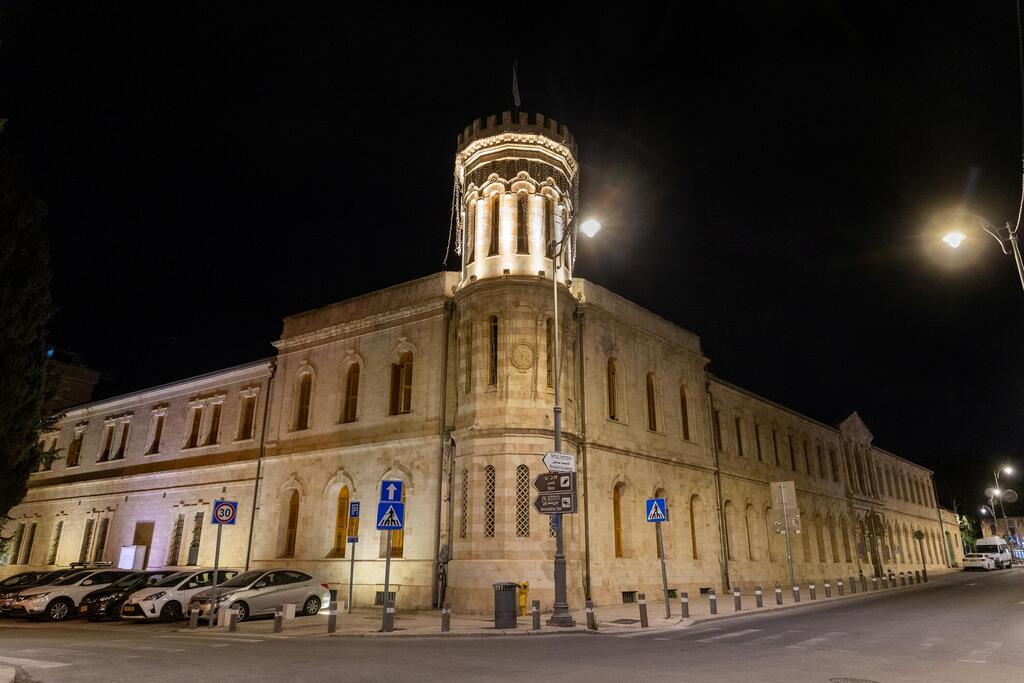
A Russian foothold in Jerusalem: Sergei’s Courtyard
(Photo: Dor Pazuelo)
The tomb’s style was influenced by Hellenistic-Roman architecture, with two columns, a frieze and Doric capitals, while the Hebrew inscription records the names of the deceased.
A Jerusalem bubble: Sergei’s Courtyard
On Heleni Hamalka Street in central Jerusalem lies an enchanting courtyard built between 1886 and 1890, another touch of Russia in the Holy Land. Its original purpose was to serve as a hostel for Russian pilgrims, alongside a center for Russian culture.
It is an architectural and historical gem. Behind its construction stood Grand Duke Sergei Alexandrovich, son of Czar Alexander II, which is how it got its name. The courtyard was part of a broader effort by the Russian Empire to expand its presence and influence in Jerusalem and provide services to its local communities.
The complex was designed in an eclectic style by architect Georgy Franghia and includes elegant structures built of dressed Jerusalem stone, with arched windows, arches and elements reminiscent of Russian-European architecture.
Over the years, Sergei’s Courtyard served a variety of purposes. During the British Mandate, it housed government offices. After the establishment of the state, the complex became Israeli government property and was used, among other things, by offices of the Society for the Protection of Nature in Israel. In 2011, however, ownership was transferred back to Russia as part of a diplomatic, political and state-level move.
Today, the site houses a boutique hotel, a cafe, a Russian cultural center, a small museum and a concert and cultural events hall open to the public. The courtyard also includes a well-kept inner garden with shaded seating areas, ancient trees and a fountain.
European classicism: Augusta Victoria
The illuminated compound on the Mount of Olives is a fascinating combination of history, religion, health care and sweeping views. The complex was established in the early 20th century by German Emperor Wilhelm II as a dedication to his wife, Augusta Victoria, queen of Germany.
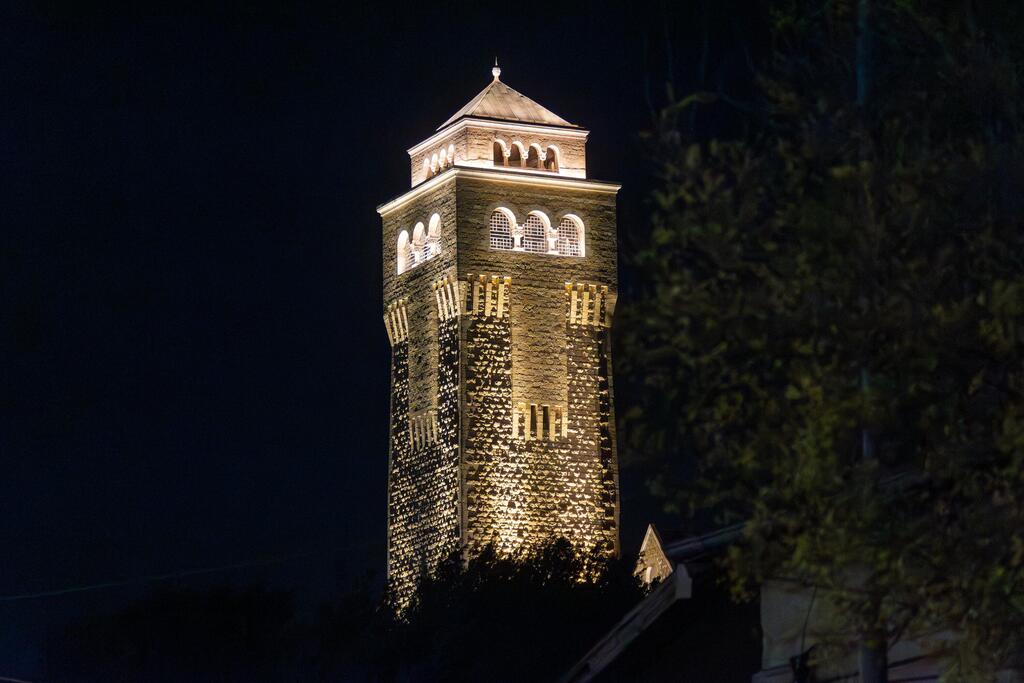
The first tall building in the area: Augusta Victoria
(Photo: Dor Pazuelo)
Since then, it has served as an important center for Lutheran communities in Jerusalem, the Protestant Christian stream that broke away from Catholicism and is guided by a more practical, pragmatic approach.
The complex includes a grand Lutheran church, a modern hospital, a medical center for patients with cancer and chronic illnesses, and a hostel for pilgrims.
The church, dedicated in 1910, is visible from afar thanks to its bell tower, which rises nearly 60 meters, along with colorful stained-glass windows, high stone arches and a decorated wooden ceiling. From the tower, whose height made it a landmark when it was built in the early 20th century, visitors can take in one of Jerusalem’s most beautiful panoramic views.
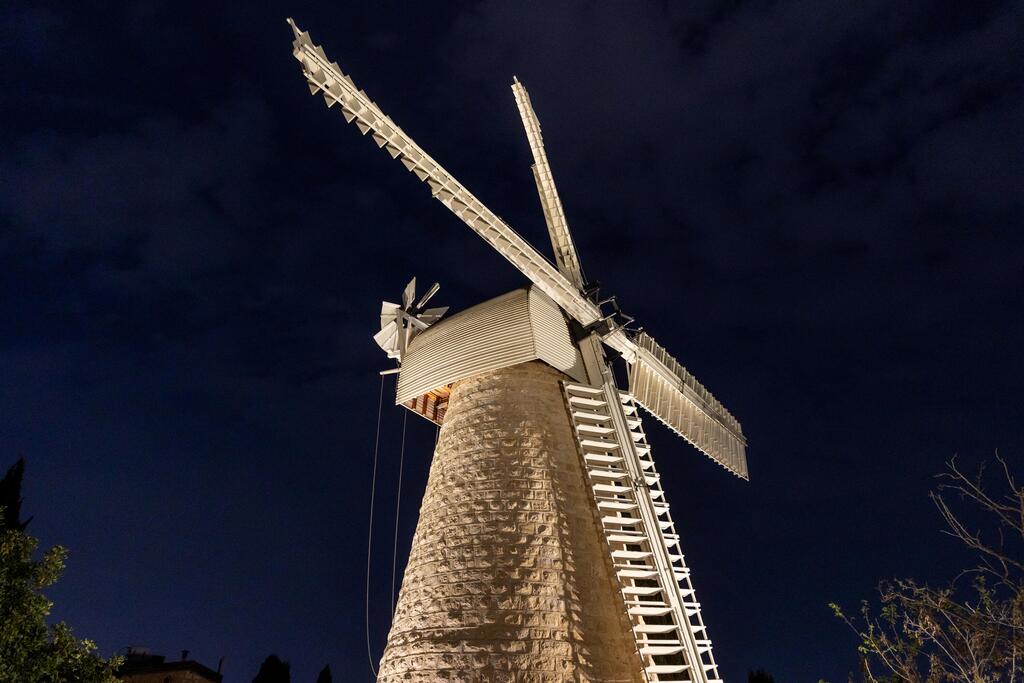
The Yemin Moshe windmill
(Photo: Dor Pazuelo)
According to Damari, the view includes the Old City, the Temple Mount, Mount Scopus, the Judean Desert and, at times, even the Dead Sea. “At the height of tourism before the war, as many as 300 buses packed with tourists would arrive here,” he says.
Today, the Augusta Victoria compound is more than a beautifully illuminated nighttime landmark. It also serves as a center for medical and social services for Palestinians in East Jerusalem.
A symbol of Zionism: The Yemin Moshe windmill
Montefiore’s windmill, located on the border between Yemin Moshe and Mishkenot Sha’ananim, is one of the symbols most closely associated with the beginning of the New Jerusalem beyond the walls, and one of the city’s Zionist symbols.
The windmill was built in 1857 as part of an effort to improve conditions for Jews living in Jerusalem’s Old City, where overcrowding, poverty and disease were widespread. Moving beyond the walls to a new neighborhood offered a chance at a better life.
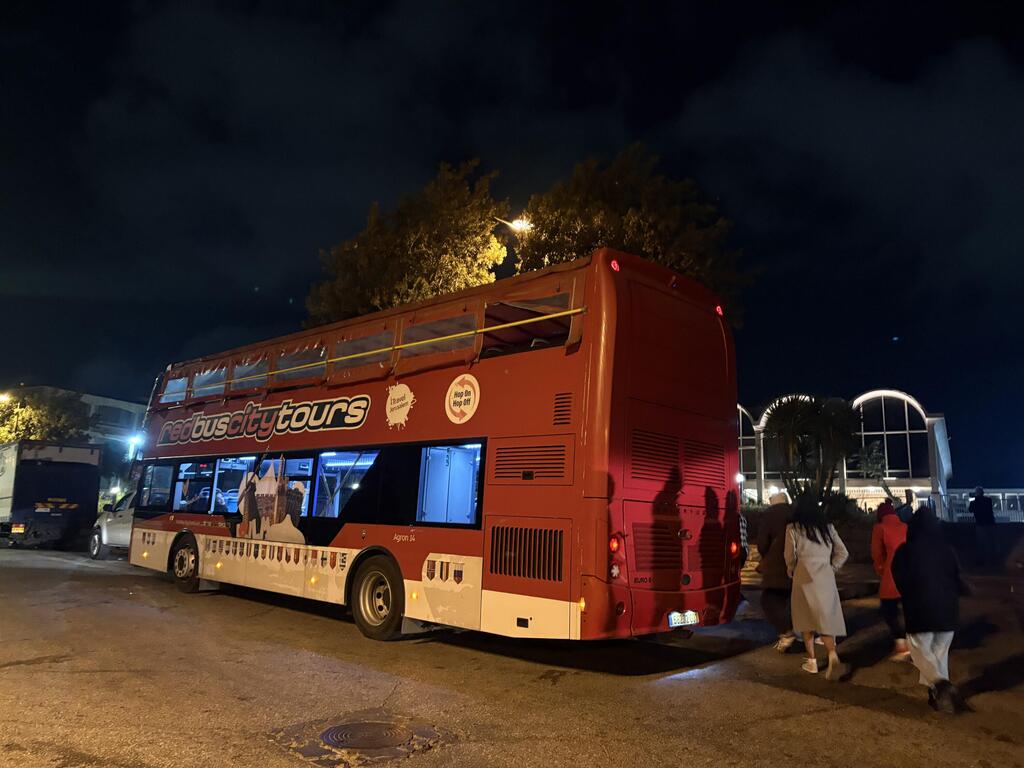
The red bus in Jerusalem
(Photo: Yulia Prilik-Niv)
The windmill was designed in a Dutch style and brought to the country from England in parts. It operated, and still occasionally operates, by wind power, and was intended to grind flour for the Jewish community, helping it establish a stronger economic footing. Because of inconsistent winds and technical problems, however, it operated for only a short time. Even so, it remains a symbol of pioneering spirit and Zionist vision.
“There is a credit issue here that is not well known enough,” Damari says during the tour. “Judah Touro, a warmhearted Jew from the United States, made a historic and significant donation that influenced the shaping of Jerusalem to this day. After his death, he donated about $50,000, a huge sum in mid-19th-century terms (equivalent to millions of dollars today), for the establishment of Mishkenot Sha’ananim. In effect, Touro’s money was used by Montefiore to build the neighborhood in 1860. A sign still stands on the main building in the neighborhood noting that it was founded with funds from ‘the benefactor Judah Touro.’”
The 18-meter windmill is impressively lit in the evening. The tower-like structure, built of Jerusalem stone, features a rounded body and a wooden cap fitted with a four-sail mechanism. Over the years, it has undergone numerous restorations and renovations.
Today, the windmill is open to the public as a small museum, a center and even a small wine bar run by Jerusalem Wineries. Visitors can reserve an evening of wine and cheese in advance, while enjoying a unique lookout point and one of the city’s most photogenic locations.
How to tour Jerusalem’s illuminated monuments
In addition to walking or driving by private car, visitors can board one of the leading tourist attractions in Israel and abroad: a red double-decker tourist bus. The bus is operated by City Tour, and its roughly two-hour tours pass about 80 sites across the city. Passengers can get on and off at about 15 stops in "hop-on, hop-off style". Individuals and families can join, starting at 75 shekels per participant, or large groups can rent the entire bus.
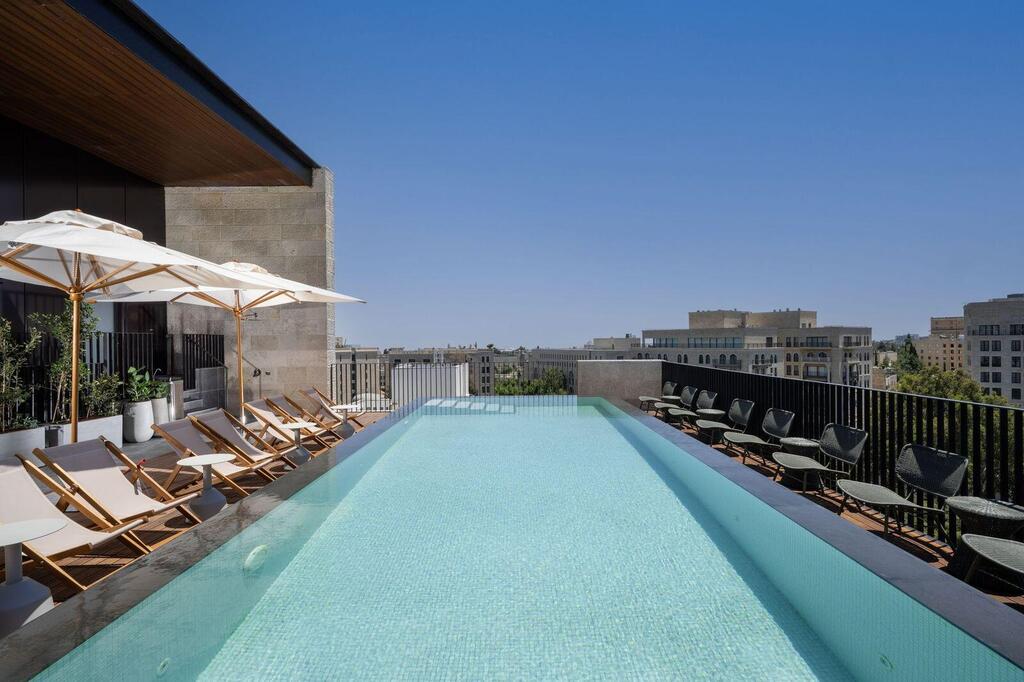
The rooftop pool at the Nucha Hotel in Jerusalem
(Photo: Aya Ben Ezri)
What to see during the day
At Anna Ticho House, a downtown branch of the Israel Museum, Jerusalem, a new photography exhibition called “Taking in the View” opened May 1 and will run through the end of November.
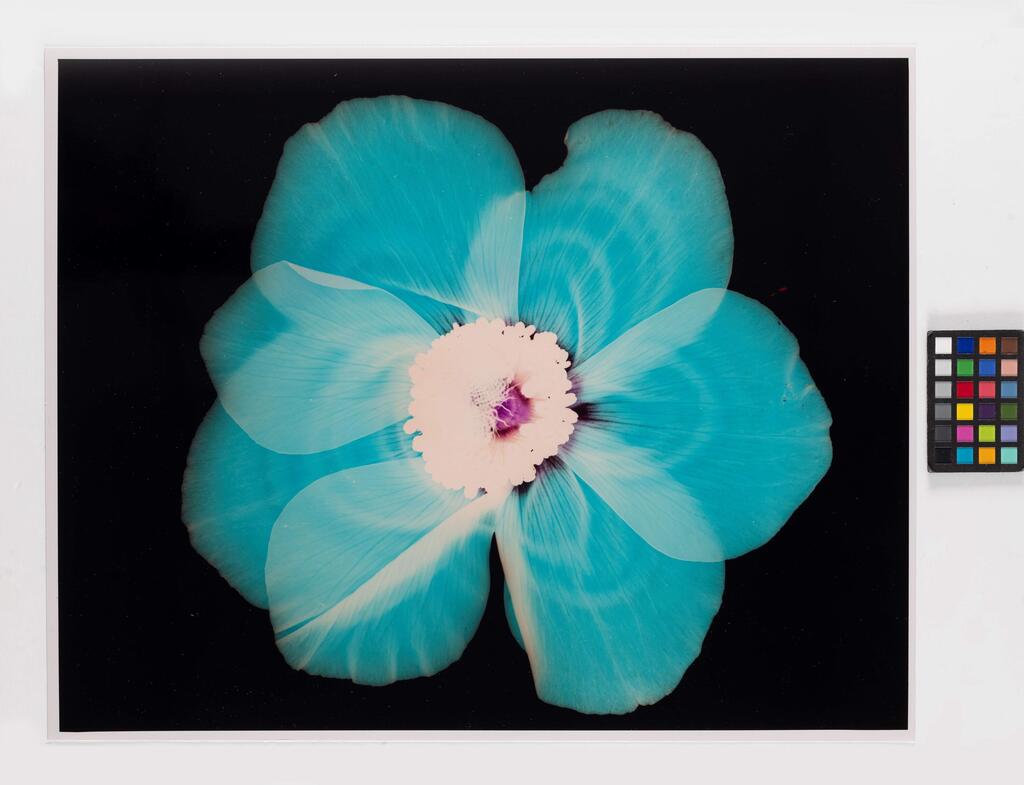
A work by Ora Lev from the series “The Way It Was,” now on display at Anna Ticho House
(Photo: Ora Lev)
The exhibition is based on recent acquisitions from the museum’s photography collection, with an emphasis on a selection of works by contemporary Israeli artists. Alongside them, for the first time, are photographs by Anna Ticho, expanding the public’s familiarity with her work beyond the drawings and paintings for which she is best known. The exhibition is curated by Gilad Reich and Timna Seligman.
Where to stay
Jerusalem is dotted with hotels, hostels and vacation apartments in every style and price range. One of the city’s central hotels opened less than a year ago and is intended for adults only.
The Nucha Hotel, from the Fattal Colors collection, is located on central Ben Sira Street, a few minutes’ walk from the Jaffa Street pedestrian mall, City Hall, the Mamilla complex and, of course, the Old City.
The hotel has 86 newly designed rooms that combine traditional Jerusalem architecture with modern design. In addition to the rooms, gym and spa, the hotel has two major draws: a rooftop pool with impressive views of Jerusalem, alongside a trendy, in-demand cocktail bar, and the kosher chef restaurant ZAHARA on the basement level.
Nucha was designed by Feigin Architects, while the interior design was done by the London-based ARA firm.
- The writer took part in a tour organized by the Jerusalem Municipality and the Jerusalem Development Authority.