

For many foreign buyers, purchasing property in Israel is both exciting and overwhelming. But alongside the excitement, I consistently see the same mistakes repeated by buyers coming from abroad. These mistakes don’t stem from bad intentions or lack of intelligence but rather misaligned expectations, hesitation, and a misunderstanding of how the Israeli market truly works.
After years of working with international buyers across Tel Aviv and central Israel, here are the most common pitfalls I see, and how avoiding them can make the difference between a smooth purchase and a frustrating, drawn-out one.

Mistake #1: comparing how things are done elsewhere
One of the biggest hurdles for foreign buyers is constantly comparing Israel to how things are done in their countries of origin. “In Australia only the seller pays commission” or “In Canada we would never sign that” or “In the U.S. its standard that appliances come with the apartment”. Trust me, I’ve heard it all. And while all of that may be true- this is Israel, with its own unique standards and protocols, systems, legal structures, and business culture. Israel’s real estate market operates differently, from contract timelines to commission structures, to building standards and apartment sizes. Buyers who struggle most are those who resist this reality instead of adapting to it.
The buyers who succeed are the ones who understand early on that acclimating to how things are done here isn’t a compromise - it’s a necessity. The faster expectations align with local norms, the smoother the journey becomes.
Mistake #2: the illusion of too many options
Even in today’s market, where there is more inventory than in recent years, truly good properties do not sit for long, especially when priced correctly. I’ve seen this play out countless times: a buyer finds an apartment that fits almost everything they want. They love it, but it’s missing one small detail: maybe the kitchen doesn’t have a window, the view isn’t perfect, or the parking is robotic instead of standard. Convinced there must be something better just around the corner, they hesitate, and several days or weeks later the property is sold to someone else.

(Photo: Noah Sander)
Early in my career, I tended to kept comments to myself and simply continue showing properties. Ironically, I’ve had more than a few clients later tell me, in retrospect, “I wish you had nudged us harder on that property, we regret not buying it.” Today, I’m much more direct. When something genuinely fits a client’s criteria and checks most of the boxes, I make my opinion clear. What they end up doing with that information is, of course, entirely their decision.
There’s a bit of humor in this, but it’s true: buyer behavior in Israel can sometimes resemble the dating scene. Always assuming there’s something better around the corner often leads to endlessly looking and never committing. When it comes to real estate and you find something that truly works for you, chances are there isn’t a dramatically better option waiting. This doesn’t mean settling for something you don’t want; it means recognizing when the right opportunity is in front of you and having the confidence to act.
Mistake #3: allowing non-professionals influence critical decisions
Another major obstacle is allowing outside opinions to override professional advice. Friends, relatives, acquaintances, or well-meaning locals often make off-the-cuff comments that have little connection to the actual market. I’ve heard everything from a client’s family friend “who used to be a lawyer” saying they should never buy new construction, to a client’s uncle insisting a neighbourhood is no good. Meanwhile, that uncle lives in a city 45 minutes away, decades older than the client, and has completely different lifestyle needs.
These comments are rarely malicious, but they are often outdated, overly simplistic, or irrelevant. Unfortunately, they can easily undermine a buyer’s confidence and derail a good deal. This can also put agents in an awkward position. We’re not here to disqualify someone’s friend or family member, but we are the professionals whose job is to guide clients based on real market data, experience, and accountability. My reputation is on the line every time I advise a client.
At the end of the day, buyers need to trust the professionals they’ve chosen: The realtors for market and property, their lawyer for the legal process, and their mortgage broker for financing. And sometimes there is some overlap, but if you don’t fully trust your realtor’s judgment: you should find one you do.
When trust exists, decisions become clearer and outcomes improve. Allowing non-professionals to steer major decisions almost always leads to delays, missed opportunities, and unnecessary frustration.
Mistake #4: expecting everything without compromise
Every so often, I meet motivated buyers that enter the market determined to find the “diamond in the rough”: perfect layout, prime location, view, modern building - all within a fixed budget. Sometimes buyers are convinced that with enough patience, they’ll find something that defies market logic. They even tell me they’re confident I’ll find something that doesn’t quite exist. The reality is that if something is dramatically underpriced and checks every box, there’s usually a reason. Legal issues, structural problems, planning complications, or future uncertainty often explain the gap. You can be patient. You can be stubborn. But at some point, every buyer must come to terms with the reality of the market, especially in cities like Tel Aviv.
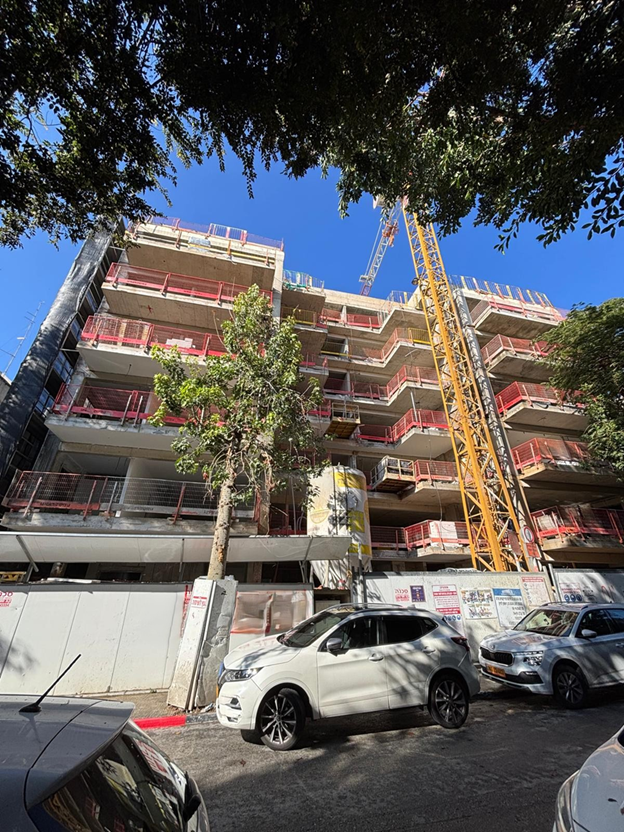
(Photo: Noah Sander)
That said, buyers with unlimited budgets and flexible timelines can often get close to exactly what they want. But most buyers operate within real constraints, whether financial or time-based, and that’s completely normal.
The buyers who succeed are the ones who understand their priorities clearly and know where they can be flexible. The ones who refuse to compromise at all often find themselves stuck on the sidelines far longer than they expected. Compromise is not a failure; it’s part of the process.
Mistake #5: not respecting local norms and processes
Closely tied to expectations is resistance to standard local procedures. I’ve had buyers refuse to sign standard commission agreements, delay basic steps out of principle, or insist on handling transactions “their way” because that’s how it’s done back home. Trying to impose ways of doing business from abroad onto the Israeli real estate often has a boomerang effect.
Israel’s real estate market runs on clear processes and accepted local norms. Refusing to engage with them doesn’t protect you - it often creates friction and, in some cases, a reputation that can follow you in a surprisingly small industry.
Business is business, even in a personal and emotional field like real estate. Buyers who respect local norms, work transparently, and act professionally give themselves a far better chance of success.
Buying property in Israel is not just a transaction, it’s a journey. The buyers who succeed are not necessarily the most aggressive or the most cautious, but the ones who adapt, trust their team, and approach the market pragmatically.
If you are planning to enter the Israeli real estate market, avoiding these common mistakes will save you time, stress, and frustration, and lay the groundwork for a far more pleasant and successful buying experience.
- Noah Sander is a Canadian-born real estate agent based in Tel Aviv who specializes in helping international buyers and new immigrants navigate Israel’s property market