

It used to be called a nursing home. Today, it is marketed as “resort living,” a “longevity complex”, or a “village villa.” Instead of a dining hall and a bridge club, residents are offered heated pools, spas, chef restaurants, gyms, yoga by the sea, artificial intelligence workshops and business lounges.
Behind the transformation is a new generation of older Israelis: healthier, more active and wealthier than before, and increasingly interested in turning retirement into another chapter of self-fulfillment.
For many, the question is no longer how much money will be left for the children, but how to enjoy the wealth accumulated over decades of work. And the sums involved are considerable. Anyone seeking to move into high-end assisted living complexes such as Sea One on the beach in Rishon LeZion or Neve Aviv in Kfar Shmaryahu must usually provide a deposit of several million shekels, along with monthly maintenance fees that can reach five figures.
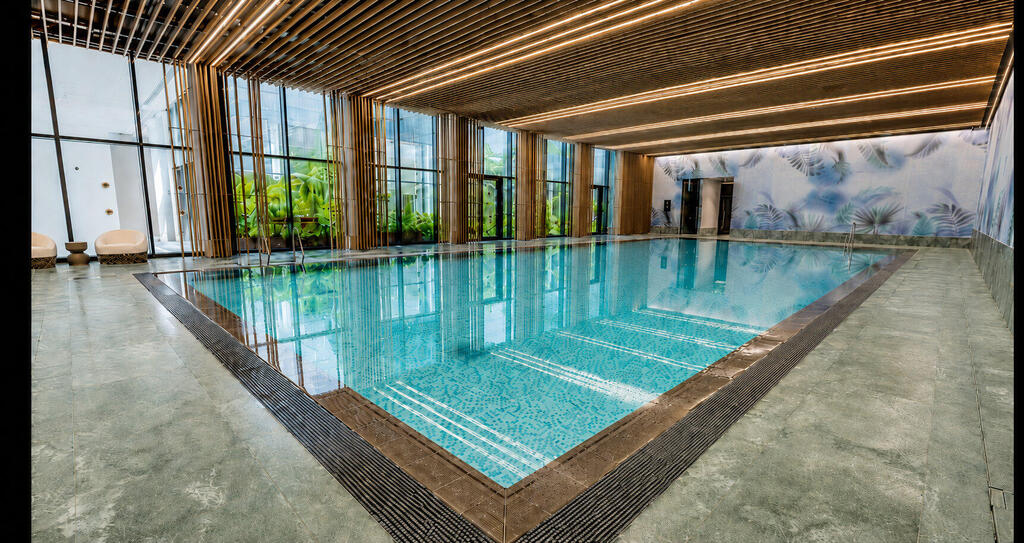
In some complexes, the deposit ranges from about 2 million to 4 million shekels ($590,000 to $1.18 million), with monthly fees of 10,000 to 15,000 shekels ($2,950 to $4,400) per person. For couples, the monthly cost can exceed 20,000 shekels ($5,900), in addition to the deposit, which is eroded by about 3% to 4% each year.
Demand is rising despite the steep costs. Major real estate and financial groups are pouring billions of shekels into the sector, turning senior living into an increasingly lucrative business. But while many residents in the United States and parts of Europe move into these communities in their 60s, the psychological barrier in Israel remains high. Even as luxury projects multiply and the old nursing-home image is replaced by resort-style living, most Israelis still make the move only in their late 70s or 80s.
Spa, yoga and a wine bar
On the Rishon LeZion beachfront, directly by the water, Sea One opened this month with 270 housing units, most with sea views. About 1 billion shekels ($295 million) were invested in the 55,000-square-meter complex (about 592,000 sq. ft), separated from the beach only by a narrow strip of promenade, cafés and restaurants. Even the reinforced safe rooms in the apartments face the sea.
The public areas include an indoor pool, an outdoor pool, specially designed lounge chairs, a wine bar, a business lounge, meeting rooms, a spa, yoga and Pilates rooms, a gym, art rooms and a restaurant.
Residents are offered free activities including mindfulness, water aerobics, TikTok workshops, yoga by the sea, Pilates machines, night swimming and women’s circles. It may sound like a luxury hotel in the Tel Aviv area, but it is the new version of assisted living.
Even the term “assisted living,” which replaced the old “nursing home,” is now treated as outdated. Sea One is marketed as “resort living for people aged 60 and over.”
It is not alone. This week, the "Ad-120" senior living chain inaugurated a new home in Modi’in following a 600 million shekel ($176 million) investment. The invitation described the project as a “longevity residential complex.” The building includes a WeWork-style co-working space, a computer room and the residents were provided with a smart-watch-like device that gives them data on their sleep, nutrition, balance and walking patterns.
Free activities there include Japanese taiko drumming, AI courses, a dance school, petanque, carpentry workshops and tai chi in the park.
A new longevity department also recently opened at Tel Hashomer, while Ad-120 is preparing to build its first complex of this kind in Kiryat Motzkin (in the Haifa bay area). The move marks a breakthrough for the sector, as luxury senior living in Israel has so far been concentrated largely between Hadera and Gedera, where much of the country’s wealthier population lives.
The United States is considered a leader in innovation in senior living. There, the old image of retirees in Florida playing bingo is fading. Millions of baby boomers now reaching retirement age are arriving healthier, wealthier and more active, with needs that go far beyond protection and basic care.
Sarah Weissman, 75, left a private home in Kochav Yair for Sea One in Rishon LeZion. “I’ve been living here for two months,” she said. “Life in Kochav Yair was good. I was there for 40 years. I worked as a physical education teacher and Pilates instructor. I raised children, but they left home, even the grandchildren grew up, and the house was already too big for me and no longer really suited me.
“Here I don’t have to worry about maintenance, culture or sports. Everything is already here. After two months in this place, I can say the whole world has come off my shoulders. I have a driver’s license, but apart from visiting my children, I don’t need to drive anymore. Everything comes to my doorstep.”
Were health services also a factor in the decision?
“Health services were actually not a factor. It was more the thought that you should come to a place like this while you’re still young, and not wait until you’re sick. Another issue is the social aspect. Most people who come here arrive with the same mindset: people here create a community, not to mention the staff, which is very pampering.”
Weissman was among the first residents to move into the complex. “During the first nights, I would wake up and wonder whether I had to check out that day, because it felt like I was on vacation. I haven’t seen many hotels as luxurious as this place. In all the years I waited and talked about this issue, I never heard anyone who moved to a place like this say it wasn’t good. On the contrary, people said, ‘We should have done this earlier.’ There are plenty of cafés and restaurants here along the promenade, the climate by the sea is different, and I don’t even suffer from the heat anymore.”
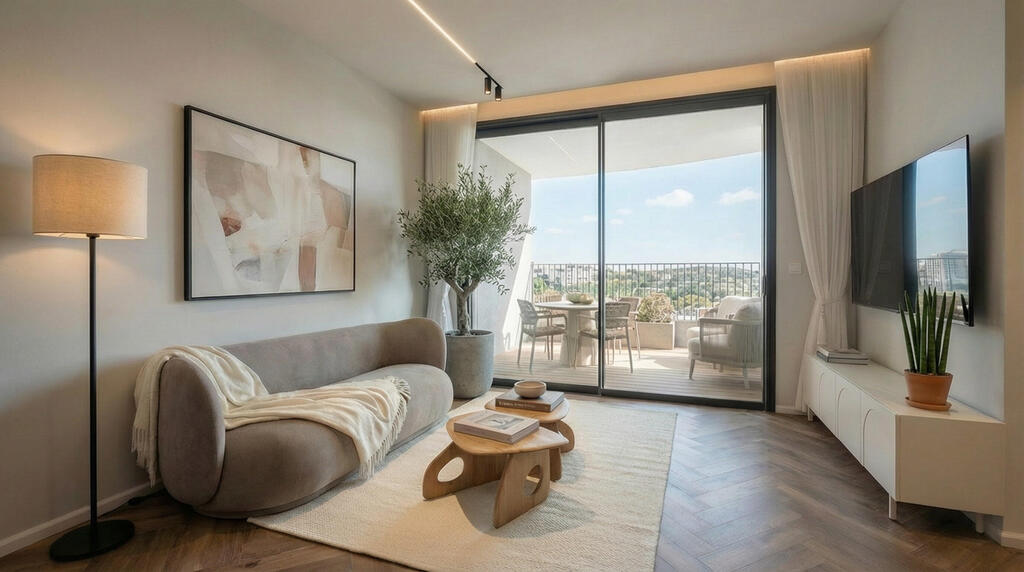
Ad-120 in Modi’in
(Photo: Aya Ben Ezri)
A menu by Chef Aharoni
Elsewhere in Rishon LeZion, the Palace senior living chain, owned by the Azrieli Group, inaugurated a new complex last week. Azrieli, best known for its malls, is also expanding into senior housing and plans to build a luxury complex at Sde Dov in Tel Aviv.
At the new Palace complex in Rishon LeZion, the chain added one especially high-profile perk: Israeli celebrity chef Israel Aharoni, who was hired as a culinary consultant. The complex also includes a rooftop for cocktails and events and an advanced device for measuring and tracking body indicators.
“The generation coming today to senior living is completely different from the one we knew in the past,” said Iris Cohen, CEO of Palace. “These are active, independent people with a greater understanding of what they want to do with themselves, given the fact that life expectancy has increased.
“The community issue has become very important because people understand they need to live in a community. They no longer live only for the children, but for themselves. They are less interested in sitting at home and waiting for the children to visit.”
The chain, she said, places a strong emphasis on sports. “We are now taking residents on sections of the Israel hiking Trail. We have a sports college for the third age, and we see rising demand to enjoy all these advantages.”
Canada Israel, the real estate group led by developers Asaf Tuchmair and Barak Rosen, has also entered the sector. Three years ago, it bought the veteran Neve Aviv senior living complex in Kfar Shmaryahu for 120 million shekels ($35 million), then invested another 180 million shekels ($53 million) to renovate it into a luxury residence. The complex sits on 10 dunams of land, about 2.5 acres, surrounded by lawns, with only two floors and many garden rooms. Here, too, the language is that of a resort or a village-style villa.
Health services are a central feature in such places. All the complexes provide a nurse around the clock and a doctor by appointment. “I moved here from managing the Palace chain because I saw an opportunity to take assisted living to the top end,” said Yoram Ben Porat, CEO of Neve Aviv. “We have an audience that knows how to pay for quality. We built a spa room, a music room, a dietitian accompanies residents free of charge, and we place a strong emphasis on the quality of the food we prepare.”
What is the average age of your residents?
“The average age is 76. These are very high-quality, independent residents.”
One resident is Yehuda Rashel, 85, a co-founder of Delta Galil Industries and former business partner of Dov Lautman, who moved in with his wife, Dalia.

Yehuda Rashel, a resident of Neve Aviv in Kfar Shmaryahu
(Photo: Eldad Rafaeli)
“We lived in Tel Aviv after I had spent most of my life in London,” he said. “I went there to establish Delta’s international center and stayed for 35 years, until retirement. My wife owned Studio C, the women’s fitness chain, and divided her time between the two countries.
“When we returned to Israel and settled in Tel Aviv, we tried to manage our lives, and then Dalia raised the idea. She said, ‘Yehuda, we’re over 80, and I’m constantly going to appointments at the healthcare centers and seeing doctors. Let’s think about assisted living.’
“Truthfully, I didn’t really know the field. From what I remembered from my youth growing up in Herzliya, a nursing home was one step before the grave. Suddenly, I was hearing something completely different.”
The couple wanted a new, rural and relatively small setting. “In hindsight, this is simply another move, another stage of life that needs to be planned according to age,” he said. “The great advantage here is the excellent medical support. Right next to me there is a wonderful clinic with nurses and doctors. If I had to go and sit at a healthcare clinic, it simply would not happen. Here, they come to me, take blood tests and arrange appointments with specialists.
“There is also an excellent gym, with an instructor who understands the needs of older residents. I hated gyms all my life, and suddenly I’m working out three times a week. The food is excellent as well, and we have met wonderful new friends here.”
Leasing an apartment
Senior living executives say the steep price of these resort-style complexes puts them within reach mainly of Israel’s top income deciles. Maintenance fees start at about 10,000 shekels ($2,950) per person per month, not including food, on top of deposits that can run into several million shekels, depending on apartment size.
The complexes offer apartments ranging from two to four rooms. Monthly maintenance fees are determined by the size of the unit and the services included. For couples, the monthly fee may be 10% higher or as much as double.
The main expense, however, is the deposit. Residents do not buy the apartment, and it does not become their property. The model is closer to leasing an apartment: residents provide a deposit that averages between 2.5 million and 4 million shekels ($735,000 to $1.18 million), from which 3.4% to 4% is deducted each year, depending on the chain, until it is fully eroded after 12 to 15 years.
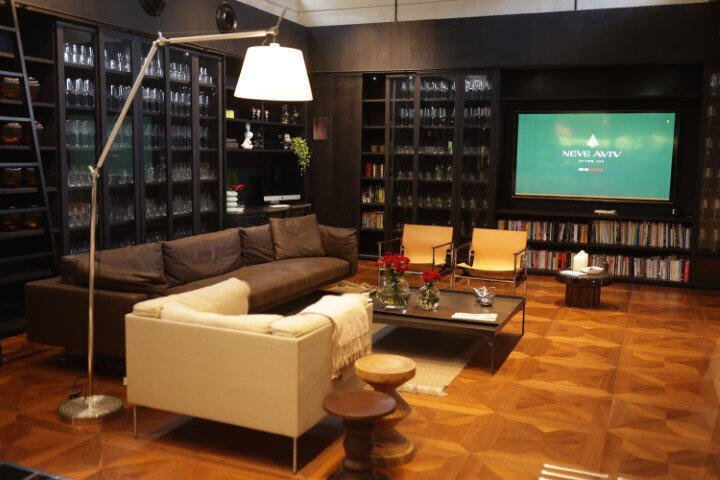
Neve Aviv in Kfar Shmaryahu
(Photo: Eldad Rafaeli)
If a resident dies or leaves before the deposit has been fully eroded, the remaining balance is returned, linked to the consumer price index. If the deposit has already been fully eroded and the resident is still alive, the chain must allow the resident to stay, with the resident continuing to pay only the monthly maintenance fee.
The gradual erosion of that capital, often seen as coming at the expense of heirs, is another barrier for many families. Some residents finance the move with a reverse mortgage on their home, which means the possibility of leaving an apartment to their children is at least partly diminished.
Sample prices: At Sea One, a 50-square-meter apartment (about 538 square feet), including kitchen appliances, requires a 2 million shekel ($590,000) deposit, with annual erosion of 3.2% and monthly maintenance fees of 9,000 shekels ($2,650) per person.
A 62-square-meter apartment (about 667 square feet) requires a 2.8 million shekel ($825,000) deposit and monthly maintenance fees of 11,000 shekels ($3,250) per person. For an 80-square-meter apartment (about 861 square feet), the deposit rises to 4.5 million shekels ($1.33 million), with monthly maintenance fees of 14,800 shekels ($4,370).
At Ad-120, a 65-square-meter apartment (about 700 square feet) requires a 2.5 million shekel ($735,000) deposit, annual erosion of 3.6% and monthly maintenance fees ranging from 9,000 to 11,000 shekels ($2,650 to $3,250). A 70-square-meter apartment (about 753 square feet) requires a deposit of about 3 million shekels ($885,000).
At Palace, a 50-square-meter apartment (about 538 square feet) with a balcony requires a 2 million shekel ($590,000) deposit, monthly maintenance fees of 9,700 shekels ($2,860) and annual erosion of 4.2%. A 74-square-meter apartment (about 797 square feet) with a balcony requires a 3.3 million shekel ($975,000) deposit and monthly maintenance fees of 14,900 shekels ($4,400).
At Neve Aviv in Kfar Shmaryahu, a 65-square-meter apartment (about 700 square feet) with a balcony requires a 4.3 million shekel ($1.27 million) deposit and monthly maintenance fees of 14,000 shekels ($4,130). A 75-square-meter apartment (about 807 square feet) requires a 5.5 million shekel ($1.62 million) deposit and monthly maintenance fees of 15,000 shekels ($4,430). For a 120-square-meter apartment (about 1,292 square feet) with a balcony, the deposit rises to 8.5 million shekels ($2.51 million), with monthly maintenance fees of 24,000 shekels ($7,080). Annual erosion at the complex is 4.2%.
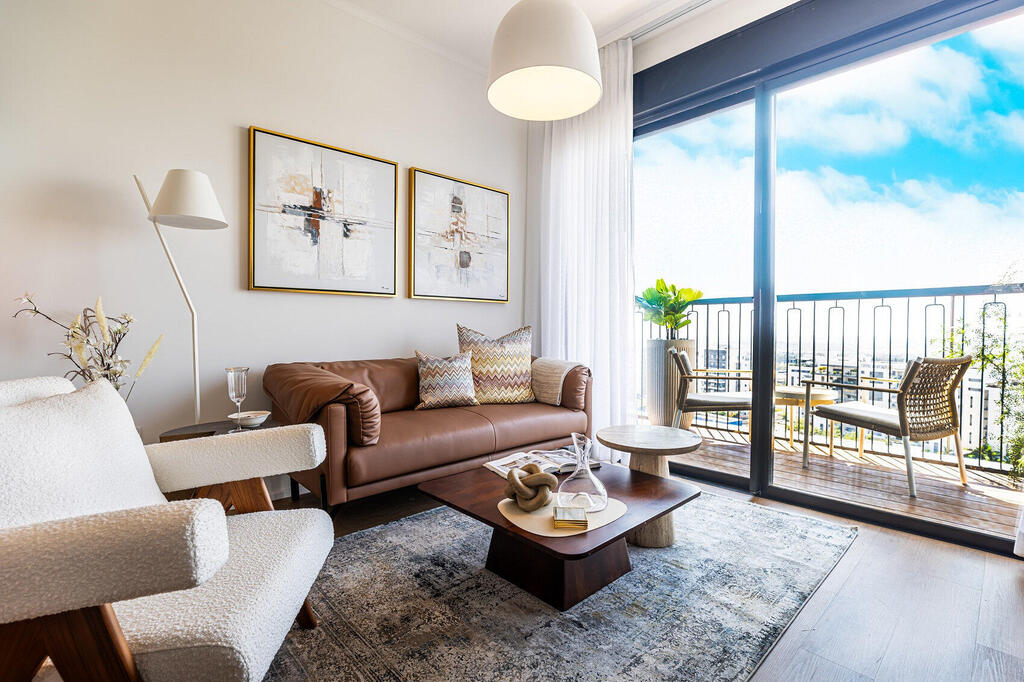
Palace Rishon LeZion
(Photo: Ofer Tamari)
For the wealthy only
The prices make clear that this is a luxury available only to the wealthy. Prof. Alex Kaplun, of the College of Management Academic Studies, an expert in financial gerontology, said the next challenge is building senior housing that the middle class can afford.
“There is no reason people who worked all their lives and saved for retirement should not be able to afford assisted living,” he said. “Israel is not a player in the assisted living world, only in nursing homes and nursing departments.”
How can costs be reduced?
“The challenge is for developers. The way to lower costs will be through outsourcing: the pool, the clinic, the classes, provided that senior living complexes are built inside neighborhoods and cities near those services, such as healthcare clinics, community centers with pools and studios that offer classes. The trend today around the world is to integrate senior living into the urban environment through mixed-use planning.”
Tomer Rosenberg, CEO of Ad-120, also acknowledged that Israel currently lacks a solution for middle-class seniors. “The problem is that the state does not give developers incentives to build assisted living for the middle class at a reduced cost,” he said. “It needs to allocate land designated for more popular assisted living in high-demand areas. In all of Israel today there are 18,000 protected housing apartments, and the problem is that most projects are between Gedera and Hadera.”
‘Age 60 is only the beginning’
Shira Oren Nahmias, deputy CEO of Oranim Group, the developer and owner of Sea One and daughter of businessman Menachem Oren, sees the project as her baby and as part of a new approach to senior living. In the United States, she said, the term increasingly used for older adults is “midlife.”
“It refers to people aged 60 and over who are not looking to slow down,” she said. “On the contrary, this is only the beginning of rediscovery. According to studies, the third age is when people still want to fulfill old dreams. They are still full of passion and curiosity and are looking for new ways to be productive.”
Isn’t 60-plus too early?
“The 60-plus category is not being served enough in Israel. Here, people tend to arrive closer to age 80, because the whole idea of making the move still has an outdated, unappealing vibe. The concept I’m promoting at Sea One is that moving here is a life upgrade, not the opposite.
“We also drew inspiration from Chip Conley, the hotel entrepreneur and the man behind Airbnb. Conley is leading a new approach to ‘midlife’ and founded the Modern Elder Academy, which holds workshops around the world based on the idea that age 60 is not the end, but the beginning, and teaches people how to make the most of it. Senior living is no longer about fences and protection. It is about vibrant community life.”
Still, many Israelis struggle to cross the psychological barrier.
“The average age in assisted living in Israel is 80 and above, and fewer than 4% of the relevant population makes the move,” she said. “The stigma is still there: moving to assisted living is still seen by many as a declaration of old age.”
The price, of course, is also part of the problem. Israel still has a long way to go before moving to assisted living is seen as an alternative housing choice rather than a symbol of aging.
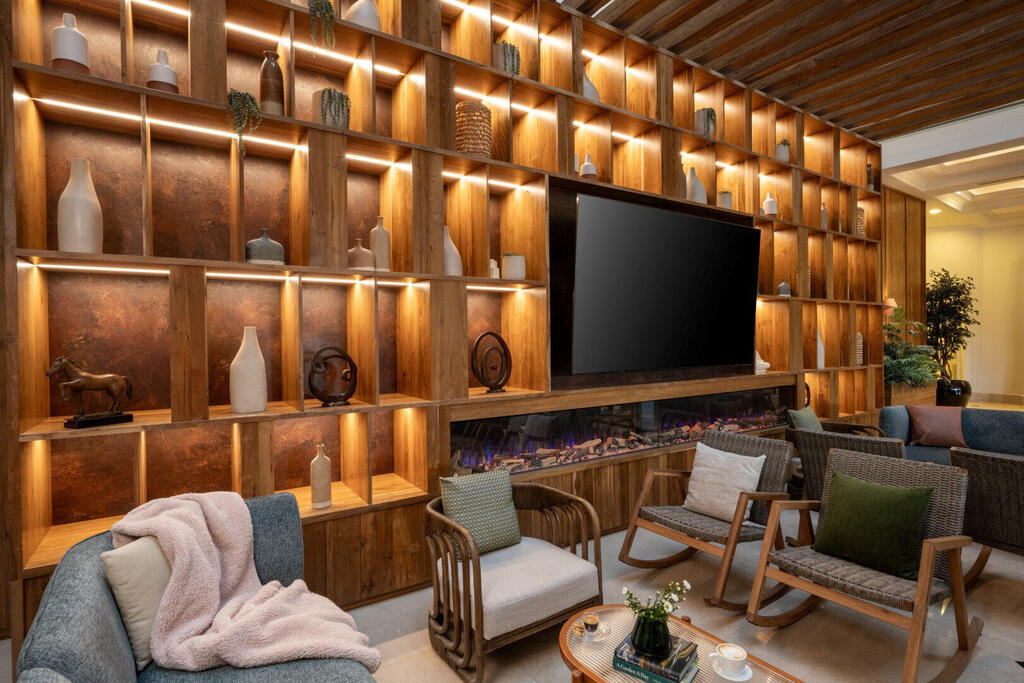
Ad-120 Tel Aviv
(Photo: Aya Ben Ezri)
“Making better use of capital”
Against that backdrop, the new complexes are already reporting registrants aged 73 and above. “The perception that moving to assisted living is the last stop before the grave is changing,” said Prof. Boaz Ben-David, a cognitive psychologist who researches aging and cognition at Reichman University. “The nursing home is becoming an alternative housing option that can also suit a younger age and allow people to enjoy life fully.
“Older people I invite to my lab open their calendars and tell me they are fully booked. The idea that life ends at 70 no longer fits.”
Prof. Kaplun said the financial dilemma facing many older adults is whether to preserve wealth for their children or use it to improve their own lives. “Our parents thought about how to live modestly so they could leave more to their children,” he said. “Today, the thinking is different: how can I make better use of my capital to live well, and if something is left for the children, all the better.”
And yet, many people in their 70s feel healthy and independent, and say, “I have no reason to move into a complex like that.”
“My advice to them is to plan ahead,” he said. “Once they fall or become ill, assisted living may no longer accept them. There is an advantage to moving in while you are still healthy.”
Most large chains also operate a nursing department in a separate wing, offering residents peace of mind that if their condition deteriorates, a care framework will be available. Sea One in Rishon LeZion chose not to include such a department, arguing that the best care is provided in a dedicated facility.
A profitable investment
From a business perspective, the sector offers income-producing real estate with relatively low risk, stable returns and resilient demand. In recent years, senior living has become a popular investment target for some of Israel’s largest business groups.
Azrieli Group owns the Palace senior living chain; Bank Hapoalim bought 20% of the Bayit Bakfar chain at a valuation of 750 million shekels ($221 million) and also became a partner in the Amal Group nursing home and care network at a valuation of 1.5 billion shekels ($443 million). Big purchased the Shivat HaKochavim nursing home in Herzliya for 225 million shekels ($66 million), in addition to winning Israel Land Authority land for a senior living project in Zichron Yaakov.
Shapir Engineering bought control of the Ad-120 chain from Phoenix at a valuation of 1.35 billion shekels ($398 million). Clal Insurance entered a 500 million shekel ($148 million) partnership with Mediterranean Towers. Israel Canada made its first move into the sector by buying a senior living home in Kfar Shmaryahu for 125 million shekels ($37 million), while Amitim, Israel’s veteran pension funds, bought 20% of Israel Canada’s senior living activity for 100 million shekels ($30 million).
Even Kibbutz Kalia, near the northern Dead Sea, bought a 20% stake in Tender Loving Care, a chain that operates six nursing homes in Israel, as an income-producing investment.
Rising life expectancy and forecasts that the number of Israelis aged 65 and over will grow to 1.9 million by 2040 promise steadily rising demand.
Investors are drawn to the sector’s unusual business model. A significant source of profit comes from the developer’s ability to use residents’ deposit money. The model also gives operators a built-in advantage over traditional housing: instead of selling an apartment once and parting with it permanently, a senior living company can market the same unit again when a resident dies or leaves.
Even in a turbulent economy, senior living is viewed as a relatively safe investment. Traditional residential construction generates profit from building and selling apartments, but senior housing offers operators ongoing revenue, operating profit and returns from the gradual erosion of residents’ deposits. For institutional investors, it is not a high-tech-style bet on rapid growth, but a long-term stream of stable income with comparatively low risk.