


The long-awaited plan for the historic casino building in Haifa’s Bat Galim neighborhood is moving ahead. This week, the Haifa District Planning and Building Committee approved the submission of a proposal by Dor Chemicals to transform the landmark structure into a boutique hotel and spa complex.
Under the plan, the existing casino building will be renovated and expanded with additional floors, while a new adjacent building will also be constructed. The project envisions a 110-room boutique hotel with a spa, a street-level restaurant, restoration of the Bat Galim swimming pool that was demolished decades ago, and an underground parking lot.
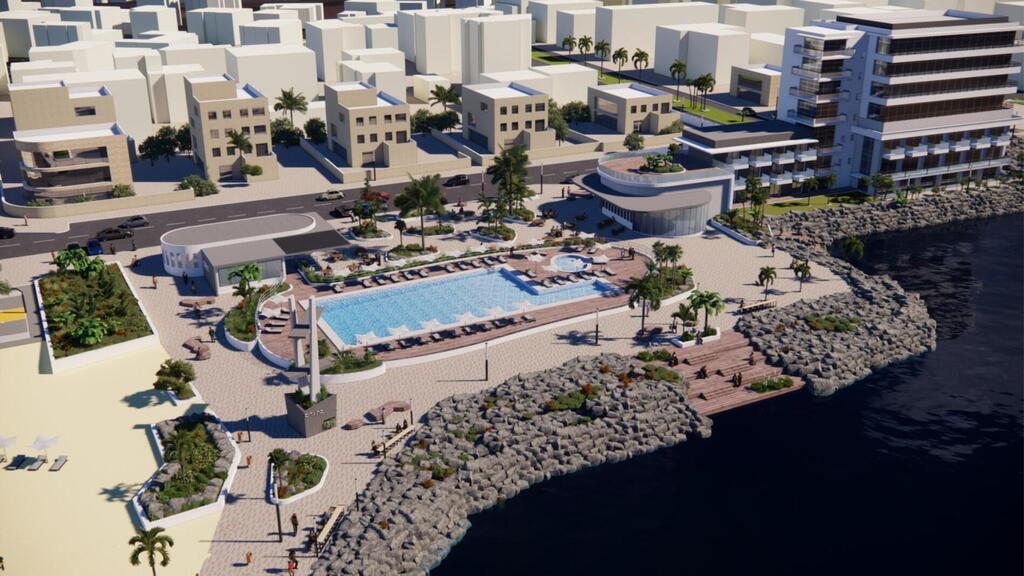
The plan, drafted by architect Dorit Shpint of Gordon Architects and Urban Planners, covers about 1.7 acres. In March, Haifa’s local planning committee reviewed a revised version of the project following public opposition. The district committee now says the new proposal aligns with Haifa’s master plan and Israel’s national coastal development plan.
As part of its review, the committee compared several alternatives for construction and open-space use in the area. It decided the new building would be concentrated above and next to the casino itself, while opening up a 0.6-acre strip of private land along the shoreline for public use. Only a small kiosk will be permitted there to serve visitors.
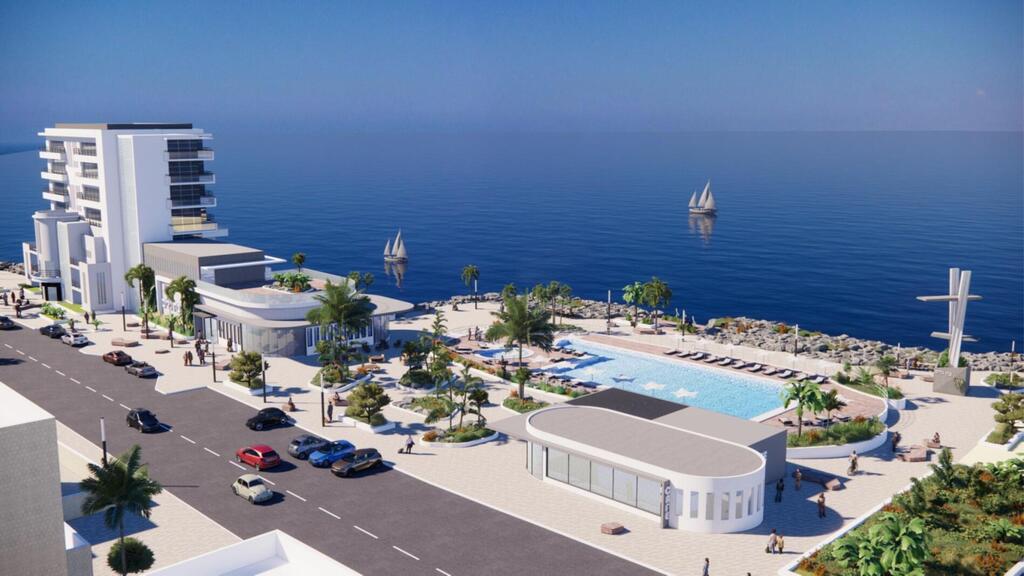
(Photo: Gordon Architects)
The approved design will raise the casino to seven stories plus a partial floor, similar in height to other planned buildings in the neighborhood. “This is an iconic structure that was originally built to stand out,” the committee noted.
A symbol of Haifa’s past
The Bat Galim Casino was built in the 1930s by the neighborhood’s development committee at the end of Bat Galim Boulevard, its main seaside thoroughfare. At the time, it was one of the largest and most ambitious construction projects in Haifa. The complex became a major cultural and social hub during the British Mandate period and after Israel’s independence.
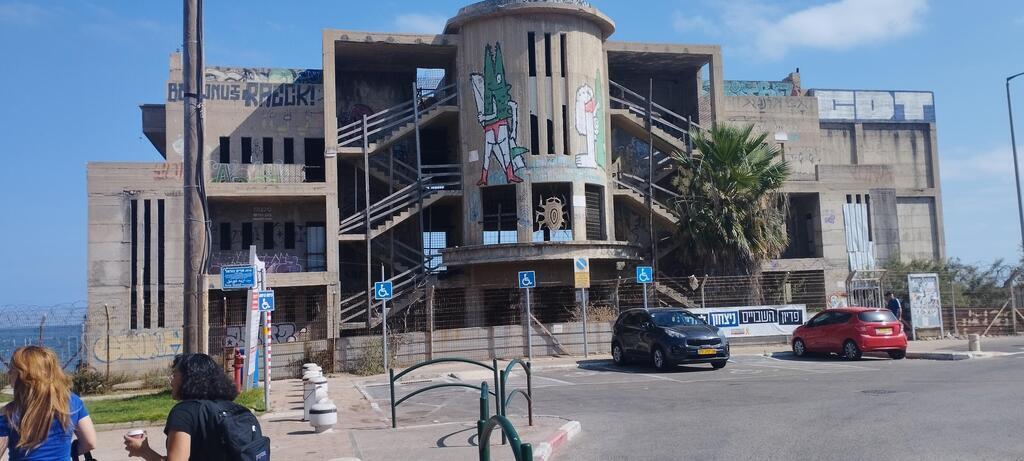
(Photo: Guy Nardi)
Since the 1960s, however, the building has stood mostly abandoned, often described as a “white elephant.” The site is jointly owned by Dor Chemicals, controlled by businessman Gil Dankner (66%), with the rest held by the state and the Haifa municipality.
“The memories of the place, the building and the pool are etched in the hearts of Haifa residents and beyond,” the district committee said. It noted that the structure was originally considered an architectural and engineering feat, built partly over the water with a grand façade facing the city and a spacious interior gallery, serving as a “beacon at night.”
‘Turning Bat Galim into a leisure destination’
Ruti Schwartz, chair of the district committee, said: “This is about restoring and rehabilitating an iconic structure that has stood abandoned by the sea for decades. Reviving the historic building and establishing a hotel with an active public frontage along the Bat Galim promenade will turn the neighborhood into a hub for tourism, leisure and recreation. This plan is another step in a broader renewal effort for Bat Galim.”
Ronen Segal, Haifa District planner at the Planning Administration, added: “The plan will bring life back to the casino building by combining preservation of its historic character with hotel development at a unique seaside location, while also prioritizing open space for the benefit of the general public.”