


After decades of planning and legal battles, a massive development project in the heart of Tel Aviv is finally underway, featuring three luxury towers, hundreds of apartments and new public facilities.
But residents, already grappling with traffic and parking shortages, say it’s hard to imagine how this will ever work. “Mayor Huldai doesn’t want private cars in the city. Maybe that’ll make sense in 10 years when public transportation improves, but not now,” one resident said.
Gallery
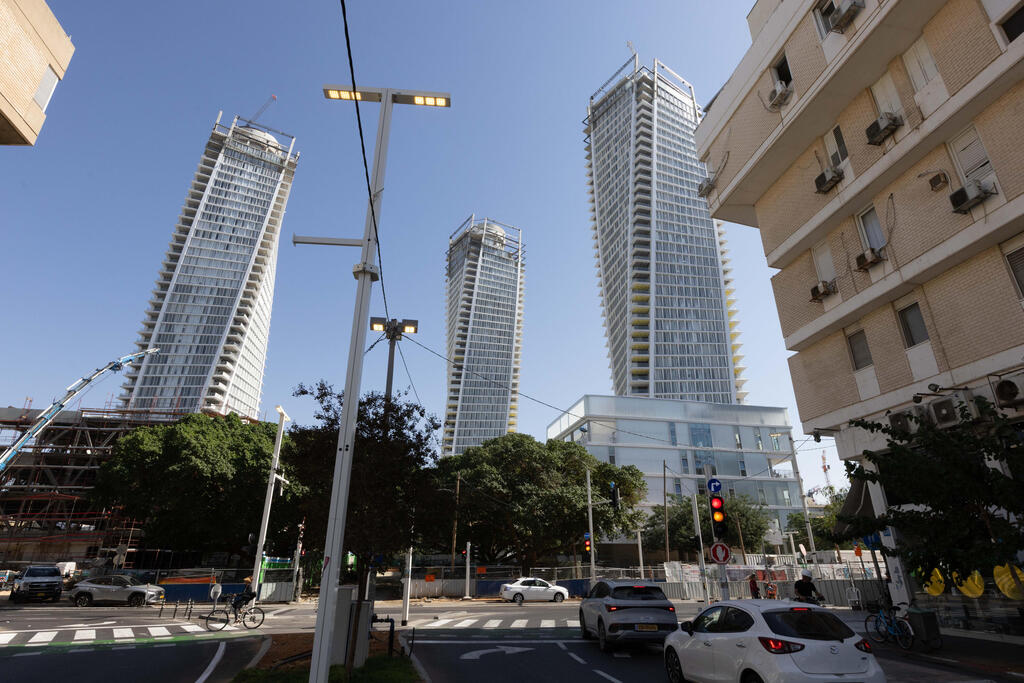
The new traffic lights at Kikar Hamedina alongside the three massive towers
(Photo: Oz Mualem)
Kikar Hamedina, one of Tel Aviv’s most iconic landmarks, is undergoing a dramatic transformation. The green space that had occupied its center for decades has been replaced by concrete, cranes and drilling machines, now forming a construction site for three luxury towers. These will be accompanied by public buildings, bike paths, a new school, and, most recently, traffic lights.
The project is expected to add more than 400 housing units and hundreds of vehicles to an already dense neighborhood that struggles with parking and traffic. Many local residents fear that the development will bring unbearable congestion.
The project, led by Electra and Ashtrom construction groups, received its building permit from the Tel Aviv-Jaffa municipality in December 2022, after decades of stuck construction plans, legal disputes and planning debates.
As early as the 1960s and ’70s, development plans for the central plaza were proposed, but they repeatedly encountered obstacles. Only after Israel’s High Court rulings allowing the city to reach agreements with landowners could a comprehensive plan move forward. That plan included the three towers, infrastructure upgrades, new public institutions and open spaces.
From the outset, residents pushed back against the plan. A local group argued that the dramatic changes to the plaza would create unbearable traffic congestion and even pose safety risks, especially due to the planned school on site.
“Our opposition didn’t start with the sidewalks or the traffic lights, but with the traffic congestion that’s going to develop here", said one of the protest organizers at the time. “Kikar Hamedina isn’t just a plaza; it’s a hub connecting seven major arteries of the city.
Thousands of vehicles pass through every day. It’s like a heart pumping traffic in every direction. Now they’re adding hundreds of apartments, a school for students with special needs who’ll be arriving in shuttles, and everyone will have to go through a single access road. This is a recipe for complete chaos.”
A city with fewer cars
According to 2023 municipal data, about 13,300 people live near Kikar Hamedina in roughly 6,000 households. With the 400 new units set to open in the coming months, the local population and density are expected to spike. Residents say their concerns go beyond traffic: they worry about the quality of life.
Construction is intensifying, space is tightening, and parking spots are disappearing, as blue-and-white parking curb spaces are being removed in favor of bike lanes and wider sidewalks.
Asaf Baruch, a resident of the area for eight years, described the daily reality as difficult. “Every month, another building is being torn down for redevelopment, and traffic is already a nightmare.
"Since they started building the towers, it’s only gotten worse, and no one from the city has explained whether the infrastructure is going to be upgraded. How is the neighborhood supposed to handle thousands of added cars from these skyscrapers?"
“In recent months, the construction around the plaza has only ramped up. It’s a catastrophe; morning traffic jams, trucks blocking roads. And now we have traffic lights that don’t really help,” he said.
Baruch also criticized the city's decision to remove parking spots. “They got rid of many blue-and-white spaces, especially near the plaza, to make room for bike lanes, oversized sidewalks and massive bus stops that no one actually needs.
The city’s goal is to frustrate people, making them give up their cars. Mayor Ron Huldai has even said it himself; he wants a Tel Aviv with as few private vehicles as possible. That’s a nice idea, but it’s not realistic with the current state of public transit. In five or 10 years, when the subway system is complete, maybe it’ll make sense. But right now, it’s just harming residents’ quality of life.”
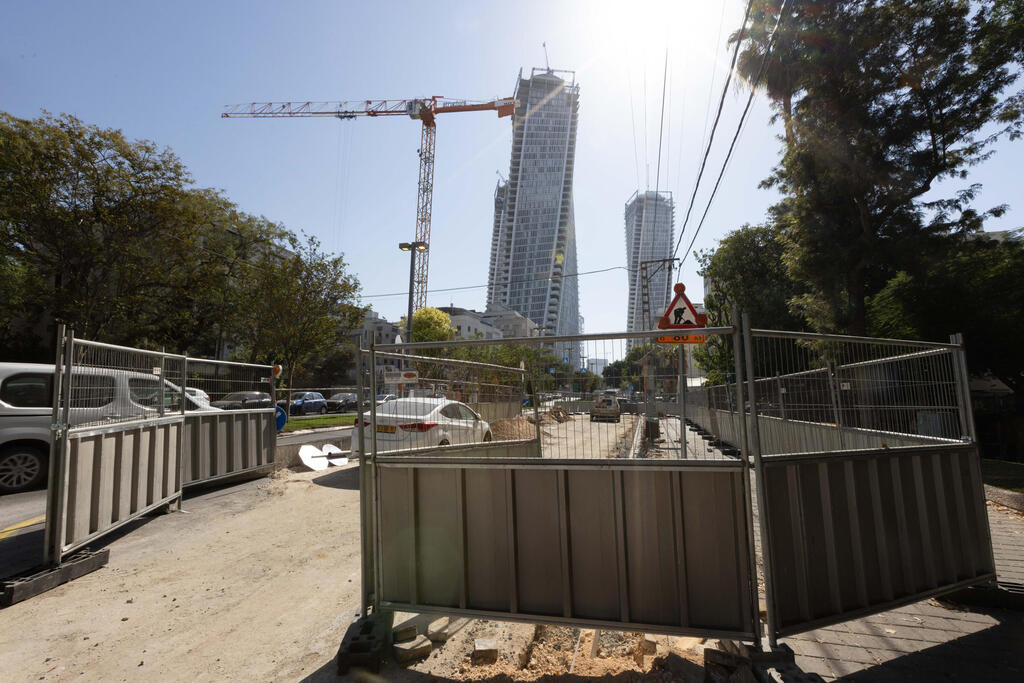
The construction of the bike lane at Kikar Hamedina is fueling traffic chaos
(Photo: Oz Mualem)
From tunnel to traffic lights
The original plan included an underground tunnel for cars exiting the towers, but the idea was scrapped. Instead, the municipal planning board decided to install traffic lights, which appeared in the plaza about two months ago.
Architect Naama Malis, an urban planning expert, said the move reflects a broader urban policy aimed at encouraging people to walk instead of using cars.
“When you build a tunnel or other types of traffic separation, it creates portals and slopes that make the space less pedestrian-friendly,” she explained. “The city chose to give full priority to people on foot. They looked at the data and decided that pedestrians come first.
"They want walking to be comfortable, safe, and slow. It’s a philosophy that tries to balance the desire to reduce traffic congestion and the desire to encourage walking. But people must understand that dense urban areas can’t rely on private vehicles. There are physical limits.
"You can’t add hundreds of new housing units to a place like Kikar Hamedina and still allow free-flowing car traffic. The geometry just doesn’t work. It’s going to be very hard for private drivers."
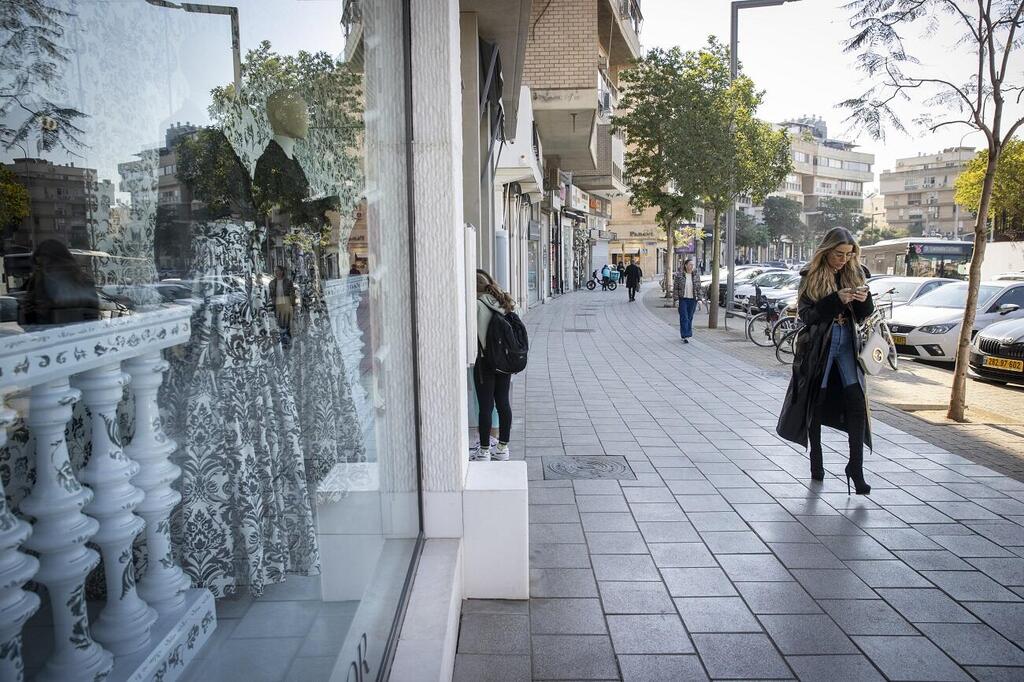
Kikar Hamedina
(Photo: Avigail Uzi)
Municipal response: Safety comes first
In a statement, the Tel Aviv-Jaffa municipality said: “As part of the Kikar Hamedina development project, alongside the three residential towers, public buildings and a circular bike path are also being built.
"The complex will be connected by four pedestrian and cyclist crossings at each of the plaza’s quadrants. The installation of traffic lights is first and foremost a safety measure, ensuring secure crossings for seniors, children and people with disabilities.
"In areas with high pedestrian traffic, traffic lights can also help manage vehicle flow by concentrating crossings to designated times and places, instead of random, dispersed pedestrian movement."
The city added that it does not anticipate unusually heavy traffic in the area. “If congestion does arise, it can be managed and regulated through the city’s traffic control center,” the statement said.