

Balconies were once treated as optional extras, useful for a few chairs, a clothes rack and several potted plants. In many new residential projects, however, they are being designed as an extension of the home itself.
As apartments become more expensive and urban density increases, homeowners are looking to make fuller use of every available square meter. That has pushed balconies beyond their traditional role and turned them into spaces for dining, entertaining, working and relaxing.
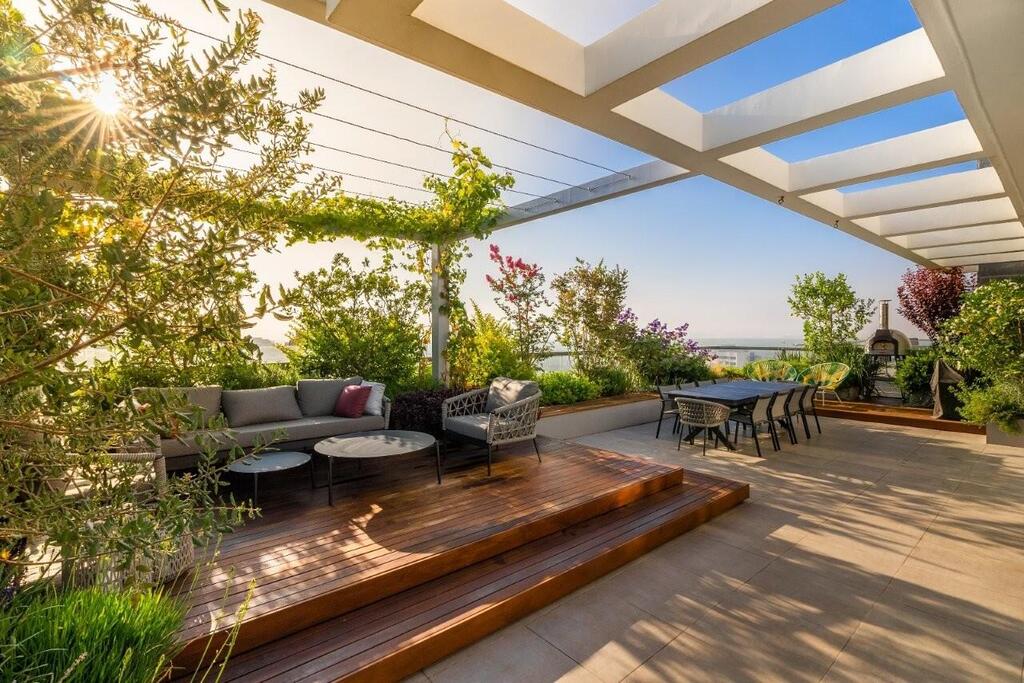
“People want their balcony to become their own private oasis,” said Shay David, a landscape designer at CARCOM. “They are looking for nature, privacy and quiet, even in a dense urban environment.”
The trend can be seen in both metropolitan high-rises and developments in smaller cities. Balconies are becoming larger and more carefully planned, with greater attention paid to how they connect to the living room and how they will be used throughout the day.
“A balcony used to be somewhere you stepped out for a few minutes,” David said. “Today, it functions as an extension of the living room. People want to entertain, cook, work, relax and spend more of their daily life outdoors.”
(Photo: Alon Grego)
(Photo: Alon Grego)
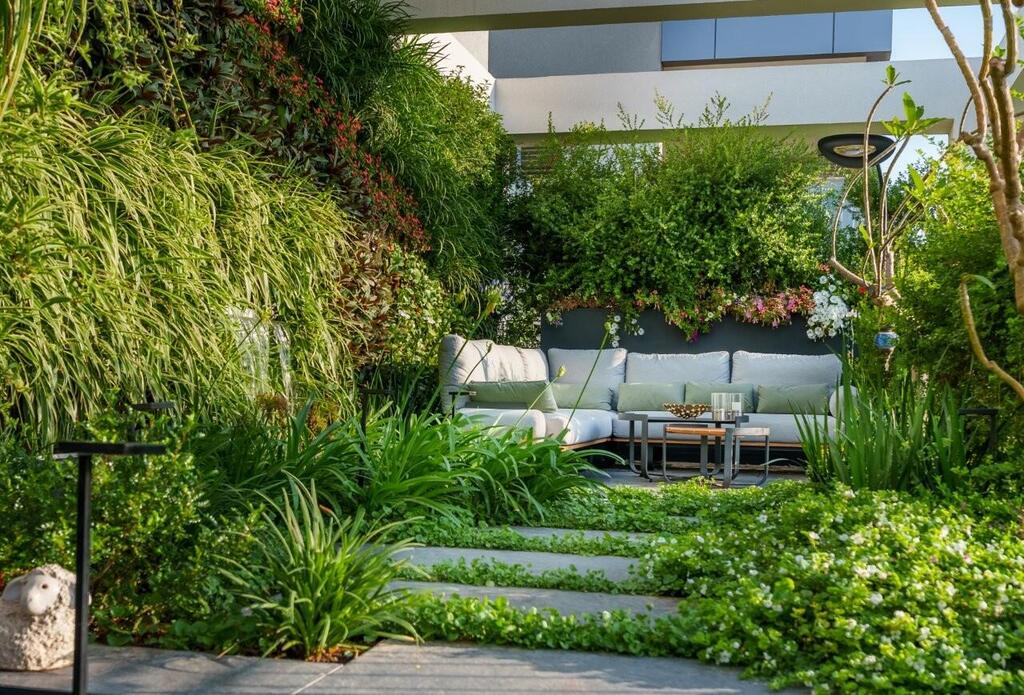
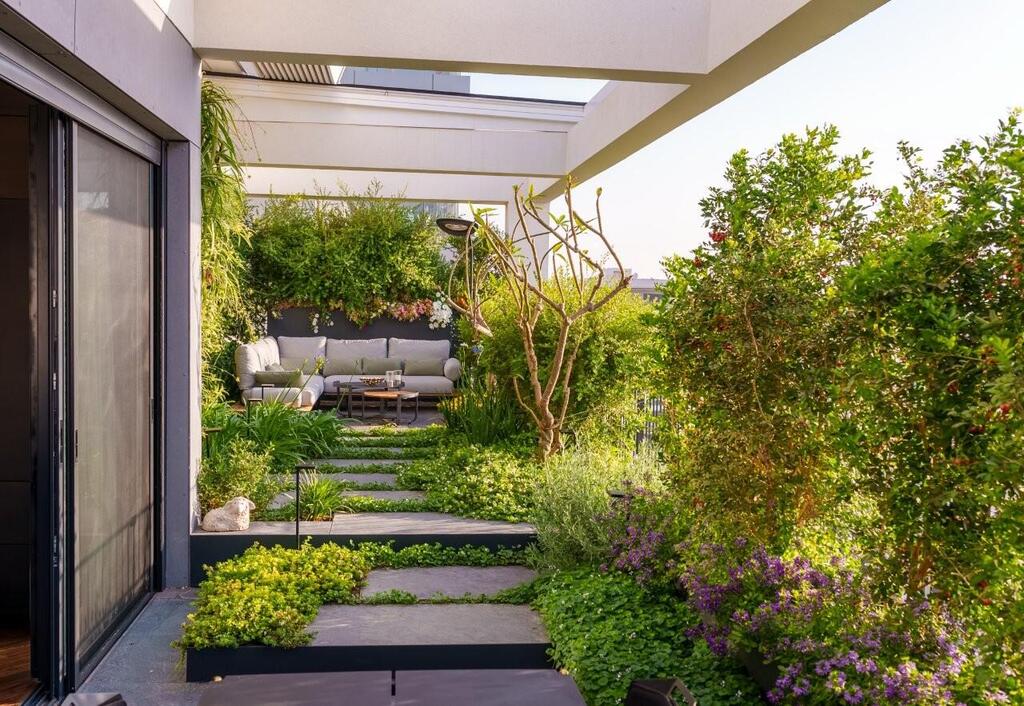
One of the main goals of contemporary balcony design is to create the impression of a garden, even on the upper floors of a tower. Designers use trees planted in large containers, layered vegetation, climbing plants and vertical gardens to soften the surrounding architecture and provide shade and privacy.
“Planting brings movement and life into the space,” David said. “The aim is to make people feel they are entering a garden, even when they are on the 20th floor.”
The practical demands placed on balconies have also expanded. Outdoor kitchens, barbecue areas, dining tables, lounge furniture and herb gardens are becoming increasingly common. In larger and more expensive properties, designs may also include plunge pools or outdoor showers.
That does not mean every balcony can accommodate every feature. Weight limits, exposure to wind and sun, drainage, maintenance and access to electricity and water all influence what can realistically be installed.
“Balconies are expected to serve several purposes at once,” David said. “The design has to begin with how the family actually lives and which functions it will genuinely use.”
Privacy has also become a central concern, particularly in neighborhoods where apartment towers face one another at close range. Trees, dense planting, pergolas and screens can reduce direct sightlines, although the challenge is to create seclusion without blocking natural light or views.
“The goal is to open the home to the outdoors while preserving a sense of comfort,” David said. “Finding that balance is one of the most difficult parts of the design.”
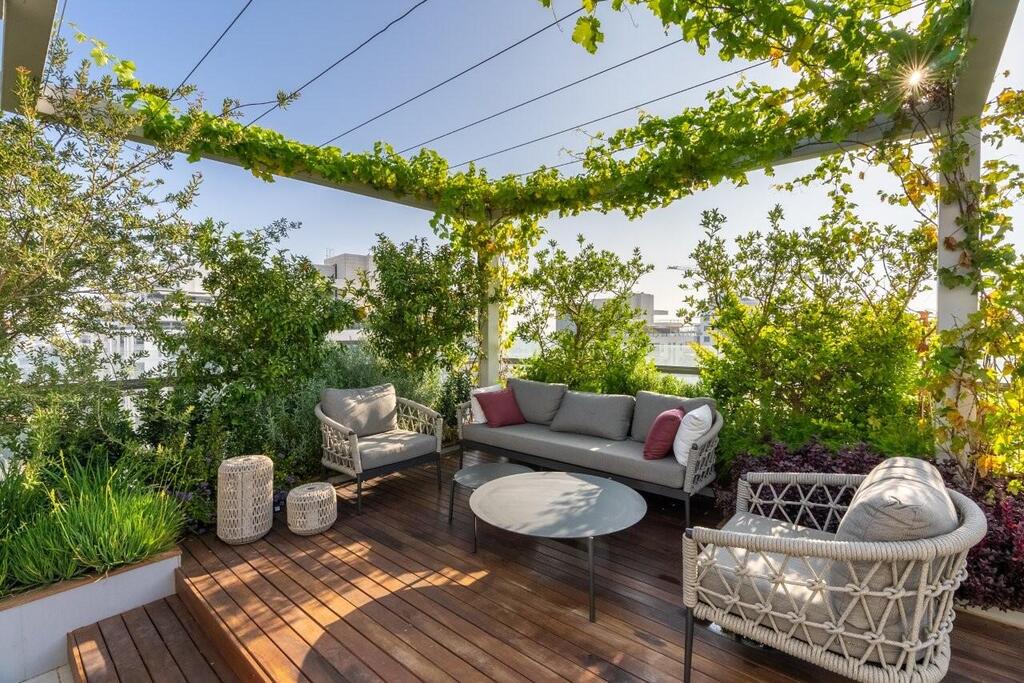
The visual language of balconies has also changed. Materials and furnishings once associated mainly with hotels and resorts, including outdoor textiles, architectural lighting, timber, stone and custom shade structures, are increasingly appearing in private homes.
(Photo: Alon Grego)
Still, the effectiveness of a balcony depends less on how luxurious it looks than on whether it is comfortable and practical enough to be used regularly.
A shaded seating area, suitable planting and a layout that connects naturally to the interior may contribute more to everyday use than expensive decorative additions. “In the past, most of the investment went into the interior,” David said. “Now people understand that outdoor space can have just as much influence on their quality of life.”
The modern balcony is no longer merely a place to step outside. In many homes, it has become another room, one exposed to the weather and the city, but increasingly planned with the same care as the space indoors.