

When Kati Tal began renovating her apartment in central Tel Aviv in early 2025, she made one decision her husband initially thought was excessive: spend roughly NIS 100,000 to reinforce one of the rooms.
The apartment is in a 1970s building with no safe room, Israel’s standard apartment-level reinforced safe room, and residents rely instead on a shared building shelter.
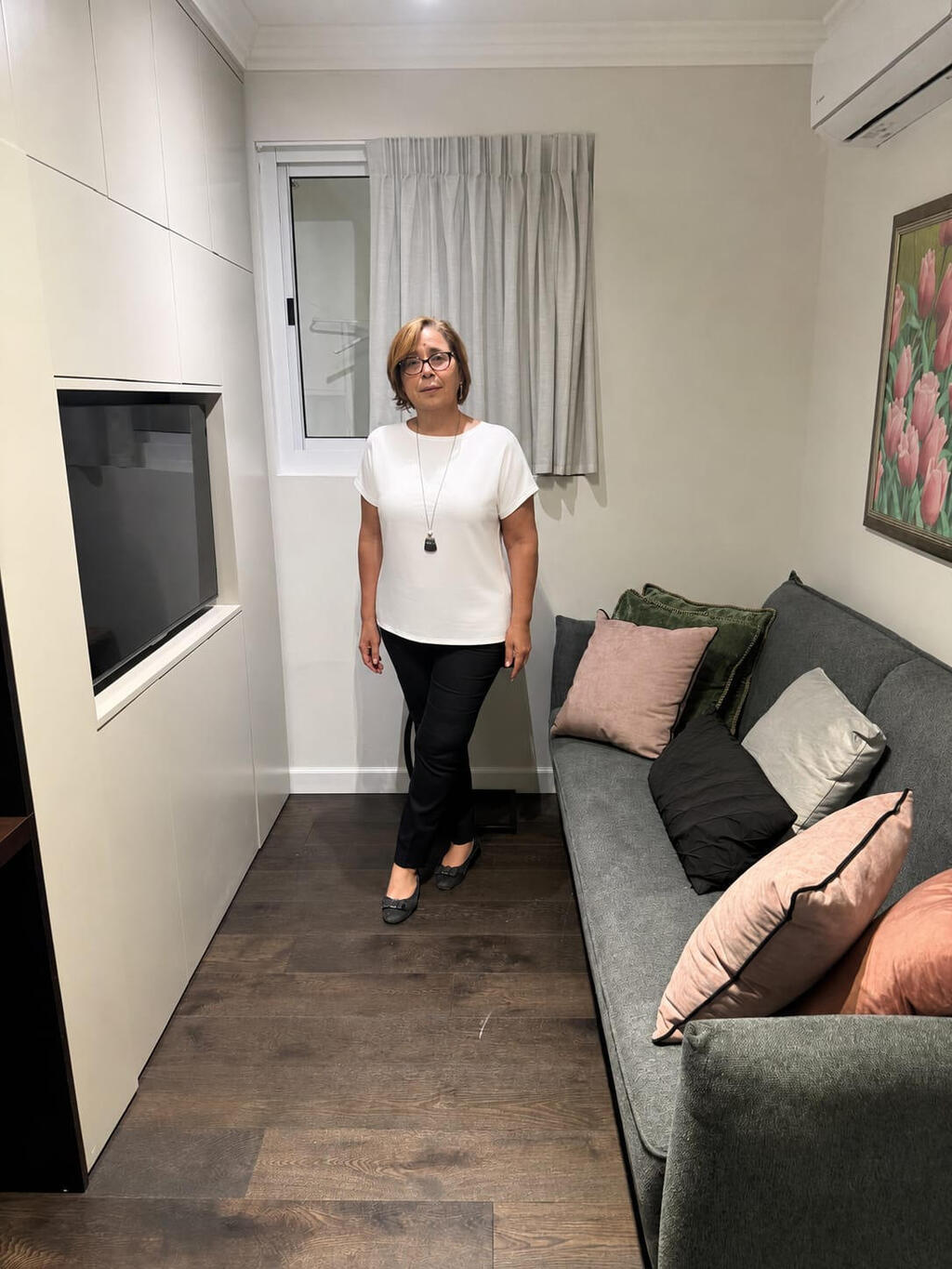
Tal, a family lawyer, knew that would not work for her.
“When we started the renovation, I said I couldn’t go down to the shelter during a war, not at night and not at all,” she said. “There’s something very beautiful about living in an old building in central Tel Aviv, with that Tel Aviv character, and I didn’t want to give it up. But at the same time, it was clear to me that I needed something that would protect me.”
Her husband was skeptical.
“At first he laughed at me and said, ‘What, we’re going to spend NIS 100,000 now? We’ll go down to the shelter.’ I said, ‘That’s not going to happen. I’m not going down to the shelter in the middle of the night.’”
The work took about a week.
At the time, the couple had not yet moved into the apartment because renovations were still underway. But when the first round of fighting with Iran began, Tal said they would come to the unfinished apartment at night specifically to sleep in the reinforced room.
Soon afterward, the decision became far more consequential.
“During the second round, a cluster munition hit the roof of our building,” Tal recalled. “We live on the second floor. It penetrated the rooftop room, went through the ceiling of the third floor and exploded in the stairwell.”
Tal and her husband were inside the reinforced room.
“We heard a boom and glass breaking, but we didn’t feel the building shake,” she said. “We were sure the building across the street had been hit.”
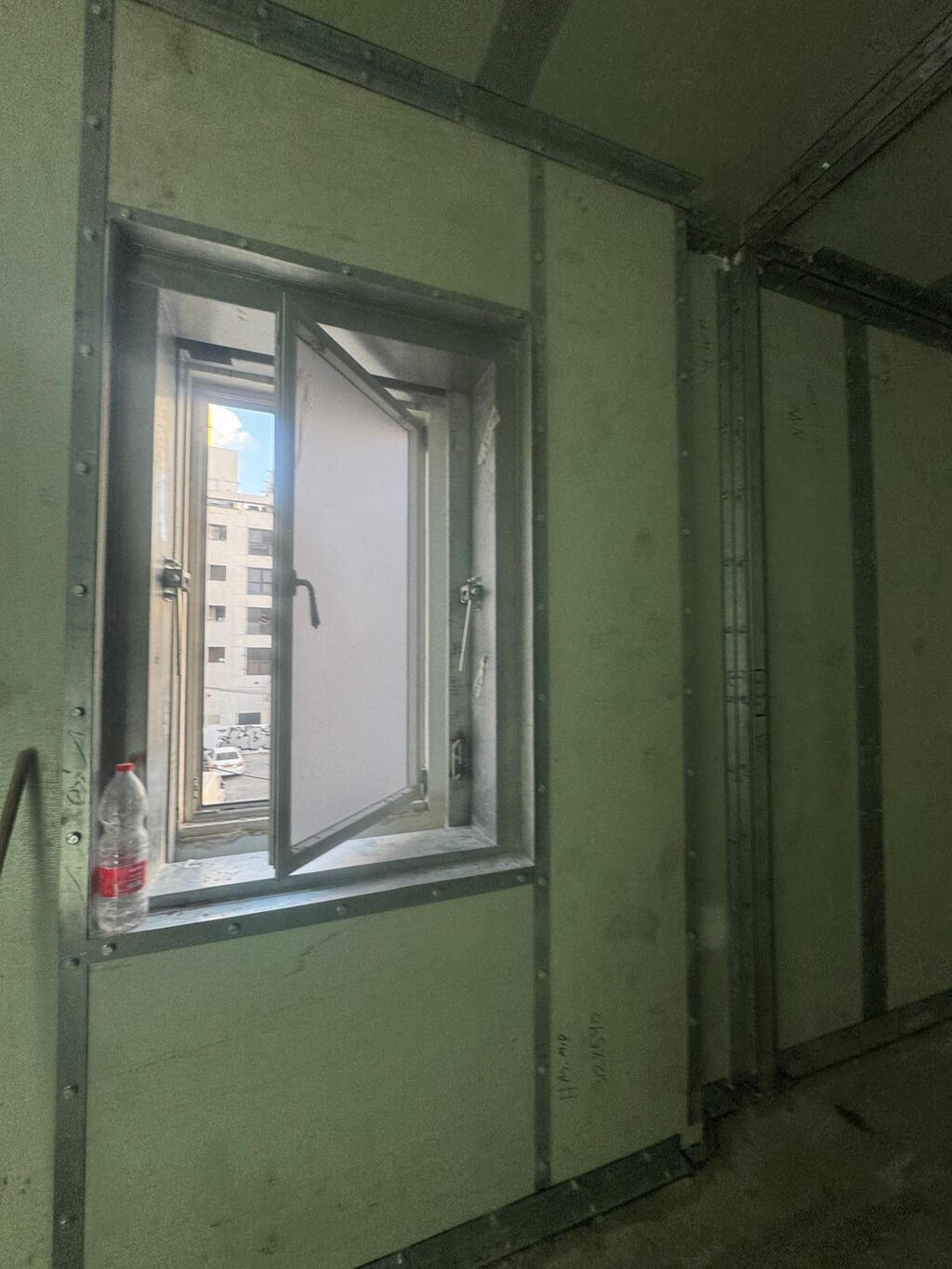
The reinforcement process took about a week
Only when members of a Tel Aviv municipal emergency team arrived and knocked on the reinforced room’s door did the couple understand what had happened.
“When they took us outside, we saw that apartment doors had been blown inward by the blast,” Tal said. “Our door flew into the apartment, and so did the neighbor’s. The blast just threw the reinforced entrance doors inside.”
The building sustained extensive damage, including to the roof level, third floor, plumbing and apartments.
“But we were inside the reinforced room, and nothing happened to us,” she said.
Asked whether she believes the room saved their lives, Tal said she does.
“If we had gone out to the stairwell, it would have been terrible,” she said. “People sometimes say the stairwell is fine, but in our case the stairwell was exactly where the impact occurred. It was a lethal blast. Thinking about what could have happened if we had been there is unimaginable.”
Today, Tal says she has no doubts about the expense.
“It was worth every shekel,” she said.
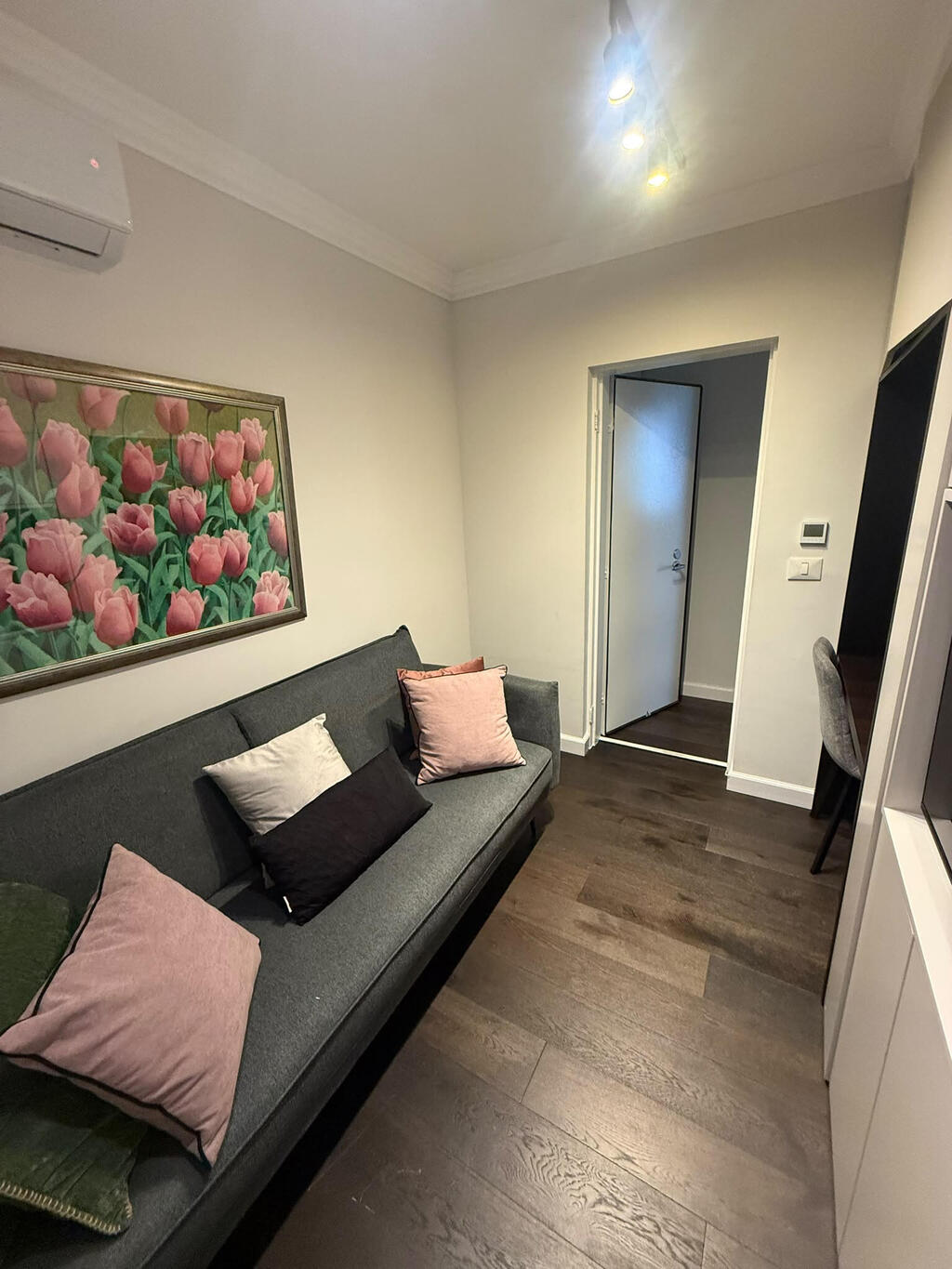
The safe room after the upgrade
Even during the first round of fighting, before the direct strike on her building, the room had already become a refuge for members of her family.
“My daughter came to stay with us because she lives in a rented apartment without a safe room,” Tal said. “My mother-in-law came too, and my mother, who has a lung condition, slept in the reinforced room so she wouldn’t have to get up in the middle of the night.”
“It gave a solution to a large part of the family.”
Asked what she would tell homeowners considering such an investment, Tal was unequivocal.
“Don’t hesitate. Really. It pays back every shekel,” she said. “Even in small apartments, you can find solutions: a bedroom, half a room, whatever works with the space you have. Where there is no safe room, it’s an excellent solution.”
Eight days to reinforce a room
The system installed in Tal’s apartment is known in Israel as “improved protection,” a Home Front Command-approved reinforcement of an existing room.
It is not the same as a regulation safe room, which is built to strict structural standards as part of the building itself.
“It’s important to say honestly that improved protection does not turn a room into a standard safe room in every respect,” said Ran Naor, owner and CEO of Ortech Defense Systems, the company that carried out the work in Tal’s home.
“But for someone living in an older apartment who cannot build a safe room or does not want to move, it is a very significant solution,” he said.
“Ultimately, people want to know they have somewhere to go when the siren starts. In the reality we live in, that is no longer a luxury. It is a real need.”
The process begins by choosing an existing room.
“The window and door are replaced with a standard reinforced-room window and door, and the room’s walls are lined with GFRP panels from a family of composite materials also used in aircraft and yachts,” Naor said.
The material is very light, about one-quarter the weight of steel, but highly durable, he said.
“In effect, we create an independent space inside the home, a kind of capsule intended to protect whoever is inside even if there is an impact or blast near the building.”
The work generally takes up to eight days, Naor said, and in most cases residents do not have to vacate the entire home.
“Only the room being worked on needs to be cleared,” he said. “It still feels like a renovation, but it is a relatively short process.”
Naor said his company, which supplies Israel’s Defense Ministry as well as civilian clients, was founded around 20 years ago and specializes in reinforcing existing rooms, building standard safe rooms and constructing protected structures.
Not a standard safe room
A reinforced room of this kind does not acquire the legal status of a standard safe room.
“If a homeowner wants to expand the property in the future, they may still be required to build a proper safe room,” Naor said. “But if the goal is to improve the protection they already have, this is a possible solution.”
Asked how the different options compare, Naor said an underground bomb shelter offers the highest level of protection, followed by a standard safe room and then an upgraded reinforced room.
“But a room that has undergone improved protection definitely provides meaningful protection,” he said. “We have had cases where a missile landed just meters from a reinforced room we built, and the person inside came out completely unharmed.”
Choosing which room to reinforce also requires more than simply looking at the building’s structure.
“There are considerations involving the apartment’s location and possible directions of attack, but in my view there are equally important considerations: the household’s needs and limitations,” Naor said.
For elderly residents, he said, it may not make sense to require them to wake in the middle of the night and rush across the apartment.
“Sometimes the risk of being injured on the way to the protected space is greater than the risk itself,” he said.
The same applies to families with children who have special needs.
“It may make sense to reinforce that child’s own room so they don’t have to be moved during an alert,” he said. “Ultimately, the solution has to be tailored to the home and the family.”
Why not build a standard safe room?
For detached houses, building a safe room may be relatively straightforward, though some homeowners may not want to sacrifice part of their yard or undertake a major construction project.
In apartment buildings, the challenge is often much greater.
“Building a safe room for an apartment on the third or fourth floor usually becomes a project involving the entire building,” Naor said. “You need the neighbors to participate, and there is also a complicated bureaucratic and construction process.”
There is often at least one owner who does not want to participate, he added, or a landlord who sees little incentive to invest in an apartment being rented out.
“For that reason, improved protection is an immediate, fast and practical alternative,” he said.
How much does it cost?
The price depends on the size of the room and its existing structure.
“In general, we’re talking about around NIS 100,000 to NIS 140,000,” Naor said.
One major factor is whether the ceiling also needs reinforcement.
“If the ceiling is solid concrete, that is not always necessary,” he said. “If it is not solid concrete, then the ceiling also needs a protective solution.”
Costs can be lower when residents of an entire building organize together and commission multiple rooms at once, he added.