

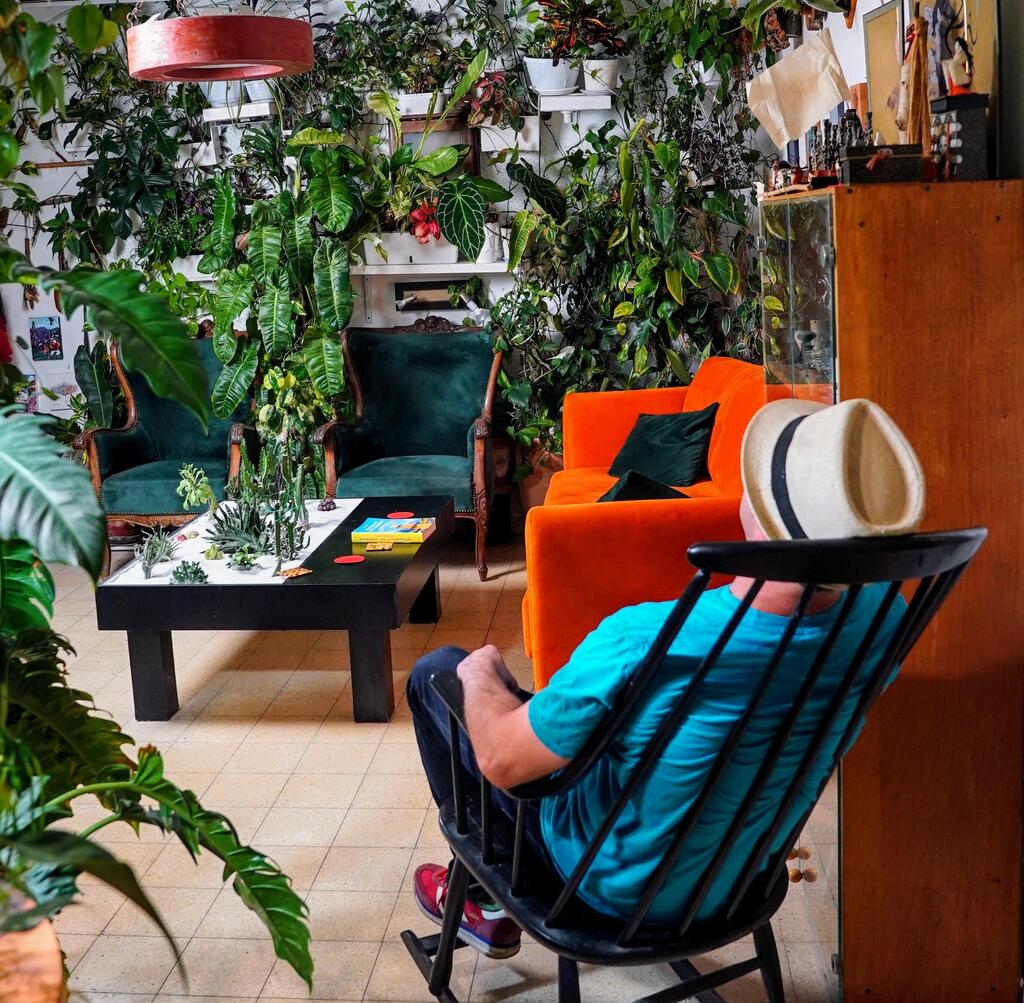
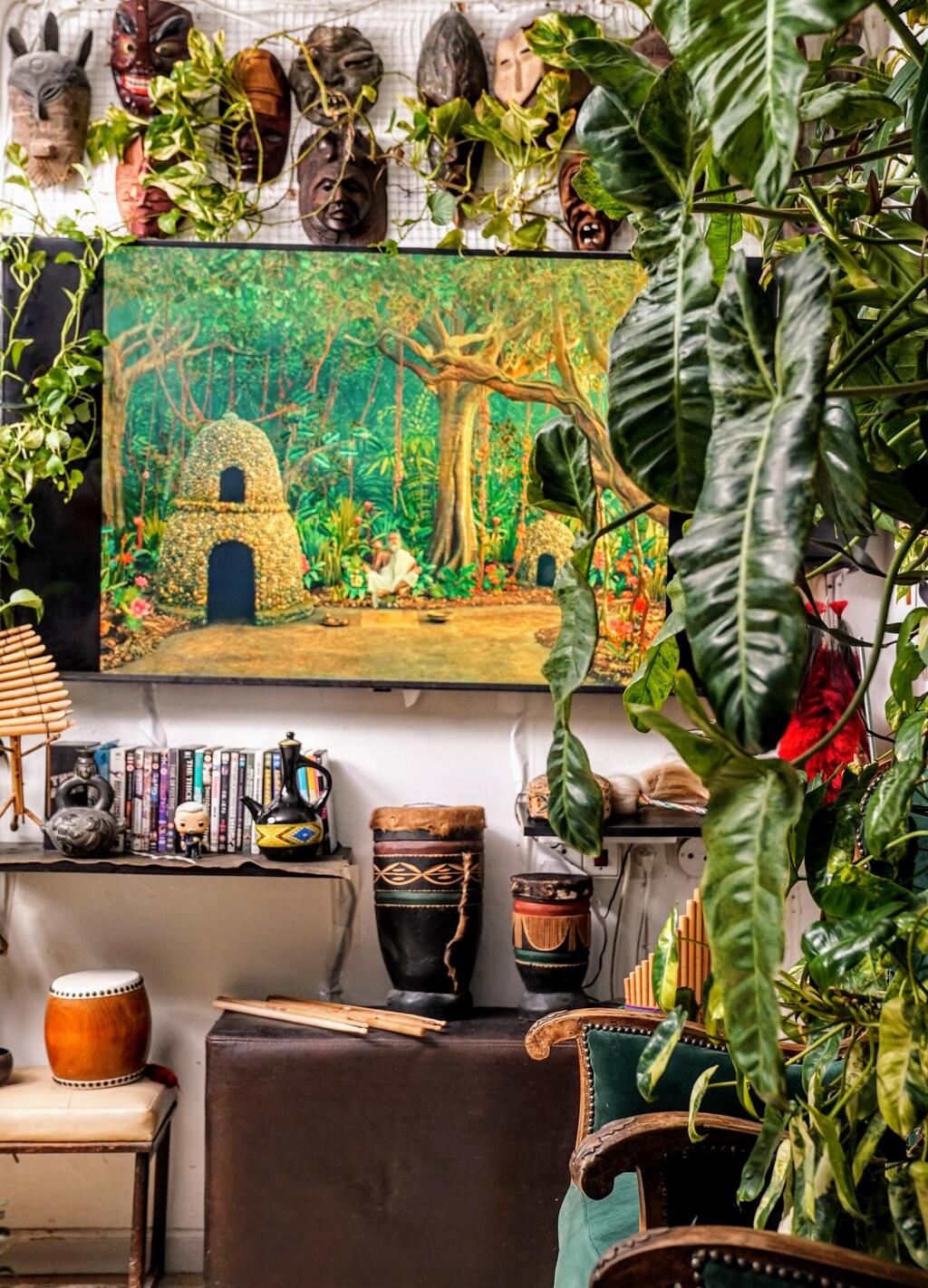
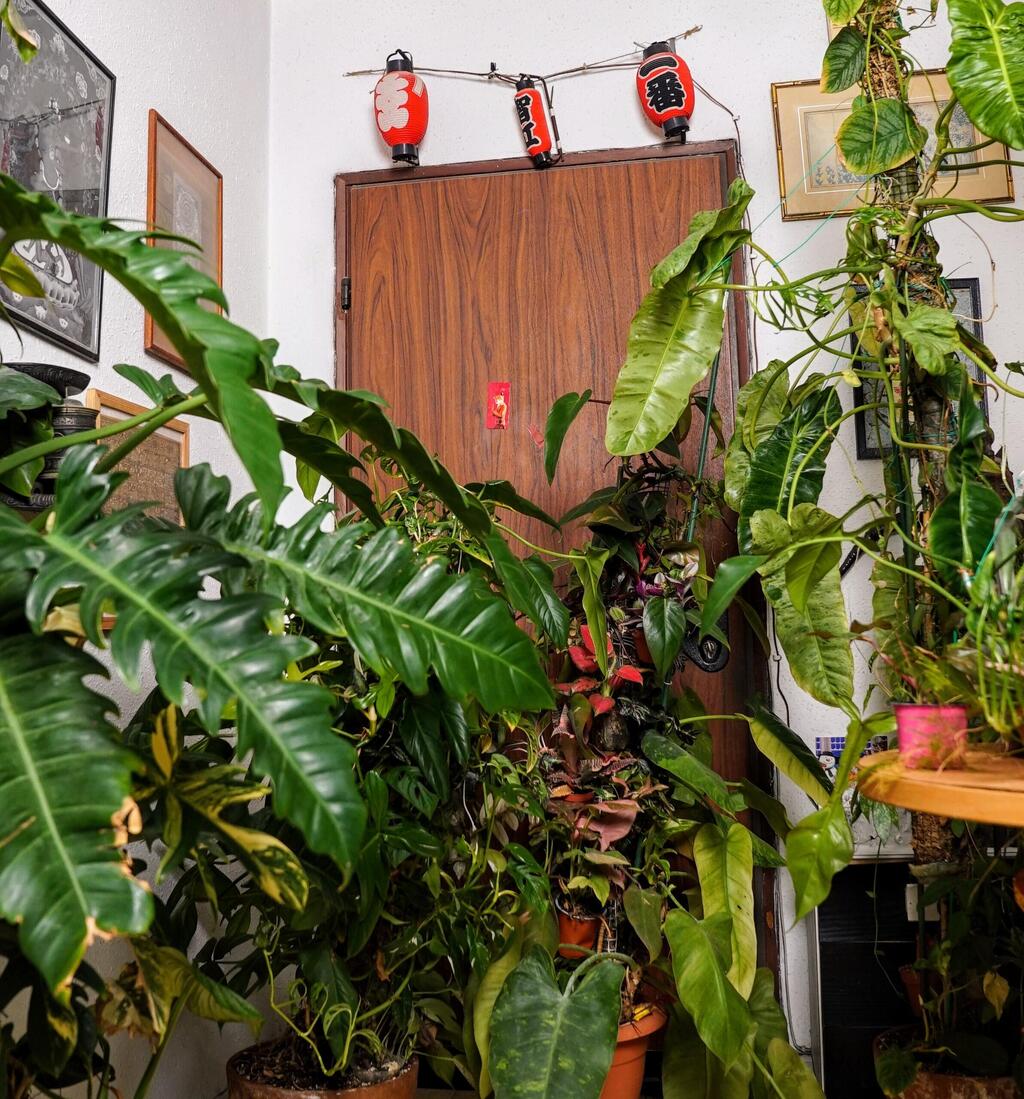
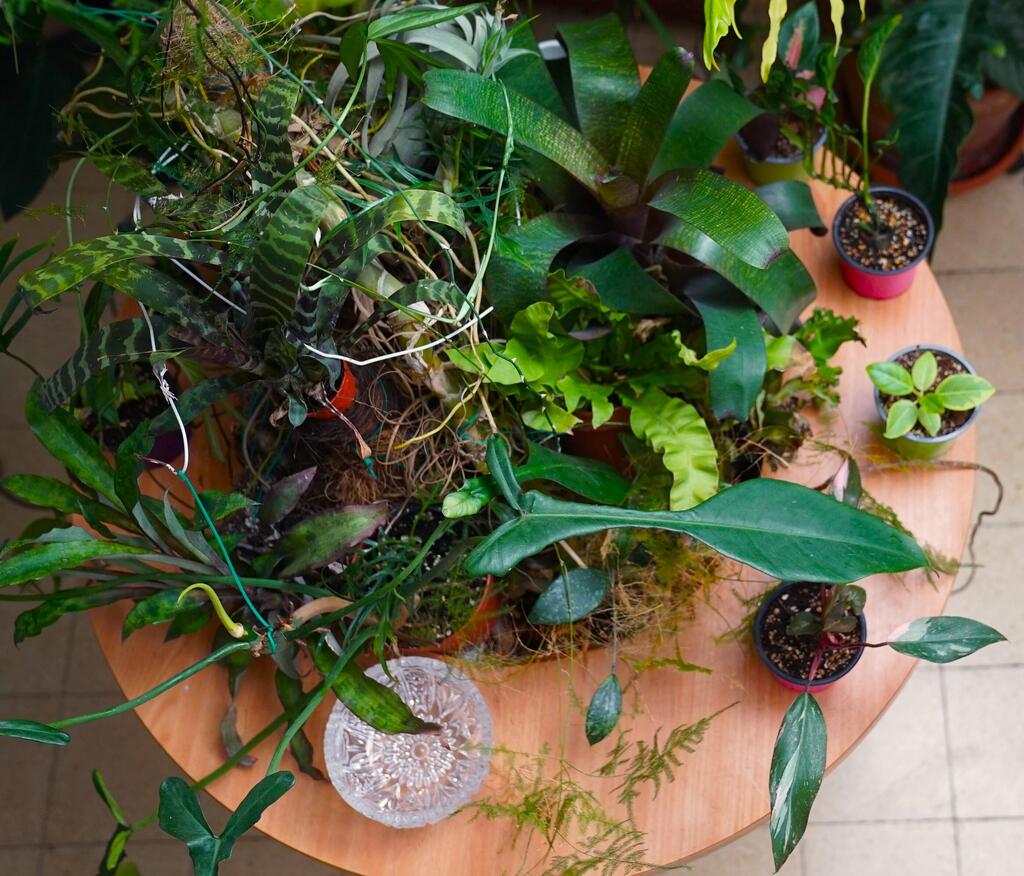
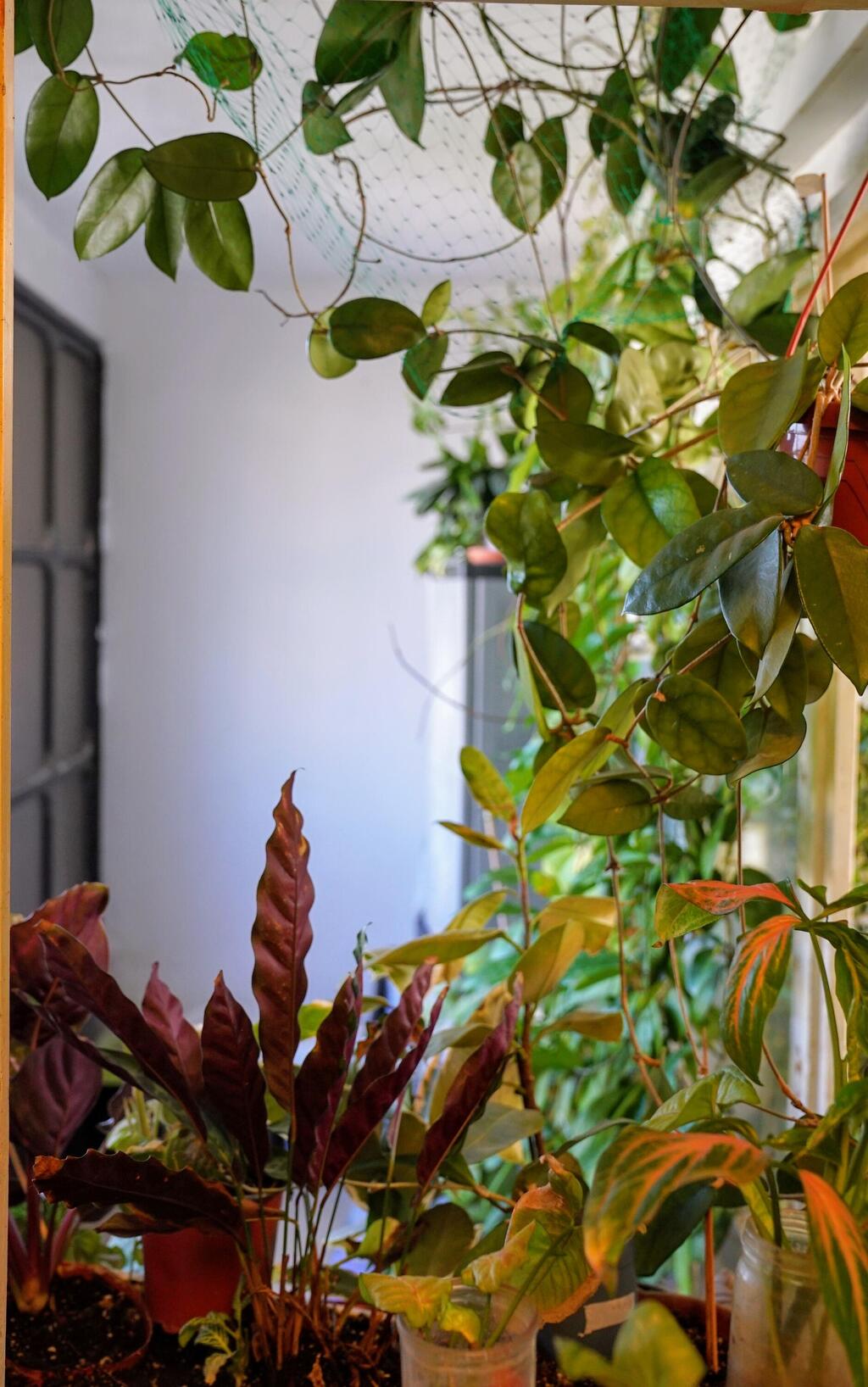
From the street, the apartment looks like any other in Tel Aviv’s Shapira neighborhood. But once you step inside the home of Gil (full name withheld), a 43-year-old single man, you enter what feels like a jungle: hundreds of plants climb walls, drape from poles, spill from planters and pots and even decorate the coffee table in the living room.
It may be just 70 square meters (750 square feet), but the sensation is that you’ve walked into a miniature rainforest in the heart of the city.

“I think I have between 100 and 200 plants, but honestly, it’s hard to count,” says Gil, who works as a scientist at a company that develops chemistry and biology research solutions. “Mostly tropical plants, but also herbs and cacti. Some I cut and propagate, some share a pot. It’s a very dynamic, living world.”
His passion for plants began about 12 years ago when he moved into the apartment. “I wanted to make the place feel alive, changing,” he recalls. “It started with one wall. I hung a net where a few plants could climb. I added a cactus table I’d planned even before moving in. Back then, the world of exotic houseplants was much less developed than it is today. I started with five or six plants — and over time, they took over the whole place.”
The post-COVID bloom
When did it really take off?
“After COVID,” he says, “Suddenly, there were more plants available, more knowledge on how to grow at home. You could use artificial light, grow plants on poles, play with three-dimensional greenery. The plants spread across the living room, the balcony, the entryway. They’re everywhere.”
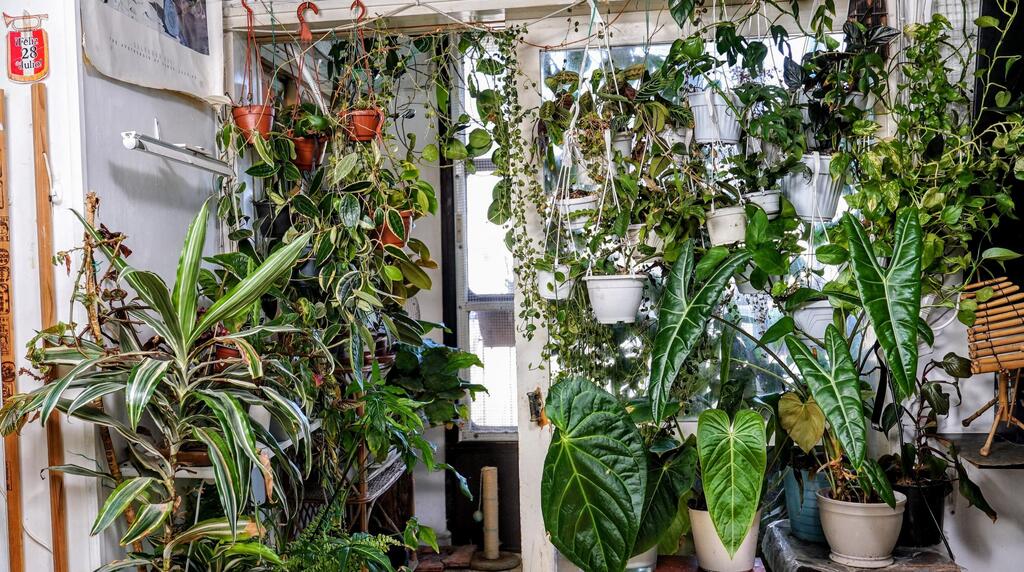
So how do you maintain a dense indoor forest — and still live your life around it? Gil describes surprisingly light upkeep. “I spend maybe half an hour a week, plus another hour on weekends. A little spraying, a little watering. Most of the plants are tropical, so they manage with little natural light, and I supplement with grow lamps. Today it’s really accessible — you can buy the right lights in Israel.
“In summer, it’s more demanding — more frequent watering, plus pests like aphids, mites, thrips. But there are solutions. I use biological pest control: little sachets with bugs that I release in the apartment to eat the pests. It works great.”
A cat named after a Peruvian town
Among the greenery lives a ginger cat with an unusual name — Chachapoyas. “When I adopted him at a shelter, he reminded me of a ginger cat I’d seen on a trek in the town of Chachapoyas in South America. That’s how I chose the name. I brought him home just after I moved in, when he was a kitten. Now he’s 12.”
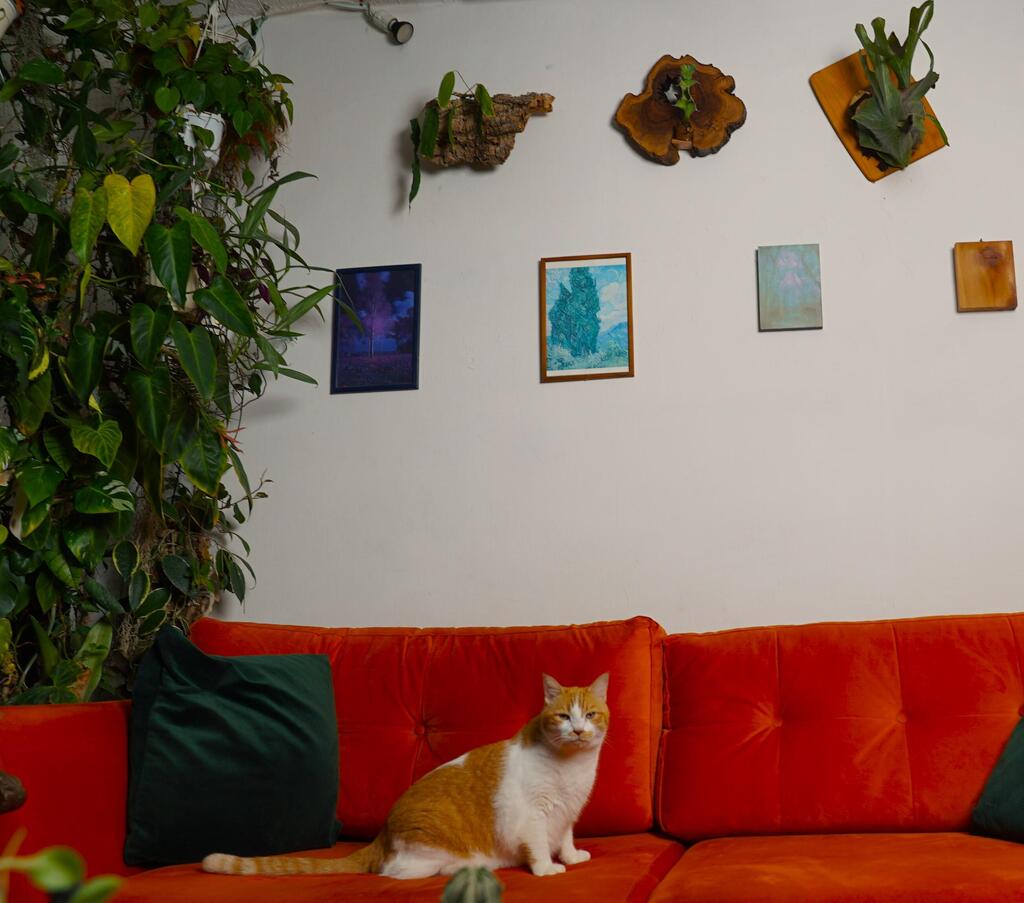
Chachapoyas
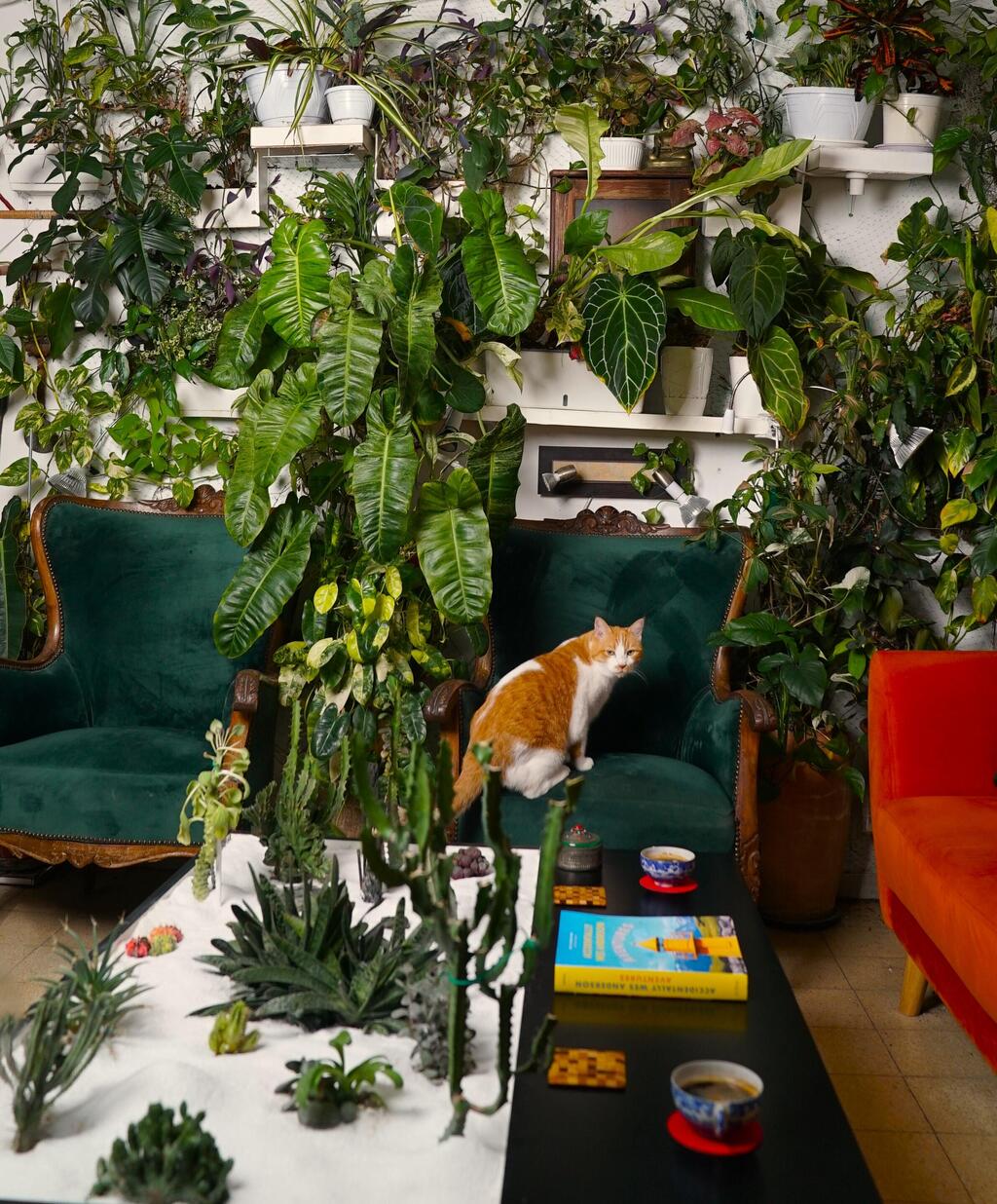
And how does he handle living in a jungle?
“Many plant owners say their cats wreak havoc — knocking things over, chewing leaves. But surprisingly, mine doesn’t knock over or eat the plants. Some plants have invaded his space, but he ignores them completely. They live together in harmony.”
For Gil, the apartment is a refuge. “I come in from noisy Tel Aviv streets and suddenly it’s quiet. Even if it’s messy, dense, jungly — with dry leaves here and there and wild growth — it calms me. It’s hands-on, a kind of therapy that brings peace.”

Trial, error and science
Doesn’t it feel overcrowded?
“No, every so often I thin things out, prune and cut. I’m part of a plant lovers’ community, so I offer my cuttings to people there. I don’t feel it’s out of control. Some of the pots are on wheeled stands, so I can move them around to change the layout.”
What about costs?
“My hobby grew gradually over 12 years, so it’s hard to estimate. But there aren’t big recurring expenses. In winter, I don’t buy anything — I just care for what I have. In spring I might add something new. It’s organic, developing over time and doesn’t demand too many resources.”
As a professional scientist with a PhD in chemistry, Gil admits his expertise doesn’t directly apply to botany. But the mindset helps. “Growing plants is a lot of trial and error. You play with soil mixes, water, minerals. You see what works and what doesn’t — just like in science.”
Part of the whole design
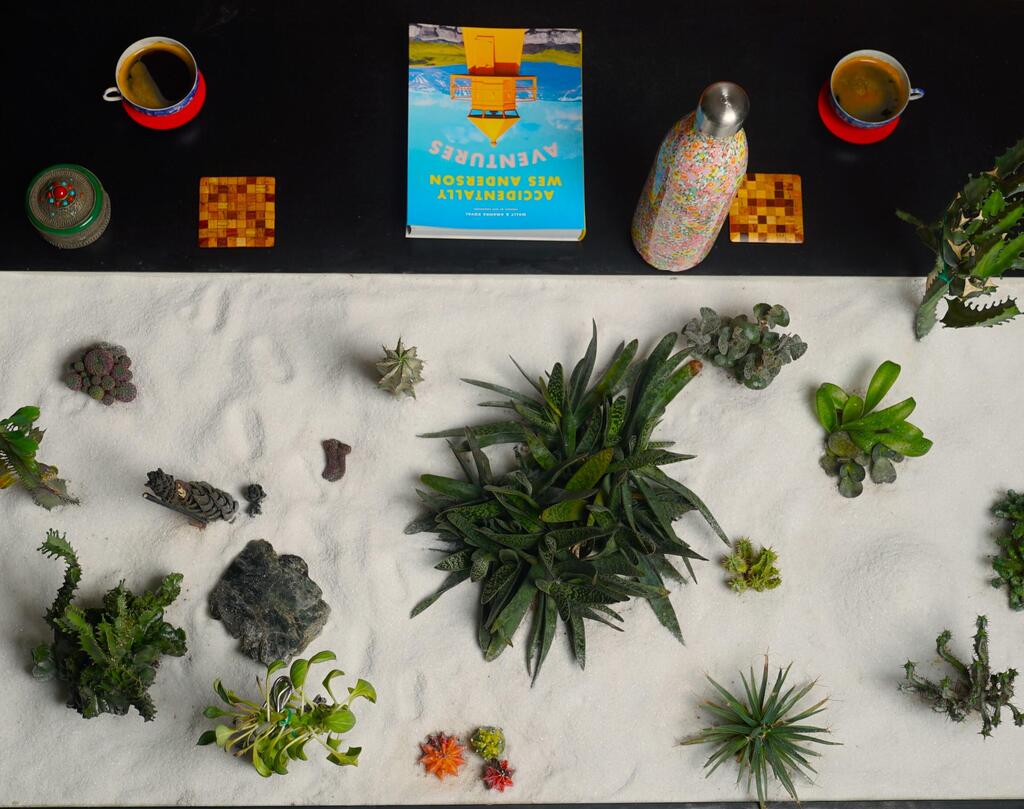
The plants are not just an assortment, but part of Gil’s home design. “I try to make everything fit together. For example, I built an entry table myself with plants at the center and wood rings around it. It’s both beautiful and functional. During COVID, I built planters because I couldn’t find what I wanted in stores. In the living room, I made a cactus table that doubles as a coffee table. I designed drainage so the wood wouldn’t rot. It’s nice watching the cactuses grow.”
His furniture also tells a story: an orange sofa, refurbished green armchairs, vintage pieces from his parents and items collected during his travels — masks, paintings, clay pots. “I like decorating with souvenirs from my trips to Australia, Japan, Ethiopia, Tanzania and elsewhere. I enjoy buying local art abroad. Alongside the paintings, there’s also a photo I took myself after doing a photography course 20 years ago.”
What reactions does he get from visitors?
“People who don’t know me are very surprised when they walk in. There’s a contrast between the neighborhood, the building and my home. From the outside, you’d never guess there’s a jungle inside. People ask for tips on growing, they ask questions — and mostly, they marvel.”