


The idea of peace between Israel and Iran, as existed before 1979, still sounds imaginary to many. Yet these days with the onset of Operation Roaring Lion - an overt attempt to shake the foundations of the regime and encourage the Iranian public to return to the streets - it seems somewhat less far-fetched. The fall of the radical Shiite Islamist regime could open a new chapter — not only politically, but culturally as well.
For millions of Iranian exiles, it would mean the possibility of visiting their homeland again, reconnecting with family and rediscovering their roots. But for the first time in decades, Israelis too might have the chance to experience Iran up close — not through news headlines or satellite images, but through its streets, buildings, and urban and natural landscapes.
And this is where Tehran enters the picture.
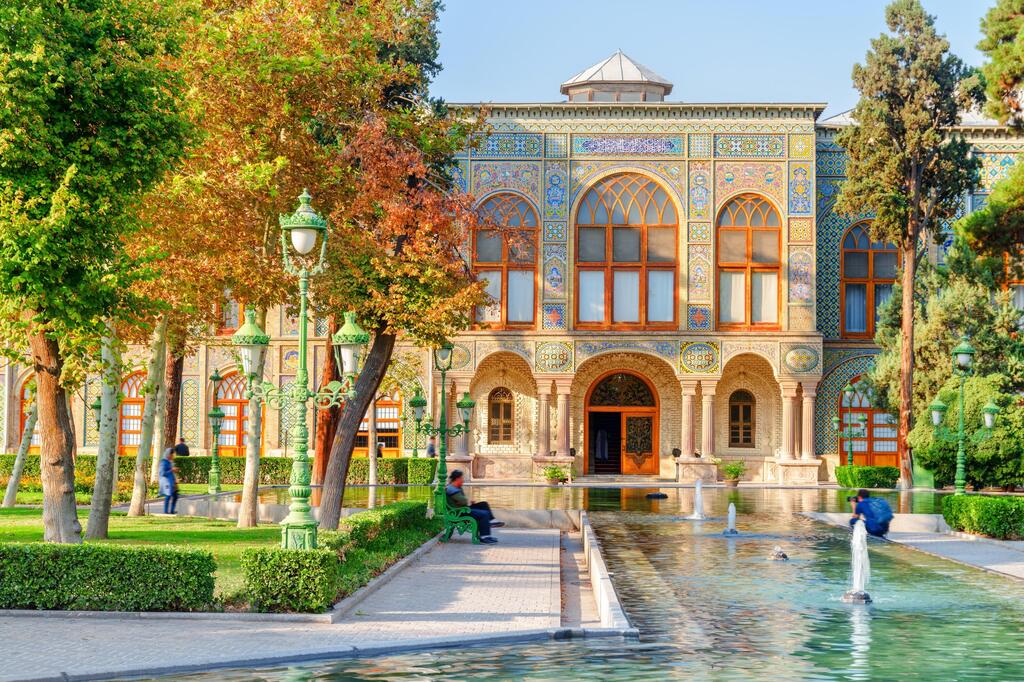
Beyond being Iran’s political capital, Tehran is a vast metropolis where striking modern architecture, remnants of imperial history, bold public buildings from the 1960s and 1970s, and dense neighborhoods telling entirely different stories about urban life coexist side by side.
For many years, some of the city’s most interesting architectural projects have remained out of reach for Western visitors, known mainly through photographs, social media and news reports. Even if the road there is still long, the possibility that Israelis might one day walk through Tehran — visiting its museums, squares and public buildings — no longer sounds entirely implausible.
Until then, and as a kind of preview of a city that might one day reopen to the world, we have gathered several of Tehran’s most intriguing and significant architectural projects. For now, we can only hope that these sites — and others — survive the war intact.
Tehran’s Main Gateway Tower
It is impossible to write about Tehran’s architecture without beginning with its most iconic and symbolically charged structure: Azadi Tower.
The striking monument, located at the western entrance to the city near the airport, has for decades served as Tehran’s symbolic gateway — a meeting point between imperial heritage, modernist aspirations and the revolution that transformed Iran beyond recognition.
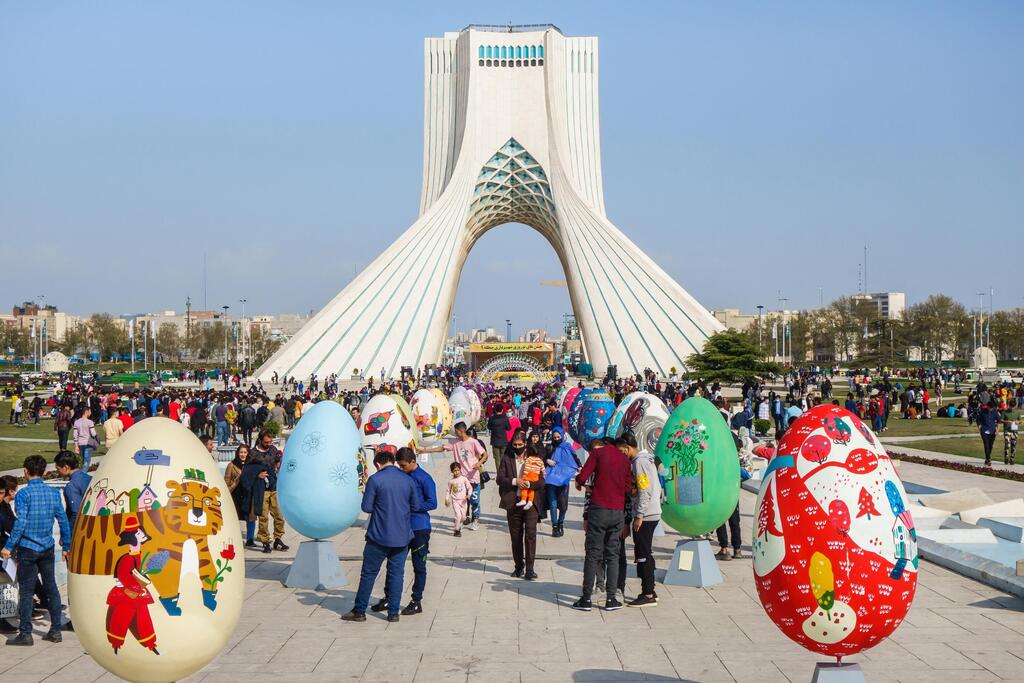
Azadi Tower at the western entrance to Tehran
(Photo: Poliorketes/Shutterstock)
The tower was built in 1971 as part of the celebrations marking 2,500 years of the Persian Empire, initiated by Mohammad Reza Shah Pahlavi. Originally called Shahyad Tower, it was conceived as a monument glorifying Persia’s royal history and the achievements of the Pahlavi dynasty, expressing a vision of a modern, secular state deeply connected to its ancient heritage.
After the 1979 Islamic Revolution, its name was changed to Azadi Tower — “Freedom Tower,” ironically enough — a change that vividly illustrates how the same structure can be loaded with opposing ideological meanings depending on the spirit of the times.
The tower was designed by architect Hossein Amanat, a Canadian of Iranian origin who won a public design competition at just 24 years old. His design combines motifs from traditional Persian architecture — arches and monumental proportions — with the clean modernism of the 1970s.
The result is a building that appears both ancient and innovative, local and universal.
Amanat’s personal story adds another layer. The architect belongs to the Baháʼí faith, a community persecuted today by the ayatollah regime. Since the revolution he has lived in Canada and cannot return to Iran. Among his works is also the arch in the Baháʼí Gardens in Haifa — a popular and striking tourist site.
Thus, one of Tehran’s most recognizable symbols also has a deep connection to the Israeli landscape.
Azadi Tower is not merely an urban landmark but a mirror reflecting modern Iranian history — its ambitions and upheavals. For anyone who might one day visit Tehran, it would likely be the first stop: both a physical and symbolic gateway to the city’s architectural and political story.
The Grand Persian Palace
Another central and impressive structure in Tehran’s landscape is Golestan Palace, one of the city’s most important and symbolic historical sites.
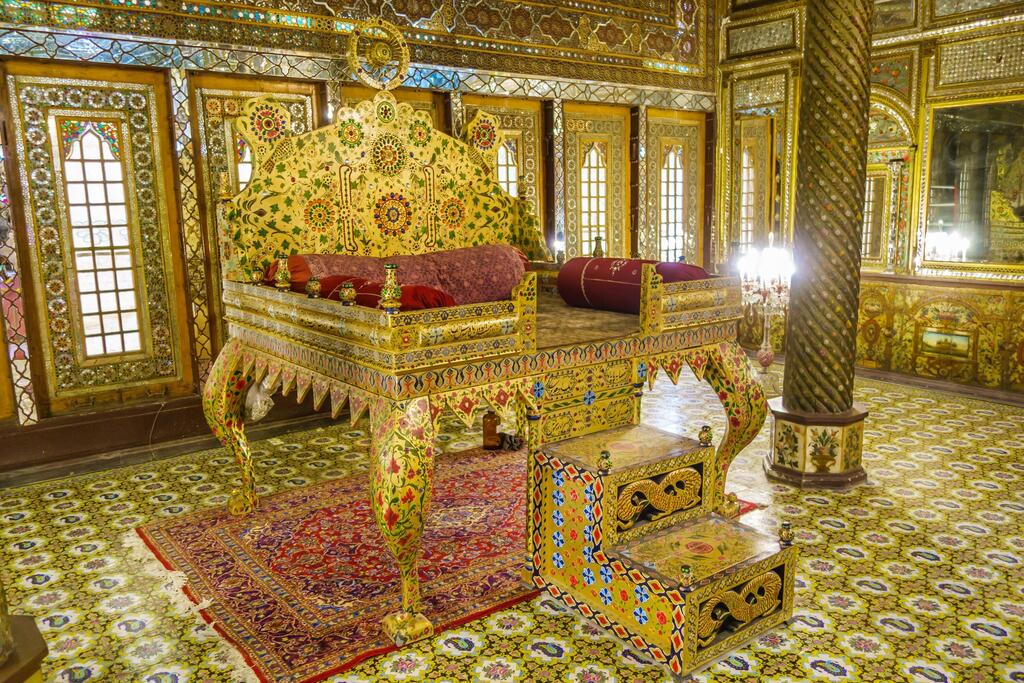
The Shah's historic Sun Throne in the Hall of Mirrors at Golestan Palace
(Photo: Poliorketes, Shutterstock)
This royal palace served as the seat of power for the rulers of the Qajar dynasty and is located in the historic heart of Tehran. The complex has been designated a UNESCO World Heritage Site due to its architectural and cultural significance and as a testament to Tehran’s emergence as a modern capital.
The palace’s origins date back to the 16th century, when Shah Tahmasp I ordered the establishment of a fortified center at the site. However, the architectural form familiar today largely took shape during the Qajar era in the 18th and 19th centuries, when the palace became a political, ceremonial and cultural hub.
During this period, lavish halls, inner courtyards, colorful ceramic tiles, mirrored decorations, ornate ceilings and elements blending Persian traditions with European influences were added — reflecting Iran’s relative openness to the world at the time.
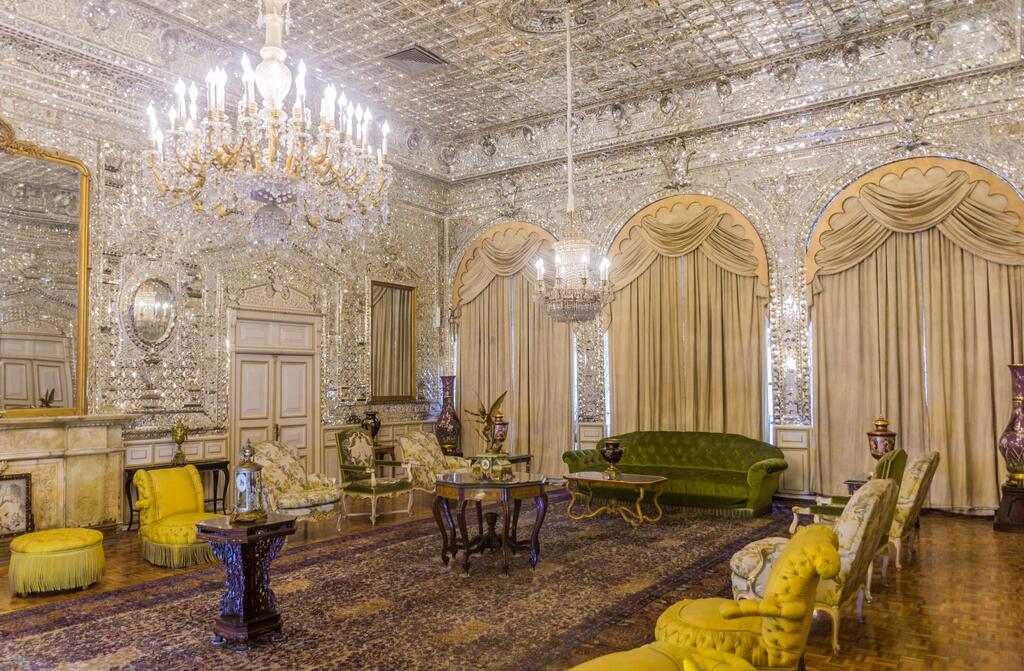
Golestan Palace in Tehran
(Photo: Matyas Rehak/Shutterstock)
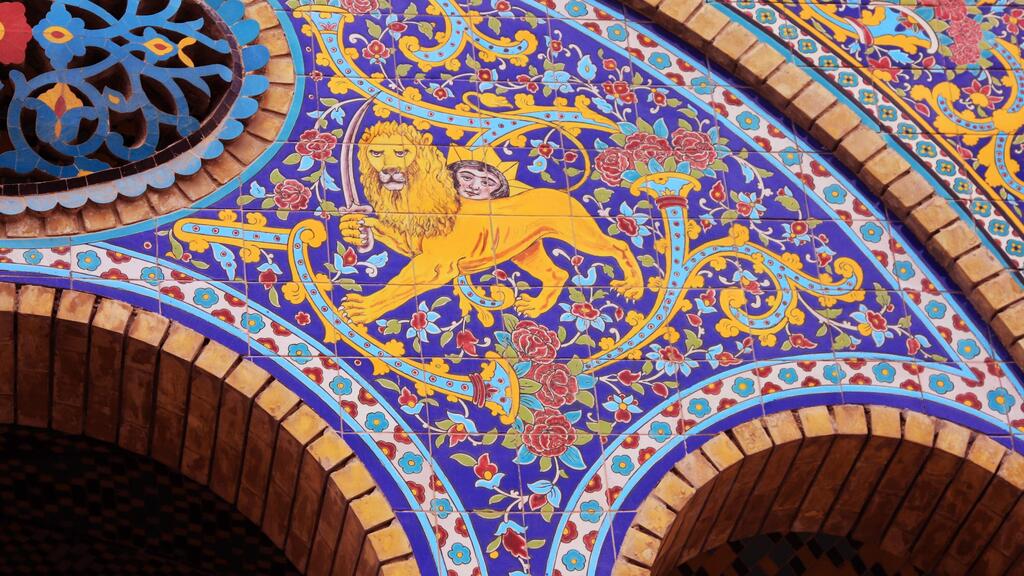
The symbol of the lion at Golestan Palace
(Photo: Venus S/Shutterstock)
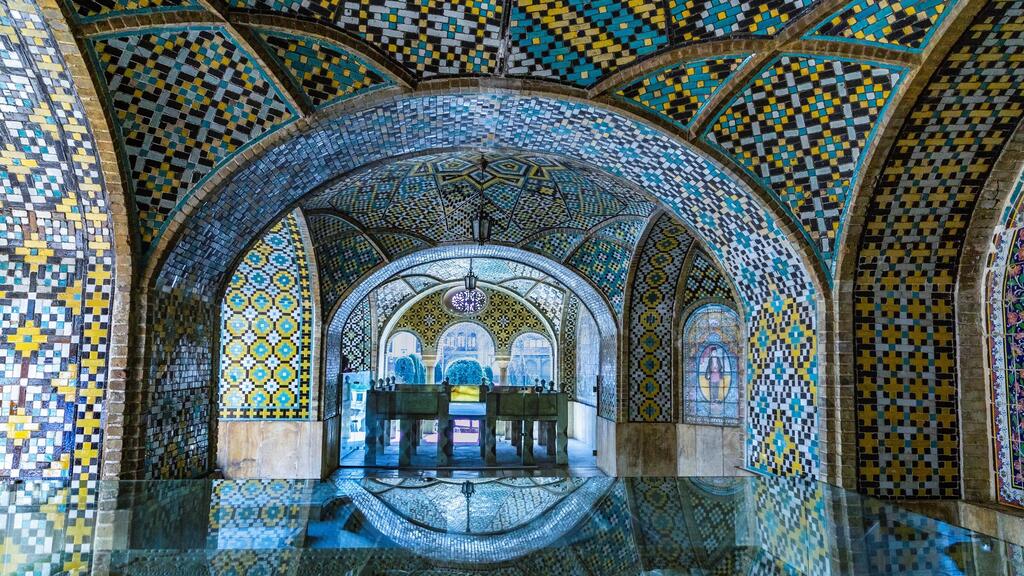
Golestan Palace in Tehran
(Photo: Serdar Aydin/Shutterstock)
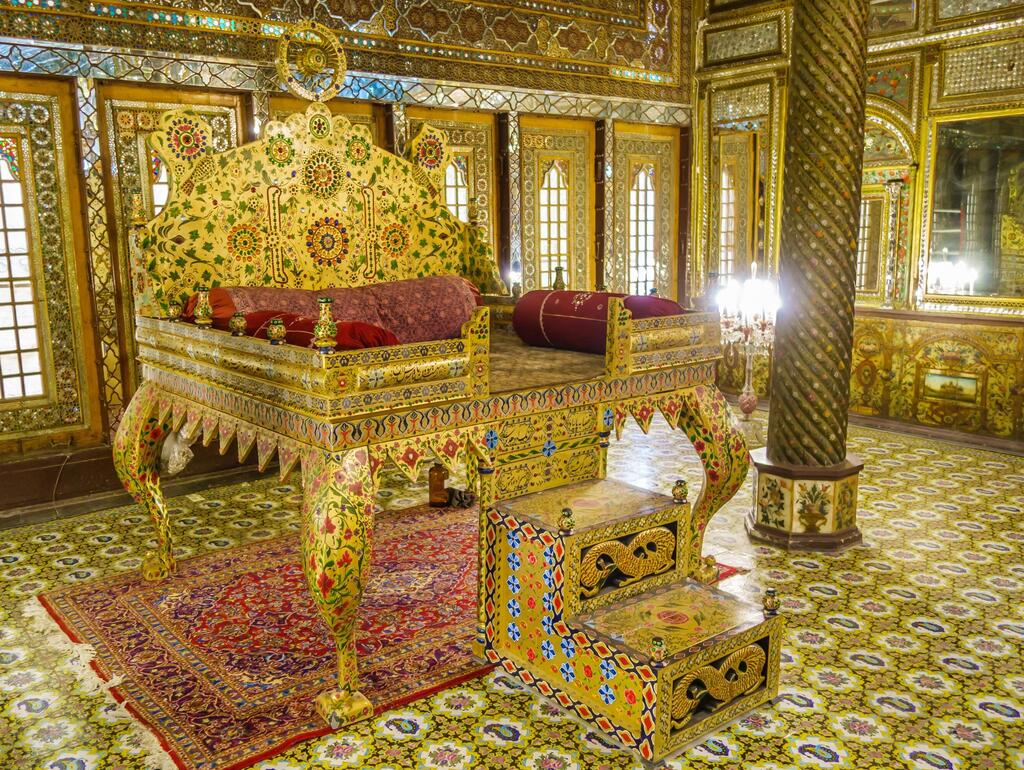
Shah's historic Sun Throne in the Hall of Mirrors at Golestan Palace
(צילום: Poliorketes, shutterstock)
Golestan Palace stands today as a kind of historical island in the heart of a bustling metropolis, offering a rare glimpse into layers of time, royal ceremony and the architectural language that shaped Iran’s identity long before it became the capital of a revolutionary and closed regime.
Mosque that breaks the mold
Many Israelis are unaware that Tehran is one of the largest cities in the Middle East — a true megacity with about 10 million residents, roughly the size of Israel’s entire population.
The sprawling metropolis stretches across a wide valley at the foot of the Alborz mountain range — a dense, layered city where government centers, residential neighborhoods, busy traffic arteries and expansive public spaces exist side by side.
Across the city stand more than 2,000 mosques, ranging from traditional historic structures to contemporary projects attempting to redefine religious architecture in Iran.
One of the most intriguing among them is Vali-e-Asr Mosque, which looks nothing like the typical mosque with domes and minarets.
Designed in a contemporary neo-modernist style, it is considered one of the most unusual architectural projects built in Iran in the past decade.
The building has eight floors — four above ground and four below — and rises organically from street level through a series of curved surfaces. Rather than towering as a closed monument, it blends into the street line, creating a built topography resembling a wave that continues the urban fabric.
Beyond its unusual form, the mosque functions as an active part of the open public space. Alongside the prayer hall are a library and classrooms, and the building also serves as a cultural and educational center.
Yet from the moment it was completed, the structure sparked controversy. Its lack of traditional domes and minarets provoked opposition from conservative and extremist circles who refused to recognize it as a “proper” mosque.
Under pressure, official religious activity at the site was halted in 2018 — illustrating the ongoing tension between innovative architectural creation and conservative religious perceptions.
The building was designed by Iranian architects Reza Daneshmir and Catherine Spiridonoff of Fluid Motion Architects. As such, it represents not only a bold architectural experiment but also a stage where debates over tradition, modernity and creative freedom play out in contemporary Tehran.
The unusual metro station
For Israeli readers, the very existence of a functioning metro system with several lines in Tehran may come as a surprise. While Israel’s metro still largely exists on paper, Iran’s capital has operated a vast metro network for years, serving millions of passengers daily.
One relatively new and particularly intriguing structure is Meydan-e-Jahad Metro Station, one of the most notable public transportation stations built in recent years.
Located at a busy traffic junction in the city center — long associated with heavy congestion and near-total dominance by private vehicles — the station is part of a broader urban initiative to gradually transform Tehran’s transportation patterns and make the city more pedestrian-friendly after decades of car-oriented planning.
Rather than limiting themselves to a purely functional underground structure, the designers gave the station a clear urban presence above ground.
The station functions as an open transitional space that reorganizes the intersection, allowing safer pedestrian flow through bright spaces, wide staircases and passages connecting the street with the underground system.
In this way, the station becomes not just transportation infrastructure but an urban element seeking to repair a complicated public space and create a new everyday experience in the heart of the city.
Designed by the local firm KA Architecture Studio, the project has received significant international recognition. It won several professional awards, including the prestigious RIBA International Prize for 2024 — a rare achievement for an Iranian urban infrastructure project.
The award demonstrates that even under political and economic constraints, architecture in Tehran continues to produce moments of innovation and global influence.
Tehran’s 'Book Garden'
In a country where literary censorship is official government policy, the existence of a massive book complex on such a scale seems almost paradoxical.
Yet in Iran stands what many consider the largest bookstore in the world: Tehran Book Garden.
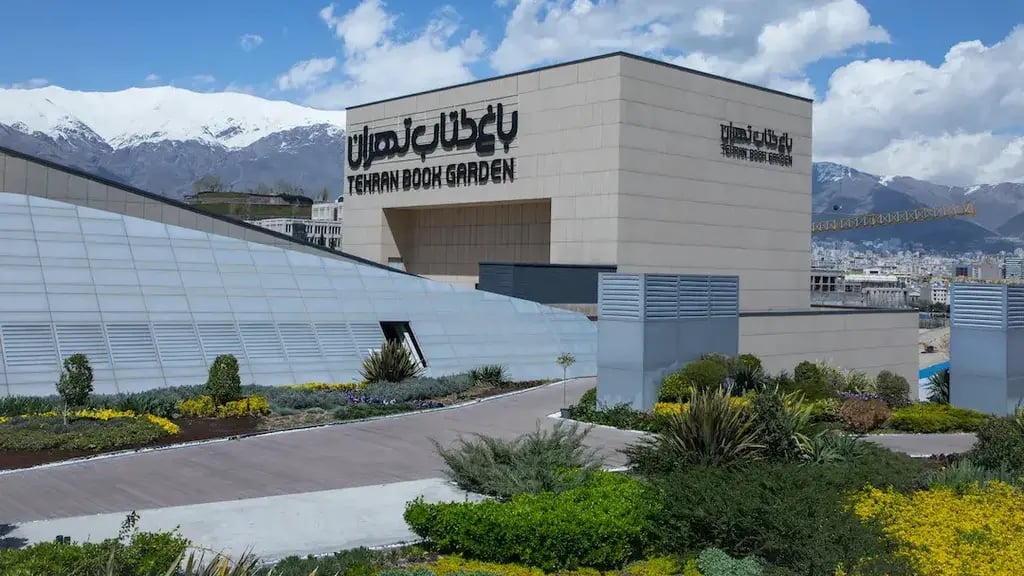
Tehran Book Garden
(Photo: From Tehran Book Garden website)
Located in the Abbasabad Hills in the northeast of the city and inaugurated in 2016, the complex is not a bookstore in the conventional sense but a vast cultural center dedicated entirely to books, knowledge and public activity.
Instead of merely dense rows of shelves, the complex combines several specialized bookstores with the National Library of Iran, the national archives, art galleries, theaters and activity spaces for children and youth.
The building spans about 110,000 square meters, making it one of the largest cultural structures built in Iran in recent decades.
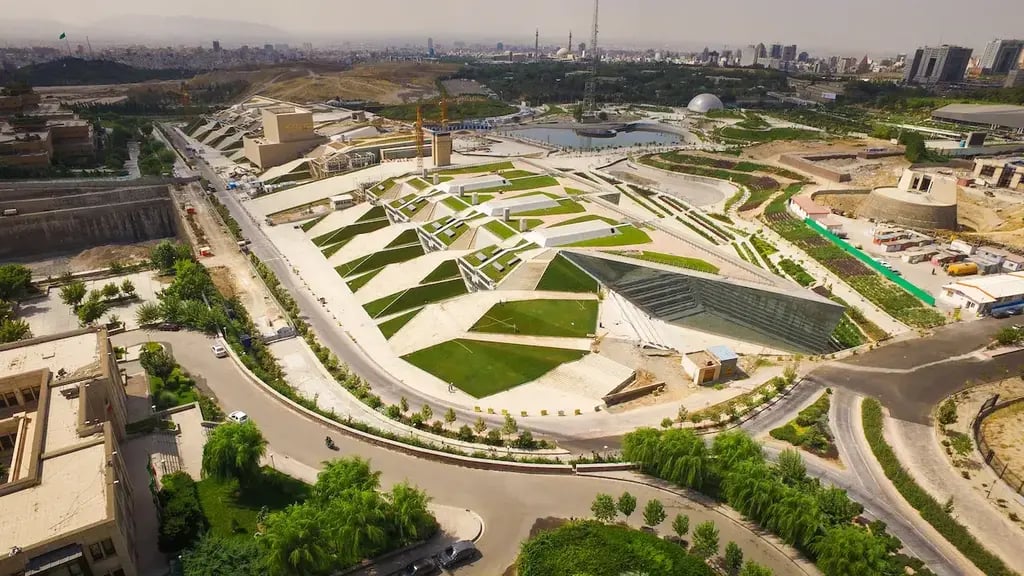
Tehran Book Garden
(Photo: From Tehran Book Garden website)
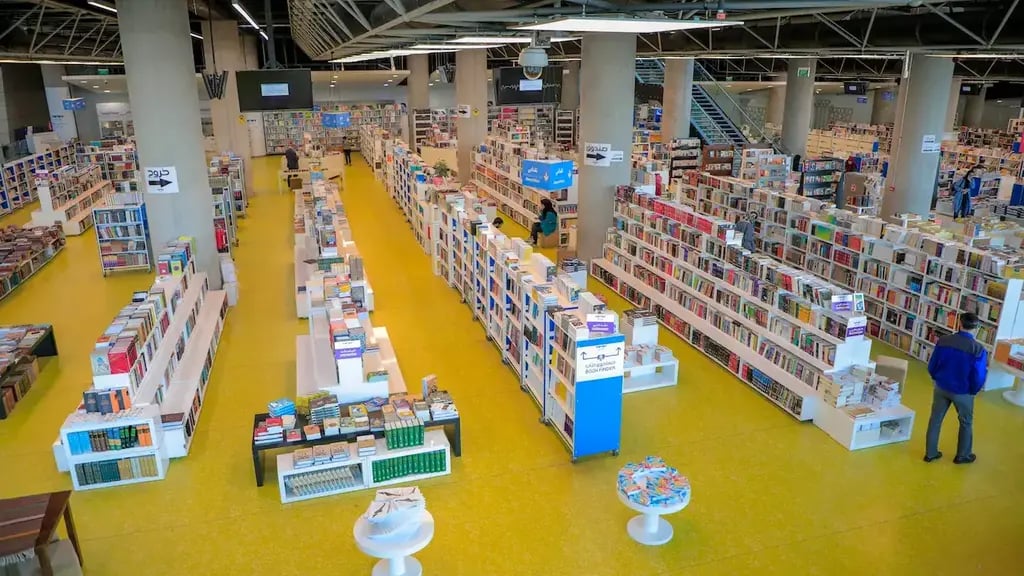
Tehran Book Garden
(Photo: From Tehran Book Garden website)
Above it stretches a vast green roof functioning as a public park — an urban meeting space combining culture, leisure and landscape, offering views of both the city and the surrounding mountains.
The project was designed by Iranian architect Sam Tehranchi, founder of the architecture firm Design Core 4S, established in Tehran in 1999 and considered one of the leading firms in the local architectural scene.
Tehranchi, who opposed the regime, was forced to leave Iran and now lives in Canada.
Like many architectural projects in Tehran, Book Garden reflects the constant tension between aspirations for cultural openness and political constraints. It is a structure that presents a vision of knowledge, generous public space and investment in culture — even in a reality where freedom of expression remains under close supervision.