

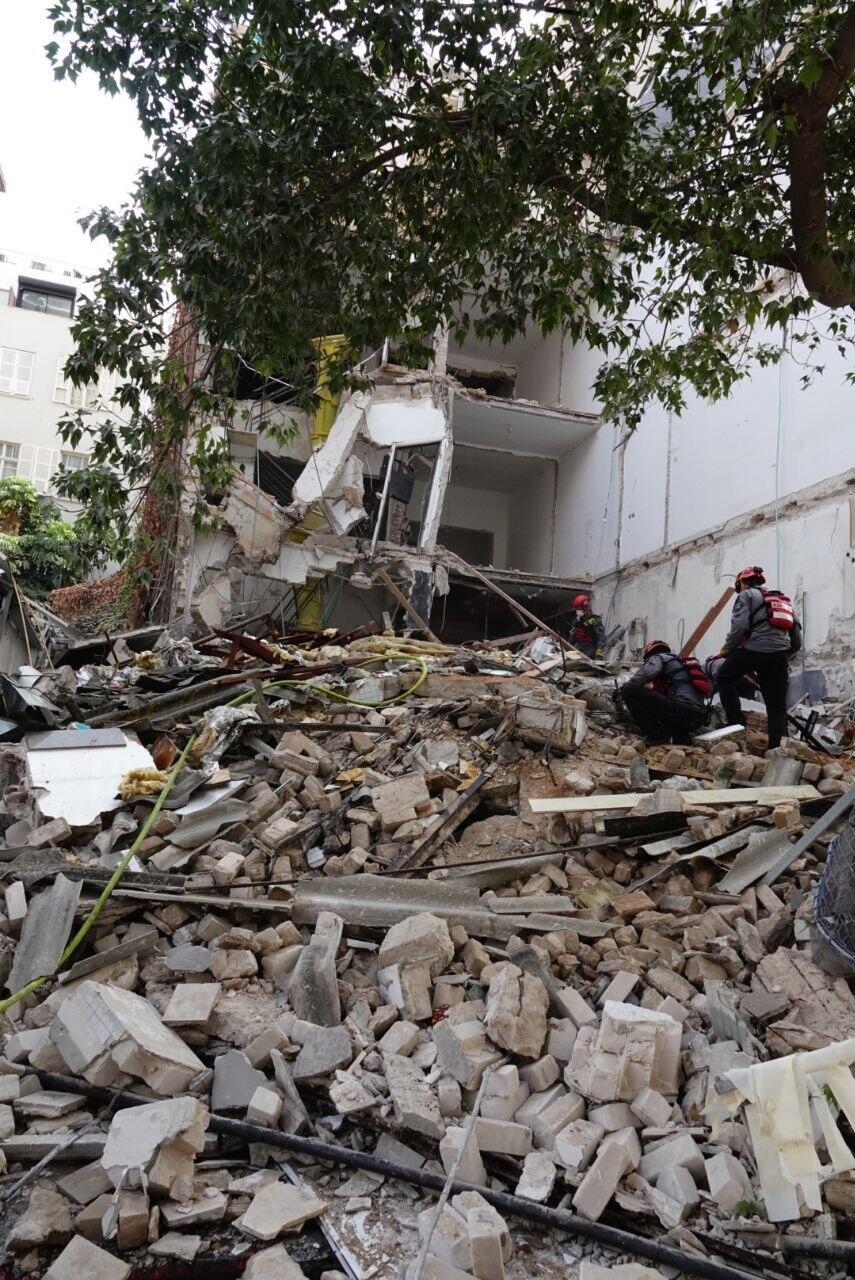
Part of an unoccupied three-story apartment building undergoing renovation collapsed Wednesday in central Tel Aviv. Five construction workers managed to escape before the collapse, and no injuries were reported.
The building on Nahalat Binyamin Street had previously been declared unsafe but was removed from the Tel Aviv municipality's list of dangerous buildings in February 2024 after repairs were completed, according to municipal documents.
Footage of the building collapse


The Labor Ministry said Wednesday that the construction site, where work was being carried out under TAMA 38, an Israeli urban renewal program designed to strengthen older buildings to withstand earthquakes, had been operating without the legally required notification to the ministry's Occupational Safety and Health Administration. Inspectors also found that no construction site manager had been appointed, as required by law.
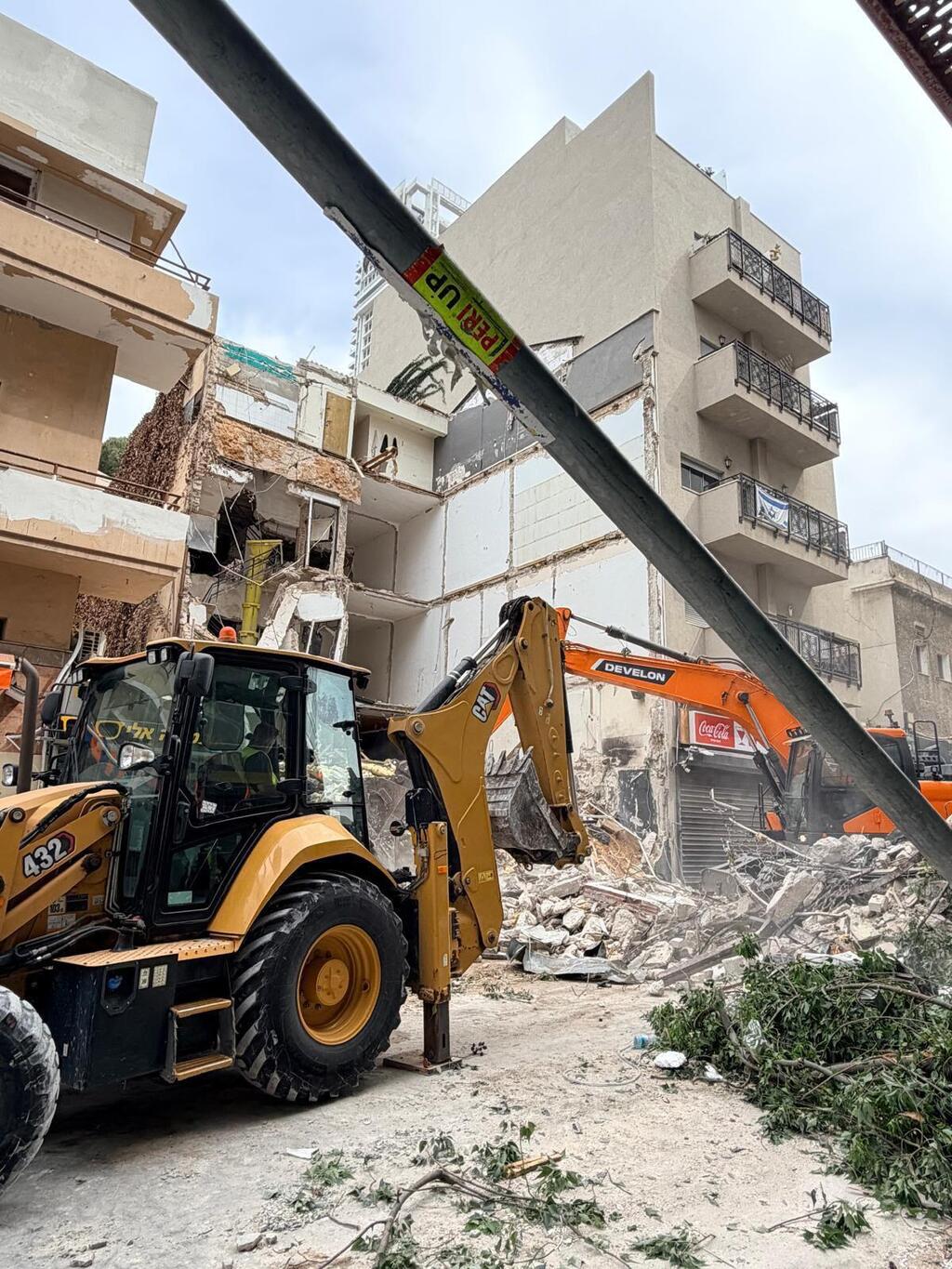
Following the findings, ministry inspectors issued a safety order closing the site for an extended period. Dozens of residents were evacuated from three neighboring buildings pending the completion of inspections and debris removal.
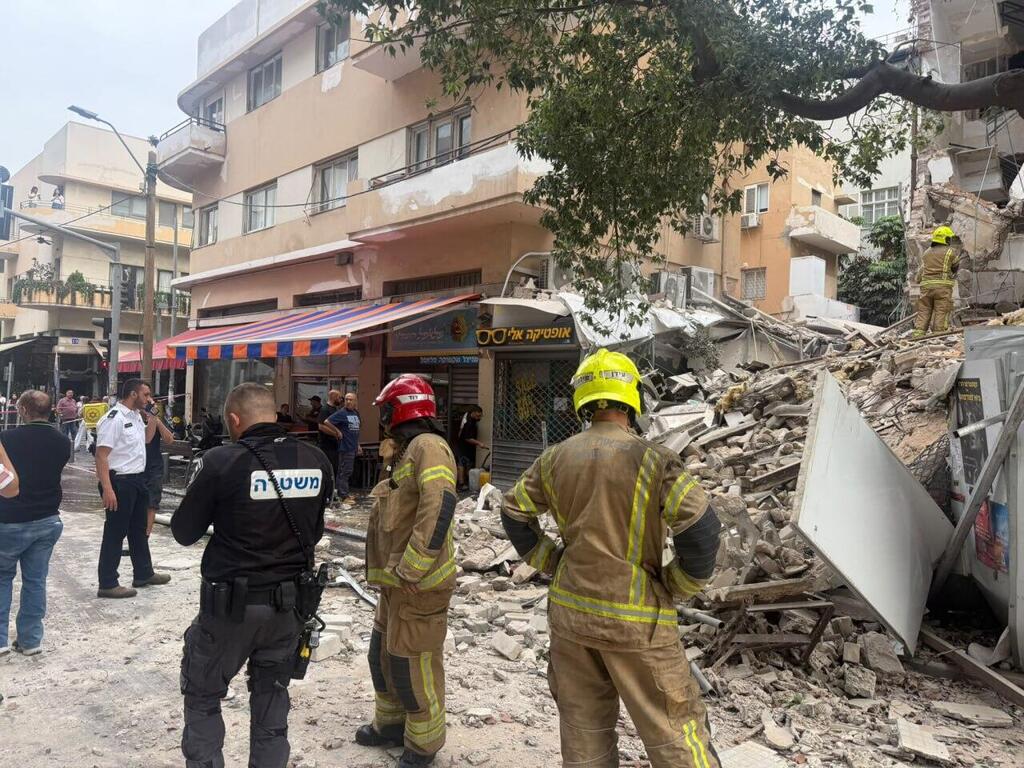
Emergency services were called to the scene at approximately 9:30 a.m. Firefighters searched the rubble to rule out the possibility of people being trapped, while police and Magen David Adom, Israel's national emergency medical service, confirmed that no injuries had been reported.
Dramatic footage captured the moment the building collapsed, showing pedestrians, including a man sitting on a nearby bench, fleeing to safety. Another video showed a cloud of dust engulfing a passing bus as the structure gave way.
Oren, the owner of the nearby Falafel Hasharon restaurant, described the moments after the collapse.
"I had just stepped outside to take out the trash, and when I came back, I saw a huge cloud of dust," he said. "I didn't understand what had happened. I thought they had demolished something because they were bringing in construction dumpsters. I ran over and, thank God, saw the workers who had miraculously escaped."
Simcha Simanduyev, a paramedic and head of Magen David Adom's Tel Aviv station, said emergency crews responded with substantial resources.
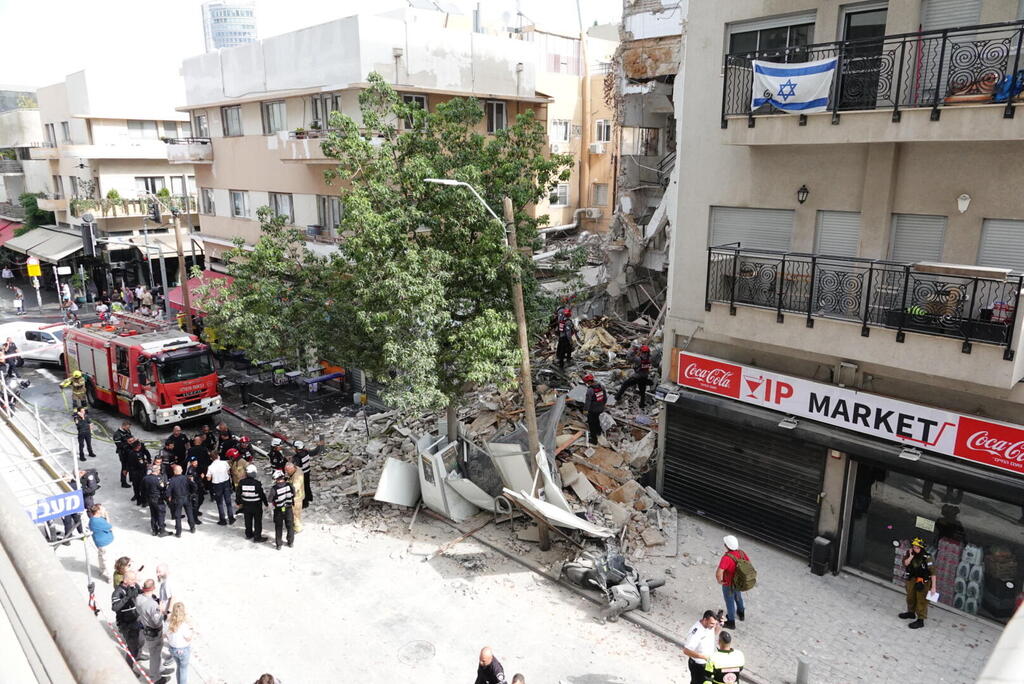
(Photo: Shaul Golan)
"At around 9:30 a.m., we received a report of a building collapse on Nahalat Binyamin Street," he said. "We arrived with large teams, and fortunately, no one was injured."
The Tel Aviv-Jaffa municipality urged residents to avoid the area and said municipal engineering officials were working alongside emergency and security personnel.
Building previously declared dangerous
According to Tel Aviv municipal records, a dangerous-building case was opened in 2023 after structural defects were discovered at the property.
In a report dated January 30, 2024, building engineer Yosef Karni stated that concrete repairs and restoration work had been carried out in several areas, including balconies, stairwells and walls. Karni determined that the work had been completed professionally and that the defects had been corrected under his supervision.
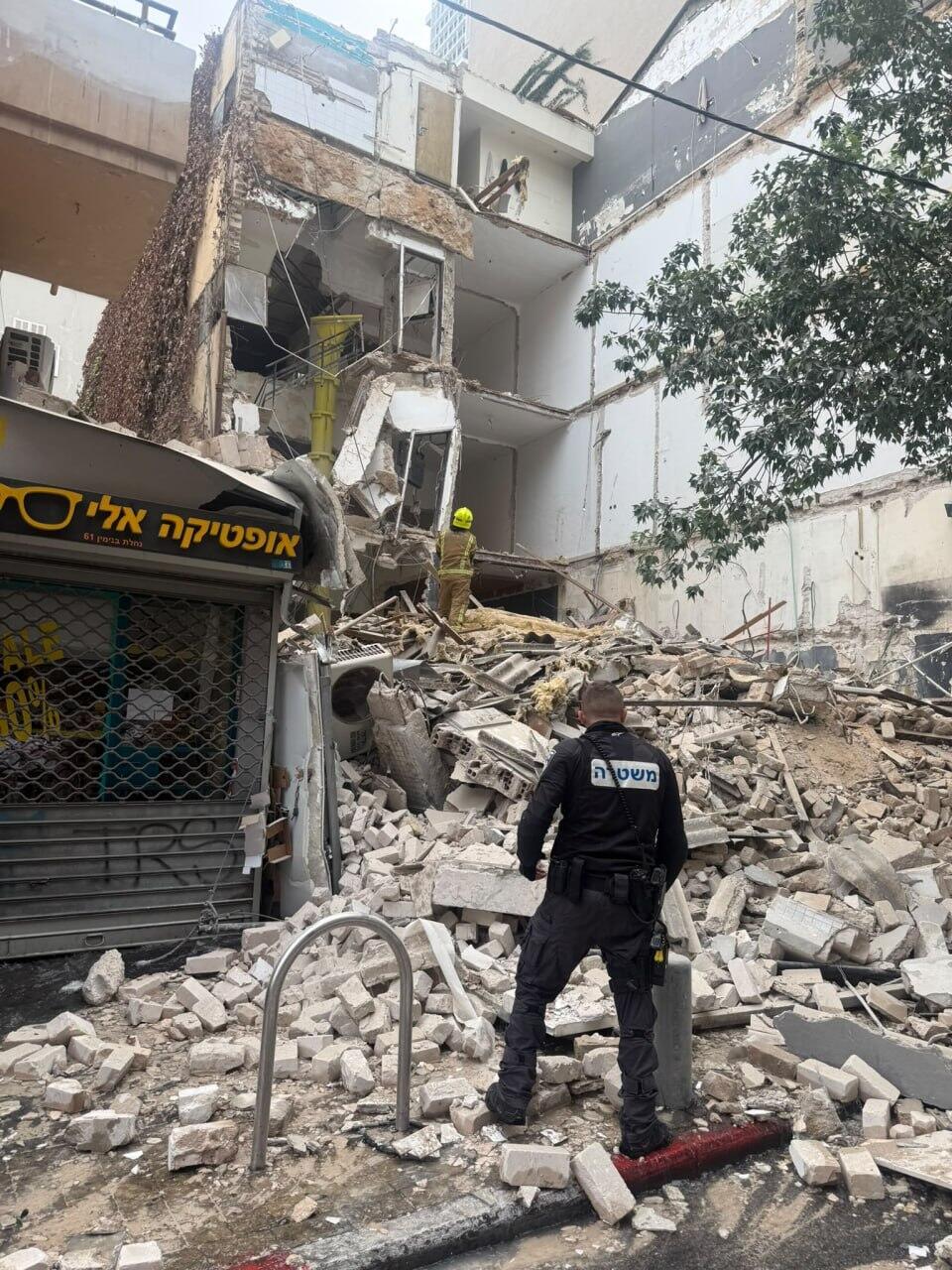
(Photo: Israeli Police Spokesperson)
A municipal inspection on February 11, 2024, found that the necessary repairs had been completed and that an engineer had certified the building was no longer dangerous. The case was subsequently closed on February 13, 2024, and the property was removed from the municipality's list of dangerous buildings.
The municipality confirmed that the building was undergoing a TAMA 38 project involving structural reinforcement and the addition of floors.
"The building had previously been included on the list of dangerous buildings, and an order had been issued to renovate its balconies," the municipality said. "The work was completed and the case was closed in 2024."
The municipality added that representatives of its engineering department were at the scene and that an information center had been established for residents affected by the evacuation.
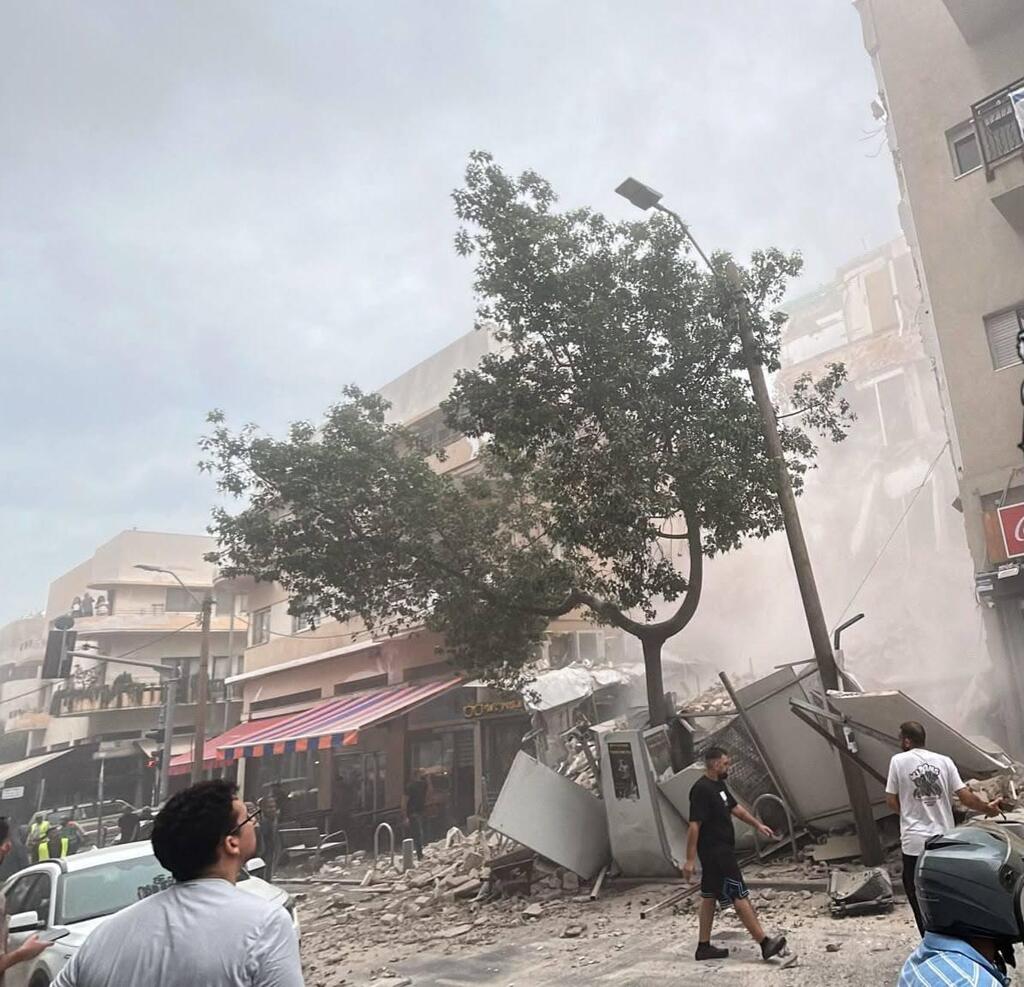
The cause of Wednesday's collapse remains unknown, and the available documents provide no indication of a connection between the previously repaired defects and the incident. Nevertheless, the building's history and the ongoing construction work raise questions about its structural condition before the collapse, the work carried out and whether it was properly supervised.
According to municipal records, the project's real estate developer is Shlomi Tahori, while the construction contractor is Yesodot Mutzakim Ltd.
Labor Ministry: Site operated without required notification
The Ministry of Labor said inspectors found that the construction site was operating without the required notification to the ministry's safety authorities and had no appointed site manager, both violations of the law. The ministry said the collapse would be investigated by municipal engineers and warned that unregistered construction sites can endanger workers and the public.
Chief Labor Inspector Hezi Schwartzman said the incident involved a TAMA 38 construction project to add floors to an existing building.
(Photo: Israeli Police Spokesperson)
"This was a TAMA construction project involving an addition to a building that failed for reasons that will be investigated at the site," Schwartzman said. "The site was not reported to the Labor Ministry and posed a danger to workers and the general public. I call on local authority heads to conduct proactive inspections to identify such work and stop it immediately."
Schwartzman also referred to three new safety regulations scheduled to take effect next week. The measures will expand developers' responsibilities, establish new safety positions, including safety controllers and site managers, revise training requirements for working at heights and introduce mandatory training for foreign workers newly arriving in Israel.
Were construction works carried out according to the permit?
Despite the violations identified by the Ministry of Labor, the building had received a construction permit for a TAMA 38 project that included reinforcing the existing structure, adding new construction and modifying its structural framework.
Attorney Ziv Groman, whose firm specializes in real estate and urban renewal, said the permit contained detailed conditions governing structural reinforcement and construction work. Investigators must now determine whether those conditions were met.
"We need to be very careful about drawing conclusions at this stage," Groman said. "At present, the cause of the building's collapse is still unknown, and it is too early to determine whether there is a connection between the collapse and the work carried out at the site."
He said investigators would need to establish precisely what work had been performed, how far the project had progressed, whether the requirements for beginning construction had been fulfilled and whether any of the work contributed to the collapse.
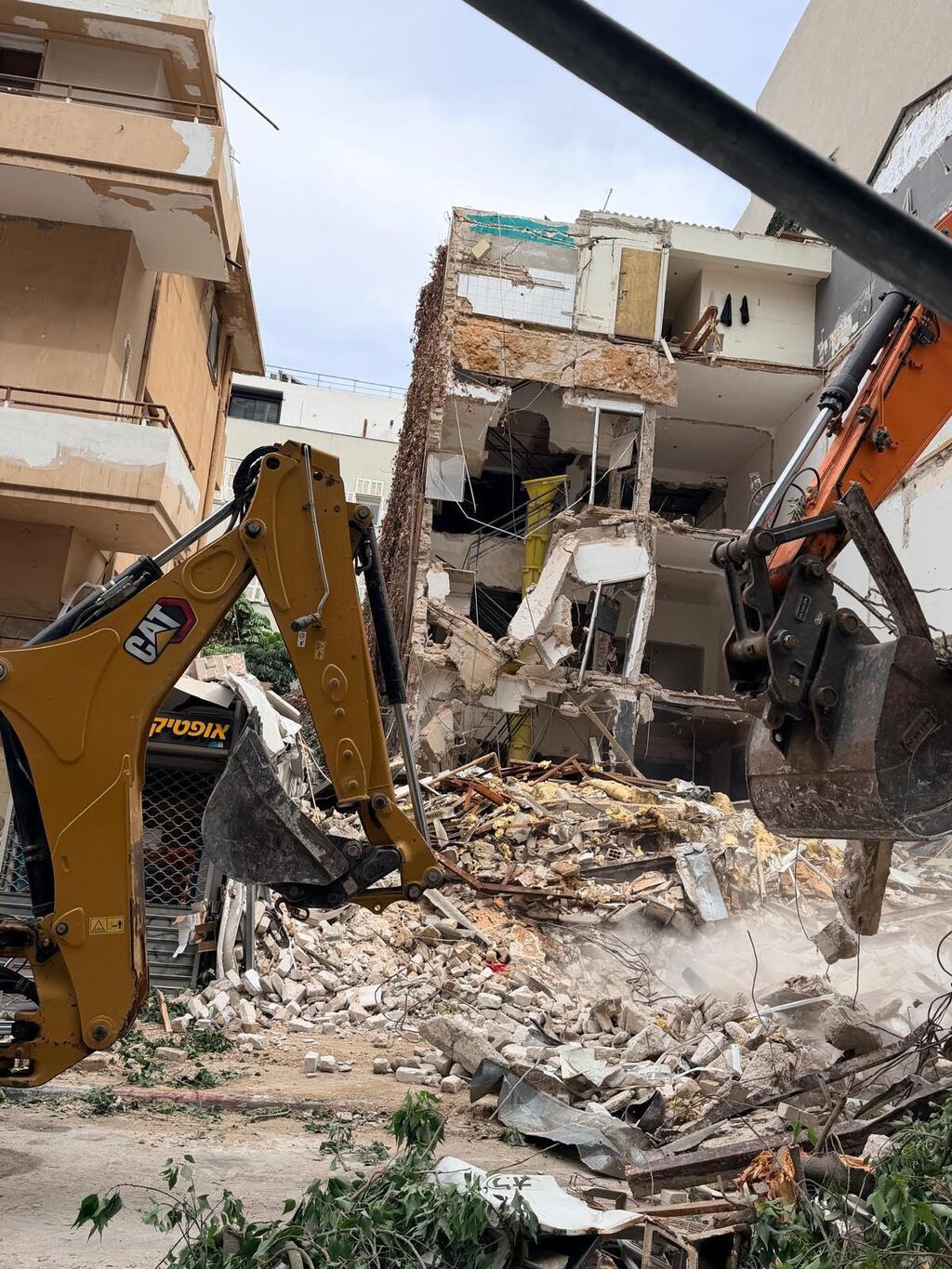
The collapsed building at 63 Nahalat Binyamin St. in Tel Aviv
(Photo: Ministry of Labor)
Groman added that the findings could have significant legal and insurance implications.
If the collapse is found to be connected to construction activity, the project's contractual arrangements and insurance policies will need to be examined, including coverage for construction work and the liability of the parties involved.
If the collapse is found to be unrelated to the work, investigators will need to examine the building's insurance coverage and the policies held by apartment owners to determine whether they apply to such an incident.
Engineering expert: 'You can renovate the exterior, but the building is still old'
Gilad Freiman, vice president of Grouchko Engineers and a member of the Association of Construction and Infrastructure Engineers, said reinforcing and expanding older buildings presents engineering challenges that do not necessarily arise in new construction.
He explained that buildings constructed decades ago often lack complete engineering documentation detailing their original construction or subsequent modifications.
Some older buildings in Tel Aviv were built using methods and standards that differ significantly from those in use today. As a result, construction crews may encounter structural defects that could not have been identified before work began.
(Photo: Ministry of Labor)
"When carrying out reinforcement and expansion work on buildings that are several decades old, it is important to remember that complete engineering documentation or accurate information about the original construction and subsequent changes is not always available," Freiman said.
"In general, damage to supporting columns or other structural elements, uncontrolled infrastructure work or excessive loads placed on parts of a building can compromise its stability and even cause it to collapse."
Freiman emphasized that he was not familiar with the specific circumstances of Wednesday's incident and that his comments should not be interpreted as an explanation for the collapse.
He also cautioned that even extensive reinforcement work does not transform an aging structure into a new building.
"It's still an old building, with construction materials that have deteriorated over some 90 years, particularly because of its proximity to the sea, which makes it more vulnerable to corrosion," he said.
"You can compare it to an elderly person who undergoes plastic surgery and looks decades younger, but his heart is still not that of a 20-year-old, and he won't be able to run a marathon."
Freiman said reinforcing a building's structural framework, renovating its exterior and adding floors can significantly improve safety but do not necessarily address every defect in the original structure.
For that reason, he said, demolishing an old building and rebuilding it according to modern standards may be preferable to reinforcing the existing structure whenever feasible.
He also identified several warning signs that could indicate structural instability, including rapidly developing cracks, unusual noises suggesting movement and doors or windows that suddenly begin sticking.
Such signs should prompt an immediate inspection by qualified professionals, he said.
Freiman stressed that the risks associated with structural instability are not limited to a building's occupants but can also threaten pedestrians and neighboring properties.