

In recent weeks, talk has centered on the slowdown in Tel Aviv’s residential real estate market. Acro, a developer focused on the city, sold just 11 apartments in the second quarter, compared with 98 in the same period last year. And Noam Graif, CEO of Amram Abraham Real Estate, told Ynet’s sister publication Calcalist this week: “If we were building only in Tel Aviv, we’d be facing a major crisis.” Unlike Acro, Amram Abraham has projects outside the city. But MyTown, another developer, is heavily concentrated in Tel Aviv.
MyTown, controlled by CEO and chairman Yossi Hasson (35.9%), went public in Tel Aviv last December after raising NIS 62 million in a bond issue. The company specializes in urban renewal, and the bulk of its pipeline is located in Tel Aviv.
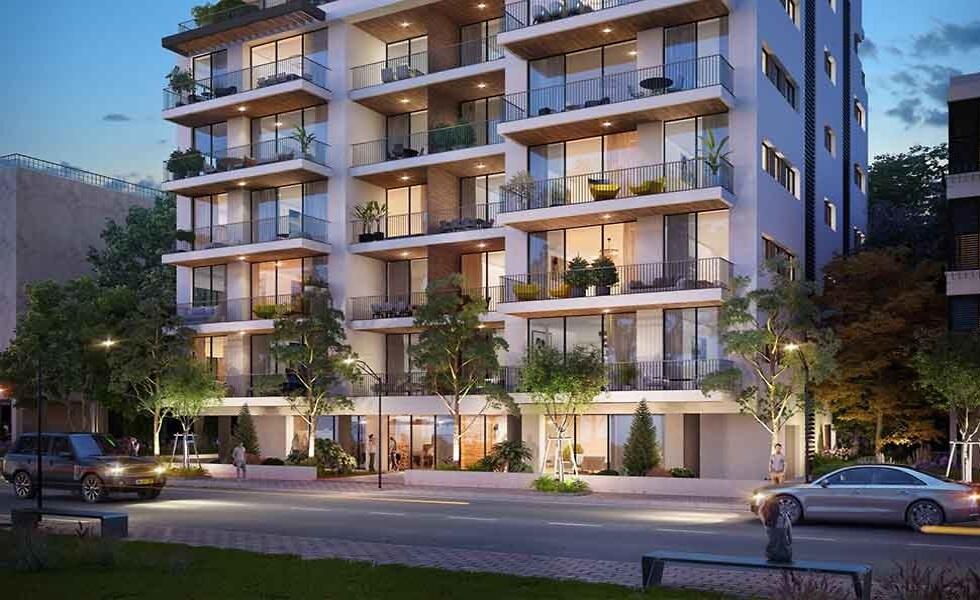
(Photo: MyTown)
The company is currently developing or marketing 12 projects in the city and another in Ramat Hasharon, totaling 109 residential units for sale. Of these, 50 units have already been sold. Yet the slowdown Graif warned about is evident in MyTown’s results: since the start of 2025, the company has not sold a single apartment in Tel Aviv, after closing 17 sales throughout 2024.
Nine of those projects are located in Tel Aviv’s Districts 3 and 4, areas particularly hard-hit by the market downturn due to a relatively high supply of new projects, stubbornly high asking prices and overall uncertainty stemming from the war in Gaza and Israel’s volatile political climate. Buyers who are not under pressure to purchase are choosing to wait.
The company attributed the lack of sales to two main reasons. First, it overhauled its sales and marketing division in recent months, bringing in a new vice president of marketing and sales and switching advertising agencies. As a result, the company said it did not actively market its projects during the quarter, though sales campaigns are expected to resume soon.
Second, MyTown noted in its quarterly report that, against the backdrop of slower sales in Tel Aviv, its long-standing strategy has been to sell units at premium prices. The company said this approach has allowed it to remain relatively low-leveraged, reduce its dependence on bank financing and maintain a leaner inventory of unsold apartments.
For comparison, the current liabilities of Anshei Ha’ir, another Tel Aviv-based urban renewal developer, totaled NIS 78 million in bank and non-bank credit as of the end of June, most of it tied to projects under construction. By contrast, MyTown reported just NIS 16 million in the same line item. Anshei Ha’ir is currently building nine projects in Tel Aviv with 101 units on the market and has sold 12 apartments since January.
In other words, MyTown acknowledges the slowdown—“Yes, we haven’t sold a single unit this year”—but stresses that it entered this period with strong liquidity and low leverage, which it says leaves the company well positioned to weather the downturn.
As part of that conservative approach, MyTown says it “rarely offers buyers purchase incentives,” a policy it followed both in 2025 and in the previous year. Other developers have leaned heavily on such discounts: Acro offered incentives on 69% of its apartment sales last year, and on 94% of sales so far this year.
Like its peers, MyTown books revenue based on project progress, but the absence of new sales this year weighed heavily on results. Second-quarter revenue fell 64% year-on-year to NIS 11.8 million, a drop the company attributed to a lack of fresh sales in active projects and the completion of four projects earlier this year.
Beyond weak sales, the company was also hit by delays and cost increases due to the prolonged war in Gaza and the June war with Iran, which extended construction timetables and pushed up building costs. As a result, MyTown swung from a gross profit of NIS 10 million in the second quarter of last year to a gross loss of NIS 1 million. Net loss attributable to shareholders was NIS 7.6 million, compared with a profit of NIS 1 million a year earlier. For January–June, revenue dropped 25% year-on-year to NIS 32 million, while net loss deepened to NIS 10.7 million, from NIS 1.8 million in the same period last year.
In a statement, MyTown said: “We are in advanced construction phases across multiple projects simultaneously, with exceptionally low credit utilization, which provides the company with flexibility and optimal timing for sales. We place special emphasis on the quality and standards of our projects. Unlike other players in the sector, we do not believe in aggressive marketing campaigns. The company continues to expand its business development activities, completing projects and delivering apartments to buyers while also exploring new partnerships and urban renewal initiatives across Israel.”