

Elif Eralp and Die Linke won Berlin’s state election on Sunday with 25.7% of the vote, more than doubling the party’s 2023 result and making it the strongest force in the German capital for the first time. Housing was at the heart of that victory: Eralp campaigned relentlessly on rents, affordability and the frustration of Berliners struggling to find somewhere to live.
The parallels with New York Mayor Zohran Mamdani were deliberate. Die Linke invested heavily in door-to-door organizing and social media, with the cost of living at the center of its message. Eralp also received coaching from Morris Katz, a strategist who worked on Mamdani’s campaign. German media were already calling her the “Spree-Mamdani” before the votes were counted.

But winning an election on Berlin’s housing crisis and solving it are two very different propositions.
Eralp’s program is sweeping. Die Linke wants to bring roughly 220,000 apartments owned by large private housing companies into public ownership, targeting companies with more than 3,000 units. It has also pushed for rent caps at publicly owned housing companies, tougher enforcement against excessive rents, a major expansion of social housing and a special tax on luxury homes worth more than €4 million.
The socialization proposal did not appear out of nowhere. In 2021, 57.6% of participants in a Berlin referendum backed a call for the city government to develop legislation transferring the housing stock of major private landlords into public ownership. Eralp has now promised to begin implementing that mandate “from day one.”
The problem is that the numbers, the law and the politics now become much harder.
Berlin’s own government expects the city to need 211,000 additional homes between 2026 and 2040, including 138,000 simply to ease the existing shortage. About 60,000 homes were completed between 2022 and 2025, despite rising construction and financing costs.
At the same time, Berlin is heading toward an estimated €4.6 billion financing deficit in 2026. Earlier official estimates of the compensation required to socialize large housing portfolios ran into the tens of billions of euros, though supporters of the plan dispute those figures and argue that the properties could largely finance themselves over time through rental income.
Then there is the coalition arithmetic. Eralp cannot govern alone and is seeking an alliance with the Greens and Social Democrats. The SPD has already signaled opposition to the socialization of large housing companies, while initial talks with the Greens have focused first on security, antisemitism and the protection of Jewish life before formal coalition negotiations begin. Eralp has said she stands for the protection of Jewish life and has distanced herself from incidents that have fueled accusations of antisemitism within parts of her party.
The supply problem
For developers, the more basic problem is supply.
An Israeli real estate developer who operates in Berlin and whose company owns hundreds of apartments argues that the city needs to make new construction easier rather than make investment less attractive.
“Instead of enticing real estate developers to launch new projects and create a construction boom that would give the industry oxygen, they are asking them to initiate projects where they either won’t make money or won’t see a return on their investment for many years,” said the developer, identified by his initials M.A.
He points to sharply higher building costs, wages and borrowing expenses, while banks are demanding more equity from developers than they did a decade ago. At the same time, he says, policymakers want developers to absorb those costs rather than pass them on through higher rents.
“No developer is going to do that,” he said.
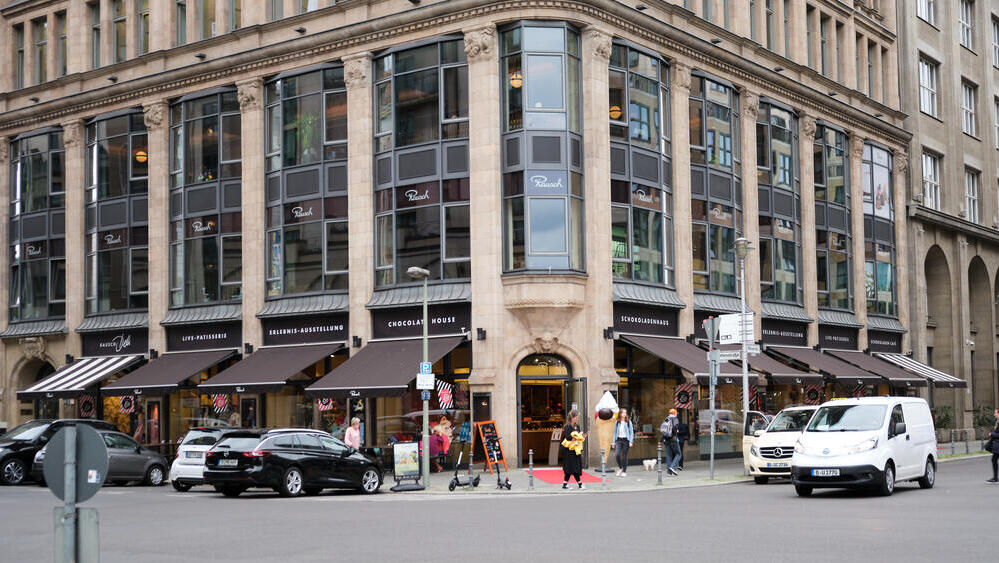
Central Berlin
(Photo: Paulleon / shutterstock)
His argument is that Berlin must also confront another politically difficult question: density.
“There are many developers who have explained to city officials that there is a limit to the amount of land available for construction in Berlin, and that you have to build upward,” he said. “Instead of a four-story building, build 10 floors. Instead of 12 apartments, you could have 40 on the same amount of land.”
According to him, proposals for taller buildings frequently run into objections over Berlin’s urban character, environmental considerations and planning restrictions. “You want to bang your head against the wall because you realize they aren’t looking for real solutions,” he said.
That is the developers’ case. Die Linke argues the opposite: that simply relying on private construction has failed to keep rents affordable and that transferring large housing portfolios into public ownership would reduce speculative pressure without preventing new homes from being built. The argument over which approach works is likely to become one of the defining battles of the next Berlin government.
Seven years looking for an apartment
Eralp’s own housing story helped make her campaign message unusually personal. She has said that she and her family have been searching for another apartment for seven years without success. She currently pays about €950 a month for a roughly 90-square-meter apartment in Kreuzberg, a comparatively favorable older lease in a city where moving can mean accepting a dramatically higher rent.
That illustrates one of Berlin’s housing-market distortions: tenants who already have affordable contracts have a strong incentive to stay, reducing turnover precisely when thousands of newcomers, students, migrants and growing families are looking for homes.
Eralp turned that frustration into a potent political message. Her campaign promised voters that government could intervene much more aggressively, protect tenants and make housing affordable again. On Sunday, enough Berliners agreed to give Die Linke its best result in the capital’s history.
What comes next is the harder test: turning rent caps, public ownership, new construction and higher taxes on expensive property into a workable governing program, while finding coalition partners, financing it in a city already facing a multibillion-euro deficit and somehow adding the homes Berlin says it desperately needs.