


The year 2025 will be remembered as a turning point for Israel’s luxury real estate landscape. While the broader housing market struggled with volatility and recorded a sharp slowdown in recent quarters, data from the Israel Tax Authority and Madlan point to an unexpected trend: Tel Aviv is losing its near-total dominance, making room for a notable comeback by Jerusalem and Herzliya Pituach.
From a historic villa in Jerusalem’s Talbiyeh neighborhood to the super-luxury towers on Rothschild Boulevard in Tel Aviv, perhaps the city’s last remaining stronghold, we have compiled the most expensive properties purchased over the past year.
The data was drawn from the Israel Tax Authority’s website and reviewed and refined by Madlan’s research team, which filtered out irregular transactions and consolidated deals that had been split.
It should be noted that several massive deals reported in the media this year have yet to be officially reported to the Tax Authority and therefore do not appear in this ranking.
1. Historic villa
Price: NIS 78,897,000 (650 sq.m.)
Location: Talbiyeh neighborhood, Jerusalem
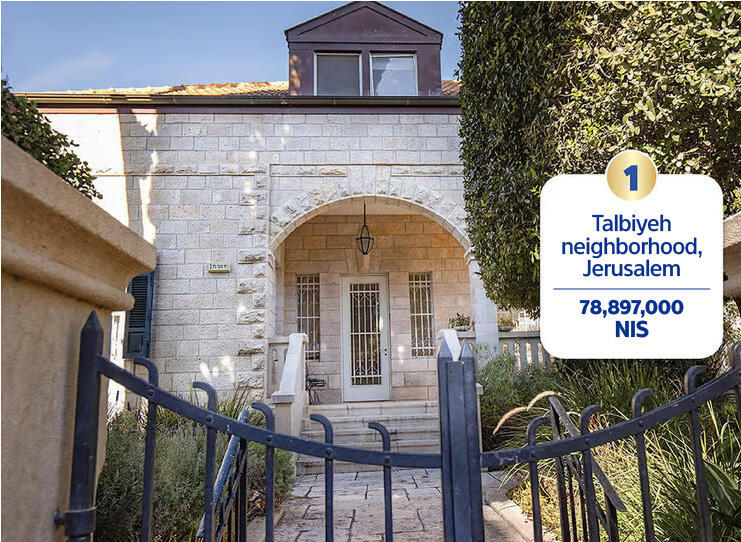
On April 10, 2025, a historic villa dating back to the 1930s was sold on Hovevei Zion Street in Jerusalem’s Talbiyeh neighborhood. The property once served the family of philosopher Martin Buber. The 650-square-meter villa sits on an 860-square-meter plot and is surrounded by a fruit tree garden. It retains its original preserved flooring, handcrafted wooden carpentry, exceptionally high ceilings and unusually thick walls. The seller was American billionaire Michael Steinhardt, an early pioneer of the hedge fund industry. The buyer was Canadian billionaire Ronnen Harary, co-founder of toy giant Spin Master, which owns brands such as PAW Patrol, Hatchimals and Bakugan.
An even bigger transaction was reported in Tel Aviv in November, in which a foreign buyer purchased an entire floor of roughly 600 square meters in the Rothschild 10 luxury tower for about NIS 106 million. That deal has not yet been reported to the Tax Authority.
2. Six-room villa
Price: NIS 78 million (1,700 sq.m.)
Location: Hadar Street, Caesarea
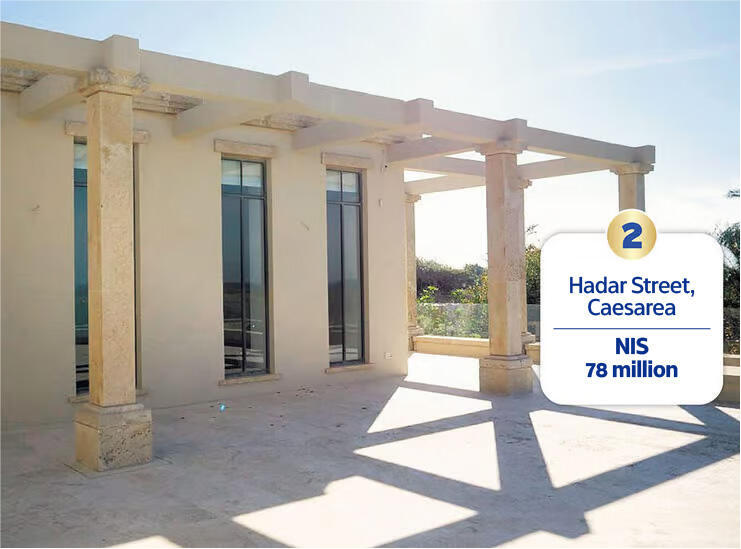
On February 13, a frontline-to-the-sea villa on HaHadre Street in Caesarea was sold for a record NIS 78 million. The buyers were American couple Reuven and Sandy Moskowitz. The seller was Prof. Shlomo Ben-Haim, a serial entrepreneur who purchased the property in 2011 from Arcadi Gaydamak for NIS 47.5 million.
Designed by architect Orly Shrem, the villa includes 1,700 square meters of built space on 6.4 dunams of land. Among the neighbors are Prime Minister Benjamin Netanyahu and oligarch Valery Kogan.
3. Apartment on the 34th floor
Price: NIS 51 million (313 sq.m.)
Location: Rothschild Boulevard 10, Tel Aviv
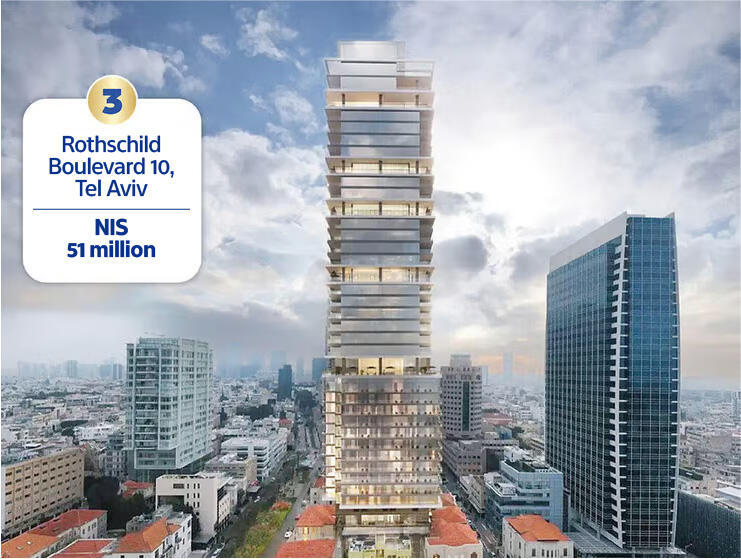
On June 12, an apartment on the 35th floor of the Rothschild 10 luxury tower, developed by Tidhar Group, Weiss Group and tech entrepreneur Ziv Aviram, was sold for NIS 51 million. The apartment spans 313 square meters and includes two parking spaces.
The 44-story tower will feature 10 floors housing a 140-room luxury hotel operated by Six Senses, along with a spa, swimming pool and gym. The complex, stretching between Rothschild, Herzl and Lilienblum streets, also includes five historic buildings that will undergo strict preservation and house cafes, restaurants and the project’s grand lobby.
4. Penthouse on the ninth floor
Price: NIS 46.5 million (294 sq.m.)
Location: Meir Shacham Street, central Jerusalem
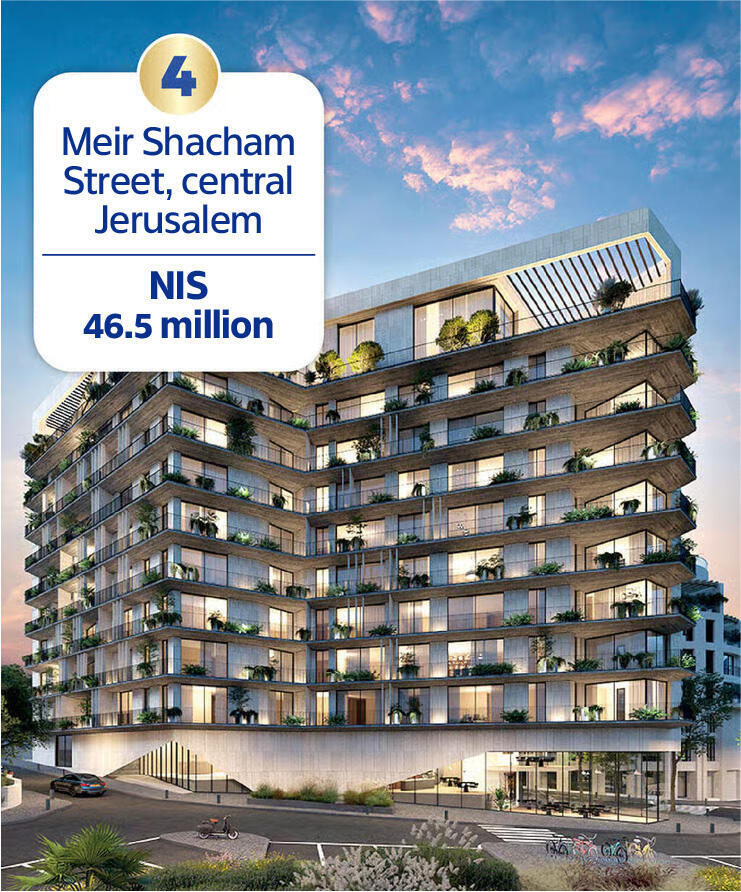
On March 31, a duplex apartment on the ninth and tenth floors of the THE INDEPENDENCE project, built by Noga Real Estate next to Independence Park, was sold. The 294-square-meter apartment includes seven rooms and features six-meter-high ceilings with glass curtain walls overlooking the Old City walls.
The project is not marketed to the general public and is aimed exclusively at foreign residents. It is marketed solely by Oren Cohen Group.
5. First-floor apartment
Price: NIS 45,531,000 (447 sq.m.)
Location: Chopin Street 24, Jerusalem
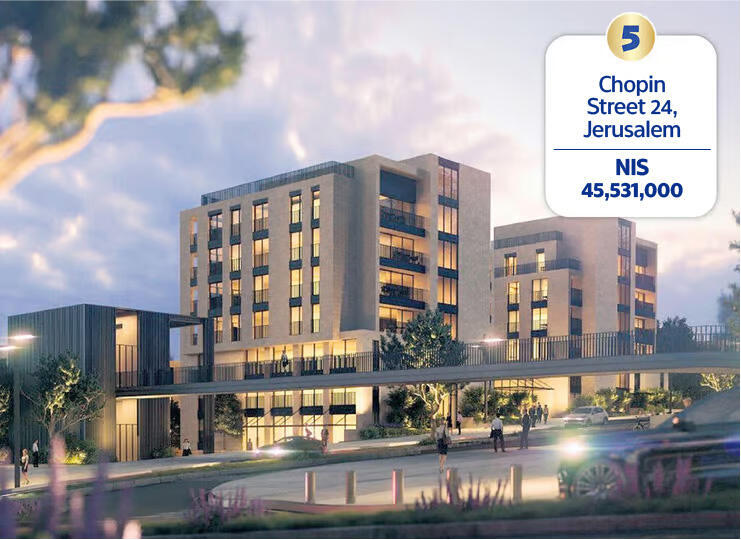
On June 10, an apartment on Chopin Street 24, on the border of the Talbiyeh neighborhood opposite the Jerusalem Theater, was sold. The 447-square-meter, 10-room apartment is located on the first floor of the Mishkenot HaTeatron project by the Hassid Brothers Group. Residents also enjoy access to the adjacent luxury Theatron Hotel, including an indoor pool, spa, fitness center and sauna.
Several additional high-end deals reported this year in Tel Aviv have yet to be reported to the Tax Authority and, therefore, are not included in the ranking.
6. Apartment on the 26th floor
Price: NIS 37 million (356 sq.m.)
Location: Rothschild Boulevard 30, Tel Aviv
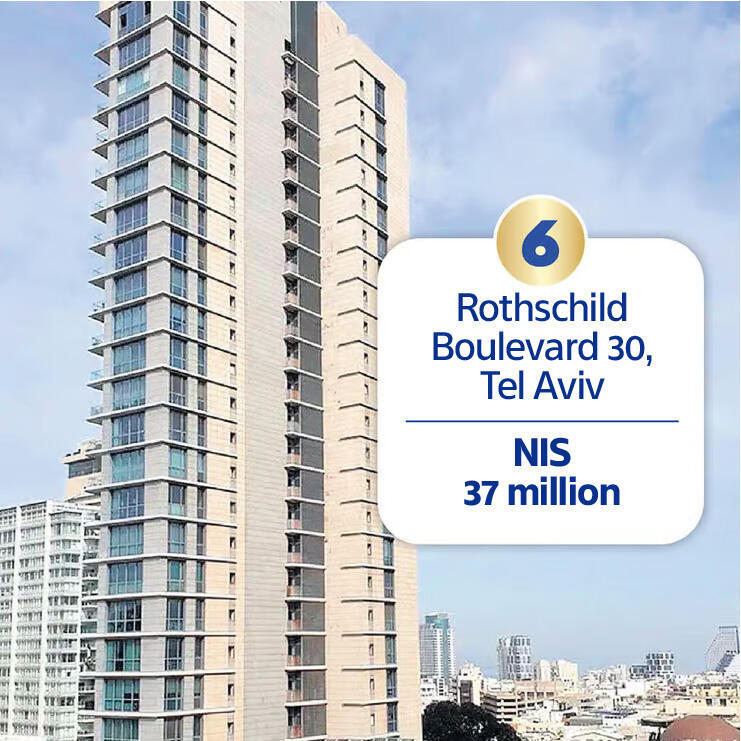
On June 18, a foreign resident, apparently Italian, purchased an apartment on the 26th floor of the Rothschild 30 tower for NIS 37 million. The 356-square-meter, five-room apartment is located in one of the earliest luxury residential towers on Rothschild Boulevard.
Completed in 2012, the building includes 76 apartments, an indoor heated pool and a fully equipped gym.
7. Penthouse apartment on the eighth floor
Price: NIS 37 million (272 sq.m.)
Location: Geula neighborhood, Jerusalem
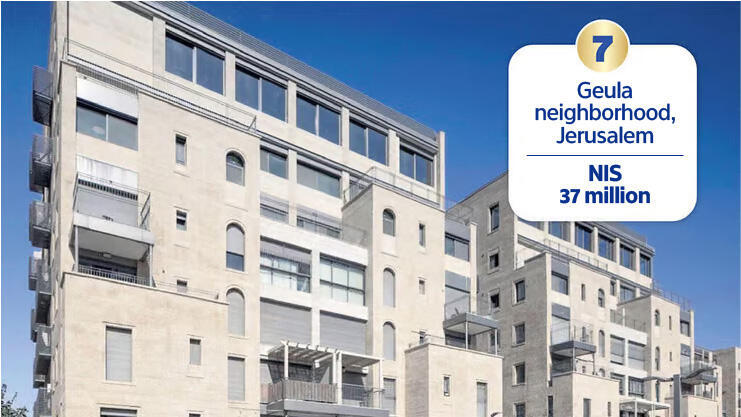
On July 7, a foreign resident purchased a seven-room penthouse spanning 272 square meters on the eighth floor of a building on Hanina Schiff Street 8. The property is part of the Marom Jerusalem luxury project built by the Ganei Tal Group in the Schneller compound.
The area, once home to an orphanage and later British and Israeli military bases, has become a luxury neighborhood with a distinctly ultra-Orthodox character.
8. Detached house
Price: NIS 34 million (290 sq.m.)
Location: Nof Yam neighborhood, Herzliya
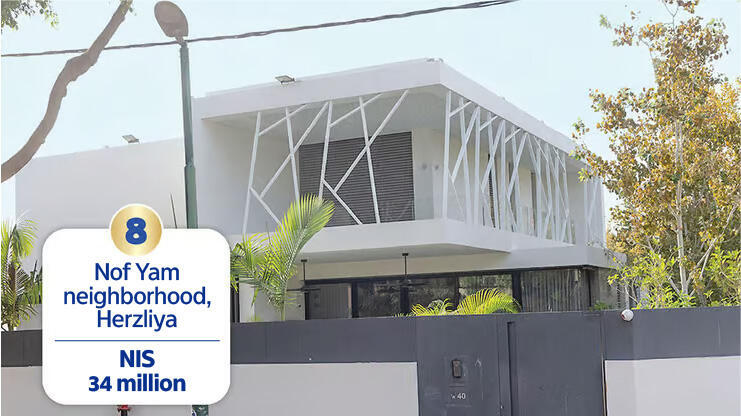
On February 11, a private home on HaEshel Street in Herzliya was sold for NIS 34 million. The seven-room house spans 290 square meters and sits on the border between Nof Yam and Herzliya Pituach.
While Herzliya Pituach is considered a super-luxury neighborhood, Nof Yam began as a transit camp and still includes more modest homes alongside luxury villas. HaEshel Street, however, is among the most expensive in Israel.
9. Private villa
Price: NIS 33,680,000 (510 sq.m.)
Location: Shlomtzion HaMalka Street, Herzliya Pituach
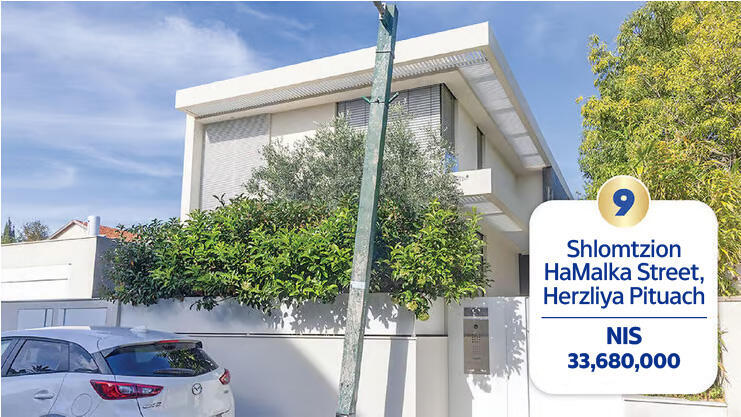
On January 12, a villa on Shlomtzion HaMalka Street was sold for NIS 33.68 million. Built in 2020, the property includes seven rooms over three floors and 510 square meters of built space.
The small, quiet street is relatively far from the sea and includes both massive villas and more modest semi-detached homes.
10. Apartment on the 37th floor
Price: NIS 32 million (191 sq.m.)
Location: Yehuda Halevi Street 24, south Rothschild area, Tel Aviv
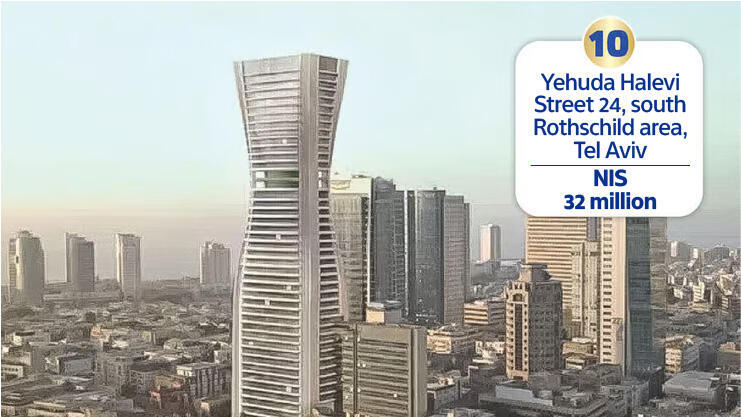
On March 12, an apartment on the 37th floor of the SHE tower, to be built on the site of Bank Leumi’s former headquarters near the historic Mani House, was sold. The 40-story tower is being developed by Canada Israel.
The four-room apartment spans 191 square meters and marked the first sale in the project.
‘A relative weakness in Tel Aviv’
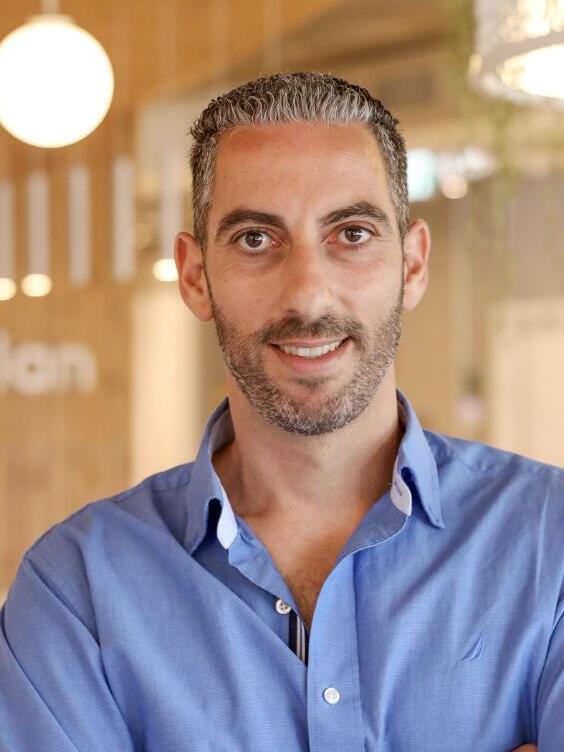 Tal Kopel,
CEO of the Madlan websitePhoto: Orit Pnini
Tal Kopel,
CEO of the Madlan websitePhoto: Orit PniniTal Kopel, CEO of the Madlan website, which conducted the analysis, told Mamon that “similar to the rest of the market, 2025 was a difficult year for the luxury segment as well. The market fell to a low point in the last quarters, and most of the impressive transactions were recorded in the first half of the year.
“The standout phenomenon this year is Tel Aviv’s relative weakness. In the past, we were used to seeing eight or nine of the most expensive deals taking place in the city that never sleeps. This year, Tel Aviv is far less dominant, and all the super-luxury transactions that did take place there were concentrated in just one neighborhood, south Rothschild. “By contrast, this year we are seeing the return to center stage of Jerusalem and Herzliya Pituach, with a single but significant appearance by Caesarea.”
Roie Kaner, CEO of Montifiore Real Estate Group, which specializes in the luxury and ultra-luxury real estate market and works extensively with foreign residents and new immigrants, takes a different view. “2025 clearly marked the return of Israel’s luxury real estate market to a position of strength, and even beyond that,” he said. “The leading deals signed this year reflect a mature, focused and high-quality market, in which demand is concentrated on exceptional assets: historic villas, penthouses with iconic views, unique projects that combine preservation, hospitality and the highest level of services, and locations that have no substitute.
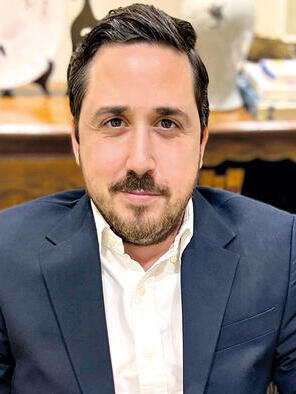 Roie Kaner,
CEO of Montifiore Real Estate Group
Roie Kaner,
CEO of Montifiore Real Estate Group“The Israeli luxury market is not a market of volume, but of quality. As long as supply remains limited and demand continues to come from strong and well-established audiences in Israel and abroad, luxury home prices are expected to remain stable and even rise in the right properties and buildings.
“In Jerusalem, the attraction to properties with historical value stands out in particular. In Tel Aviv, the trend continues of concentrating luxury transactions along the Rothschild axis and its surroundings, where there is a willingness to pay very high prices for the combination of a central location and an international-level urban living experience. Caesarea and Herzliya continue to solidify their status as preferred destinations for private homes in neighborhoods with a very high socioeconomic profile.”
The identity of the buyers
According to Kaner, “One of the most prominent characteristics of 2025 is the significant share of foreign residents in luxury transactions. Buyers from North America and Europe, including Italy and Canada, were involved in the most expensive deals.
“At our company this year, nearly 60% of luxury transactions were carried out by foreign residents, and we are talking about a year of war. That is an extraordinary figure.
“This year we noticed that for these foreign residents, the purchase is not just about acquiring a vacation apartment, but a long-term strategic investment. For many of them, Israel is perceived as a safe anchor economically, culturally and in terms of identity, and owning property here is a combination of security, belonging and quality of life.”
Kaner estimates that 2026 will continue these trends. “Against the background of rising antisemitism around the world and the growing sense of uncertainty among many Jewish communities, we expect further growth in demand from foreign residents for luxury properties in Israel. Demand will focus on unique assets that cannot be replicated: prime locations, projects with a story, international-level services, and uncompromising planning and architectural standards.
“This is a wake-up call for developers heading into 2026 who are building in luxury areas and want to sell to this audience. Most of them do not specialize in the construction and marketing of true luxury residences, the kind that attract luxury buyers and lead them to pay record-breaking prices per square meter.”
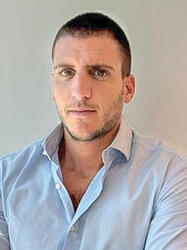 Marc Lugassy, owner of Barnes Israel
“Purchasing property in Israel is not only a financial decision, but a declaration of connection to the land,” said Marc Lugassy, owner of Barnes Israel, the local branch of global luxury real estate giant Barnes International, which specializes in high-end properties.
“In 2025, we completed transactions totaling 380 million shekels in just eight months, which proves that the luxury market, even during crisis and war, operates differently from any other real estate market,” he said.
Lugassy added that “for many buyers, a home in Israel is not just a luxury asset, but an expression of belonging, connection to the country and long-term security. Even during periods of instability, the luxury market continues to maintain strong demand thanks to the emotional, historical and national value embedded in it, something that is difficult to find in other luxury markets around the world.”
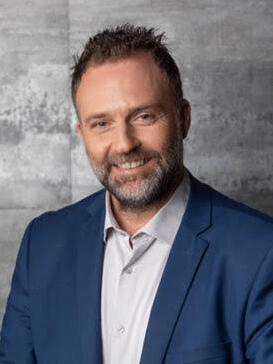 Nir Shmol,
CEO and owner of Snir GroupPhoto: Tal Shahar
Nir Shmol,
CEO and owner of Snir GroupPhoto: Tal ShaharNir Shmol, CEO and owner of Snir Group for real estate marketing, reinforced the view that despite the weakness of the general housing market, the luxury segment continues to demonstrate stability. “The explanation lies in the nature of the buyers and the way they make decisions,” he said. “Affluent buyers operate according to a different logic than the broader market and do not necessarily wait for further price declines.
“From their perspective, when a gap emerges between sellers’ expectations and the pressure developers are under, it creates a window of opportunity.”
According to Shmol, “In luxury transactions involving tens of millions of shekels per property, any flexibility on the part of the developer translates into significant benefits worth millions of shekels, since they are derived directly from the high price of the asset.
“Therefore, even in times of uncertainty, capital-rich buyers know how to identify the right timing and take advantage of market conditions to complete large-scale deals.”