

For years, commuting in and around Tel Aviv at peak hours has been one of the most dreaded parts of daily life in central Israel. Whether you were driving from Ramat Gan, Givatayim, Herzliya, or Bat Yam, traffic could easily stretch a short trip to be close to an hour on a bad day.
Public transportation wasn’t much better. A bus ride of just a few kilometers could feel endless, especially during rush hour bottlenecks on the Ayalon. And with some Israeli bus drivers seeming perfecting the art of constant stop and go, one can disembark from a bus ride feeling as if they just got off a ride at a Six Flags theme park.
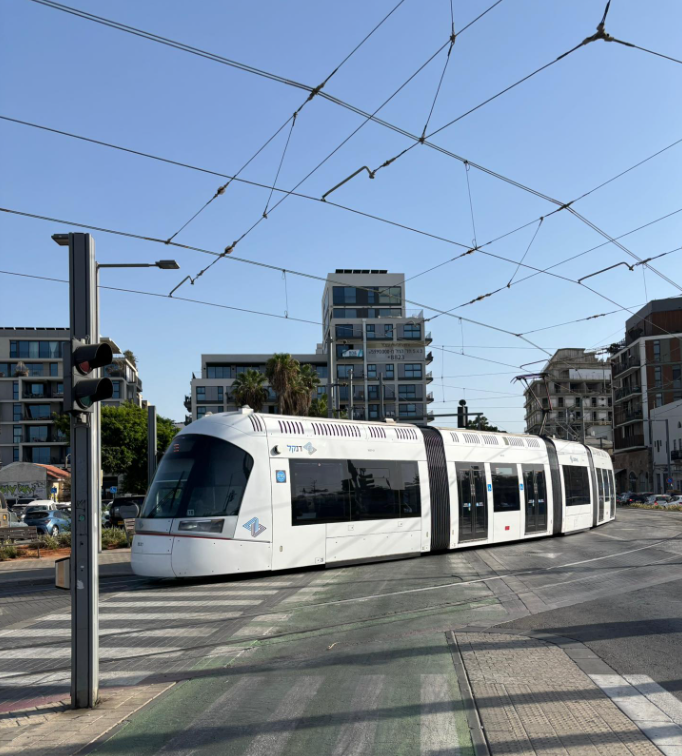
That reality is now changing. The new light rail system, already operational with the Red Line, is reshaping the way people think about where to live, work, and invest in Israel’s center. With more lines soon to open, the effect on property markets in and around Tel Aviv will be nothing short of revolutionary. For buyers, families, and investors, this is the moment to pay attention.
From traffic jams to reliable arrival times
What the light rail introduces is predictability. Instead of commutes being at the mercy of traffic, a passenger can properly schedule their day and set a reliable arrival time. From Bat Yam to central Tel Aviv, for example, the ride can be as little as 15 minutes, without the stress of bumper-to-bumper congestion. The full Red Line currently connects Petah Tikva, Ramat Gan, Tel Aviv, Jaffa, and Bat Yam, with the entire ride from end to end in about 45 minutes.
For Ramat Gan residents, the change is even more dramatic. In the past, getting into Tel Aviv during peak hours could take over an hour, even though the distance is just a few kilometers. Now, the same journey can be made in a fraction of the time. And when parts of Givatayim are connected via the Purple Line, that city too will be only minutes ride away from the heart of Tel Aviv.
It’s not only about saving time. Objectively speaking, the ride itself is a pleasure. These trains are spotless, brand new, and easy to use. Security is visible, the system is well monitored, and the experience is far more pleasant than one might expect.
The stations themselves are state-of-the-art. Anyone who has stepped off at some of the main hubs in Tel Aviv or Ramat Gan can attest to the world-class engineering and design that went into them. They feel modern, spacious, and efficient, more like European metros at their best than some of the older public transportation systems many Israelis have been used to up until now.
I recently experienced this firsthand with a client from Paris visiting to purchase a property. We were about to order a taxi in south Tel Aviv to go just a couple of kilometers east to Sarona Market. With all the traffic and construction, that short trip would easily have taken 25 to 30 minutes.
Instead, I said “Forget it, let’s take the light rail.” Within seven minutes we were at our destination. My client was stunned. He turned to me and said, “In Paris, I would never do something like this. You would never get such a safe, modern, and efficient ride, but this is really impressive.” For him, it was a shocking experience in the best possible way, and a clear sign that this system is a game changer for the city.
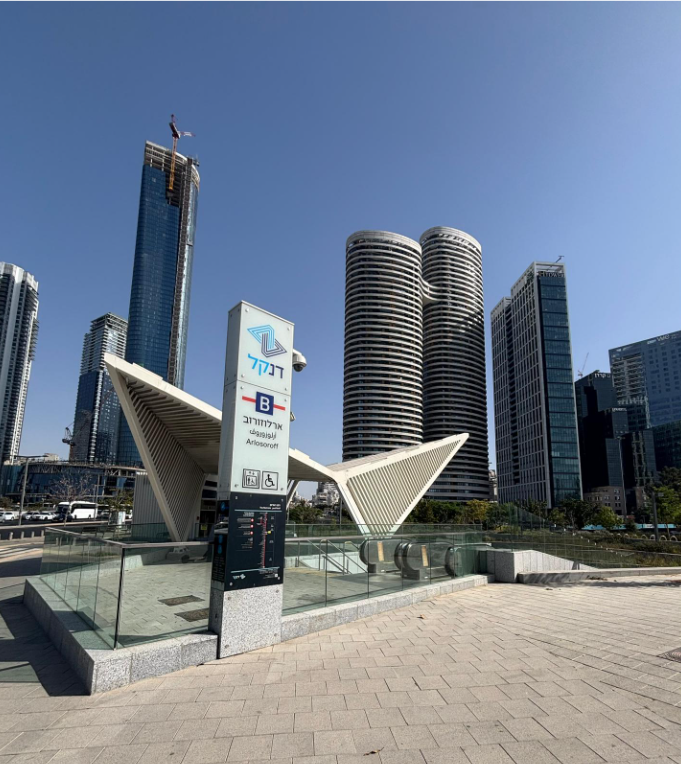
(Photo: Noah Sander)
Opening up more affordable living options
This shift is transformative for buyers and renters alike. For years, many people paid Tel Aviv’s sky-high housing prices not only for lifestyle, but simply for the privilege of avoiding a punishing commute. Now, however, families and young professionals can look to surrounding cities knowing they can still commute between cities quickly and reliably.
The math is simple: if you can live 20-30 minutes away, pay significantly less for housing, and still enjoy an easy ride into the city, why not? For many, this will tilt the balance away from Tel Aviv and toward these neighboring areas, boosting demand and prices outside the city.
Now, I’ll be the first to admit it: I live in Tel Aviv, and I love to rant and rave about this city. But I’m under no illusion about where the future lies. From both a demographic and an investment perspective, it’s in the surrounding areas that are already or set to be plugged into the light rail network.
Don’t get me wrong, Tel Aviv will always be a strong long term investment, you have unmatched demand with limited space to build, but for those looking for places that have yet to reach their peak, one should look just outside this wild city.
Sometimes I sit with clients whose budgets simply don’t stretch far enough to get what they want in Tel Aviv. In those cases, I strongly recommend looking just outside the city in surrounding areas - the return on investment is enormous, they’re closer than most people think, and lets not forget, they are also wonderful places to live.
Recently, I took a client of mine to see a property in Bat Yam. I wanted to show him how accessible it is from Tel Aviv. We hopped on the light, and within about 15 minutes we were stepping out in Bat Yam. We strolled down Ha’atzmaut Boulevard, a leafy promenade leading directly to the beach.
When we reached the Mediterranean Sea, my friend looked around and said, “Wow, these beaches are gorgeous, nicer than in Tel Aviv.” (Spoiler: they are). He pointed to one of the new apartment towers and asked, “How much would it cost to live there?” I told him while I don’t know the exact figure offhand, but prices are roughly 50% less than Tel Aviv.
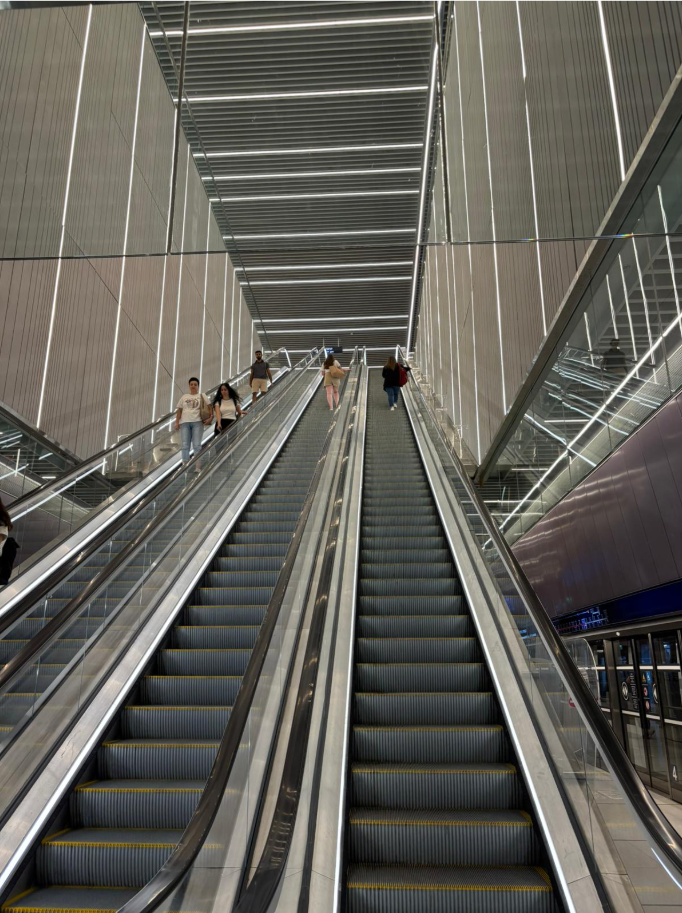
(Photo: Noah Sander)
We grabbed a coffee nearby, and the light rail station was barely 100 meters away. Within minutes, another arrived. We jumped back on, and less than 15 minutes later we were right back in the bustle of central Tel Aviv. My friend turned to me, still a little dazed, and said, “Wait. I can buy for half the price, enjoy better beaches, and still be in Tel Aviv within 15 minutes if I want. So why I am stuck on buying in Tel Aviv exactly?”.
That was his lightbulb moment, and I see the same realization dawning on more and more clients of mine. Of course this is a personal decision, but for those not absolutely fixed on living in Tel Aviv itself, the surrounding cities offer tremendous value, lifestyle advantages, and now, with the light rail, easy access to the heart of the city.
Looking ahead: where the opportunities are
Right now, the Red Line is operational, and that alone is already reshaping housing decisions from Petach Tikva down to Bat Yam. But this is only the beginning. In the coming years, the Purple and Green Lines will also open, connecting new areas such as North Tel Aviv neighborhoods, Givatayim, Holon, Rishon LeZion, Herzliya, Kiryat Ono, and more.
For investors, this is where the opportunity lies. Properties today in these future-connected neighborhoods are still undervalued compared to Tel Aviv. If you can buy within walking distance of a planned station and have the patience to wait a few years, the potential for return on investment is enormous.
And it’s not only about investors, either. Young families, new immigrants, and professionals who want to enjoy a quieter, more affordable lifestyle while still being a short ride away from Tel Aviv will increasingly choose these areas.
In practice, that means vibrant new communities will grow around the rail lines, while connecting the existing ones as well- just like it has happened in other cities around the world. The future Metro system is still years away, but the principle remains the same: buy near the transit, and you’ll benefit from the wave of demand that follows once connectivity becomes reality.
A global pattern, finally making waves in Israel
This is not just an Israeli phenomenon. In many major global cities with strong rail infrastructure be it London, New York, or Toronto, properties near transit hubs enjoy a premium. Easy access to the city center increases both quality of life and real estate values.
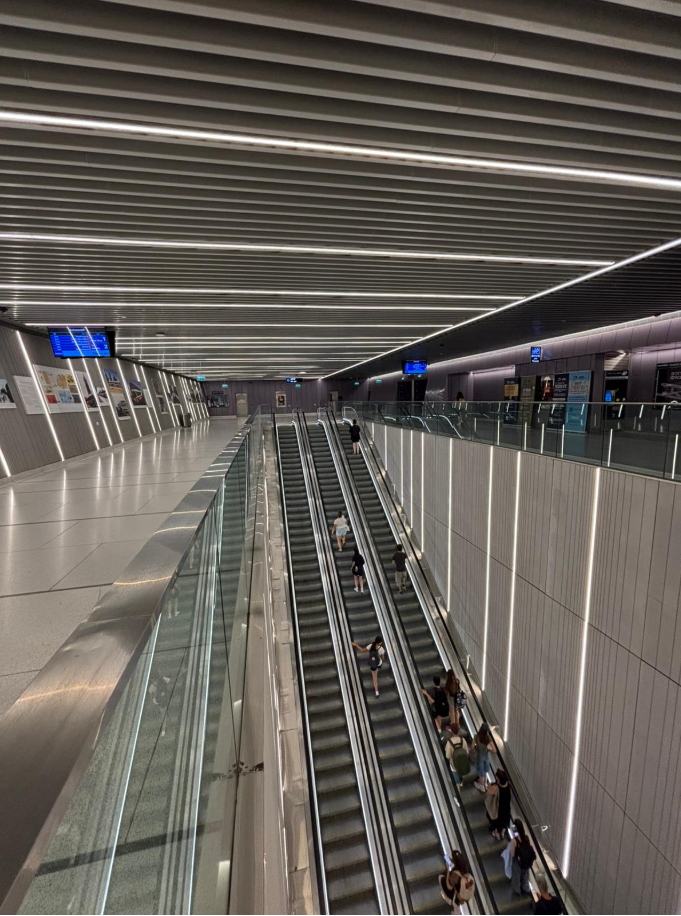
Light Rail
(Photo: Noah Sander)
What’s refreshing here is that Israel’s light rail is brand new. The trains are clean, the stations are modern, and the overall passenger experience more pleasant than what many people know from other systems abroad. I’ve heard this time and again from clients who have lived in major cities worldwide. They are surprised, even impressed, by how advanced the light rail feels. In that sense, Israel is not just catching up, it’s leapfrogging into the future with a system that sets new standards.
The future of the center
Tel Aviv will always command a high price of admission. Its culture, nightlife, job opportunities, and sheer energy make it one of the most desirable cities in the country, arguably in the world. But the light rail is rewriting the rules. For the first time, it is possible to combine the lifestyle and affordability of surrounding cities with the convenience of a quick, traffic-free commute.
In my view, this is the future of central Israel. The light rail is more than a transportation project, it’s the catalyst for demographic shifts, smarter urban planning, and new waves of real estate investment. Buyers who understand this early and position themselves near the stations will be the ones who benefit most as this new reality takes shape.
Noah Sander is a Canadian-born real estate agent based in Tel Aviv, specializing in helping international buyers and new olim navigate the Israeli property market. For inquiries: [email protected], his brokerage: Daon Group Real Estate