

"One of the signs it was time to move to a smaller home was when I realized that if I went upstairs to make myself a cup of coffee and wanted to make one for my husband too, I would start calling out, ‘Avi, do you want coffee?’ — and there would be no answer. I had to call him so he could hear me," laughs Carmit Albeck, who manages the Grandma in Style Facebook community.
Like Albeck, quite a few women in their later years are choosing to move from large homes filled with years of history and many rooms once used to raise children, to smaller apartments better suited to the grandparent stage of life.
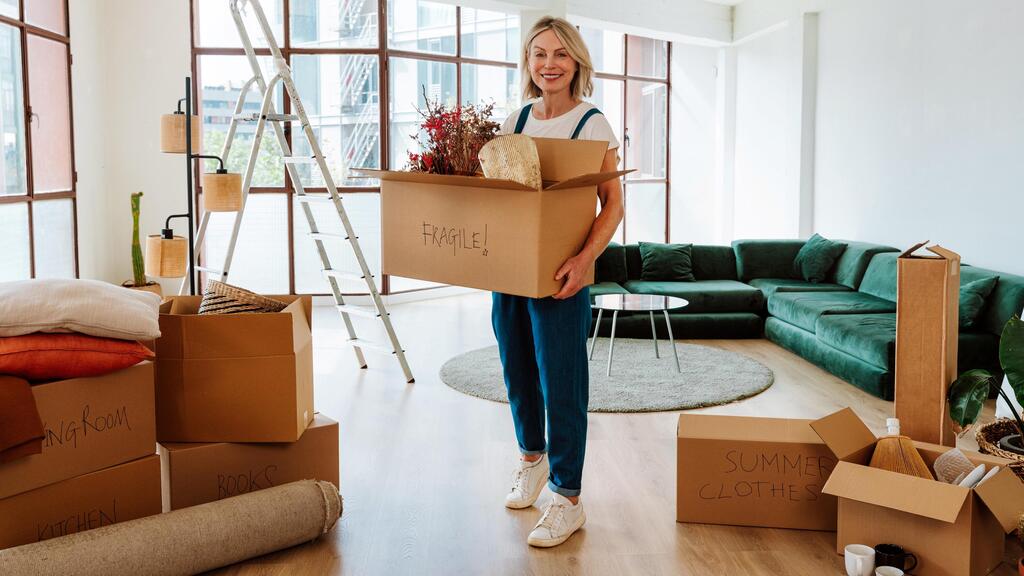
This transition requires the ability to part with belongings and tangible memories, carefully sort through what has been accumulated over a lifetime and significantly scale down in preparation for a lighter way of living. This downsizing is not easy, but it will presumably also help our children cope with our emotional and physical possessions after we are gone.
The process is also known as Swedish death cleaning (Döstädning). It is a calm process of sorting, reducing and organizing personal belongings, carried out in the final third of life to spare the family emotional and physical burden after death. It is a Swedish philosophy that encourages leaving behind an orderly, uncluttered home, with the aim of easing things for children and grandchildren.
To make it sound less morbid, the Albeck uses the term “downsizing” to describe the process. In a recent interview, filmmaker Orna Ben-Dor described to ynet how she left behind a 250-square-meter home filled with collections and books in favor of a 50-square-meter apartment. Albeck, 64, who runs DreamBow, a children’s games business, and her partner have been married for 40 years. They have three children (a daughter, 38, and two sons, 34 and 30) and two grandchildren.
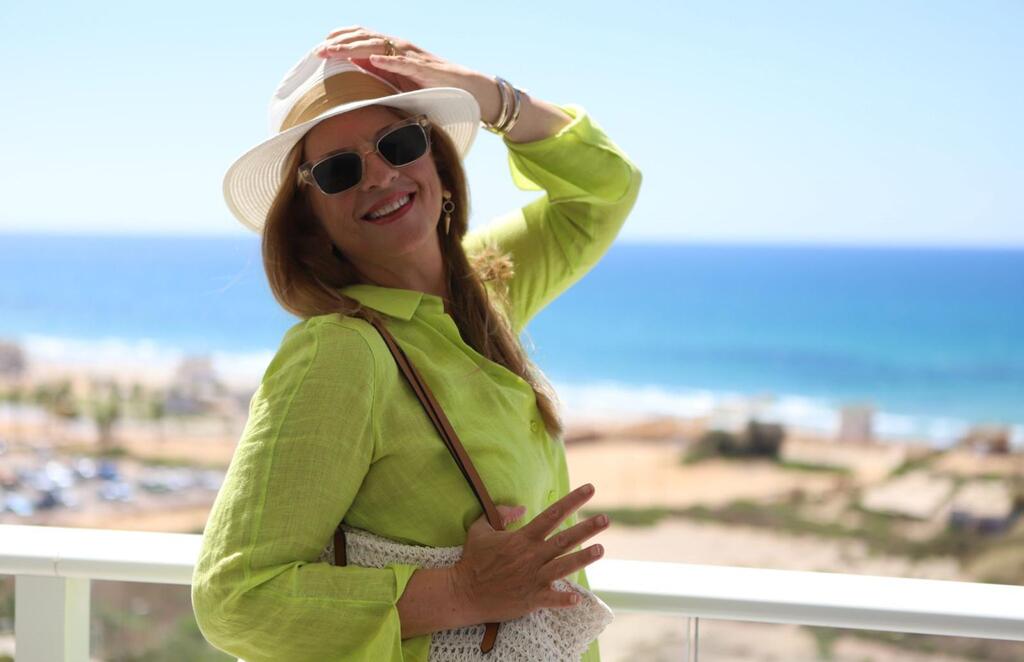
Carmit Albeck moved to an apartment by the sea
(Photo: Carmit Albeck)
“Everyone lives in Tel Aviv, and we lived there too for nearly 40 years,” she says. “At first on Gordon Street, and then in old Ramat Aviv, where we built our dream home. It was a 250-square-meter house, nine rooms on two floors, with a balcony overlooking a garden. We raised the children there, and after they left the nest, it was just the two of us in a space we no longer needed. Just maintaining it is a quarter-time job.”
Albeck began considering a move during the COVID period. “I wanted the sea right next to the house,” she says. “It’s not a simple step, so we chose to rent out our home and rent another place, to keep the option of changing our minds. And now here we are in Olga in Hadera for the fourth year, in an apartment half the size of our previous home. From every room I see the sea. I go downstairs, and I’m at the beach. We lived in a house with four neighbors, no parking, and moved to a tower with a pool, gym, security guard, parking and a warm, supportive community.”
Was a safe room or shelter a consideration in the move?
“We had a safe room in our Tel Aviv home and we have one here too, so it wasn’t a deciding factor.”
How did you manage the reduction in space?
“We have four rooms — a living room, bedroom, office, guest room and a balcony. The office is on one side and the living area on the other, so there’s separation. We love hosting, and we have a room for that. We left our tenants in the previous house a furnished apartment, so in the new one we bought a new living room set, brought smaller designed family photos and changed the curtains. Of course we had to downsize. In the previous home I had a three-meter dining table. Here too I have an extendable table, but smaller. When I host, I prepare a buffet-style meal, and it works perfectly — there’s room for everyone without sitting around the table.”
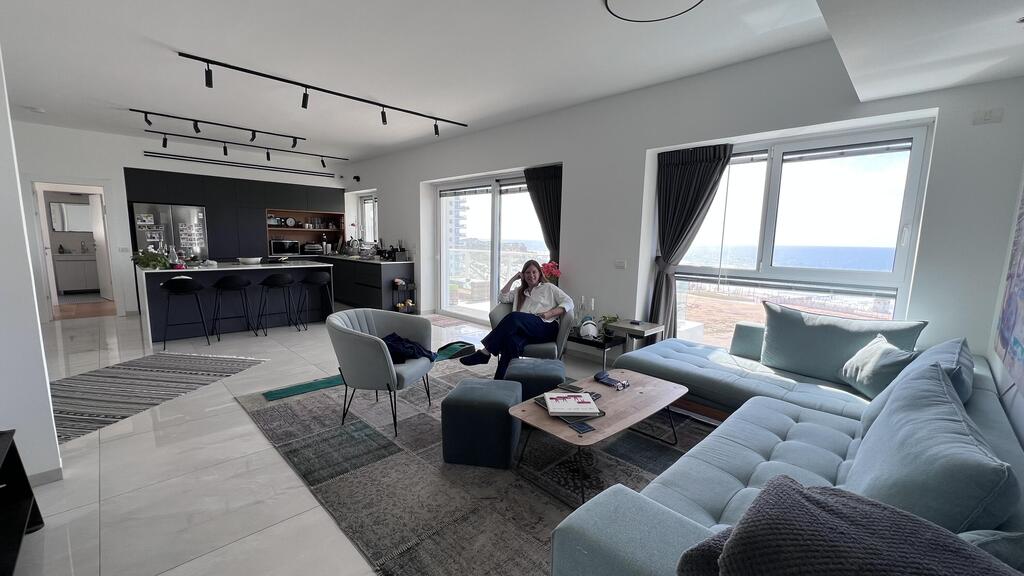
Carmit Albeck in her downsized home
(Photo: Carmit Albeck)
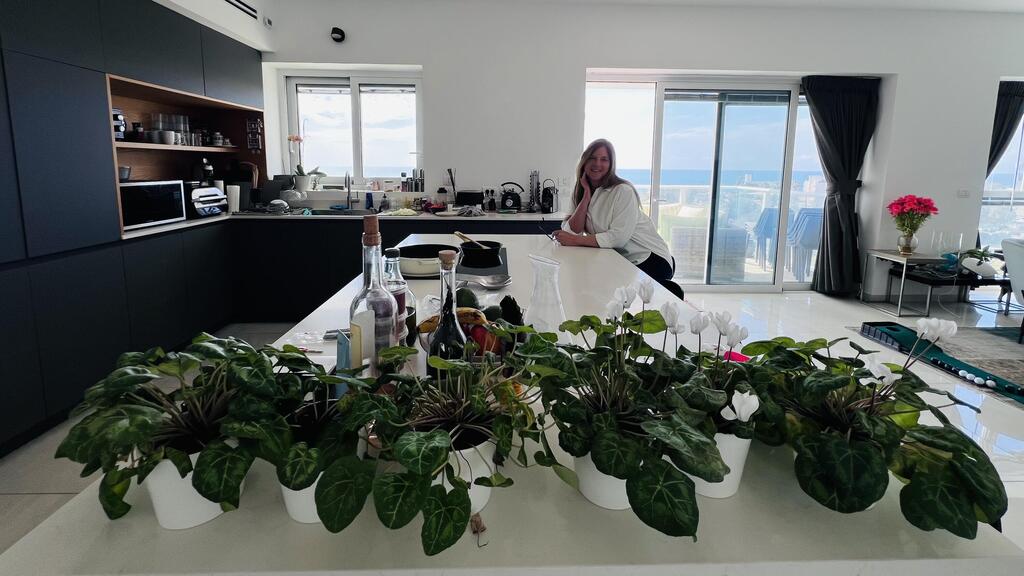
She got rid of hundreds of books, but kept her plants
(Photo: Carmit Albeck)
Aside from the table, you must have given up many belongings.
“Of course. A big house is a guaranteed recipe for it becoming the storage space of your life, and that’s what happened to us. The organization and sorting were among the most significant processes I’ve gone through. There were enormous quantities of items in the previous home. All my mother’s dishes and my aunt’s and my grandmother’s, some from abroad. They were in storage so I didn’t really use them. Art objects, piles of clothes, a special costume closet, sports equipment, ski gear, office equipment, dance clothes, a special cabinet with yarn because I planned to start knitting, fabrics I dreamed of doing something with one day, lots of craft supplies, a million tablecloths and linens that ‘maybe someone will want someday.’ It’s always hard to throw such things away, but really, who needs it?”
How did the sorting process work?
“We brought in a special container and started separating — what to donate, what to give away, what to keep. I gave away thousands of items. I posted things I put outside on social media, and within half an hour they were taken. There were valuable items I sold. The children don’t want their grandmother’s crystal, but there are people who do. I had more than 600 books. I kept 20 and gave the rest to university libraries, community libraries and anyone who wanted them. There was also alcohol in quantities that would not embarrass a bar — and we found new homes for that too.”
Was it emotionally difficult to part with the items?
“It was difficult, but there was also an enormous sense of release. I told myself that if I miss something, I’ll buy something in its place or beg the person I sold it to for it back. They’re just objects. I photographed items I felt more attached to, and sometimes I look back at the photos. These things no longer take up space in my home, only on my phone. I have fewer possessions now and more room in my heart.”
Even the new home isn’t that small. Are you managing not to accumulate?
“Absolutely not accumulating, and I don’t want things. I’ve reduced everything. I have one closet. I decided that if I buy something, I have to get rid of something else. When guests come, I ask them not to bring gifts. Flowers or fruit are fine — no more bowls, please. I feel like 100 pounds have been lifted off me. How many sheets and towels do we really need? How many underwear, coats, shoes, creams and swimsuits? There are toys in the guest room for the grandchildren, but they always end up playing with the same ones. We don’t need everything we carry with us.”
Another thought that helped Albeck during the process was her children. “I knew that if I didn’t do this, my children would have to deal with it and go through all our drawers and cabinets. We cleared out our parents’ homes, and I know how hard that is,” she adds.
To be closer to the children, travel and enjoy life
In the case of Gita Rokach, 63, who has a doctorate in history and is a lecturer in styling and fashion who runs workshops in making jewelry from beads and paper and flowers from cold porcelain, the move was from the community of Azor in the Be’er Tuvia Regional Council to Tel Aviv, to a 100-square-meter apartment on the 28th floor.
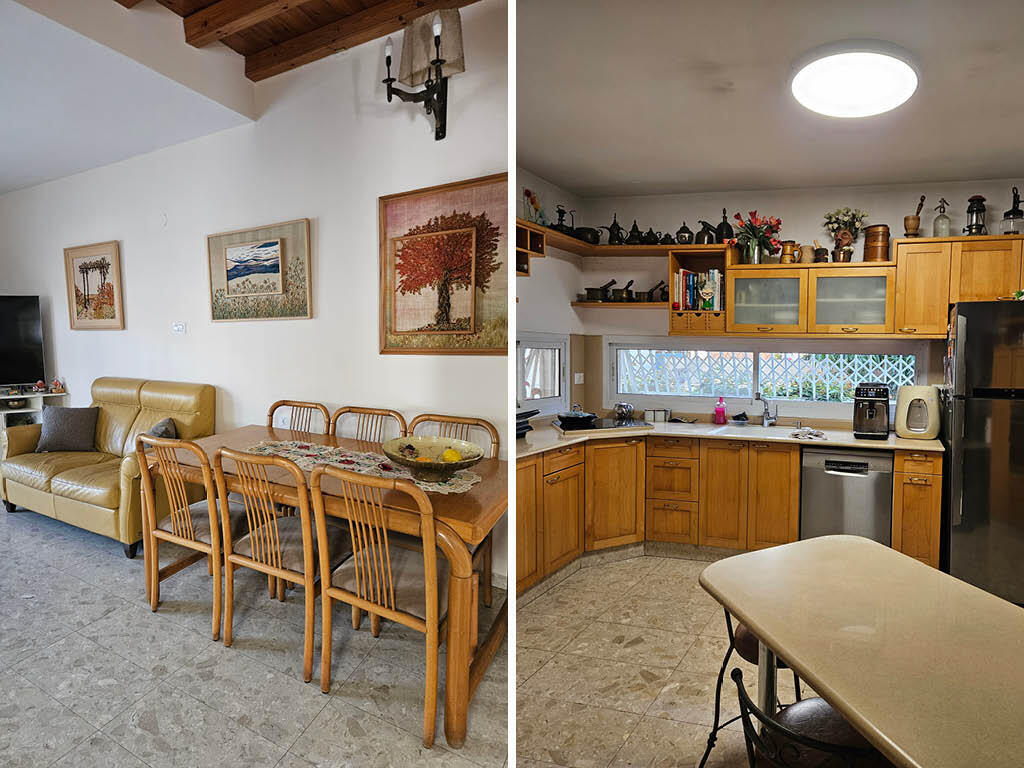
This is Gita Rokach's old apartment in Azor
(Photo: Gita Rokach)
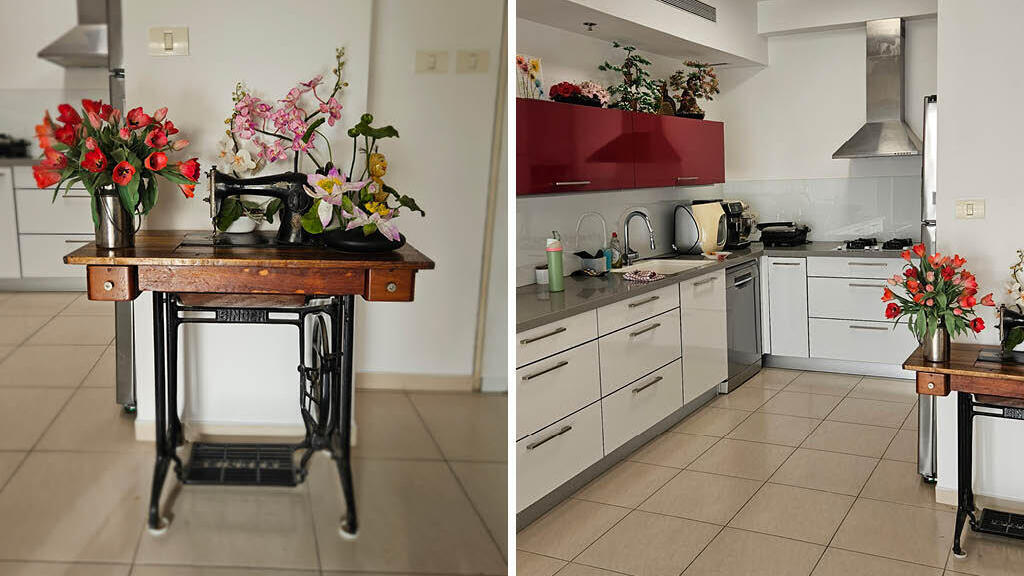
This is the new apartment in Tel Aviv, she doesn't want to be bothered with redoing the kitchen
(Photo: Gita Rokach)
“The house in Azor was 180 square meters with a large yard and roof. Over time it became a bit of a storage space,” she says. “I have four children — a 38-year-old daughter with two children, a 34-year-old daughter with three children, a 29-year-old son and a 24-year-old son — and they stored all kinds of items there. I always knew I would want to move to Tel Aviv. I love art and culture, but it took me a few years to get my husband on board. When I retired from the Education Ministry, the conditions were right: one daughter lives in Tel Aviv, another in Rehovot, one son in Holon and another daughter in Herzliya. It made sense to be closer to them, and that’s how I sold it to my husband. I don’t intend to be a babysitter, but it’s nice to be close.”
How do you approach moving from a large house to an apartment?
“It’s not easy. I had a lot of art and a lot of clothes. My husband is self-employed in the electrical field and also has a lot of equipment. I knew I needed four rooms, and I found an apartment with storage and a stunning urban view. I invited all the children to come take their belongings, documents and albums. One daughter told me that when a friend’s mother died, she couldn’t bring herself to clear the home and hired someone to do it. That was also a consideration — not leaving them such a task in the future.”

View of Tel Aviv from the window of Gita Rokach's apartment
(Photo: Gita Rokach)
Rokach then began dealing with the rest of her belongings. She transferred her large library to a secondhand book initiative, keeping only 10 books. “Today I read books on my phone,” she says. “What I’ve read, I won’t read again, so why keep it? I sorted clothes strictly. Anything I hadn’t worn in two years I gave to friends or donated. The same with kitchenware. Why do I need 30 pots? I tell myself that when I throw something out, I make room for something new. There’s no choice — if you’re stuck with things, you can’t move.”
What about furniture?
“I gave the sofas to one of my daughters, and for us I bought a kind of sofa bed. Maybe later I’ll buy something more like a living room set, but it certainly won’t be large. I haven’t bought a dining table yet, but I plan to get something extendable that doesn’t take up much space day to day.”
What made the process easier for Rokach was that the move was to a rental apartment, and she kept a storage unit in Azor for items like her artwork. “I didn’t want to turn the new apartment into a museum, so I took only a few items,” she adds.
Did you invest in designing the new apartment?
“Not really. I liked it very much the moment I saw it, but I don’t feel like dealing too much with design. I’ve never heard anyone on their deathbed say, ‘I regret not changing the kitchen.’ I feel more like traveling and enjoying life.”
Without attractions that require maintenance
Nurit Geffen, an interior designer, 63, also raised her three children (ages 36, 31 and 29) in a large home in Ra’anana and recently left it for a smaller apartment.
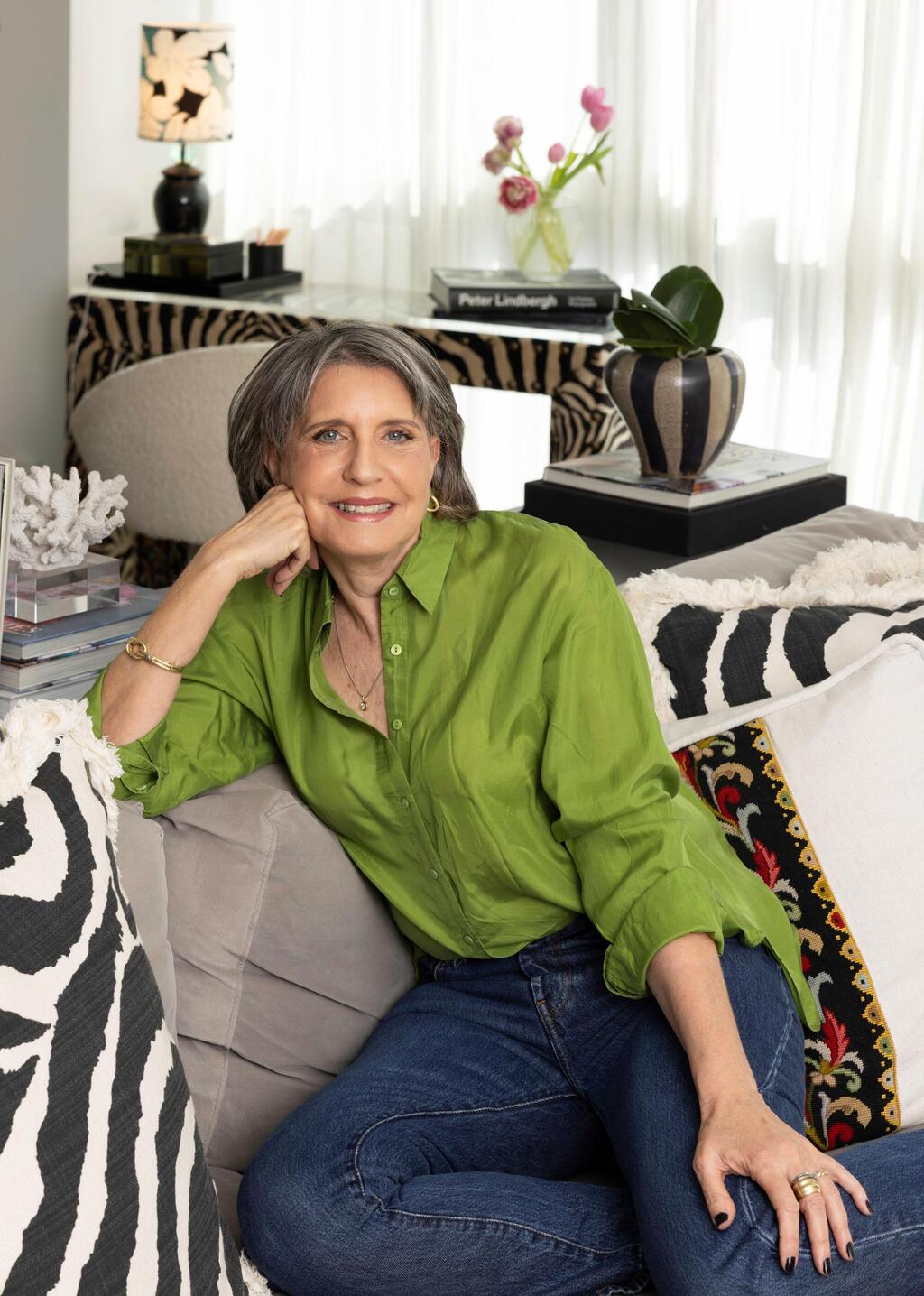
Nurit Geffen, an interior designer who downsized herself
(Photo: Liat Federman)
“The 450-square-meter house I built in Ra’anana had, besides spacious living areas and kitchen, four suites — for us and for each child — a basement with a large space, an office and a TV room,” she says. “It was very hard to leave. It was full of life, but as large and comfortable as it was, it became empty when the children grew up. It wasn’t an easy decision, and I deliberated for a long time, but in the end, I — who designed and built the house — accepted that it had finished its role for me. The rest of the family needed more time.”
How did you start the process once you decided?
“It took time to decide where to move and what type of home. Our first instinct was Tel Aviv, which we love, but in the end we chose Ramat Hasharon, where we had lived before. Another decision was not to buy a private house but a garden apartment in an older villa neighborhood. The apartment isn’t exactly small — 220 square meters — but it’s still half the size of the house, and we had to make many changes.”
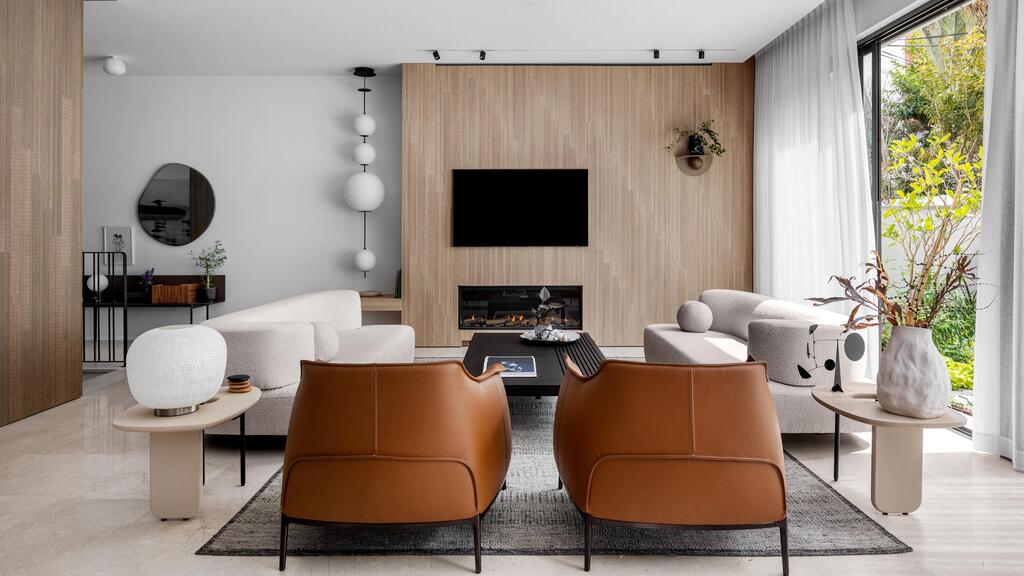
Duplex garden apartment in Ramat Hasharon; planning and design: Nurit Geffen
(Photo: Shiran Carmel)
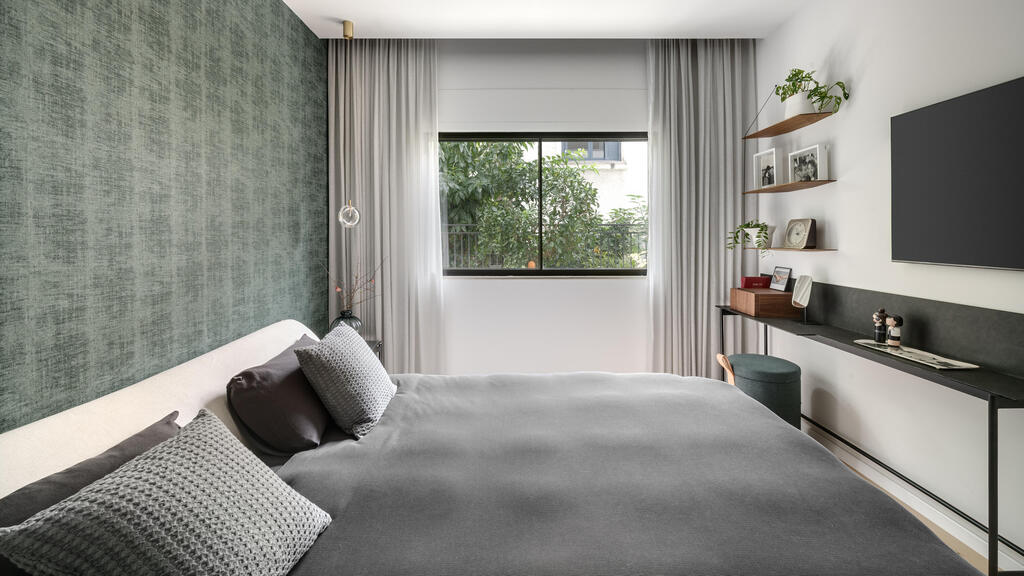
It is recommended to maintain continuity in some of the objects. Nurit Geffen's new home
(Photo: Oded Smadar)
Such as?
“When I began planning, the landscape designer suggested a pool or jacuzzi in the yard, and I didn’t want those attractions, nor a water source that could endanger the grandchildren. I knew that at this stage of life I wanted something precise for our needs.”
Geffen and her partner moved into their new home two days before October 7. “There was no kitchen or closets,” she says. “The kitchen was supposed to be installed on October 8 and, remarkably, the carpenters showed up and everyone made an enormous effort to make the new home functional.
Do you have a safe room or shelter? Was it a consideration?
“Yes. Unfortunately in Israel, having a safe room or accessible shelter is a consideration, especially when you may need to host children who don’t have one. On October 7 everyone came and stayed for two months. Some furniture came with us and some was new. We brought items that matter to us — our bed, a guest bed, a dining area, a hand-painted Italian dinner set from my mother, a Scandinavian desk and iron display cabinets. I like to carry things forward. I also advise clients to bring meaningful furniture and items with them, not to start from scratch. Maintain continuity in at least some things — in moderation. Renew, let go, but also preserve memories.”
So how do you decide what to give up?
“I call the process ‘precision downsizing.’ I recommend using ideas like those of Marie Kondo — let go of what doesn’t serve you and release sentimental attachment, otherwise you can’t move forward and the new home will fill up again with unnecessary items. That’s what I did. I started sorting everything and called the children to take what they wanted or say goodbye to what they didn’t. It’s true that such a move is emotionally difficult, but it also brings a sense of renewal.”
A complex and sensitive issue
Psychologist Dr. Michal Ben Zvi Sommer explains the shift in living environments in later life: “Moving to a smaller apartment is often a sensitive and intimidating issue. On one hand, the home is where we feel safe, the place most familiar to us, where every corner reflects our life story. The design, the objects and even the smells connect to our memories and identity. On the other hand, there is a normal and healthy need to reduce. The developmental arc of life begins in infancy with minimal needs requiring little space.
“Over time, needs become more complex. When children leave home, there is initially a strong desire to continue hosting them with grandchildren and remain the family anchor. At the same time, there is a desire to downsize and a real difficulty in maintaining a large home. Downsizing is rightsizing (a design philosophy meant to change the perception of moving to a smaller home — not as reduction or loss, but as a precise fit for current needs). At this stage of life, the need for adjustment and reduction often arises, but it is not always easy to acknowledge the change.
 Dr. Michal Ben Zvi Sommer Photo: Moran Ginossar for spunk
“So what do we do? The transition requires choosing which items to carry forward and which to part with. The process is emotionally challenging, but it also encourages an important developmental psychological process of writing one’s life story through this sorting — focusing on the meaning of items rather than their financial value or quantity. This is one of the key developmental tasks defined by psychologist Erik Erikson for later life.
“Today, women in this stage of life approach the process full of vitality, energy and a desire to create more meaning and happiness. The decision to move to a smaller apartment may be linked to freeing up financial resources to travel and enjoy life. It may also be tied to a desire to step back from the role of family host and enjoy being a guest in their children’s homes. Modern grandparenthood is freer and not a 24/7 commitment. Still, giving up possessions and space can be emotionally difficult, and it is important to give it thought and attention, and even seek help from professionals or trusted people.”
Five insights from Geffen for a precise transition
Flexible planning: The dynamics between the new home and family hosting. Planning the new home requires balance. On a daily basis it should suit a couple or individual, but on weekends it needs to accommodate an extended family. The process begins with planning versatile spaces that can expand and adapt.
Mindful renewal: Balancing progress with personal identity. The move is an opportunity to adopt technologies and materials that did not exist when the previous home was designed. Be open to smart solutions and contemporary design, but choose what feels personally right and avoid fleeting trends.
Creating emotional continuity: When moving, it is recommended to bring selected meaningful items from the previous home. This applies at any age, and certainly later in life. Treat them as a “starter” — they provide familiarity, continuity and comfort. These can be collections, instruments, art, furniture or beloved objects.
Curating and letting go: The new home is an opportunity to refine your environment. Ask of each item: does it serve who I am today? Does it evoke positive feelings and memories? If not, let it go through sale or donation. This is not loss, but making space for new experiences.
Intergenerational partnership: Giving children a place and identity in the evolving home. Even if they no longer live there, the new home remains their anchor. Involve them in design decisions and shared spaces, and give each a memory box for meaningful items. When they are included, the new home becomes not just a place to visit, but one that feels like theirs too.