

Over the years, and throughout many journeys with clients, one of the more common concerns I hear from international buyers considering property in Israel is whether the quality of new construction matches what they’re used to abroad.
As someone who genuinely enjoys watching the skyline fill with cranes and neighborhoods transform from old to new, and who meets with developers on a regular basis, I spend a significant amount of time looking closely at how projects are built. I’ve toured countless developments over the years, paying attention not just to how they look, but to how they’re delivered and executed, because ultimately that’s what matters most for my clients.

But the underlying concern is a legitimate one: Is the construction standard in Israel lower quality?
This article aims to give readers a clearer picture, as the reality on the ground is nuanced, but evolving.
A structurally sound industry
In my experience in the Tel Aviv market and surrounding areas, from a structural standpoint, residential construction is generally very robust.
Most new buildings are constructed using reinforced concrete and are required to include a protected room (MAMAD), reflecting both regulatory standards and the realities of the region. Much of the new construction over the past decade or so has also been influenced by urban renewal frameworks such as TAMA, originally designed to strengthen buildings against earthquakes.
These requirements have shaped a market where buildings are designed to withstand significant stress - not just theoretical scenarios, but real-world conditions. Even in extreme situations, such as nearby missile impacts, new buildings do not simply collapse or structurally fail in the way some might assume.
In many respects, the structural approach in Israel can be described as conservative, or even over-engineered. Compared to markets where lighter construction methods are more common, the baseline level of durability here is high.
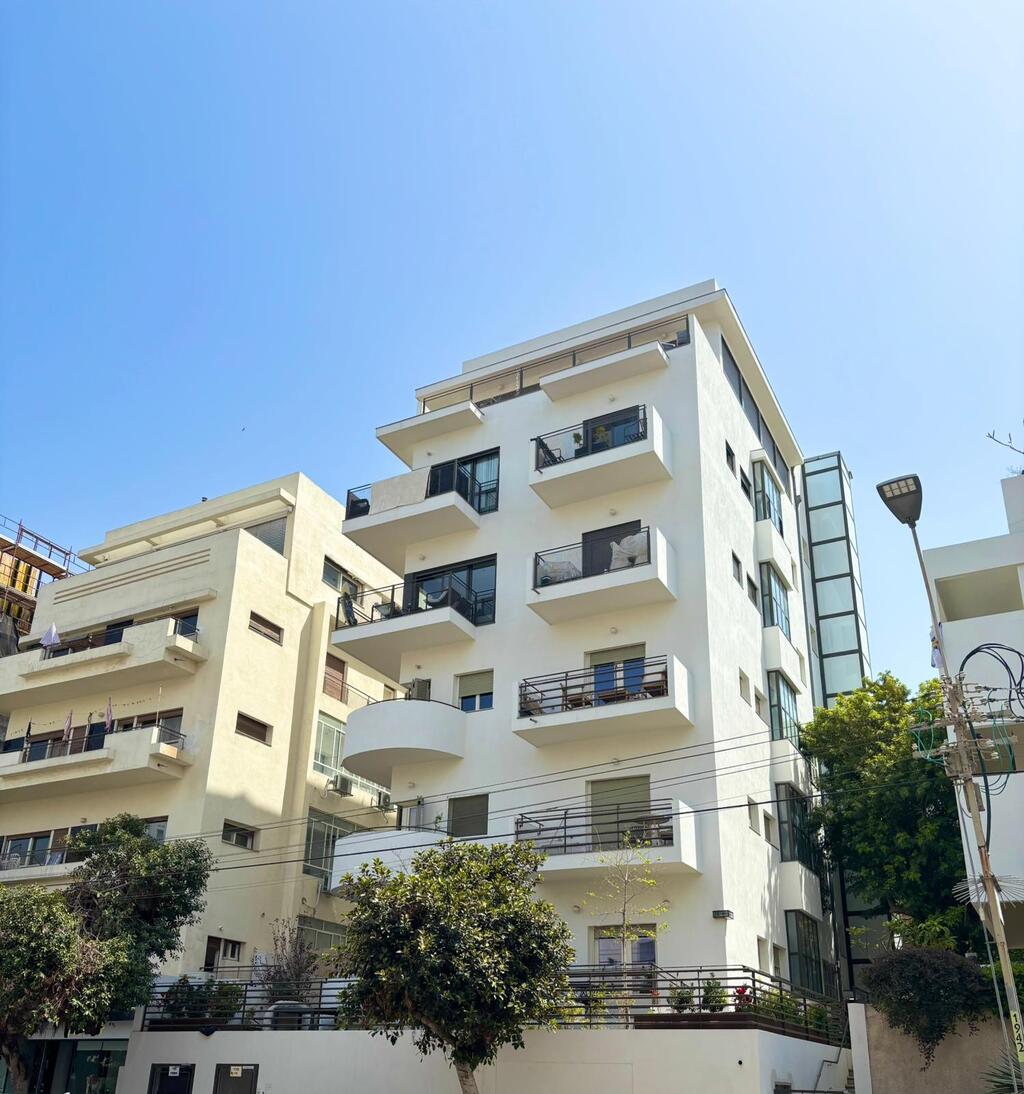
(Photo: Noah Sander)
Where the perception comes from
So where does the perception of low-quality construction come from?
Not structure but finishes and execution.
Over the years, I’ve occasionally heard clients make comments like, “The quality in Israel is low.” And in some respects, I understand where that perception comes from.
I often describe it this way: some brand-new properties in Israel feel “98% finished.” Those final touches that make a home feel complete can sometimes come up short. At the same time, I’ve also walked into many properties where right away it’s clear that the developer truly understands what buyers are looking for, where the level of finish and attention to detail is immediately noticeable.
But it’s important to understand the context. The modern State of Israel is relatively young, with much of its construction developed from scratch, rather than building on centuries of existing architecture like one would see throughout Europe. Much of its early construction was driven by necessity - housing large waves of immigrants quickly, within a more centralized and resource-constrained system, in what was primarily a socialist structured economy. That’s not to say Israel lacks beautiful architecture, but cities like Tel Aviv, for example, were quite literally built from sand dunes at the beginning of the 20th century.
Today, much of the new construction seen is modern, clean, and aligned with contemporary Western design standards. The issue isn’t the overall aesthetic; it’s consistency in delivery. Because in practice, the difference between projects can be significant.
These differences show up in the details: tiling, cabinetry, paintwork, sealing, insulation. Individually, they may seem minor, but collectively they define how a home actually feels to live in. And this is where many buyers get caught off guard. What you see in the building’s exterior or shared spaces does not always reflect what you’re getting inside the apartment.
The individual buyer plays a role
Another factor that often goes unnoticed is what happens after the developer delivers the apartment.
In Israel, and especially in Tel Aviv, many new apartments are sold well before completion to individual buyers rather than being held and rented out by the developer. Those buyers have a range of different goals, and that of course shows in the delivered product.
Some are purchasing a home to live in. They invest in upgrades, higher-end finishes, and customization. These apartments tend to feel more complete, more comfortable, and more “home-like” from the moment you walk in. Others are purchasing purely for investment. In those cases, the focus is on efficiency and keeping costs down, while ensuring the apartment is functional and rentable. The result is often a more basic finishes: minimal cabinetry, standard materials, and a more “shell-like” feel. This creates a reality that many people don’t initially expect. Two apartments in the same building, delivered by the same developer, can feel completely different depending on how the individual owner chose to finish them. In many cases, what buyers perceive as a lack of quality is not necessarily a reflection of the developer, but of the decisions made by the purchaser.
The role of the developer still matters
That said, the developer remains a critical factor in the overall quality of the project.
The well-established developers tend to build with greater consistency, both in terms of structure and finishing standards. They typically will have already upgraded specifications, clearer processes, and proper warranties in place for wear and tear over time. Essentially, they are fine-tuned machines who no longer just build individual projects but are transforming entire neighborhoods.
Newer developers, or those without a strong track record, still need to prove themselves. For buyers, this makes due-diligence even more essential. Looking at previous projects, speaking with existing owners or tenants, and understanding how buildings have performed over time can provide valuable insight into what to expect.
In a market with so much ongoing construction, reputation tends to travel quickly, both positive and negative.

(Photo: Noah Sander)
An evolving market
In recent years, many of the larger developers in Israel have increasingly incorporated environmental and energy-efficiency standards into their projects - not just as a regulatory requirement, but as part of the product itself.
Today, new construction must comply with the Israeli Green Building Standard (SI 5281), which evaluates factors such as insulation, energy efficiency, materials, water usage, and overall environmental impact. While the minimum requirement is relatively basic, increasingly more developers are choosing to exceed it and build to higher standards.
In practical terms, this has a real impact on daily living: better insulation leads to improved temperature control, reduced reliance on air conditioning, lower electricity costs, and a more comfortable living environment year-round, both inside and out. It also reflects a broader shift in how projects are being planned - with more attention being paid not just to how buildings look, but how they perform over time.
What buyers should take away
Overall, like many things in Israel, while there is of course room for improvement, the standard of the market is rising, and I expect to see significant strides made in the coming decade. The developer, the type of project, and the decisions made by the individual owners all determine what the end result will look like. With the scale of construction across Israel today, and the increasing number of developers entering the market, the environment is competitive, which in the end is great for the consumer. Some developers cut corners instead of prioritizing long-term durability. Others have built strong reputations for delivering consistently high-quality product.
However, the key point is this: Buyers today have options. But they also need to do their homework. Rather than asking whether construction in Israel is “good” or “bad,” the more accurate question is: Which developers are actually delivering the standard and level of finishes that aligns with your expectations? Because in this market, quality isn’t one size fits all, and understanding where those differences come from is key to making the right decision.
Noah Sander is a Canadian born real estate professional based in Tel Aviv and founder of ZionistInvestor.com, an AI-powered platform helping international buyers and new olim navigate the Israeli property market. For inquiries: [email protected]