

Most people changing apartments face the same routine: boxes, movers, dismantled furniture and days of disruption. Yam Nets had a much simpler solution. Whenever he wanted to move, he closed the door and took his entire home with him.
For four years, the caravan he built served as a home for him and his dog as he moved around Israel, from Eilat in the south to the Mediterranean coast, the Carmel region and the area around Kiryat Tivon. Along the way, he discovered that a home did not have to mean staying in one place.
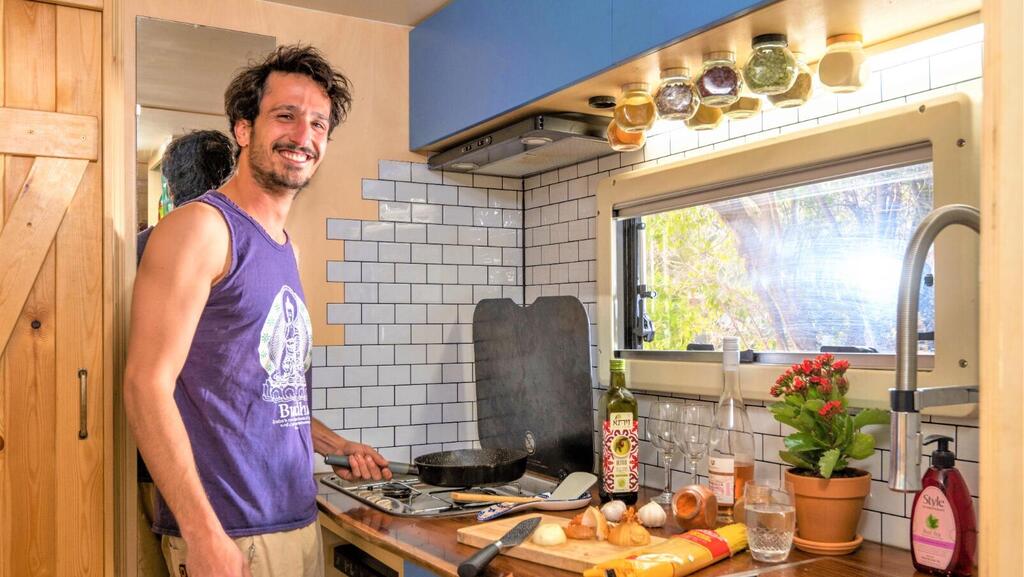
Nets, 30 and recently engaged, now works abroad in alternative housing, including caravans, yurts and tiny houses. His interest in small-space living began for a far less romantic reason: soaring rent. Nearly six years ago, he was living with roommates and began looking for a place of his own as his lease approached its end.
“After a long search for an apartment, when supply was limited and prices were outrageous, I realized I had to think differently,” he said. “I was also tired of moving. I had moved a lot, and every time it meant boxes, dismantling things and moving everything. At some point I realized a caravan could be the right option for me.”
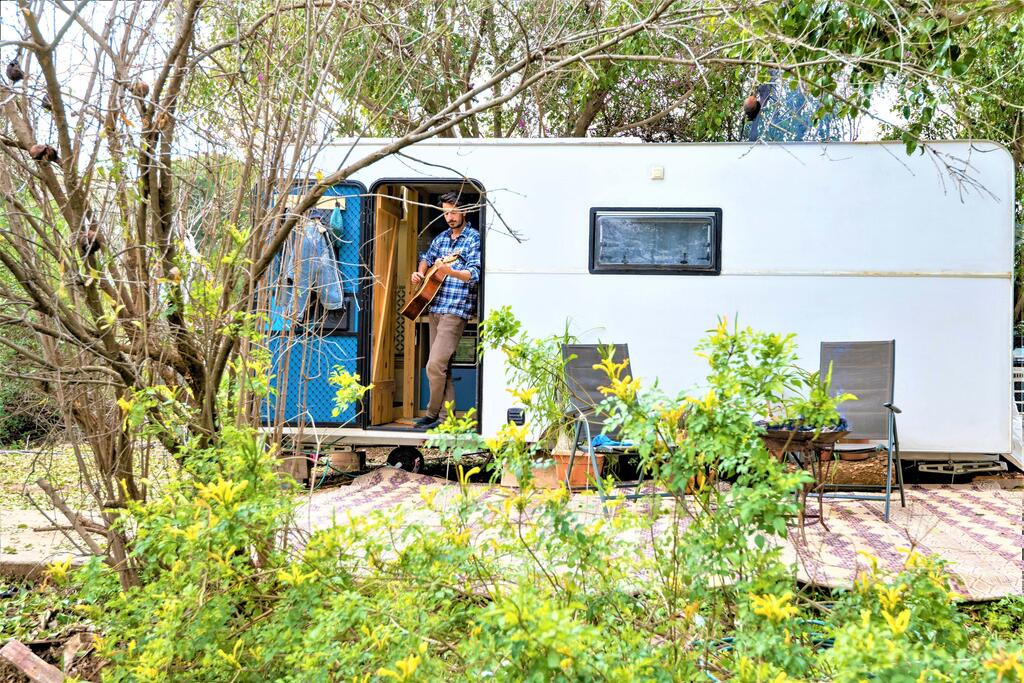
Tired of moving apartments. Yam Nets in his caravan
(Photo: Albert Adout)
He bought a basic shell with walls for about 30,000 shekels
(Photo: Albert Adout)
‘Plan twice, build once’
Nets did not buy a finished caravan. He purchased a basic 11-square-meter shell with walls for about 30,000 shekels and built the entire interior himself.
Working from a friend’s carpentry shop, he handled the woodworking, plumbing, water, gas and electrical systems, with licensed professionals brought in where inspections and approvals were required.
He said the materials and systems cost another roughly 60,000 shekels, not including the many hours of labor he put into the project himself.
Before picking up a tool, though, he started with a notebook. “I made a detailed list of everything I do every day, from the moment I open my eyes in the morning until I go to sleep,” he said. “I checked what I needed for every activity. Whether I had space for tools, a place to brush my teeth, cook, whether there was an oven and a refrigerator. Only after I understood the practical side did I start thinking about the design.”
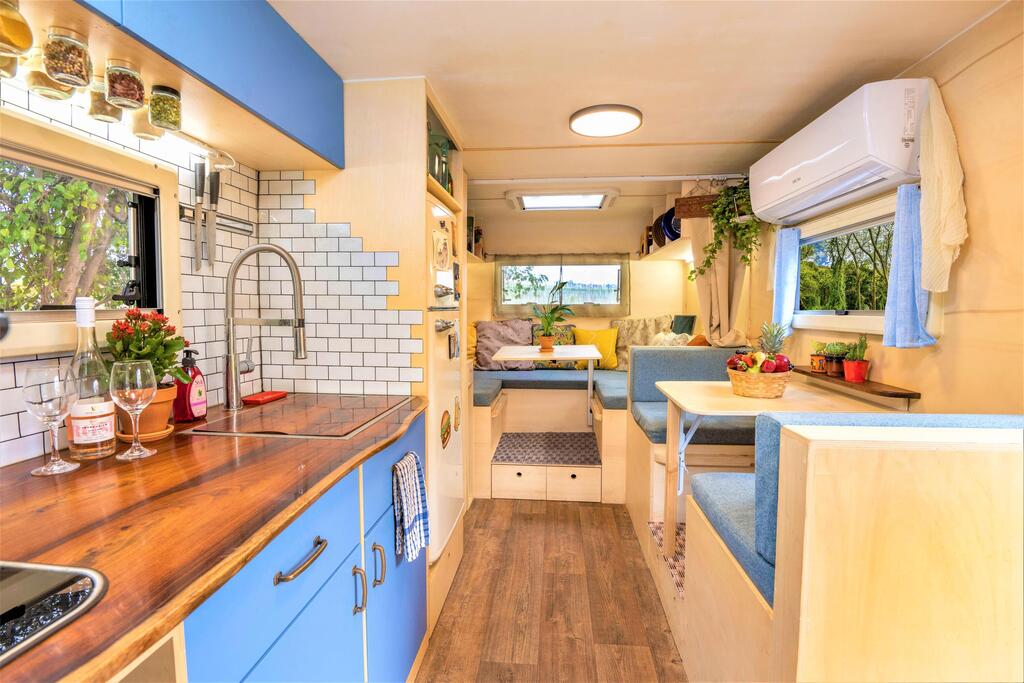
He mapped out his daily routine and designed the space around it
(Photo: Albert Adout)
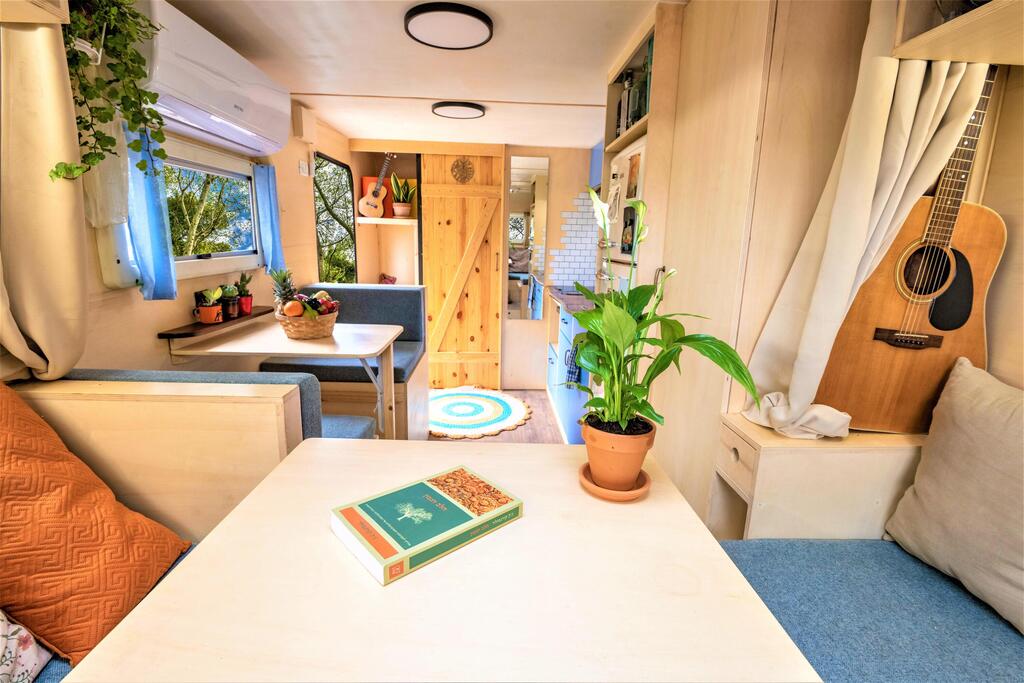
The main living area, with storage built into every available space
(Photo: Albert Adout)
He then modeled the interior in SketchUp, gathered ideas from other caravans and consulted friends and professionals. Every solution had to meet several demands at once: look good, work well, remain lightweight and survive constant movement. The planning stage took about six weeks, followed by roughly four months of construction.
Nets wanted the caravan to feel less like a vehicle and more like a rustic house. “I wanted a rustic, country style, with wood and a warmer feeling,” he said. “A lot of caravans I had seen felt very plastic or full of aluminum, and that was less my style. I wanted to feel like I was inside a country home.”
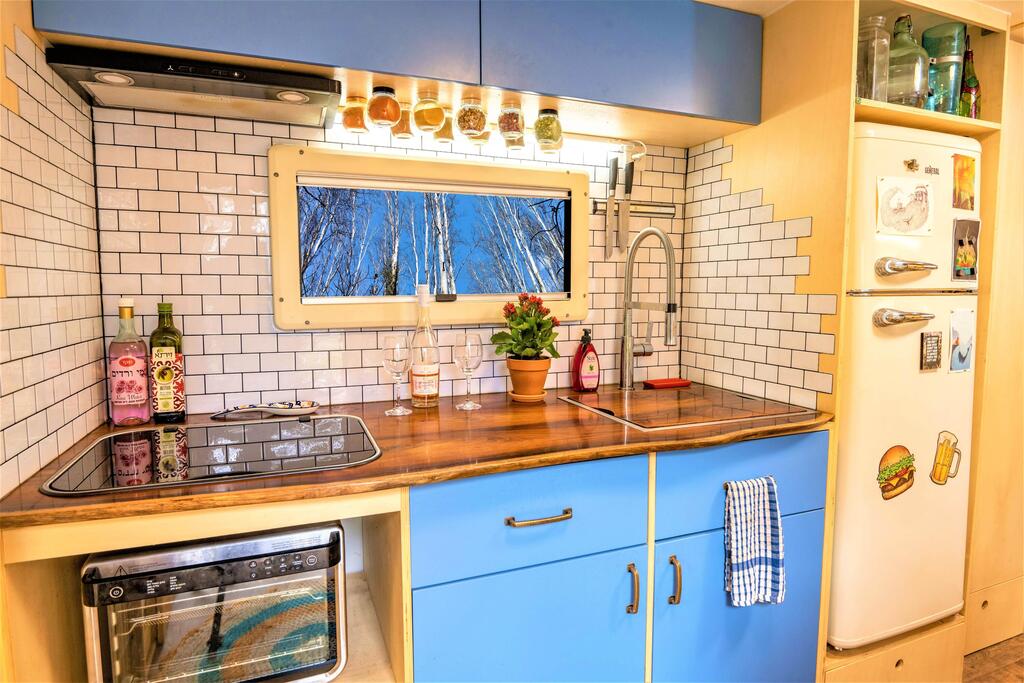
The fully equipped kitchen
(Photo: Albert Adout)
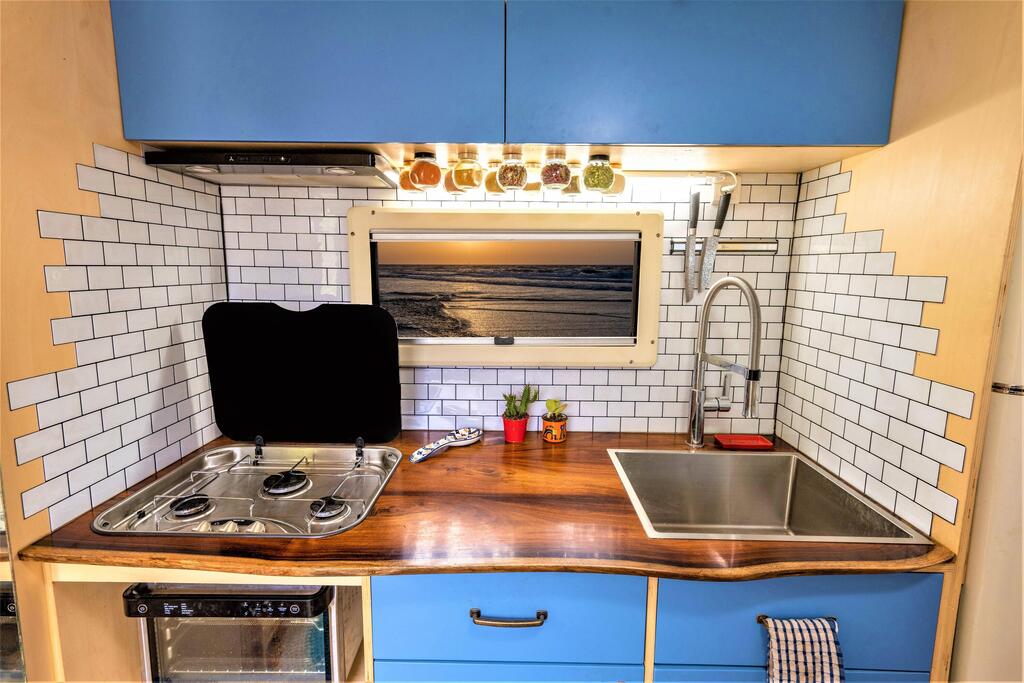
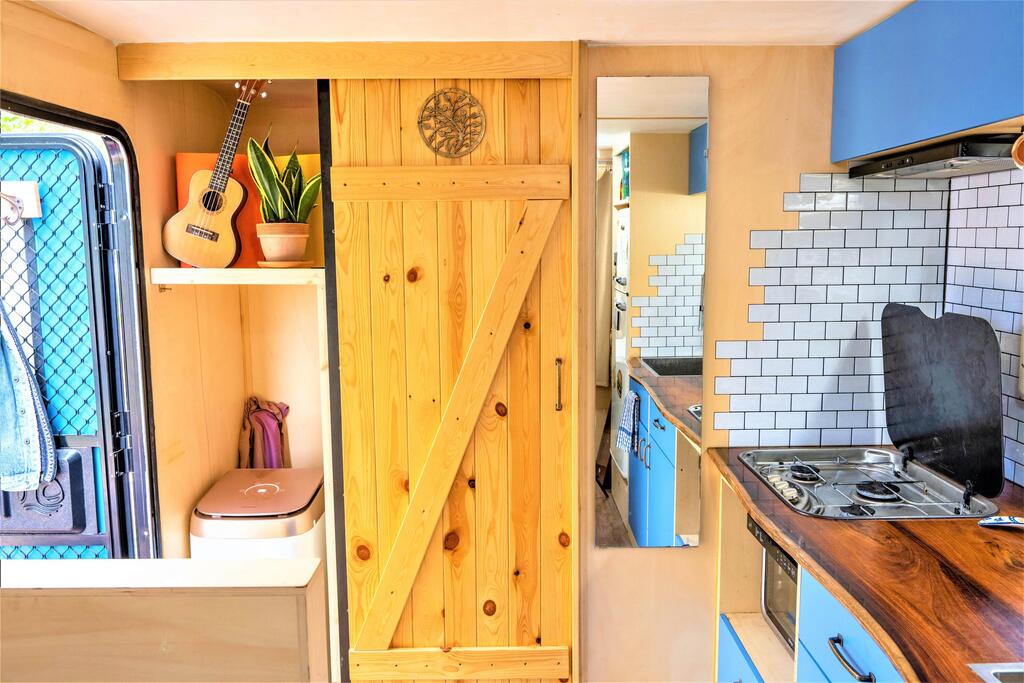
He wanted a rustic, country style, with wood and a warm feel
(Photo: Albert Adout)
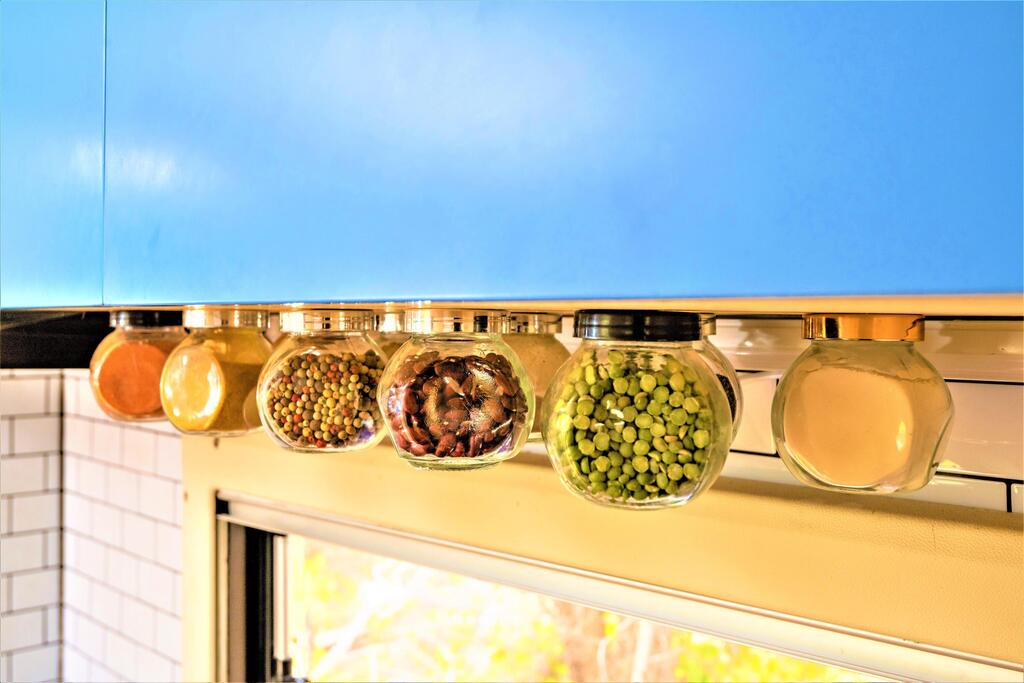
A clever storage solution for the spice jars
(Photo: Albert Adout)
He used wood throughout the interior, added bronze-colored handles and incorporated small design details intended to make the space feel warm and domestic. “It was important to me that even though it was a small space, when you walked inside, it felt like entering a home.”
Weight was one of the biggest constraints. The caravan had to stay within a total weight of around 1,500 kilograms, so even choosing materials for cabinets became an engineering problem.
Nets initially wanted to use birch plywood but found it too heavy. He switched to poplar wood, which he said was roughly half the weight while still offering the strength and appearance he wanted. Nearly every corner of the caravan was designed to serve a purpose. The bench included storage, narrow niches were used for equipment and every item had to remain accessible without blocking something else. “It was like playing Tetris,” he said.
Living in such a small space also changed the way he thought about home. “There was something I really loved about opening the window next to the bed and seeing a different view each time,” Nets said. “One time Tivon, one time the sea, one time Carmel. You open the window and say, ‘Oh, right, I’m here.’ It’s the same home, but every time it’s somewhere else.”
At first, he tried moving more frequently. Eventually, he discovered that constant mobility could become exhausting. He began staying in each location for six months or even a year, creating a small outdoor area and sometimes putting up a pergola. “I realized I was more comfortable settling in for longer periods,” he said. “I didn’t want to change places every week.”
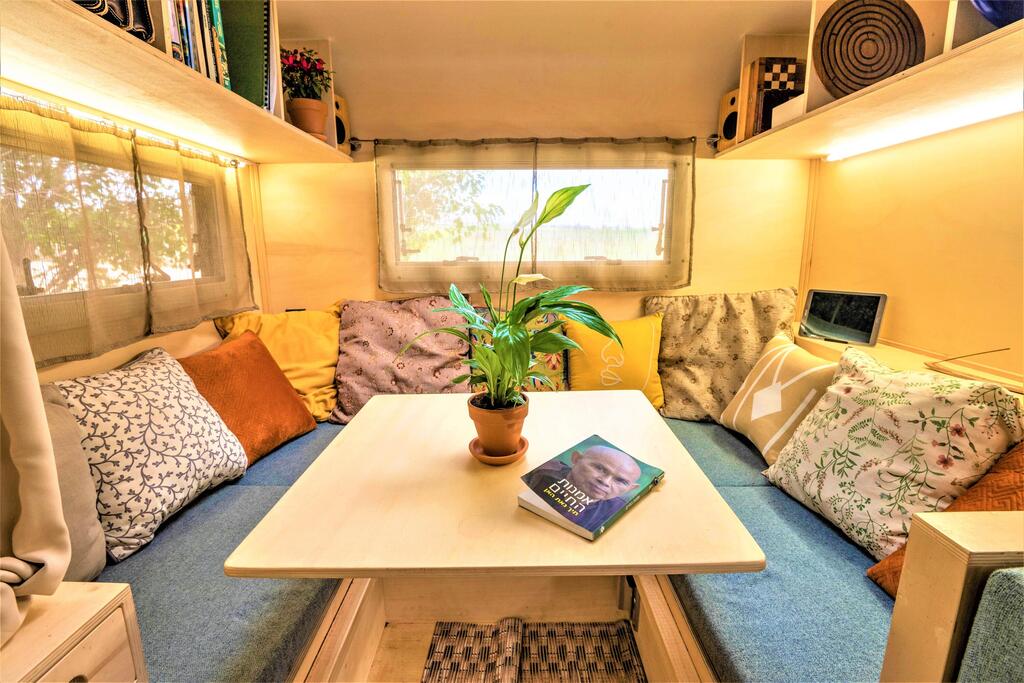
The dining area
(Photo: Albert Adout)
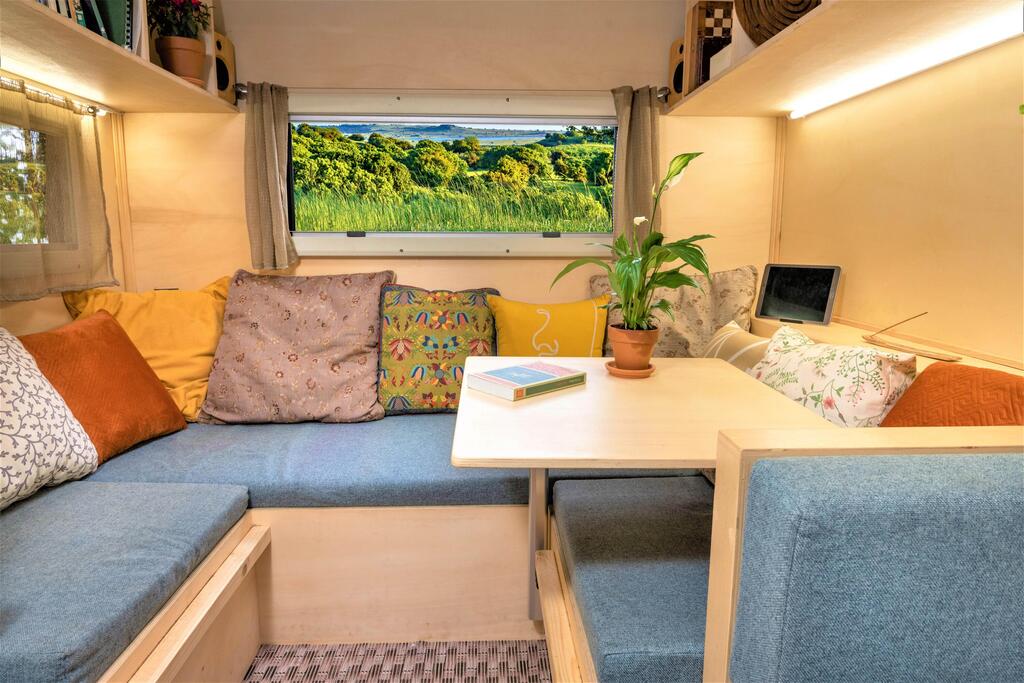
The view changes from time to time
(Photo: Albert Adout)
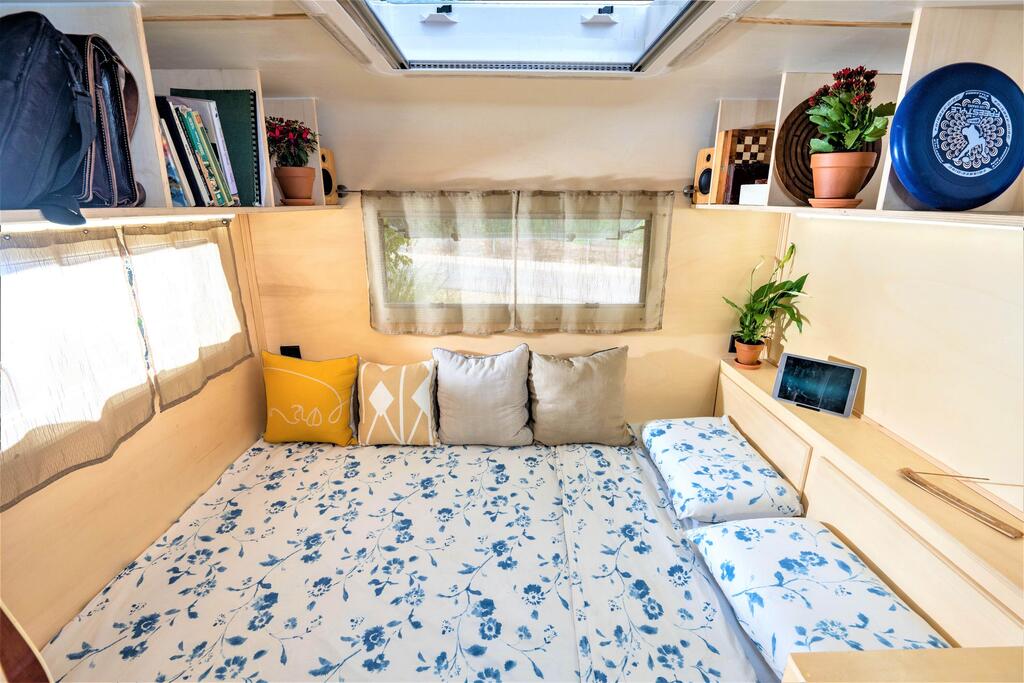
The spacious dining area can be converted into a double bed for guests
(Photo: Albert Adout)
The small interior initially felt claustrophobic. “You suddenly put your entire life into a tiny space, tools, a guitar, a barbecue, a dog, clothes, personal belongings,” he said. “Then a process of reducing begins. You discover how many things you kept for years that you never really needed. After two or three months, it becomes very liberating.”
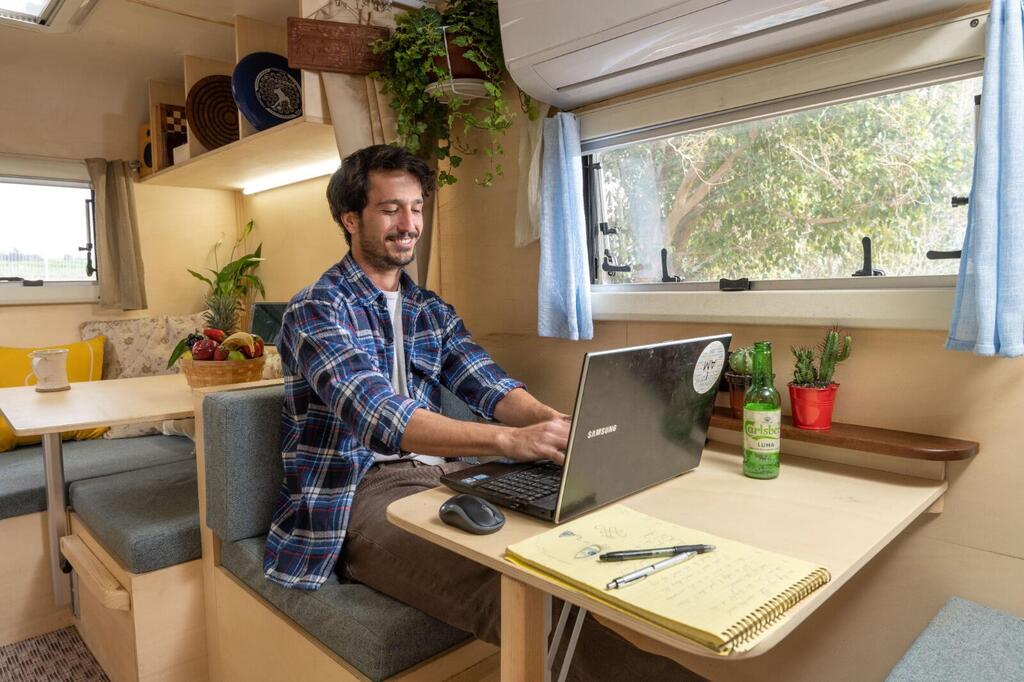
(Photo: Albert Adout)
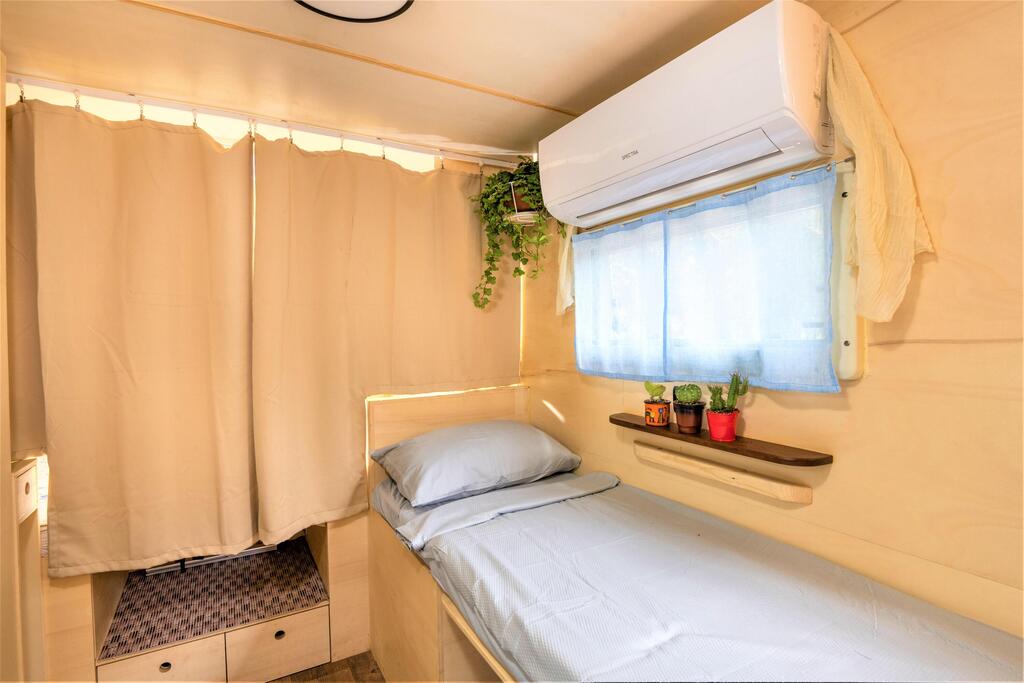
The sleeping area is separate
(Photo: Albert Adout)
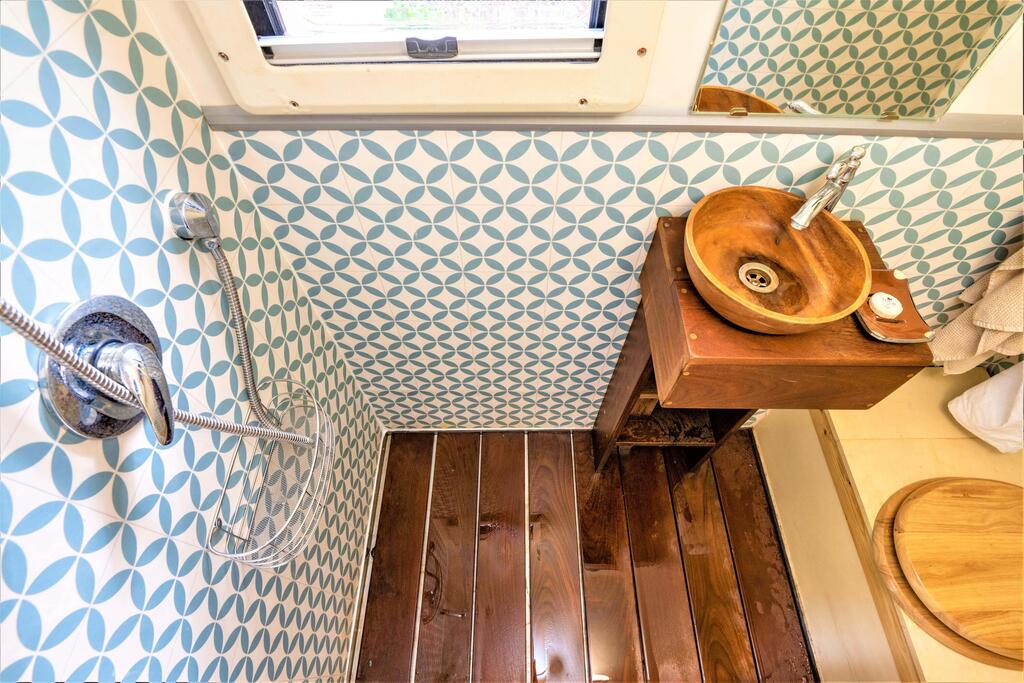
Compact bathroom, complete with hot water
(Photo: Albert Adout)
To make the caravan feel less enclosed, Nets designed a relatively large kitchen and sofa, added multiple windows and installed a roof opening. “Precisely because the interior is small, you find yourself going outside much more, drinking coffee in nature, meeting people and connecting with the surroundings and caravan communities,” he said. “For me, that was one of the most beautiful things about living in a caravan.”
Nets has not lived in the caravan for the past year and a half. He moved to Australia, where he continued building and designing caravans and traveled around the country in a motorized van. During that period, he met the woman who would later become his fiancée, and the two also traveled together.
Now living abroad and planning his next steps, he has decided to rent out the caravan he left behind in Israel. The asking price is 2,500 shekels a month.
That includes the caravan and its equipment, among them a refrigerator, oven, air conditioner, speakers and water and electrical systems. It also has water tanks, a hot-water system, solar panels with batteries, a connection for regular electricity and a gas system.
There is one important catch: the caravan does not come with land. Anyone renting it must find a legal and suitable place to park and live in it.
For Nets, that trade-off is worth it. “For me, it’s the possibility of being more connected to the outdoors and the environment,” he said. “And there’s something very simple about moving from place to place. Instead of packing up an entire home, in one day I close the door, drive, park it somewhere else and open the door, and I have a ready apartment with everything inside. No boxes, and no moving your whole life all over again.”
His main advice to anyone considering tiny living is to design around daily life first and aesthetics second. “Make a list of everything you need to do inside the caravan and understand what you want to use it for,” he said. “If you want to travel and move constantly, maybe a motorized vehicle is better. If you want to stay somewhere for a few months, a towable caravan can be more convenient because you don’t need to drive your entire house just to buy eggs in the morning.”
After years of living this way, Nets says conventional housing has lost much of its appeal. “It’s hard for me to imagine going back to living in a concrete structure with rooms,” he said. “There’s something about this way of life that really draws me in.”