

Have you ever walked through the center of your city — whether in Holon, Givatayim, Herzliya, or elsewhere — and stopped in front of a sign announcing, “A new neighborhood will be built here?"
You look at the rendering: elegant towers rising into the skyline, vibrant public spaces, tree-lined streets, and bustling urban life. Then you look back at the reality around you—aging low-rise apartment blocks, congested roads, and neighborhood businesses that have been there for decades—and wonder: How will this ever become that? Where will all these new residents fit? Won’t it just create more chaos?
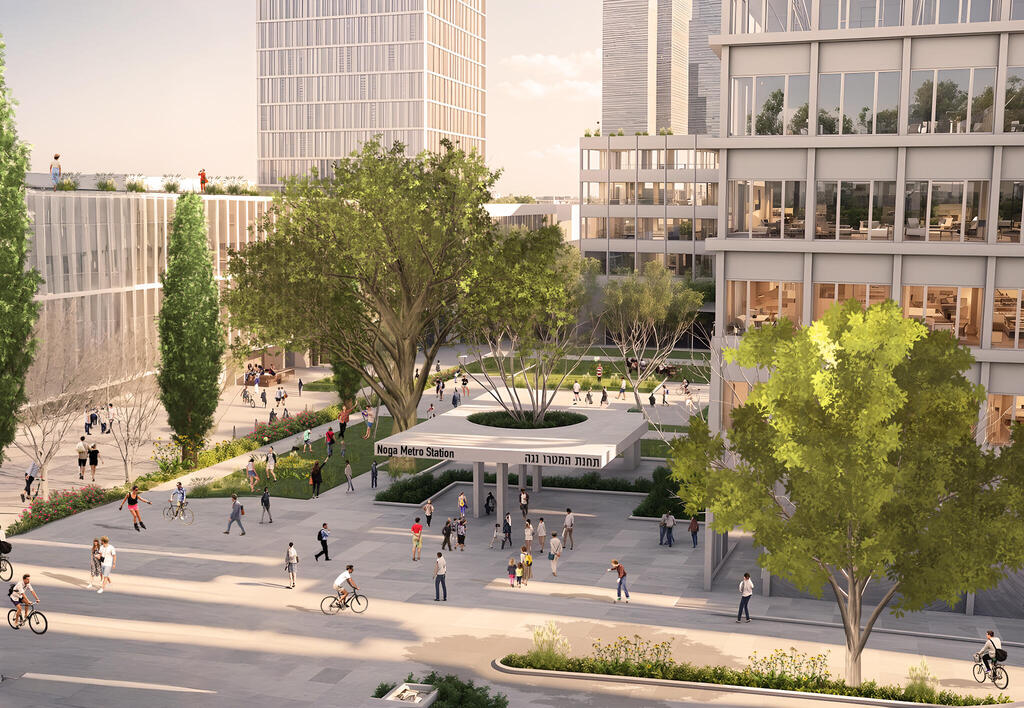
According to architect Adi Assif, partner at Gutman Assif Architects, the answer lies in a much broader transformation than most people realize.
“What people see from the street today is only a snapshot of a city in transition,” says Assif. “The plans already being implemented are not about replacing individual buildings. They are about rethinking entire urban districts. This is not simply urban renewal—it is an urban revolution.”
Assif is currently involved in two major redevelopment projects that exemplify the future of city planning in Israel: the Katzenelson–Noga district in Givatayim and the redevelopment of Dov Hoz Street in Holon. Together, these projects represent a new generation of planning focused on density, public transportation, mixed-use development, and high-quality public spaces.
Today, residents walking along Katzenelson Street in Givatayim or Dov Hoz Street in Holon see familiar urban landscapes characterized by aging residential buildings, limited public space, and heavy dependence on private vehicles. Within the next decade, however, these same streets are expected to undergo dramatic change.
Instead of rows of four- to six-story apartment buildings, the areas will feature residential towers reaching between 30 and 60 stories, thousands of new housing units, commercial and employment centers, public institutions, community facilities, and green open spaces—all connected to an advanced public transportation network centered around the future metro system.
“We are no longer talking about a single building or even a single project,” explains Assif. “We are creating entirely new urban centers. The goal is not only to add housing units but to create complete urban environments where people can live, work, shop, and spend their leisure time within walking distance.”
A central component of this vision is the future metro network, which is already shaping planning decisions today.
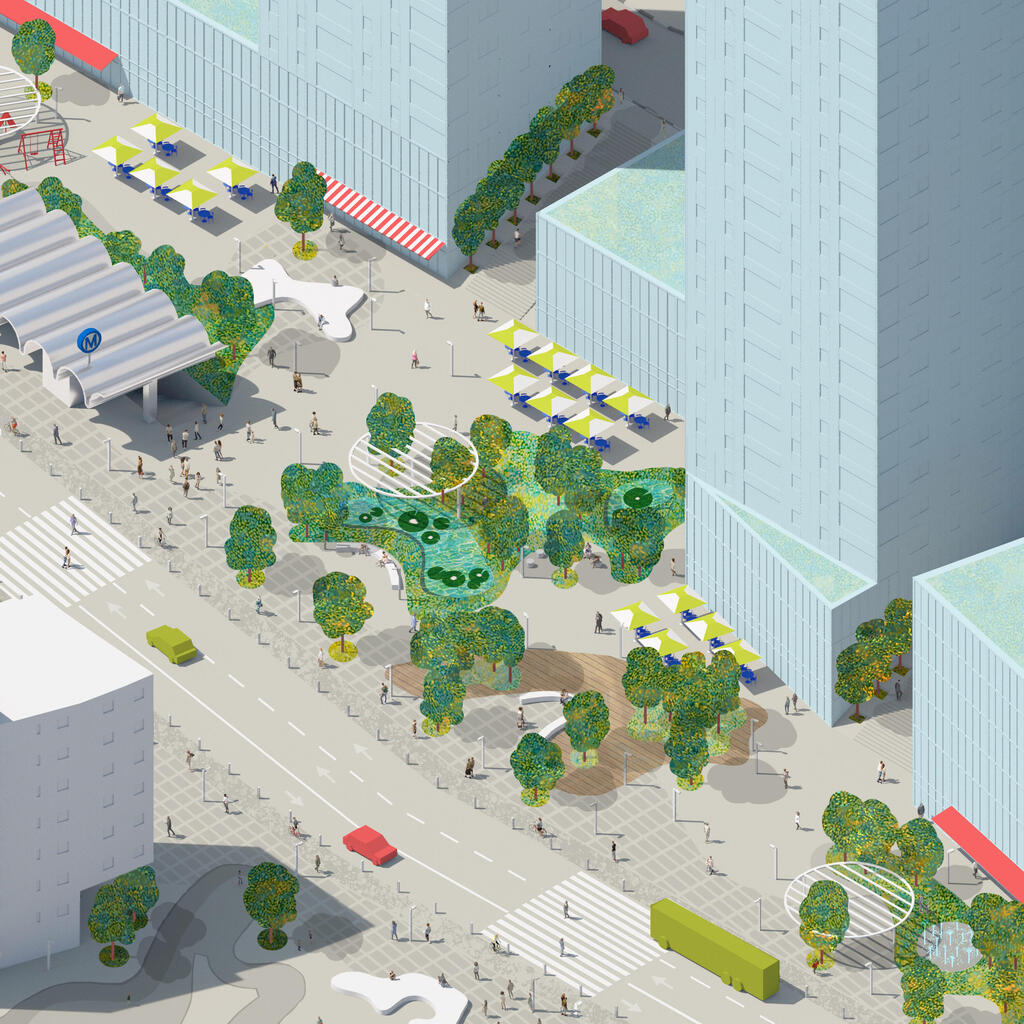
Dov Hoz Holon - Gutman Assif Architects
(Illustration: Tay Zehavi)
“The metro is the starting point for everything,” says Assif. “We are already designing how stations connect to public spaces, surrounding buildings, and pedestrian routes. Once you begin planning around mass transit, the entire way you think about urban life changes.”
One of the most common concerns residents express about urban renewal is the fear of overcrowding and endless rows of towers. Assif believes the opposite is true.
“In cities like Holon, one of the biggest challenges is the lack of quality public space,” she explains. “By building upward rather than outward, we can actually free up land for parks, plazas, community spaces, and pedestrian-friendly environments.”
Instead of spreading low-rise buildings across large areas, the new planning approach concentrates development on a smaller footprint, allowing more space at ground level to remain accessible for public use.
Another defining feature of these projects is a fundamental shift in transportation planning. Future residents will be expected to rely far less on private vehicles and far more on public transportation, walking, cycling, and shared mobility solutions.
“These projects are being planned under the assumption that the private car will no longer be the dominant mode of transportation,” Assif says. “Parking standards are significantly lower than what people are accustomed to today. In some cases, apartments will have no dedicated parking space at all. Parking ratios range between approximately 0.3 and 0.6 spaces per housing unit.”
While that may sound radical to many Israelis, Assif notes that similar approaches have already become standard in major cities around the world.
“If we continue planning cities around the assumption that every household owns two cars, we will never achieve high-quality urbanism. The city centers of the future will prioritize people rather than vehicles.”
Beyond housing and transportation, the projects are built around a mixed-use philosophy designed to keep streets active throughout the day.
“In the same buildings, you will find residential units alongside offices, retail, healthcare services, childcare facilities, cafés, and restaurants,” says Assif. “Approximately 15 percent of the planned space is dedicated to employment uses because vibrant cities need more than housing. They need activity throughout the day.”

Architect Adi Asif
(Photo: Nir Selekman)
According to Assif, these developments are also part of a broader trend reshaping the entire Tel Aviv metropolitan area.
“For many years, economic and cultural activity was concentrated almost exclusively in Tel Aviv,” she explains. “Today we are seeing the emergence of strong secondary urban centers. Businesses, restaurants, cultural institutions, and employers are increasingly choosing locations outside Tel Aviv, creating more opportunities closer to where people actually live.”
This shift is helping neighboring cities develop their own identities while reducing dependence on the metropolitan core.
For residents, the dramatic transformations shown in planning renderings may still feel distant. But from Assif’s perspective, the future is already taking shape.
“The plans have been approved and are moving through advanced stages of implementation,” she says. “The decisions that will shape these cities for decades are being made right now. Within ten years, people walking along Katzenelson Street in Givatayim or Dov Hoz Street in Holon will experience an entirely different urban reality.”
For Assif, however, success is not measured by the number of towers built or apartments delivered.
“The real challenge is not simply creating more housing,” she concludes. “The real challenge is creating better cities—cities with efficient transportation, high-quality public spaces, diverse uses, and vibrant street life. Ultimately, that is the true revolution we are working to achieve.”